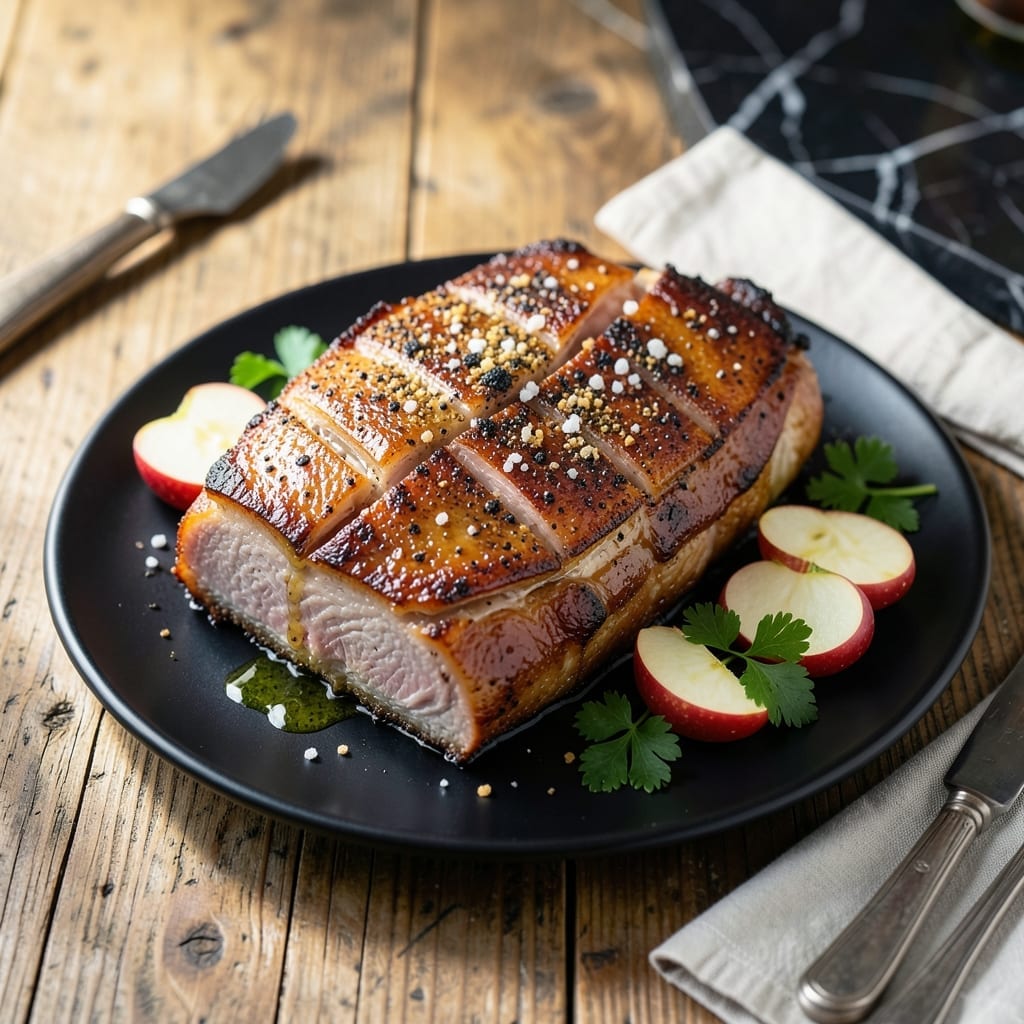
This pellet grill method delivers crispy pork belly with deep woodfire flavor. I developed this technique after years of perfecting smoke cooking.
The result is tender meat with a shatteringly crispy exterior, infused with smoky aromatics. Precise temperature control ensures perfect texture every time.
Ingredients for Pork Belly Pellet Grill
A few quality ingredients transform pork belly into woodfire masterpiece with crispy perfection.
| Ingredient | Amount | Notes |
|---|---|---|
| Pork Belly 🥓 | 2 lb | Skin-on, uniform thickness |
| Coarse Kosher Salt 🧂 | 2 tbsp | Diamond Crystal preferred |
| Black Pepper 🌶️ | 1 tbsp | Freshly ground, coarse |
| Garlic Powder 🧄 | 1 tbsp | High-quality, no additives |
| Onion Powder 🧅 | 1 tbsp | Fine texture preferred |
| Smoked Paprika 🌶️ | 1 tsp | Sweet or hot variety |
| Dried Oregano 🍃 | 1 tsp | Mediterranean origin preferred |
| Dijon Mustard 🟡 | 2 tbsp | Whole grain acceptable |
| Apple Cider Vinegar 🍏 | 2 tbsp | Raw, unfiltered preferred |
| Brown Sugar 🍚 | ¼ cup | Light or dark variety |
| Hardwood Pellets 🪵 | 2 cups | Hickory or apple preferred |
| Olive Oil 🫒 | 2 tbsp | For rubbing the skin |
[recipe_ingredient_scaler]
The pork belly is paramount here. Source skin-on cuts with uniform thickness from reputable butchers like Whole Foods or Local Farms. Look for pieces with even fat-to-meat ratios—this ensures consistent cooking. Hardwood pellets from Traeger or Weber brands deliver reliable smoke quality. Avoid pre-ground black pepper; freshly ground makes a noticeable difference in the bark formation.
No smoked paprika? Regular paprika plus a pinch of liquid smoke can substitute, though the depth won’t be identical. For the brown sugar, coconut sugar works in a pinch but may darken faster. Apple cider vinegar can be replaced with white vinegar at a 1:1 ratio. If using store-bought rubs, check for added sugars that might throw off your bark’s texture. The Dijon mustard is mostly for binding—yellow mustard works too.
Pork belly can be dry-brined overnight for deeper seasoning penetration. Store uncooked belly wrapped tightly in the fridge for up to 3 days. Cooked leftovers keep for 4-5 days refrigerated or 3 months frozen. Always bring meat to room temperature before smoking for even cooking.
Why You’ll Love This Recipe
- Set and Forget: I just rub the pork belly with salt, pepper, and those powders, then let the pellet grill do all the work.
- That Crispy Bite: The fat renders out slow and even, leaving the meat tender with a crackling edge that garlic and onion powders make irresistible.
- Feeds My Crowd: One slab serves a hungry family gathering, and I can slice it thick or thin to stretch for sandwiches the next day.
- Leftovers? Yes Please: Cold pork belly slices taste even better the next day—toss them into fried rice or tacos for a quick, flavor-packed meal.
Step-by-Step Instructions for Pork Belly on Pellet Grill
Master this technique for perfectly crispy, woodfire-infused pork belly with a tender interior.
Step 1: Score and Season the Pork Belly
Pat the 2 lb Pork Belly dry with paper towels to ensure maximum crispiness. Using a sharp knife, score the skin in a crosshatch pattern, cutting just through the fat cap without piercing the meat below. This allows the fat to render out while creating more surface area for crisping.
In a bowl, combine the 2 tbsp Coarse Kosher Salt, 1 tbsp Black Pepper, 1 tbsp Garlic Powder, 1 tbsp Onion Powder, 1 tsp Smoked Paprika, and 1 tsp Dried Oregano. Rub this mixture evenly over all surfaces of the pork belly, pressing it into the scored skin and sides.
Step 2: Apply the Binder and Sugar Coating
In a separate small bowl, whisk together the 2 tbsp Dijon Mustard and 2 tbsp Apple Cider Vinegar until smooth. Brush this mixture evenly over the entire surface of the pork belly, including the scored skin. This acidic binder helps the dry rub adhere and adds depth to the flavor profile.
Immediately sprinkle the 0.25 cup Brown Sugar over the mustard-coated pork belly, pressing it gently into the scored skin. The sugar will caramelize during cooking, creating a sticky, flavorful bark. Let the seasoned pork belly rest at room temperature for 30 minutes while you prepare the grill.
Step 3: Set Up and Preheat the Pellet Grill
Fill your pellet grill hopper with the 2 cups Hardwood Pellets—hickory or apple wood works particularly well with pork. Set the grill to 225°F and preheat for 15 minutes to allow the temperature to stabilize. This low-and-slow start ensures the pork belly cooks evenly without drying out.
Once preheated, place the pork belly skin-side up directly on the grill grates. The indirect heat from the pellet grill will slowly render the fat while infusing smoky flavor. Close the lid and maintain a consistent 225°F throughout the initial cooking phase.
Step 4: Smoke and Crisp the Pork Belly
Smoke the pork belly at 225°F for 2 hours, or until the internal temperature reaches 165°F. This slow cooking phase allows the connective tissue to break down while the fat begins to render. Resist the urge to peek—every time you open the lid, you lose heat and extend the cooking time.
Increase the grill temperature to 375°F and cook for an additional 30-45 minutes, or until the skin is deep golden brown and crispy. Brush the pork belly with the 2 tbsp Olive Oil during the last 10 minutes of cooking to enhance browning and add an extra layer of crispiness.
Step 5: Rest and Slice for Serving
Remove the pork belly from the grill and transfer it to a cutting board. Tent loosely with foil and let it rest for 10-15 minutes. This resting period allows the juices to redistribute, ensuring each slice remains moist and flavorful.
Slice the pork belly against the grain into ½-inch thick pieces. Each portion should feature a perfect balance of crispy, caramelized skin and tender, juicy meat. Serve immediately while hot, as the skin is at its crispiest right out of the grill.
Pro Tips For Making Pork Belly Pellet Grill
- Score the Skin: Use a sharp knife to cut 1/4-inch deep crosshatches in the fat cap—this lets the rub penetrate and helps render the fat evenly.
- Dry the Belly: Pat the pork belly thoroughly dry with paper towels before seasoning; moisture prevents the crust from forming properly.
- Skip the Overcrowd: Leave at least an inch between pieces on the grill so the heat circulates; I learned this the hard way after steaming my first batch.
- Start Low, Finish Hot: Smoke at 225°F for 3 hours, then crank it to 300°F for the last hour to crisp the skin without drying it out.
Serving Suggestions for Leftovers
Plating Perfection
I always slice the pork belly into ½-inch thick pieces and fan them out on a wooden board. The contrast of the dark, crispy skin against the lighter meat looks stunning. A sprinkle of flaky sea salt right before serving makes the flavors pop. 💫
Sauce Pairings
A drizzle of honey-sriracha glaze adds sweet heat that complements the smoky pork. I mix 2 tbsp honey with 1 tbsp sriracha and a splash of lime. Alternatively, a tangy BBQ sauce works beautifully for those who prefer classic flavors.
Side Dish Ideas
The richness of pork belly calls for bright, acidic sides. I love serving it with pickled red onions and quick-pickled cucumbers. A crisp kale slaw with apple cider vinegar dressing cuts through the fat perfectly.
Garnish Touches
Fresh herbs add color and freshness. I scatter chopped cilantro or thinly sliced scallions over the top. For extra crunch, toasted sesame seeds or crushed peanuts work wonders. These small touches elevate the presentation.
Beverage Pairings
An ice-cold craft lager with citrus notes balances the richness. For non-alcoholic options, sparkling water with lime cleanses the palate. I also enjoy a dry hard cider—the apple notes echo the hickory smoke beautifully. 🍺
Serving Temperature
This dish is best served immediately while the skin is still crackling crisp. If you must hold it, keep slices in a 200°F oven for no more than 15 minutes. The texture changes quickly, so timing is everything with this creation.
Nutrition Facts
Frequently Asked Questions
Do I need to remove the skin before cooking?
No, keep the skin on for maximum crispiness. Score it in a crosshatch pattern to help fat render and create more surface area for the rub. The skin becomes the crispy highlight of the dish.
Can I use a different wood pellet flavor?
While hickory and apple are classic, cherry or pecan pellets add excellent complementary flavors. Avoid mesquite—it can overpower the pork’s natural richness.
Why did my pork belly turn out tough?
This usually happens if the internal temperature didn’t reach 165°F during the low-and-slow phase. Use a meat thermometer and ensure you cook until the connective tissue breaks down completely.
How do I store leftovers?
Cool completely, then store in an airtight container in the fridge for up to 4-5 days. Reheat in a 350°F oven for 10-15 minutes to restore crispiness.

Trained in classic French technique but raised on slow-cooked ribs and spicy rubs, she blends culinary skill with smoke and soul.
- Recipe for Boneless Pork Chops in Cast Iron Skillet: Sear and Baste to Juicy Perfection - October 3, 2026
- Recipe for Boneless Cross Rib Roast: Slow-Roasted Beef with Herb Crust - October 3, 2026
- Hamburgers in Sauce Recipe Crock Pot: Slow-Cooked Savory Delight - October 3, 2026