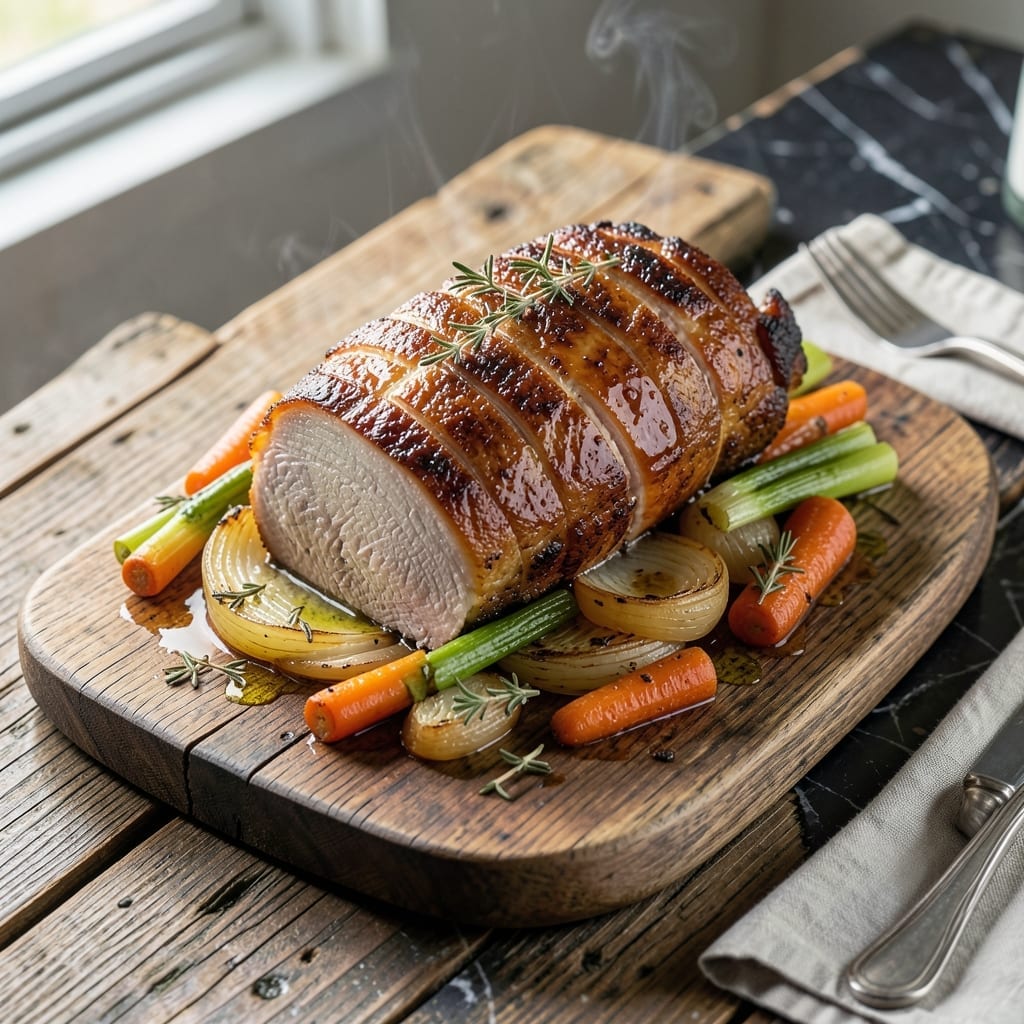
This slow-roasted pork shoulder transforms tough cuts into fall-off-the-bone perfection with minimal effort. I’ve adapted Jamie Oliver’s approach for home kitchens, focusing on time and temperature to unlock deep flavor and unmatched tenderness.
The key is patience—low and slow in the oven allows the fat to render and the meat to become impossibly tender. A simple dry rub of salt, pepper, and herbs enhances the pork’s natural richness without overpowering it.
What emerges is succulent, juicy pork with a caramelized crust, ready to shred or serve in thick slices. The aroma alone will have everyone gathering around the table before it’s even done.
Serve with roasted vegetables or crusty bread to soak up every drop of the flavorful juices. Here’s how to achieve it.
Ingredients for Pork Shoulder Recipe Jamie Oliver
Pantry staples plus fresh pork shoulder. Nothing complicated, just time and heat.
| Ingredient | Amount | Notes |
|---|---|---|
| Pork Shoulder 🐖 | 4 lb | Bone-in, skin-on preferred |
| Kosher Salt 🧂 | 2 tbsp | Diamond Crystal preferred |
| Black Pepper 🌶️ | 1 tbsp | Freshly ground coarse |
| Dried Rosemary 🌿 | 1 tbsp | Crushed between fingers |
| Dried Thyme 🍃 | 1 tbsp | Rubbed to release oils |
| Garlic Cloves 🧄 | 6 cloves | Smashed, unpeeled |
| Olive Oil 🫒 | 2 tbsp | Extra-virgin for richness |
| Apple Cider Vinegar 🍏 | ¼ cup | For tenderizing acidity |
| Brown Sugar 🍚 | 2 tbsp | Light or dark variety |
| Yellow Onion 🧅 | 1 whole | Quartered for roasting |
| Carrots 🥕 | 3 whole | Peeled, cut into chunks |
| Celery Stalks 🥬 | 2 pieces | Cut into large pieces |
| Chicken Stock 🍲 | 1 cup | Low-sodium preferred |
[recipe_ingredient_scaler]
The pork shoulder is everything here—bone-in, skin-on gives you that perfect texture. Look for good marbling at Whole Foods or your local butcher. I’ve had luck with Costco too (their pork is consistently high quality). Don’t trim the fat cap—it renders down into the most incredible juices. If you can only find boneless, it’ll still work, but bone-in really does make a difference.
No dried rosemary? Fresh at double the amount works great. Out of apple cider vinegar? White wine vinegar or lemon juice in a pinch. The brown sugar adds caramelization, but you can skip it if you’re avoiding sugar—just expect a slightly less sticky crust. For the stock, vegetable broth is a fine swap, though chicken stock adds more depth.
Leftovers keep beautifully in the fridge for 4-5 days or freeze for 3 months (the fat solidifies, but it reheats fine). I always make extra—shredded pork freezes in portions for quick tacos or sandwiches later. Just thaw overnight before reheating.
Why You’ll Love This Recipe
- Hands-Off Cooking: I rub the pork shoulder with salt, pepper, rosemary and thyme, pop it in the oven, and let Jamie’s method do the work for hours.
- Fallback Flavor: That slow roast turns the herbs into this ridiculous crust—crispy outside, tender inside—every single time.
- Feeds the Week: One shoulder, endless meals. Tacos tonight, sandwiches tomorrow, maybe a pasta topping the next day.
- Budget Hero: A cheap cut becomes the star. Honestly, it’s the only way I make pork shoulder now.
Step-by-Step Instructions for Slow-Roasted Pork Shoulder
This method guarantees tender meat that falls apart with just a nudge.
Step 1: Score and Season the Pork Shoulder
Pat the 4 lb Pork Shoulder dry with paper towels. Using a sharp knife, score the skin and fat cap in a crosshatch pattern, cutting about ¼ inch deep. This helps the fat render and the seasonings penetrate.
Rub the pork all over with the 2 tbsp Olive Oil. In a small bowl, mix the 2 tbsp Kosher Salt, 1 tbsp Black Pepper, 1 tbsp Dried Rosemary, and 1 tbsp Dried Thyme. Press this mixture into every crevice of the scored pork, making sure it sticks.
Step 2: Prepare the Aromatics and Braising Liquid
Place the 1 whole Yellow Onion, 3 whole Carrots, and 2 pieces Celery Stalks in the bottom of your roasting pan. These will create a natural rack for the pork and infuse the dish with flavor as it cooks.
Add the 6 cloves Garlic Cloves (smashed, unpeeled) around the vegetables. Pour in the 1 cup Chicken Stock and 0.25 cup Apple Cider Vinegar. The vinegar helps tenderize the meat while the stock keeps everything moist.
Step 3: Sear and Start the Slow Roast
Preheat your oven to 325°F. Heat a large skillet over medium-high heat and sear the pork on all sides until the skin is deep golden brown. This should take about 3-4 minutes per side and builds a flavorful crust.
Transfer the seared pork to the roasting pan, placing it on top of the vegetables. Sprinkle the 2 tbsp Brown Sugar over the top of the pork. This will caramelize as it roasts, adding a touch of sweetness that balances the savory flavors.
Step 4: Slow Roast to Perfection
Cover the roasting pan tightly with foil or a lid and place it in the preheated oven. Roast for 3 hours, then carefully remove the foil and increase the oven temperature to 400°F.
Roast uncovered for an additional 30-45 minutes until the skin is crispy and deeply browned and the meat pulls apart easily with a fork. The internal temperature should reach 195-200°F for that fall-off-the-bone tenderness.
Step 5: Rest and Serve
Remove the pork from the oven and let it rest, covered loosely with foil, for 20-30 minutes. This allows the juices to redistribute throughout the meat, ensuring every bite is moist and flavorful.
Use two forks to shred the pork directly in the pan, mixing it with the cooking liquids and vegetables. Serve the tender pork with the pan juices spooned over the top for maximum flavor.
Pro Tips For Making Pork Shoulder Recipe Jamie Oliver
- Score the Fat: Cut 1-inch crosshatches into the pork shoulder’s fat cap before seasoning—this helps the salt, rosemary, and thyme penetrate deeper and creates crispier crackling.
- Low and Slow: Cook at 300°F (150°C) for at least 4 hours; I learned this the hard way after rushing it at higher heat and ending up with dry, tough meat.
- Don’t Skimp on Salt: Use 1 tablespoon of kosher salt per pound of pork—it sounds like a lot, but pork shoulder needs it to absorb the herbs and develop flavor.
- Rest Before Serving: Let the pork rest under foil for 20-30 minutes after cooking—this keeps the juices inside where they belong instead of all over your cutting board.
Creative Variations of This pork shoulder recipe jamie oliver
Asian-Inspired Twist
Swap the rosemary and thyme for 2 tbsp Chinese five-spice powder and 1 tbsp grated ginger. Add ¼ cup soy sauce to the braising liquid. The result is tender pork with warm, aromatic flavors that pair perfectly with steamed rice. 🌟
Mexican Carnitas Style
Replace the brown sugar with 2 tbsp honey and add 1 tbsp ground cumin, 1 tbsp smoked paprika, and 1 orange (juiced and zest added). Shred the pork and crisp it in a skillet for carnitas-style tacos.
Sweet and Smoky BBQ
Use ½ cup BBQ sauce instead of chicken stock and add 1 tbsp smoked paprika to the dry rub. After roasting, shred the pork and mix it with the cooking liquid for pulled pork sandwiches. I love this with a tangy slaw on top.
Herb-Crusted Elegance
Create a paste with 3 tbsp Dijon mustard, 2 tbsp chopped fresh parsley, and 2 tbsp chopped fresh sage. Spread this over the pork before roasting for a sophisticated herb crust that impresses at dinner parties.
Apple Cider Braise
Increase the apple cider vinegar to 1 cup and add 1 sliced apple to the roasting pan. The result is a sweet-tart glaze that pairs beautifully with mashed potatoes or roasted squash.
Spicy Kick
Add 1 tbsp cayenne pepper and 1 chopped jalapeño to the dry rub and braising liquid. The heat balances the richness of the pork beautifully. Serve with cooling sides like avocado or sour cream. 🔥
Nutrition Facts
Frequently Asked Questions
What temperature should the pork reach?
Aim for an internal temp of 195-200°F for that melt-in-your-mouth texture. This ensures the collagen breaks down properly during the slow roast.
Can I make this in a slow cooker?
Yes! Sear the pork first, then cook on low for 8-10 hours or high for 5-6 hours. Skip the final high-heat crisping step unless you transfer to the oven.
How do I get crispy skin?
Pat the skin dry before seasoning, and finish uncovered at 400°F for 30-45 minutes. This renders the fat and creates that perfect crunch.
What if my pork is dry?
Overcooking or insufficient liquid can cause this. Always use a meat thermometer and ensure there’s enough braising liquid in the pan. Resting 20-30 minutes also helps retain moisture.

Trained in classic French technique but raised on slow-cooked ribs and spicy rubs, she blends culinary skill with smoke and soul.
- Recipe for Boneless Pork Chops in Cast Iron Skillet: Sear and Baste to Juicy Perfection - October 3, 2026
- Recipe for Boneless Cross Rib Roast: Slow-Roasted Beef with Herb Crust - October 3, 2026
- Hamburgers in Sauce Recipe Crock Pot: Slow-Cooked Savory Delight - October 3, 2026