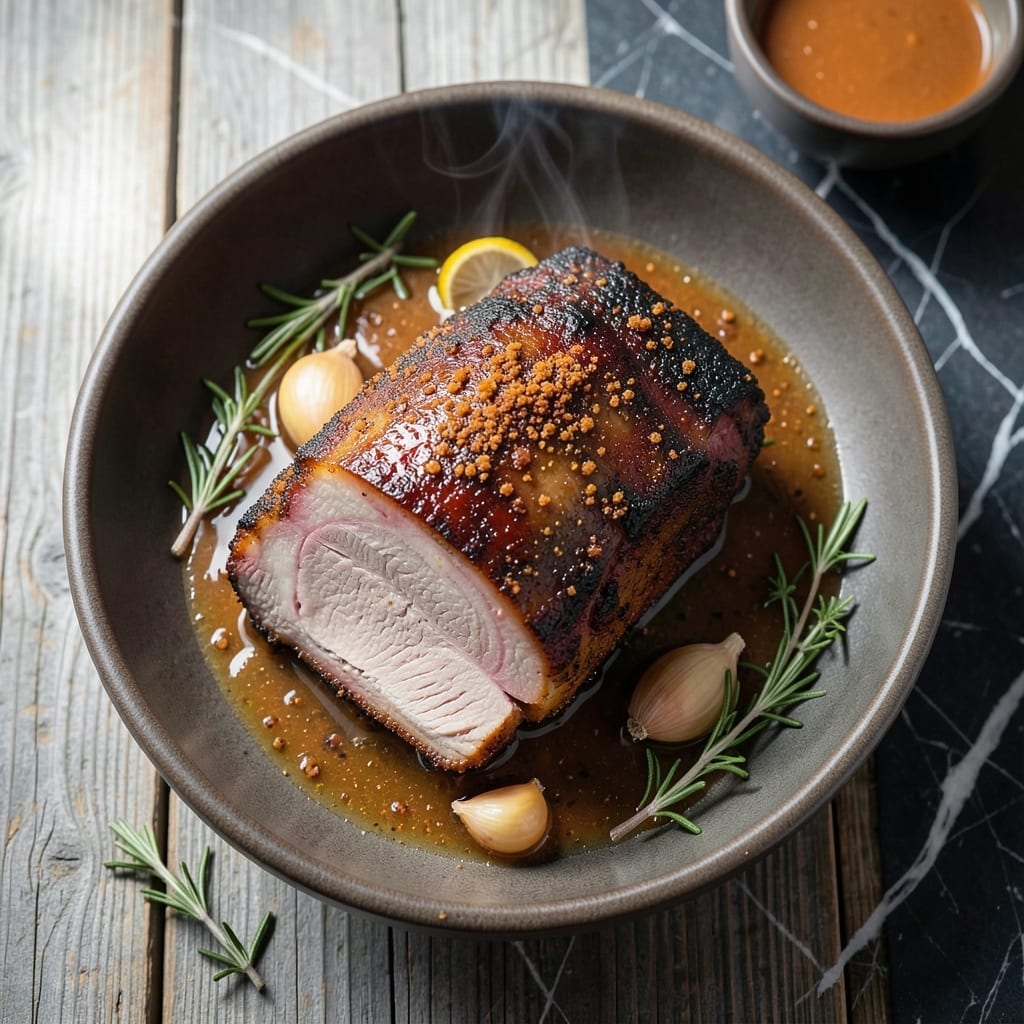
There’s nothing like the rich, smoky aroma of pork shoulder slow-cooked on a Traeger. This method transforms a tough cut into tender, fall-off-the-bone perfection with minimal effort.
I’ve tested various wood pellets and seasoning blends, but the real secret is patience. Low and slow at 225°F for 10-12 hours allows the collagen to break down completely.
The bark develops a deep mahogany color while the inside becomes so tender it nearly melts. A simple dry rub of salt, pepper, and brown sugar enhances the natural pork flavor without overpowering it.
Serve pulled on buns with tangy BBQ sauce or as a hearty main dish with classic sides. The results speak for themselves.
Ingredients for Pork Shoulder Smoker Recipe Traeger
Simple dry rub plus pork shoulder equals smoky perfection on your Traeger.
| Ingredient | Amount | Notes |
|---|---|---|
| Pork Shoulder 🐖 | 4 lb | Bone-in preferred for flavor |
| Brown Sugar 🍚 | ½ cup | Light or dark variety |
| Kosher Salt 🧂 | 2 tbsp | Diamond Crystal preferred |
| Black Pepper 🌶️ | 1 tbsp | Coarsely ground for texture |
| Paprika 🌶️ | 1 tbsp | Sweet or smoked variety |
| Garlic Powder 🧄 | 1 tbsp | Not garlic salt |
| Onion Powder 🧅 | 1 tbsp | Fine grind preferred |
| Mustard Powder 🟡 | 1 tsp | Optional for tang |
| Cayenne Pepper 🔥 | ½ tsp | Adjust for heat preference |
| Apple Cider Vinegar 🍏 | ¼ cup | For spritzing during cook |
| BBQ Sauce 🍯 | 1 cup | For serving or final glaze |
| Hickory Wood Pellets 🪵 | 20 lb | For Traeger smoker fuel |
| Apple Juice 🍎 | 1 cup | For moisture in pan |
| Yellow Mustard 🟡 | ¼ cup | Binder for dry rub |
[recipe_ingredient_scaler]
The pork shoulder is everything here. Bone-in gives better flavor and moisture, but boneless works in a pinch. Look for good marbling—this fat renders down during the long cook. Costco has excellent pork butts at a great price, or ask your butcher for a Boston butt cut. Aim for 4-5 lbs total for leftovers (you’ll want them).
No apple cider vinegar? White vinegar with a teaspoon of sugar gets you close. Swap hickory pellets for cherry or pecan if you want a sweeter smoke profile. The BBQ sauce can be store-bought (Stubb’s or Sweet Baby Ray’s are solid), but homemade takes it over the top. Mustard powder adds depth, but skip it if you don’t have it—the rub still works.
The cooked pork keeps beautifully. Shredded and mixed with juices, it stays moist for 4-5 days in the fridge or 3 months frozen. Reheat gently in a pan with a splash of apple juice to keep it from drying out. Always rest the meat 1 hour before pulling—don’t rush this part.
Why You’ll Love This Recipe
- Set It and Forget: I toss the pork shoulder in the Traeger with just brown sugar, salt, pepper, and paprika, then let the smoker do all the work for hours.
- Smoky Sweet Crust: That dark, caramelized bark from the brown sugar and spices? It’s the first thing everyone reaches for.
- Feeds a Hungry Crowd: One pork shoulder means leftovers for sandwiches, tacos, or chili—no waste, just easy meals all week.
- Budget-Friendly Feast: Pork shoulder is cheap, and a single cut turns into pounds of ridiculously tender, flavorful meat.
Step-by-Step Instructions for Smoked Pork Shoulder
Here’s the method. Straightforward, tested, works every time.
Step 1: Prepare and Season the Pork Shoulder
Pat the 4 lb Pork Shoulder dry with paper towels to ensure the rub adheres properly. In a bowl, mix 0.5 cup Brown Sugar, 2 tbsp Kosher Salt, 1 tbsp Black Pepper, 1 tbsp Paprika, 1 tbsp Garlic Powder, 1 tbsp Onion Powder, 1 tsp Mustard Powder, and 0.5 tsp Cayenne Pepper until well combined.
Rub the 0.25 cup Yellow Mustard all over the pork shoulder first—this acts as a binder for the dry rub. Then generously coat the pork with the spice mixture, pressing it into the meat to create a flavorful crust. Let it sit at room temperature for 30 minutes while you prepare the smoker.
Step 2: Set Up Your Traeger Smoker
Fill the hopper with 20 lb Hickory Wood Pellets and preheat your Traeger smoker to 225°F. This low-and-slow temperature ensures the pork cooks evenly and absorbs maximum smoke flavor.
Place a disposable aluminum pan on the grill grates and pour in 1 cup Apple Juice. This adds moisture to the cooking environment, which helps keep the pork tender during the long cook. Position the pan on the opposite side of the grill from where you’ll place the pork.
Step 3: Smoke the Pork Shoulder to Perfection
Once the smoker is fully preheated, place the pork shoulder directly on the grill grates, fat-side up. Insert a meat probe into the thickest part of the pork, avoiding the bone. Smoke undisturbed for 6-8 hours, or until the internal temperature reaches 165°F.
Every 2 hours, spritz the pork with 0.25 cup Apple Cider Vinegar to keep the surface moist and build a flavorful bark. Avoid opening the smoker unnecessarily—each time you do, it extends the cooking time.
Step 4: Wrap and Finish the Cook
When the pork reaches 165°F, it will enter the stall—a phase where the temperature plateaus as moisture evaporates. At this point, wrap the pork tightly in pink butcher paper or aluminum foil to power through the stall. Return it to the smoker and continue cooking until the internal temperature reaches 203°F.
This final stretch usually takes another 2-3 hours. The pork is done when the probe slides in like butter, indicating the connective tissue has fully broken down into tender, fall-apart perfection.
Step 5: Rest and Serve
Remove the pork from the smoker and let it rest, wrapped, in a warm place for at least 1 hour. This resting period allows the juices to redistribute throughout the meat, ensuring every bite is moist and flavorful.
Unwrap the pork and shred it using two forks, discarding any large fat chunks. Toss the shredded pork with 1 cup BBQ Sauce or serve the sauce on the side for dipping. The result should be tender, smoky, and packed with the rich flavors of the dry rub and hickory smoke.
Pro Tips For Making Pork Shoulder Smoker Recipe Traeger
- Start Low and Slow: Set your Traeger to 225°F and resist the urge to rush—pork shoulder needs 8-10 hours at this temp to break down properly. I learned this the hard way after pulling tough meat off at 275°F.
- Trim the Fat Cap: Leave about 1/4 inch of fat on the pork shoulder for flavor, but trim any thick chunks—too much fat can block the rub from penetrating. Sounds tedious, but it actually changes the outcome.
- Skip the Water Pan: Traegers maintain moisture well, so a water pan just slows down the cook time. After trying both ways, I skip it now—your bark will thank you.
- Rest Under Foil: Once it hits 195°F internally, pull it, wrap it tight in foil, and let it rest for at least 30 minutes. My grandmother swore by this, and she was right: it keeps the juices from running all over the cutting board.
Wine and Beer Pairings for These Flavors
Bold Red Wines
For this rich, smoky dish, I love a bold Zinfandel—its jammy fruit and peppery notes complement the hickory smoke beautifully. Try a Ravenswood Old Vine from Lodi for a classic pairing. The wine’s acidity cuts through the fat, cleaning your palate between bites. 🍷
Malty Craft Beers
A robust porter or stout mirrors the deep, roasted flavors of the pork. Portland’s Deschutes Black Butte Porter is my go-to, with its chocolate and coffee undertones. The carbonation also helps refresh your mouth after each smoky bite.
Crisp Lager Options
If you prefer something lighter, a crisp pilsner works surprisingly well. The clean, slightly bitter finish of Breakside Pilsner balances the sweetness of the rub. Serve it ice-cold to contrast the warm, tender pork.
Fruity Whites
For white wine lovers, an off-dry Riesling from the Pacific Northwest offers a refreshing contrast. The Chateau Ste. Michelle Riesling has just enough sweetness to harmonize with the brown sugar in the rub. Its bright acidity is key.
Barbecue Classics
You can’t go wrong with a bourbon barrel-aged ale—the vanilla and oak notes echo the smokiness. Fremont Bourbon Barrel-Aged Dark Ale is a local favorite that enhances the dish’s complexity. The caramel malt profile ties everything together.
Nutrition Facts
Frequently Asked Questions
What’s the ideal temperature for smoking?
Maintain a steady 225°F throughout the cook. This low-and-slow approach ensures the collagen breaks down for tender results. Avoid temperature spikes above 250°F.
How long should the pork rest after smoking?
Let it rest for at least 1 hour wrapped in butcher paper. This allows juices to redistribute for maximum moisture in every bite.
Can I use a different wood pellet?
Cherry or pecan pellets add a sweeter smoke profile, while mesquite brings bold intensity. Hickory is classic, but experiment to match your taste.
Why did my pork stall at 165°F?
This is normal! The stall occurs as moisture evaporates. Wrap in foil or butcher paper to push through to 203°F. Patience is key.

Trained in classic French technique but raised on slow-cooked ribs and spicy rubs, she blends culinary skill with smoke and soul.
- Recipe for Fried Prawns Batter: Ultra-Crispy Golden Shell - October 3, 2026
- Indian Lamb Curry Recipe Pressure Cooker: Fragrant Spices in a Fraction of the Time - October 3, 2026
- Recipe for Oven Roasted: Golden Crisp Perfection Without the Fryer - October 3, 2026