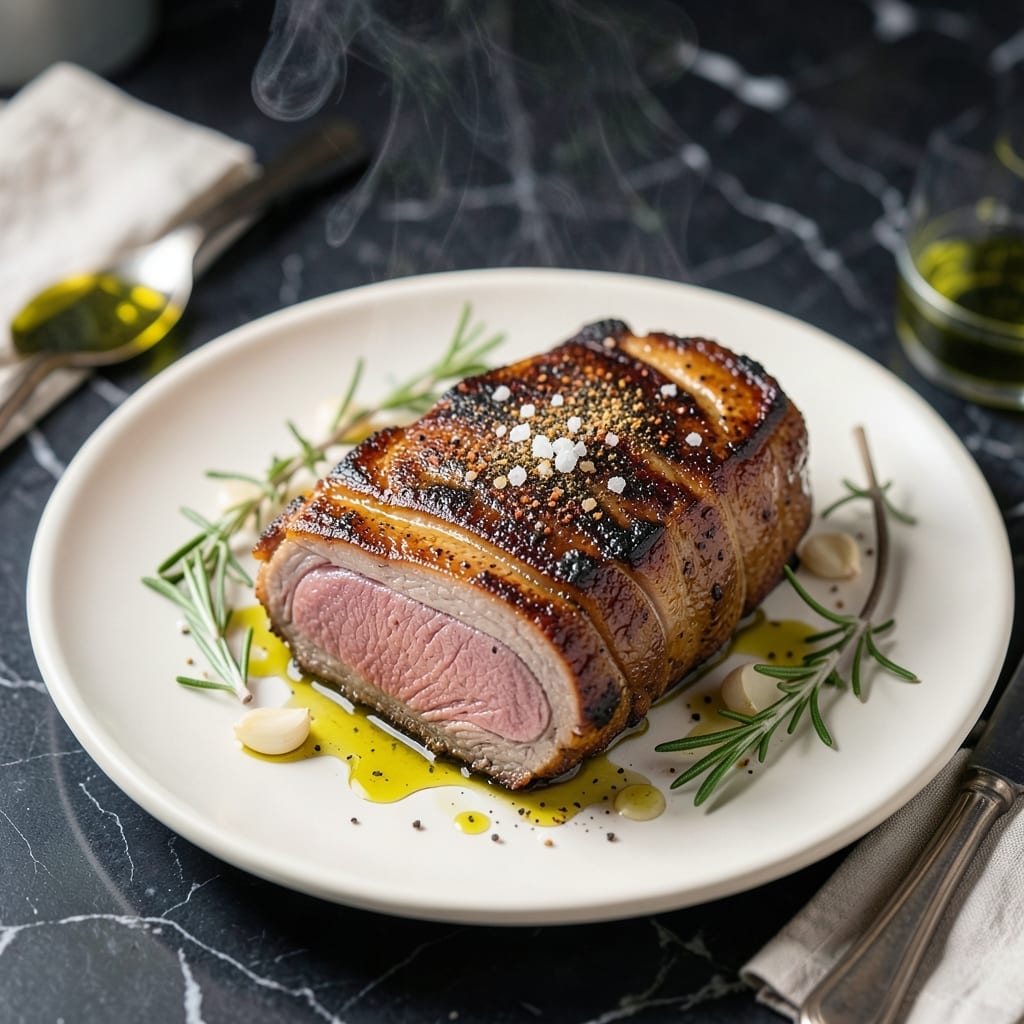
Pan-frying pork shoulder steak creates the perfect balance of crispy edges and juicy centers every time.
I developed this method after years of experimenting with heat levels and timing to ensure the meat stays tender while forming a golden crust. The key is patience—letting the steak cook undisturbed until it releases naturally from the pan.
This technique works with simple seasonings, transforming affordable cuts into restaurant-quality results. No fancy equipment needed, just a hot pan and a watchful eye.
The final dish delivers that ideal contrast: a caramelized exterior giving way to perfectly cooked, succulent meat inside.
Ingredients for Pork Shoulder Steak Recipe Pan Fry
Transform affordable pork shoulder into restaurant-quality results with these carefully selected ingredients.
| Ingredient | Amount | Notes |
|---|---|---|
| Pork Shoulder Steak 🥩 | 1 ½ lb | Bone-in, 1-inch thick preferred |
| Kosher Salt 🧂 | 1 ½ tsp | Diamond Crystal brand recommended |
| Freshly Ground Black Pepper 🌶️ | 1 tsp | Coarse grind preferred |
| Garlic Powder 🧄 | 1 tsp | Not garlic salt |
| Onion Powder 🧅 | 1 tsp | Fresh ground optimal |
| Smoked Paprika 🌶️ | 1 tsp | Sweet or hot variety |
| Dried Thyme 🌿 | ½ tsp | Rubbed between fingers to release oils |
| Olive Oil 🫒 | 2 tbsp | High smoke point, extra-virgin acceptable |
| Unsalted Butter 🧈 | 1 tbsp | For basting while cooking |
| Fresh Rosemary Sprigs 🌿 | 2 whole | Optional, for aromatic basting |
| Lemon Wedges 🍋 | 4 pieces | For serving |
[recipe_ingredient_scaler]
The pork shoulder steak quality is paramount. Bone-in cuts provide superior flavor and moisture retention, while a 1-inch thickness ensures even cooking without drying out. Source from Whole Foods or Costco for consistent marbling. Diamond Crystal kosher salt is the professional standard for its clean flavor and precise seasoning control. Always bring the meat to room temperature before cooking for optimal results.
Substitutions are minimal but effective. Pork butt steaks can replace shoulder if unavailable, though the texture differs slightly. If fresh rosemary isn’t accessible, dried rosemary at one-third the amount works. For a smokier profile, chipotle powder can replace smoked paprika. The basting butter can be omitted, but the flavor depth will be reduced. Always pat the steaks dry before seasoning.
Store pork shoulder steaks in the coldest part of the refrigerator for up to 3 days, or freeze for 6 months. The dry rub can be prepared in advance and stored in an airtight container for 2 weeks. Cooked steaks can be refrigerated for 4 days or frozen for 3 months, though they’re best served immediately after cooking.
Why You’ll Love This Recipe
- One Pan Magic: I love that I can sear the pork shoulder steak and have dinner ready in one pan—minimal cleanup, maximum flavor.
- Garlic-Pepper Perfection: That crust from the kosher salt, black pepper, and garlic powder? Ridiculously good with every bite.
- Feeds the Family: Honestly, it’s a hit with everyone—kids, adults, even my picky brother-in-law asks for seconds.
- Budget-Friendly Cut: Pork shoulder steak is affordable, and this method makes it taste like a million bucks.
Step-by-Step Instructions for Pork Shoulder Steak Pan Fry
Master these fundamental techniques to achieve perfectly seared, juicy steaks with minimal effort.
Step 1: Season and Prepare the Pork Shoulder Steak
Pat the 1.5 lb Pork Shoulder Steak thoroughly dry with paper towels to ensure optimal browning. I always press firmly to remove all surface moisture—this prevents steaming and promotes that coveted sear.
In a small bowl, combine the 1.5 tsp Kosher Salt, 1 tsp Freshly Ground Black Pepper, 1 tsp Garlic Powder, 1 tsp Onion Powder, 1 tsp Smoked Paprika, and 0.5 tsp Dried Thyme. Rub this mixture evenly over all surfaces of the steak, pressing gently to adhere. Let the seasoned steak rest at room temperature for 15-20 minutes.
This resting period allows the salt to begin penetrating the meat while the surface dries further, setting the stage for a perfect sear. The bone-in cut helps maintain even cooking and adds depth of flavor.
Step 2: Sear the Steak to Develop a Crust
Heat the 2 tbsp Olive Oil in a heavy skillet (cast iron works best) over medium-high heat until it shimmers but doesn’t smoke. Place the steak in the pan carefully—it should sizzle immediately upon contact.
Sear undisturbed for 4-5 minutes per side until a deep, golden-brown crust forms. Resist the urge to move it; the steak will release naturally when properly seared. For a 1-inch thick cut, this timing ensures a perfect crust without overcooking the interior.
Use tongs to turn the steak—never pierce it with a fork, as this releases precious juices. The edges should also develop a crispy sear; press them briefly against the pan if needed.
Step 3: Baste with Aromatics for Flavor Depth
Reduce heat to medium and add the 1 tbsp Unsalted Butter and 2 whole Fresh Rosemary Sprigs to the pan. Tilt the skillet slightly and use a spoon to baste the steak with the foaming butter and rosemary for 1-2 minutes.
This basting technique infuses the meat with aromatic compounds while adding a glossy finish. The rosemary releases its essential oils into the butter, creating a fragrant steam that enhances the steak’s natural flavors.
For bone-in cuts, pay special attention to basting around the bone area, where the meat tends to cook slightly faster. The internal temperature should reach 145°F for medium doneness.
Step 4: Rest and Serve with Lemon
Transfer the steak to a cutting board and let it rest uncovered for 5-10 minutes. This crucial step allows the muscle fibers to relax and redistribute their juices throughout the meat.
During resting, the internal temperature will rise by 5-10°F (carryover cooking). Tenting with foil isn’t necessary for this cut, as the thick crust helps retain heat. The juices should pool slightly on the cutting board—a sign of perfect doneness.
Slice against the grain and serve immediately with the 4 pieces Lemon Wedges on the side. The acidity from the lemon cuts through the richness of the pork, balancing each bite with bright, fresh notes.
Pro Tips For Making Pork Shoulder Steak Recipe Pan Fry
- Dry the Steak: Pat the pork shoulder steak completely dry with paper towels before seasoning—this guarantees a proper sear instead of steaming. I learned this the hard way after my first three attempts turned out gray and sad.
- Start Hot, Finish Low: Sear the steak over medium-high heat for 2-3 minutes per side, then drop to medium-low to cook through without burning the garlic and onion powder.
- Season Generously: Don’t be shy with the kosher salt—pork shoulder can handle it. I use about 1 teaspoon per side for a 1-inch thick steak, plus a heavy sprinkle of the pepper and powdered spices.
- Rest Before Serving: Let the steak rest for 5-10 minutes after cooking—this keeps the juices inside where they belong. Sounds weird, but it works: the meat stays moist and the flavors settle.
Regional Styles of This pork shoulder steak recipe pan fry
Southern Style
In the American South, we often add 1 tbsp brown sugar to the dry rub for a touch of sweetness that caramelizes beautifully in the pan. I also like to include ½ tsp cayenne pepper for a subtle kick. The sugar helps create an even deeper crust on the steak. 💛
Texas Twist
For a Lone Star approach, swap the smoked paprika for 1 tbsp chili powder and add ½ tsp ground cumin. This gives the pork a bold, smoky flavor that pairs perfectly with a side of pinto beans. The aroma while cooking is incredible.
Asian Fusion
I love adding 1 tbsp soy sauce and 1 tsp grated ginger to the seasoning mix for an umami-rich profile. Instead of rosemary, I’ll baste with 2 cloves minced garlic in the butter. Serve with steamed rice for a complete meal.
Mediterranean Approach
Replace the smoked paprika with 1 tsp dried oregano and add ½ tsp lemon zest to the rub. For basting, I use olive oil instead of butter and add 4 crushed garlic cloves. The bright flavors work wonderfully with the pork. ✨
Midwestern Comfort
In Ohio, we often keep it simple but hearty. I’ll add 1 tsp onion salt to the rub and serve the steak with mashed potatoes and green beans. The pan juices make an excellent gravy when deglazed with a bit of beef broth.
Pacific Northwest
Here in Portland, I’ll use fresh sage instead of rosemary for basting, and add 1 tsp maple syrup to the butter. The local flavors shine through, especially when paired with roasted root vegetables from the farmers market.
Nutrition Facts
Frequently Asked Questions
How thick should the steak be for best results?
Aim for 1-inch thick cuts. This ensures even cooking while developing a perfect crust without overcooking the center. Thinner steaks may dry out, while thicker ones need adjusted timing.
Can I use a non-stick pan instead of cast iron?
Yes, but cast iron gives better crust formation. If using non-stick, preheat well and avoid metal utensils. The sear may be less pronounced, but the meat will still cook properly.
When should I add the aromatics?
Add butter and rosemary during the last 1-2 minutes of cooking. This prevents burning while allowing the flavors to infuse. Baste continuously for best results.
Why does my steak stick to the pan?
It’s not ready to flip yet! The steak releases naturally when properly seared. Ensure your pan is hot enough and don’t move it prematurely. Patience is key.

Trained in classic French technique but raised on slow-cooked ribs and spicy rubs, she blends culinary skill with smoke and soul.
- Recipe for Boneless Pork Chops in Cast Iron Skillet: Sear and Baste to Juicy Perfection - October 3, 2026
- Recipe for Boneless Cross Rib Roast: Slow-Roasted Beef with Herb Crust - October 3, 2026
- Hamburgers in Sauce Recipe Crock Pot: Slow-Cooked Savory Delight - October 3, 2026