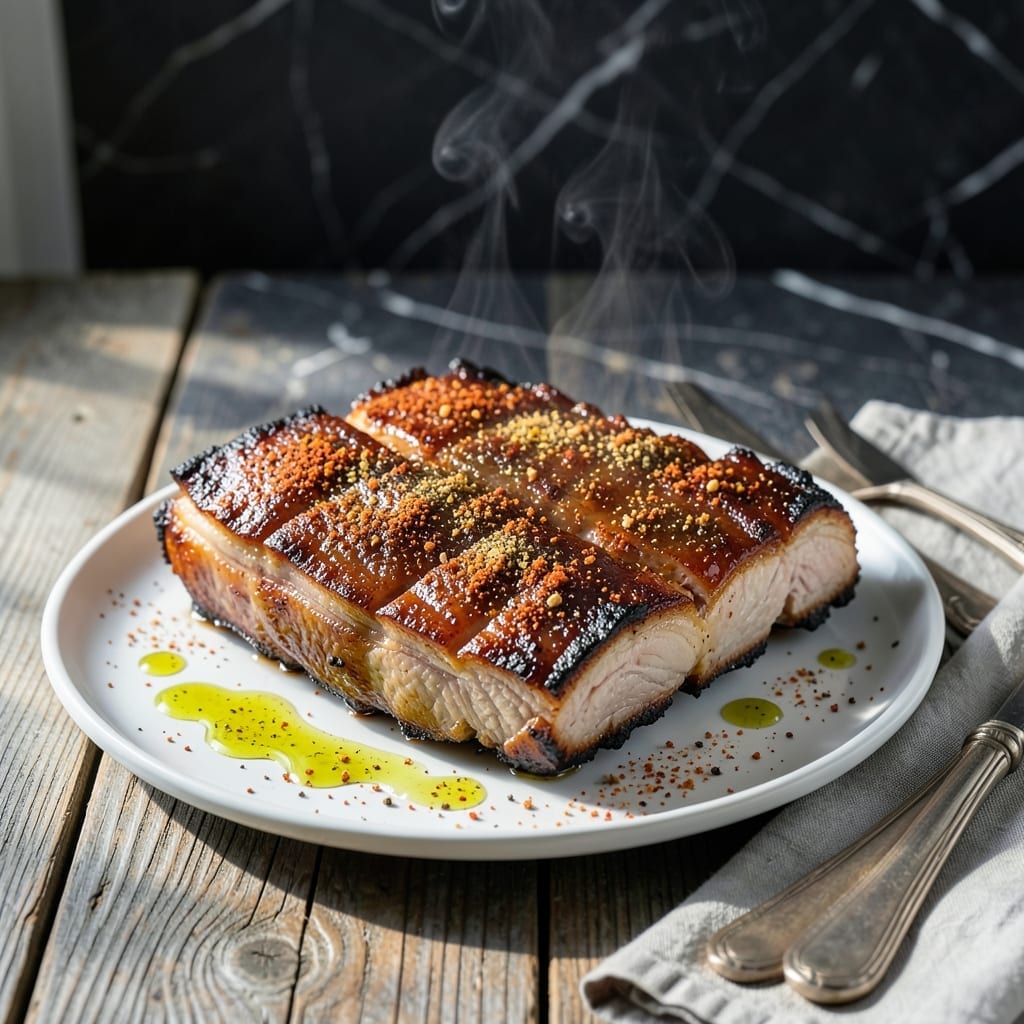
Achieving tender pork spare ribs in the oven requires patience and the right technique. This method delivers fall-off-the-bone results without a smoker.
Slow baking at low heat allows the connective tissue to break down, creating ribs that are juicy and infused with smoky flavor. The dry rub forms a delicious crust.
Ingredients for Pork Spare Rib Recipe Baked
A full rack of ribs and a bold dry rub create this oven-baked masterpiece.
| Ingredient | Amount | Notes |
|---|---|---|
| Pork Spare Ribs 🥩 | 3 lb | Full rack, membrane removed |
| Brown Sugar 🍚 | ½ cup | Light or dark variety |
| Paprika 🌶️ | 2 tbsp | Smoked paprika preferred |
| Garlic Powder 🧄 | 1 tbsp | Not garlic salt |
| Onion Powder 🧅 | 1 tbsp | Fresh ground preferred |
| Ground Black Pepper 🌶️ | 1 tbsp | Freshly ground for best flavor |
| Kosher Salt 🧂 | 1 tbsp | Diamond Crystal preferred |
| Chili Powder 🌶️ | 1 tsp | Adjust for heat preference |
| Ground Cumin 🌿 | 1 tsp | Toasted for deeper flavor |
| Cayenne Pepper 🔥 | ½ tsp | Optional for heat |
| Apple Cider Vinegar 💧 | ¼ cup | For dry rub moisture |
| Olive Oil 🫒 | 2 tbsp | For rib coating |
| Liquid Smoke 🔥 | 1 tsp | For authentic smoky flavor |
| Barbecue Sauce 🍯 | 1 cup | For finishing glaze |
[recipe_ingredient_scaler]
The pork spare ribs are the foundation—choose full racks with good marbling. Most butchers or Costco will sell them membrane-on, so you’ll need to remove it yourself (worth the extra minute). For the dry rub, smoked paprika delivers that authentic depth, but regular works if that’s what’s in your pantry. Quality matters here, so opt for freshly ground spices from a reputable brand like Penzeys.
No smoked paprika? Regular paprika plus a pinch of chipotle powder gets you close. Out of apple cider vinegar? White vinegar in a pinch, though the flavor will be sharper. For the liquid smoke, half a teaspoon is plenty—overdoing it can taste artificial. If you’re avoiding liquid smoke, a dash of Worcestershire sauce adds umami, though it’s not a perfect substitute.
The dry rub keeps in an airtight container for up to 3 months, but the ribs are best cooked fresh. Leftovers (if there are any) reheat beautifully in a 300°F oven for 15-20 minutes. Store cooked ribs in the fridge for up to 4 days or freeze for 3 months.
Why You’ll Love This Recipe
- Set It and Forget: I toss the ribs with the brown sugar and spices, pop them in the oven, and walk away for a couple hours.
- Smoky Sweet Crust: The paprika and brown sugar caramelize into this ridicously good, sticky glaze that clings to every bite.
- Feeds My Crew: One batch of these ribs satisfies my family of five with leftovers for sandwiches the next day.
- Budget Dinner Win: Pork spare ribs are cheaper than baby backs, and this recipe stretches them into a meal that feels special without the cost.
Step-by-Step Instructions for Oven-Baked Pork Spare Ribs
This method delivers fall-off-the-bone tenderness with minimal effort and maximum flavor.
Step 1: Prepare and Season the Ribs
Begin by patting the 3 lb Pork Spare Ribs completely dry with paper towels. This crucial step ensures the dry rub adheres properly and promotes even browning. Remove any remaining membrane from the bone side if not already done—slide a butter knife under it, lift, and pull it off with a paper towel for better grip.
In a bowl, combine the 0.5 cup Brown Sugar, 2 tbsp Paprika, 1 tbsp Garlic Powder, 1 tbsp Onion Powder, 1 tbsp Ground Black Pepper, 1 tbsp Kosher Salt, 1 tsp Chili Powder, 1 tsp Ground Cumin, and 0.5 tsp Cayenne Pepper. Rub this mixture evenly over all surfaces of the ribs, pressing it in firmly. Drizzle with the 0.25 cup Apple Cider Vinegar and 2 tbsp Olive Oil, then add the 1 tsp Liquid Smoke for that authentic smoky depth. Let the ribs marinate at room temperature for 30 minutes.
Step 2: Wrap and Slow-Bake for Tenderness
Preheat your oven to 275°F. This low temperature is key for breaking down the collagen in the ribs without drying them out. Tightly wrap the seasoned ribs in heavy-duty aluminum foil, creating a sealed packet. Place the packet on a rimmed baking sheet to catch any potential leaks.
Bake the ribs for 2.5 to 3 hours. This slow, gentle heat transforms the tough connective tissue into gelatin, resulting in ribs so tender they nearly slide off the bone. You’ll know they’re ready when the meat has pulled back from the ends of the bones by about ¼ inch and a knife inserts with little resistance.
Step 3: Finish with a Barbecue Glaze
Carefully remove the ribs from the foil packet—be cautious of the hot steam—and transfer them to a clean baking sheet. Increase the oven temperature to 400°F. Brush the ribs generously with half of the 1 cup Barbecue Sauce, coating all sides evenly.
Return the ribs to the oven and bake uncovered for 10-12 minutes, allowing the sauce to caramelize and create a sticky, glossy finish. Flip the ribs, brush with the remaining barbecue sauce, and bake for an additional 5-7 minutes until the sauce is bubbling and slightly charred at the edges. This final step adds the signature barbecue flavor and texture.
Step 4: Rest and Serve
Remove the ribs from the oven and let them rest for 10 minutes before cutting. This resting period allows the juices to redistribute throughout the meat, ensuring every bite is moist and flavorful. Tent them loosely with foil to keep warm if needed.
Slice the ribs between the bones and serve immediately. The meat should pull away cleanly from the bone with minimal effort, showcasing the perfect tenderness achieved through this low-and-slow method. Any leftover pan juices make an excellent dipping sauce.
Pro Tips For Making Pork Spare Rib Recipe Baked
- Start Low and Slow: Bake at 275°F for the first 2-3 hours—this renders the fat and tenderizes the ribs without drying them out. I learned this the hard way after my first batch came out tough as boots.
- Pat Ribs Dry: Before rubbing with brown sugar and spices, blot the ribs with paper towels. Sounds tedious, but it makes the dry rub stick better and gives you that coveted crust.
- Skip the Overcrowding: Give each rib space on the baking sheet, or they’ll steam instead of caramelize. After burning three batches, I finally figured out that less is more.
- Finish with a Broil: For the last 5 minutes, switch to broil to get that sticky, glossy glaze on the brown sugar. My grandmother swore by this, and she was right.
Creative Variations of This Recipe
Asian-Inspired Glaze
Swap the barbecue sauce for a mix of ½ cup hoisin, 2 tbsp soy sauce, 1 tbsp honey, and 1 tsp grated ginger. Brush this glaze during the final 10-12 minutes at 400°F. I love the sweet-savory depth it adds. 🌟
Dry Rub Variations
For a coffee rub, add 2 tbsp finely ground coffee to your existing dry rub mix. The earthy notes pair perfectly with pork. Alternatively, try a Cajun twist with 1 tbsp thyme and 1 tsp oregano.
Honey-Glazed Finish
Combine ¼ cup honey and 1 tbsp Dijon mustard for the final glaze. Brush it on during the last 10 minutes of baking. The result is sticky, caramelized ribs with a subtle tang.
Spicy Chipotle Style
Add 1 tbsp chipotle powder and 1 tsp adobo sauce to your dry rub for heat. Then use a chipotle-infused barbecue sauce for glazing. This variation packs serious smoky heat. 🔥
Herb-Crusted Ribs
Press a mix of 2 tbsp fresh rosemary and 2 tbsp fresh thyme into the ribs before the final bake. The herbs create a fragrant crust that complements the smoky flavor.
Apple Cider Glaze
Simmer 1 cup apple cider with 2 tbsp brown sugar until reduced by half. Use this instead of barbecue sauce for a sweet, tangy finish that enhances the apple cider vinegar in the rub.
Nutrition Facts
Frequently Asked Questions
Do I need to remove the membrane from the ribs?
Yes, always remove the membrane for the best texture. Slide a butter knife under it, lift, and pull it off with a paper towel for grip. This lets the rub penetrate fully.
Can I use baby back ribs instead of spare ribs?
Yes, but reduce the cooking time. Baby backs are smaller and cook faster—check for doneness at 2 to 2.5 hours instead of 3 hours.
Why is my rub falling off during baking?
Pat the ribs completely dry before applying the rub, and press it in firmly. Adding 2 tbsp olive oil helps the dry rub adhere better during cooking.
How do I know when the ribs are done?
The meat should pull back from the bones by about ¼ inch. Test with a knife—it should slide in with little resistance.

Trained in classic French technique but raised on slow-cooked ribs and spicy rubs, she blends culinary skill with smoke and soul.
- Recipe for Boneless Pork Chops in Cast Iron Skillet: Sear and Baste to Juicy Perfection - October 3, 2026
- Recipe for Boneless Cross Rib Roast: Slow-Roasted Beef with Herb Crust - October 3, 2026
- Hamburgers in Sauce Recipe Crock Pot: Slow-Cooked Savory Delight - October 3, 2026