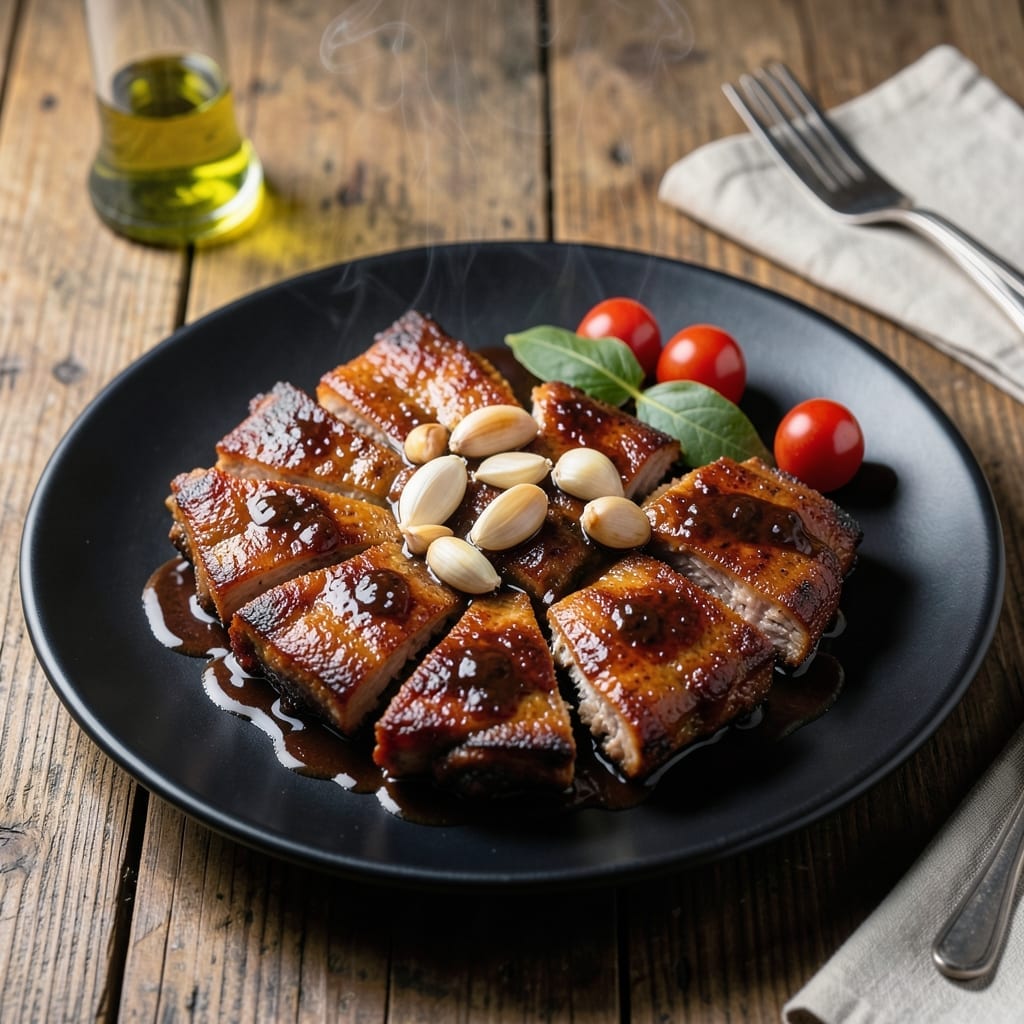
This Filipino adobo delivers the tender results that define authentic pork spare ribs. My years at The Smoky Pig taught me the importance of balance in vinegar-based braises.
The key is patience—letting the ribs simmer until they reach that perfect fall-off-the-bone texture. The vinegar and soy sauce create a tangy-savory sauce that penetrates every bite.
What emerges is meat so tender it nearly dissolves, with a rich, garlicky sauce that’s impossible to resist. This is comfort food at its most satisfying.
Serve with steamed rice to soak up every last drop of that incredible adobo sauce. The process is simple but the results are extraordinary.
Ingredients for Pork Spare Ribs Adobo Recipe Filipino
Rich, tangy, and deeply savory—these ribs transform pantry staples into something extraordinary.
| Ingredient | Amount | Notes |
|---|---|---|
| Pork Spare Ribs 🥩 | 2 ½ lb | Cut into individual ribs |
| Soy Sauce 🫒 | ¾ cup | Use low-sodium if preferred |
| White Vinegar 💧 | ¾ cup | Cane or distilled works |
| Garlic Cloves 🧄 | 10 cloves | Minced for maximum flavor |
| Bay Leaves 🍃 | 3 whole | Dried, for aromatic depth |
| Black Peppercorns 🌶️ | 1 tbsp | Whole, lightly crushed |
| Brown Sugar 🍚 | 2 tbsp | Balances the acidity |
| Water 💧 | 1 cup | To adjust sauce consistency |
| Vegetable Oil 🫒 | 2 tbsp | For searing ribs |
| Onion 🧅 | 1 whole | Sliced into rings |
| Salt 🧂 | 1 tsp | Adjust to taste |
| Green Onions 🧅 | 4 pieces | Chopped, for garnish |
[recipe_ingredient_scaler]
The ribs are everything here. Look for meaty spare ribs with good marbling at your butcher or Asian markets—they’re often cheaper and fresher than supermarket options. I learned at The Smoky Pig that bone-in ribs hold up better to long braising than boneless cuts. The vinegar matters too—cane vinegar is traditional, but any white vinegar (like Heinz) works in a pinch.
No spare ribs? Pork shoulder cut into chunks is the closest swap. Out of cane vinegar? Apple cider vinegar at a 1:1 ratio adds a nice fruitiness. The soy sauce can be tamari for gluten-free, but stick to low-sodium if you’re sensitive to salt. Fresh garlic is non-negotiable here—jarred minced lacks the punch this dish needs.
This tastes even better the next day once the flavors meld. Store in the fridge for up to 4 days or freeze for 3 months. The sauce thickens as it cools, so thin with a splash of water when reheating (worth the extra minute).
Why You’ll Love This Recipe
- One Pot Wonder: I just toss the ribs, soy sauce, vinegar, garlic, and bay leaves in a pot—no fancy techniques, no mess.
- Tangy Garlic Bomb: The soy and vinegar balance with garlic in a way that makes the ribs irresistibly savory and slightly tangy.
- Feeds a Crowd: I make a big batch for Sunday lunch, and it’s always a hit with family and friends.
- Better Next Day: Honestly, the flavors deepen overnight, so leftovers taste even richer the next day.
Step-by-Step Instructions for Pork Spare Ribs Adobo
Here’s the method. Tested, perfected, delivers that signature Filipino tangy-savory depth.
Step 1: Sear the Ribs for Deep Flavor
Heat the 2 tablespoons vegetable oil in a large pot over medium-high heat. When the oil shimmers, add the 2.5 lb pork spare ribs and sear for 3-4 minutes per side until golden brown. This creates a rich fond that will deepen the adobo sauce later.
I always work in batches to avoid crowding the pot—this ensures each rib gets proper contact with the hot surface. You’ll see the meat release easily from the pot when it’s ready to flip, a sign that perfect browning has occurred.
Step 2: Build the Aromatic Foundation
Add the sliced 1 whole onion to the pot and sauté for 2 minutes until slightly softened. Then stir in the 10 cloves garlic cloves, 3 whole bay leaves, and 1 tablespoon black peppercorns. Cook for 1 minute until the garlic becomes fragrant.
This aromatic base is crucial for authentic adobo flavor. The garlic should turn just golden at the edges—don’t let it brown or it will impart a bitter taste. The black peppercorns add subtle heat while the bay leaves contribute that signature earthy note.
Step 3: Braise in the Adobo Sauce
Pour in the 0.75 cup soy sauce, 0.75 cup white vinegar, 2 tablespoons brown sugar, 1 cup water, and 1 teaspoon salt. Stir to combine, making sure to scrape up all those delicious browned bits from the bottom of the pot.
Bring the mixture to a boil, then reduce heat to low, cover, and simmer for 1.5 to 2 hours. You’ll want to turn the ribs occasionally to ensure even cooking. The sauce should reduce slightly and the ribs should become fork-tender, nearly falling off the bone.
Step 4: Reduce the Sauce to Perfection
Once the ribs are tender, remove the lid and increase heat to medium. Let the sauce reduce for 10-15 minutes until it thickens slightly and coats the back of a spoon. This step intensifies the flavors and creates that glossy, clingy sauce characteristic of great adobo.
Taste and adjust seasoning if needed. The balance should be tangy from the vinegar, salty from the soy sauce, with a hint of sweetness from the brown sugar. The sauce should be rich but not overpowering.
Step 5: Garnish and Serve
Transfer the ribs to a serving dish and spoon the thickened sauce over them. Sprinkle with the 4 pieces green onions for a fresh, vibrant finish. The contrast of the bright green against the deep brown sauce is as pleasing to the eye as it is to the palate.
Let the ribs rest for 5 minutes before serving. This allows the flavors to meld and the sauce to thicken slightly more. Serve with steamed rice to soak up every last bit of that incredible adobo sauce.
Pro Tips For Making Pork Spare Ribs Adobo Recipe Filipino
- Sear the Ribs First: Brown the spare ribs in the pot before adding liquids—I learned this the hard way after my first few batches tasted flat. That caramelized crust adds depth the sauce can’t.
- Balance the Vinegar: Use equal parts soy sauce and white vinegar, but taste as you go. After ruining a batch with too much acid, I now add vinegar in stages.
- Don’t Boil Vigorous: Keep the simmer gentle once the vinegar goes in, or the ribs will turn tough. A slow bubble lets the flavors meld without drying out the meat.
- Crush the Garlic: Smash the garlic cloves lightly before adding them whole—it releases more flavor without the risk of burning. My grandmother swore by this, and she was right.
Health Benefits of This Dish
Protein Powerhouse
Pork spare ribs are an excellent source of high-quality protein, with each serving providing about 25-30 grams. This supports muscle maintenance and repair—something I appreciate after long days at The Smoky Pig. The slow braising process helps break down collagen, making the protein more bioavailable. 💪
Rich in B Vitamins
This dish delivers a solid dose of B vitamins, particularly B12 and B6, which are essential for energy metabolism and nervous system health. Pork is one of the best sources of thiamine (B1), which helps convert food into energy. A 3-ounce serving covers a significant portion of your daily needs.
Essential Minerals
The ribs provide iron and zinc, minerals that play vital roles in immune function and oxygen transport. The vinegar in adobo actually enhances iron absorption, making this dish more nutritious than you might expect. I always feel energized after a good adobo meal.
Bone Health Boost
Pork spare ribs contain phosphorus and calcium, both crucial for maintaining strong bones and teeth. The long cooking time helps release these minerals from the bones into the sauce. It’s a comforting thought that this dish contributes to overall skeletal health. 🥗
Metabolism Support
The garlic in this recipe isn’t just for flavor—it contains allicin, a compound known for its metabolism-boosting properties. Combined with the protein from the pork, this dish helps maintain steady energy levels throughout the day. The balance of nutrients keeps you satisfied for hours.
Nutrition Facts
Frequently Asked Questions
What’s the best vinegar for adobo?
Cane vinegar is traditional for authentic flavor. White vinegar works too, but avoid balsamic—it’s too sweet. The acidity balance is key.
Can I use a slow cooker?
Yes! Sear ribs first, then cook on low for 6-8 hours or high for 4 hours. The sauce may need reducing afterward.
Why are my ribs tough?
They likely need more time. Simmer until fork-tender, about 1.5-2 hours. Don’t rush—patience rewards with fall-off-the-bone texture.
How do I store leftovers?
Keep in an airtight container in the fridge for up to 4 days. The flavors deepen overnight!

Trained in classic French technique but raised on slow-cooked ribs and spicy rubs, she blends culinary skill with smoke and soul.
- Recipe For Fried Salmon Patties With Flour: Crispy Golden Crust With Flaky Centers - October 3, 2026
- Meat and Potato Recipe Ideas: Savory Pairings for Hearty Meals - October 3, 2026
- Recipe for Fried Prawns Batter: Ultra-Crispy Golden Shell - October 3, 2026