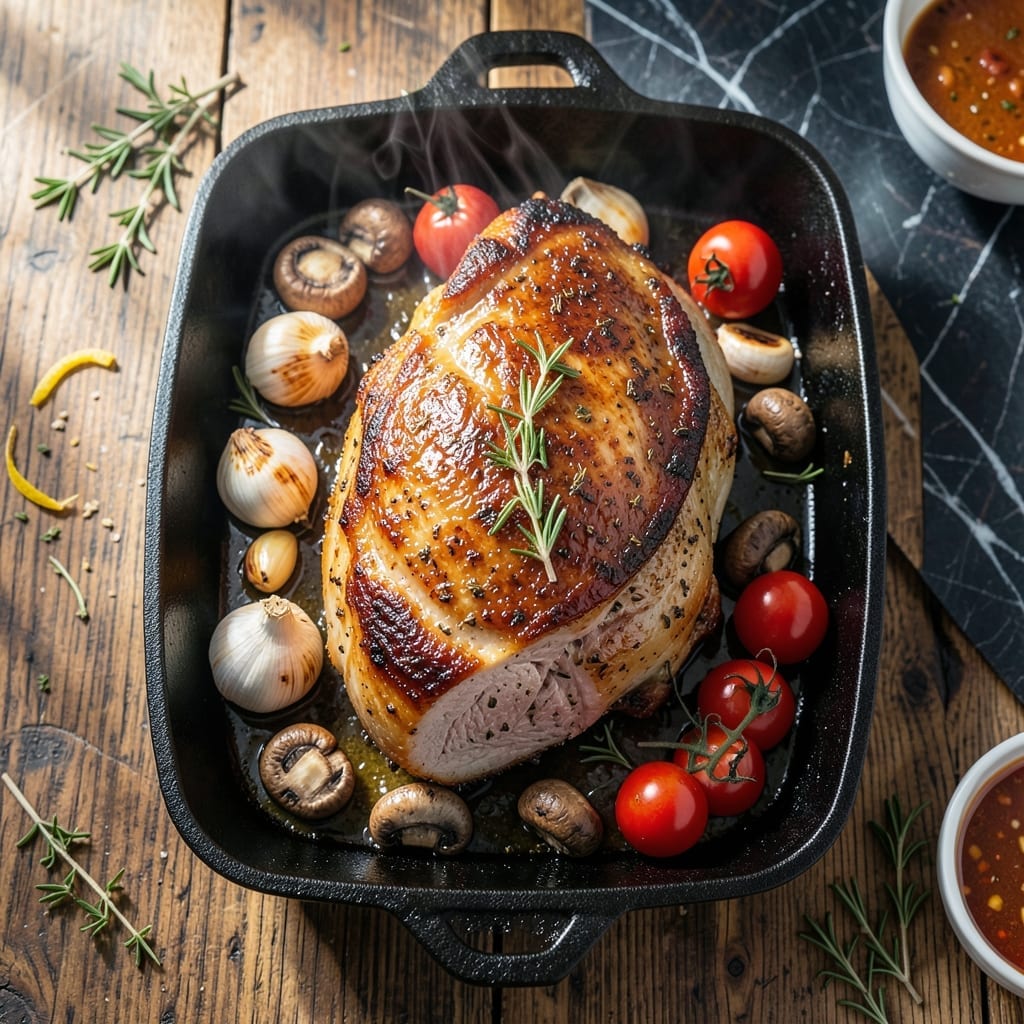
This pork shoulder blade roast transforms a humble cut into a restaurant-quality centerpiece with minimal effort. The oven does most of the work, slowly coaxing out rich, juicy flavors while creating a caramelized crust that crackles with every slice.
I rely on a simple herb rub and precise oven temperature to ensure the meat stays tender throughout the long cook. The natural marbling in the shoulder bastes the roast from within, eliminating the need for constant attention.
The result is fall-apart pork with a deep, savory crust and juices that pool on your plate. It’s the kind of dish that makes weeknight dinners feel like a special occasion.
Serve it with roasted vegetables or mashed potatoes to soak up every last drop of flavor. The leftovers, if there are any, make incredible sandwiches.
Ingredients for Pork Shoulder Blade Roast Recipe Oven
Transform a humble cut with these pantry staples and fresh herbs for restaurant-quality results.
| Ingredient | Amount | Notes |
|---|---|---|
| Pork Shoulder Blade Roast 🥩 | 3 lb | Bone-in preferred for flavor |
| Kosher Salt 🧂 | 1 ½ tbsp | Diamond Crystal preferred |
| Black Pepper 🌶️ | 1 tbsp | Freshly ground coarse |
| Garlic Cloves 🧄 | 6 cloves | Minced for rub |
| Fresh Rosemary 🌿 | 2 tbsp | Finely chopped stems discarded |
| Fresh Thyme 🍃 | 2 tbsp | Leaves only no stems |
| Olive Oil 🫒 | 2 tbsp | Extra-virgin for richness |
| Dijon Mustard 🟡 | 2 tbsp | Smooth variety preferred |
| Brown Sugar 🍚 | 1 tbsp | Light or dark works |
| Smoked Paprika 🌶️ | 1 tsp | Adds depth to crust |
| Onion Powder 🧅 | 1 tsp | Enhances savory notes |
| Red Wine 🍷 | ½ cup | Dry bold variety |
| Low-Sodium Chicken Broth 🥣 | ½ cup | For braising liquid |
[recipe_ingredient_scaler]
The pork shoulder is everything here. Bone-in gives you that extra depth of flavor, and look for good marbling—it’s what keeps the meat juicy through the long cook. I grab mine from Costco when they have the big packs (freeze what you don’t use), but any grocery store butcher counter will have it. Ask them to leave the fat cap on—it renders down into pure deliciousness.
No fresh rosemary or thyme? Dried works at one-third the amount, but fresh really shines here. Out of Dijon? Whole-grain mustard adds a nice texture, or regular yellow in a pinch. The red wine can be swapped for apple cider or extra broth—just add a splash of balsamic for acidity. Don’t skip the brown sugar though (it’s what gives that caramelized crust).
The roast can sit in the rub overnight—actually improves the flavor. Leftovers? They’re even better the next day. Store in the fridge for up to 4 days or freeze for 3 months (sliced portions thaw faster).
Why You’ll Love This Recipe
- Set It and Forget: I rub the pork with salt, pepper, garlic, and rosemary, pop it in the oven, and let it do its thing for hours.
- Fallback Herb Magic: That fresh rosemary and garlic crust? Ridiculously good with every juicy bite.
- Feeds My Crew: One roast, and I’ve got Sunday dinner plus Monday’s sandwiches covered.
- Budget Hero: Pork shoulder blade is cheap, and it turns into something my family thinks came from a fancy restaurant.
Step-by-Step Instructions for Pork Shoulder Blade Roast Oven
Here’s the method. Simple, tested, and it works beautifully every single time.
Step 1: Create the Herb Crust
Start by combining the 1.5 tbsp Kosher Salt, 1 tbsp Black Pepper, 2 tbsp Fresh Rosemary, 2 tbsp Fresh Thyme, 1 tbsp Brown Sugar, 1 tsp Smoked Paprika, and 1 tsp Onion Powder in a small bowl. This blend creates a flavor-packed crust that will form a beautiful bark on the roast.
Pat the 3 lb Pork Shoulder Blade Roast completely dry with paper towels—this is crucial for the crust to adhere properly. Rub the 6 cloves Garlic Cloves (minced) all over the surface of the meat, pressing it into every nook and cranny. Then generously coat the roast with the herb mixture, pressing it in firmly so it sticks.
Step 2: Sear and Deglaze for Maximum Flavor
Heat the 2 tbsp Olive Oil in a large Dutch oven or heavy pot over medium-high heat. Once hot, sear the roast on all sides for about 2-3 minutes per side until deeply browned. You’re looking for a rich, golden crust—this adds incredible depth to the final dish.
Remove the roast and set it aside. Reduce the heat to medium, then pour in the 0.5 cup Red Wine to deglaze the pan, scraping up all those delicious browned bits with a wooden spoon. Add the 2 tbsp Dijon Mustard and stir to combine, then pour in the 0.5 cup Low-Sodium Chicken Broth to create the braising liquid.
Step 3: Braise in the Oven Until Fall-Apart Tender
Return the roast to the pot, spooning some of the liquid over the top. Cover the pot tightly with a lid and transfer it to a preheated 325°F oven. Braise for 2.5 to 3 hours, turning the roast halfway through the cooking time.
You’ll know it’s done when the meat pulls apart easily with a fork and the internal temperature reaches 195-200°F. The liquid should be bubbling gently, and the aroma filling your kitchen will be absolutely intoxicating. If the braising liquid reduces too much, add a splash more Low-Sodium Chicken Broth to keep it from drying out.
Step 4: Rest and Serve
Carefully transfer the roast to a cutting board and tent loosely with foil. Let it rest for 15-20 minutes before slicing or pulling apart—this allows the juices to redistribute, ensuring every bite is moist and flavorful.
While the pork rests, skim any excess fat from the braising liquid. You can reduce it further on the stovetop if you prefer a thicker sauce, or serve it as-is for a lighter, broth-like consistency. Slice or shred the pork and serve it with the pan juices spooned over the top for maximum flavor.
Pro Tips For Making Pork Shoulder Blade Roast Recipe Oven
- Start Low and Slow: Set your oven to 275°F and give it 3-4 hours—this cut needs time to break down properly. I learned this the hard way after pulling it out too early and ending up with chewy meat.
- Score the Fat Cap: Cut a crosshatch pattern into the fat cap before seasoning so the salt, pepper, and rosemary really penetrate. Sounds weird, but it works: the flavor goes deeper than just the surface.
- Don’t Skip the Rest: Let the roast rest under foil for at least 20 minutes after pulling it from the oven. My grandmother swore by this, and she was right: it keeps all the juices inside where they belong.
- Use a Meat Thermometer: Pull it at 195°F internal temp—this is the sweet spot for tender, pull-apart pork. After burning three batches by guessing, I finally figured out that visual cues just aren’t reliable.
Health Benefits of These Flavors
Protein Powerhouse
This creation packs a serious protein punch with about 50 grams per serving from the pork shoulder. Protein is essential for muscle repair and growth, keeping you full and energized. I love that this dish delivers such a substantial amount without any fancy ingredients. 💪
Rich in B Vitamins
Pork is an excellent source of B vitamins, particularly B1 and B6, which support metabolism and brain function. A 3-ounce serving provides a significant portion of your daily B vitamin needs, helping your body convert food into energy efficiently.
Iron Boost
The pork shoulder in this recipe offers heme iron, which your body absorbs more easily than plant-based iron. This is especially beneficial for maintaining healthy blood and preventing fatigue. I notice I feel more energized when I include iron-rich meals like this in my diet.
Zinc for Immunity
Pork is a fantastic source of zinc, with a single serving providing about 25% of your daily value. Zinc plays a crucial role in immune function and wound healing, making this dish a great choice for supporting your overall health. 💛
Healthy Fats
While pork shoulder does contain fat, much of it is monounsaturated and polyunsaturated fats—the heart-healthy kinds. The marbling in the shoulder renders down during cooking, infusing the meat with rich flavor and juiciness.
Low-Carb Option
This dish is naturally low in carbs, making it a great choice for those watching their carbohydrate intake. The herbs and spices add plenty of flavor without adding significant carbs, so you can enjoy a hearty meal without the guilt.
Nutrition Facts
Frequently Asked Questions
What oven temperature works best?
Use 325°F for slow, even cooking that renders the fat and keeps the meat tender. This lower temperature prevents drying out while creating a perfect crust.
How do I know when it’s done?
The pork is ready when it reaches an internal temperature of 195-200°F. It should pull apart easily with a fork and have a rich, caramelized exterior.
Can I use a bone-in or boneless cut?
Bone-in is preferred for extra flavor, but boneless works too. Adjust cooking time slightly as boneless may finish 15-20 minutes faster.
What if my roast dries out?
Add a splash of broth or water to the pan if the liquid reduces too much. Cover tightly to trap moisture and prevent dryness during the long cook.

Trained in classic French technique but raised on slow-cooked ribs and spicy rubs, she blends culinary skill with smoke and soul.
- Recipe for Boneless Pork Chops in Cast Iron Skillet: Sear and Baste to Juicy Perfection - October 3, 2026
- Recipe for Boneless Cross Rib Roast: Slow-Roasted Beef with Herb Crust - October 3, 2026
- Hamburgers in Sauce Recipe Crock Pot: Slow-Cooked Savory Delight - October 3, 2026