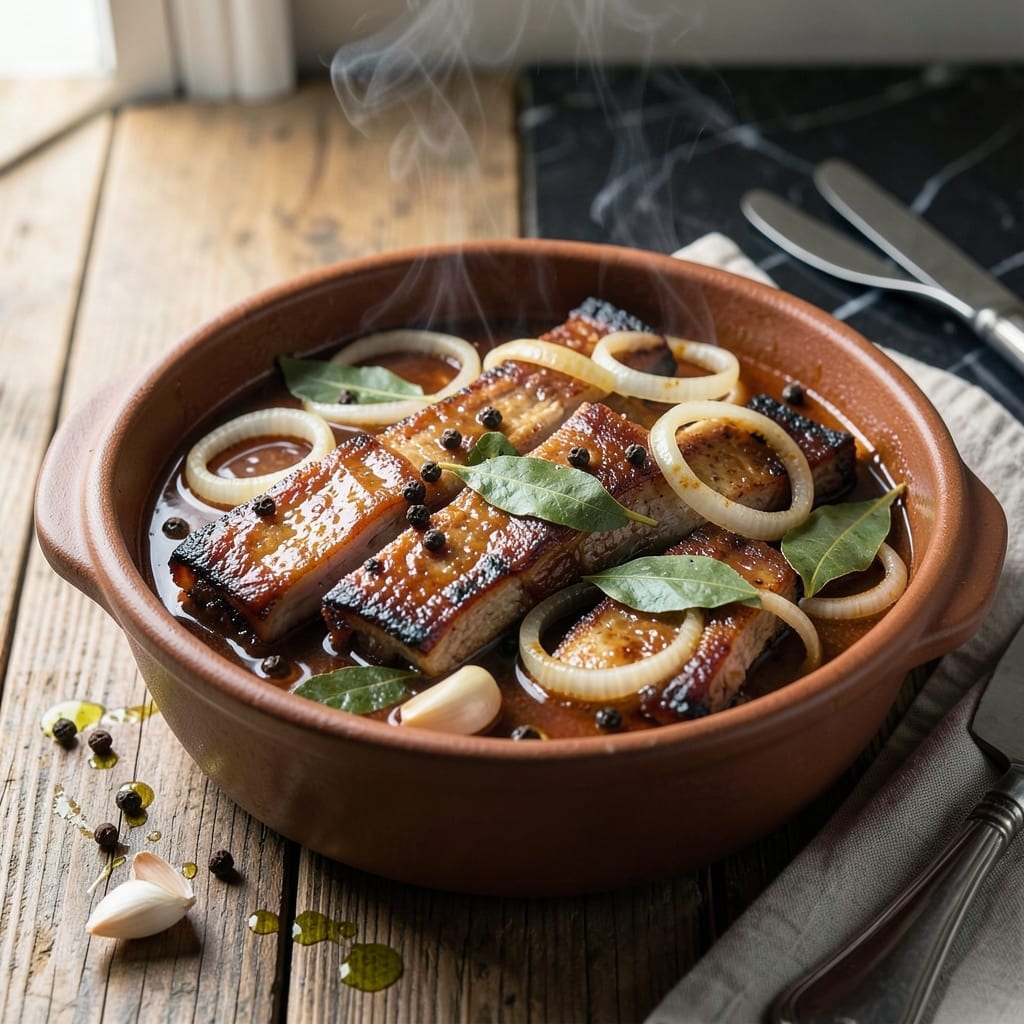
Few dishes capture Filipino comfort like pork spare ribs adobo, where vinegar and garlic work their magic. This Panlasang Pinoy classic transforms humble ingredients into something extraordinary through patient braising.
The key lies in the balance—tangy vinegar tenderizes the ribs while garlic and soy sauce build layers of savory depth. I’ve perfected this method over years, ensuring the ribs absorb every bit of flavor without becoming dry.
What emerges is fall-off-the-bone meat bathed in a rich, slightly tangy sauce that’s impossible to resist. The aroma alone will have everyone gathering around the table before the dish even hits the plates.
Serve with steamed rice to soak up every last drop of that unforgettable adobo sauce.
Ingredients for Pork Spare Ribs Adobo Recipe Panlasang Pinoy
These humble ingredients transform into a rich, tangy braise that defines Filipino comfort.
| Ingredient | Amount | Notes |
|---|---|---|
| Pork Spare Ribs 🥩 | 2 lb | Cut into individual ribs |
| White Vinegar 💧 | 1 cup | Cane or distilled preferred |
| Soy Sauce 🫒 | ½ cup | Filipino brand like Silver Swan |
| Garlic Cloves 🧄 | 12 cloves | Peeled and crushed |
| Bay Leaves 🍃 | 3 pieces | Dried, whole leaves |
| Black Peppercorns 🌶️ | 1 tsp | Whole, lightly crushed |
| Water 💧 | 1 cup | For braising liquid |
| Brown Sugar 🍚 | 2 tbsp | Optional for balancing acidity |
| Cooking Oil 🫒 | 2 tbsp | Neutral-flavored like vegetable oil |
| Onion 🧅 | 1 whole | Medium, sliced into rings |
| Salt 🧂 | 1 tsp | Adjust to taste after cooking |
[recipe_ingredient_scaler]
The ribs are everything here. Pork spare ribs have the perfect fat-to-meat ratio for this long braise. Look for well-marbled pieces at Asian markets or Costco—they’ll stay tender through the cooking. Filipino soy sauce (like Silver Swan) has a slightly sweeter profile that balances the vinegar’s tang. Don’t skip the whole peppercorns; their subtle heat builds depth over time.
No spare ribs? Pork belly slices work beautifully, though the texture differs. Out of Filipino soy sauce? Regular soy sauce plus a pinch of brown sugar gets you close. The vinegar must be white—cane or distilled—as apple cider or rice vinegar will alter the flavor. Bay leaves are non-negotiable for authenticity, but if you’re desperate, a dash of dried thyme can substitute in a pinch.
Adobo tastes even better the next day. Store in an airtight container in the fridge for up to 5 days, or freeze for 3 months. Reheat gently to let the flavors meld. The sauce thickens slightly upon cooling, making it perfect for drizzling over rice.
Why You’ll Love This Recipe
- One Pot Magic: I just toss the ribs, vinegar, soy sauce, garlic, and bay leaves in a pot and let it simmer—no fancy techniques needed.
- Tangy Perfection: The white vinegar and soy sauce balance each other so well, making the ribs ridiculously tender and flavorful.
- Weeknight Hero: I make a big batch on Sunday and it tastes even better reheated for lunch the next day.
- Budget Stretcher: Pork spare ribs are affordable, and this dish feeds my whole family without breaking the bank.
Step-by-Step Instructions for Pork Spare Ribs Adobo
Here is the tested method. Straightforward, traditional, and always delicious.
Step 1: Sear the Pork Spare Ribs
Heat a large pot over medium-high heat and add the 2 tbsp cooking oil. Once the oil shimmers, add the 2 lb pork spare ribs in a single layer. Sear undisturbed for 3-4 minutes until the meat develops a deep brown crust on one side.
Flip the ribs and sear the other side for another 3-4 minutes. This step builds a flavor foundation and ensures the meat doesn’t stick during braising. Remove the ribs and set aside, but leave the rendered fat in the pot.
Step 2: Sauté Aromatics and Toast Spices
In the same pot, add the 1 whole onion sliced into rings, the 12 cloves garlic cloves, 3 pieces bay leaves, and 1 tsp black peppercorns. Sauté over medium heat for 2-3 minutes until the onion softens and the garlic turns light golden brown.
Be careful not to burn the garlic—it should smell fragrant, not bitter. Stir in the 2 tbsp brown sugar and let it caramelize slightly for 30 seconds, creating a rich base for the sauce.
Step 3: Build the Braising Liquid
Pour in the 1 cup white vinegar, 0.5 cup soy sauce, 1 cup water, and 1 tsp salt. Stir well to combine, scraping up any browned bits from the bottom of the pot. These bits dissolve into the liquid, adding depth to the adobo sauce.
Return the seared pork spare ribs to the pot, ensuring they’re mostly submerged in the liquid. Bring the mixture to a gentle boil over medium-high heat.
Step 4: Braise Until Fork-Tender
Once boiling, reduce the heat to low to maintain a steady simmer. Cover the pot and let the ribs braise undisturbed for 1.5 to 2 hours, or until the meat is fork-tender and nearly falling off the bone.
Occasionally skim off any excess fat that rises to the surface. The sauce should thicken slightly as it reduces, coating the ribs in a glossy, tangy glaze. If the liquid reduces too quickly, add a splash of water to keep the ribs partially submerged.
Step 5: Reduce the Sauce and Serve
Once the ribs are tender, remove the lid and increase the heat to medium. Simmer uncovered for an additional 10-15 minutes to reduce the sauce to your desired consistency—it should cling to the ribs and have a balanced sweet-savory-tangy flavor.
Taste and adjust the seasoning with additional salt if needed. Serve the pork spare ribs hot with the thickened adobo sauce spooned over the top. This dish tastes even better the next day as the flavors meld further.
Pro Tips For Making Pork Spare Ribs Adobo Recipe Panlasang Pinoy
- Simmer Low and Slow: Keep the heat at a gentle simmer—after boiling the ribs, drop to low for 40-45 minutes. I learned this the hard way when my first batch came out tough because I rushed it at high heat.
- Balance the Vinegar: Use equal parts white vinegar and soy sauce, but taste before adding salt—soy sauce is already salty. My grandmother swore by this ratio, and she was right.
- Skip the Overcrowding: Don’t pack the pot with too many ribs at once; they should be in a single layer. After burning three batches, I finally figured out that crowding steams instead of browns.
- Rest Before Serving: Let the ribs sit in the sauce for 10 minutes off the heat after cooking. Sounds weird, but it lets the flavors sink in—I was skeptical until I tried it.
Best Sauces and Condiments for pork spare ribs adobo recipe panlasang pinoy
Classic Adobo Sauce
I love reducing the braising liquid into a thicker glaze to drizzle over the ribs. The sauce should cling to the meat, balancing tangy vinegar with savory soy. Add a splash of water if it reduces too quickly. 🔥
Garlic Chili Oil
A drizzle of homemade garlic chili oil adds heat and depth. Heat ½ cup neutral oil with 6 crushed garlic cloves and 1 tbsp chili flakes until fragrant. Strain and drizzle sparingly over the ribs before serving.
Pickled Vegetables
Serve with atchara (Filipino pickled papaya) or quick-pickled radishes and carrots. The acidity cuts through the richness. I like a 1:1 ratio of vinegar to water with 1 tbsp sugar and 1 tsp salt for the brine.
Spicy Vinegar Dip
Combine ¼ cup white vinegar with 1 minced garlic clove, 1 tsp soy sauce, and ½ tsp chili flakes. This dip enhances the adobo’s tangy notes. Serve in small bowls for dipping ribs or rice.
Coconut Milk Glaze
For a creamy twist, stir in ½ cup coconut milk during the final 10 minutes of cooking. This adds richness and mellows the vinegar’s sharpness. I learned this variation from a chef in Charleston—it’s a crowd-pleaser. ✨
Fresh Herb Garnish
Sprinkle with chopped scallions or cilantro just before serving. The freshness brightens the dish. I grow my own herbs, and this small touch makes all the difference.
Nutrition Facts
Frequently Asked Questions
Can I use a different type of vinegar?
Stick to white vinegar for authentic flavor. Apple cider or rice vinegar will change the taste profile significantly.
How do I know when the ribs are done?
They’re ready when the meat pulls away from the bone easily with a fork. This usually takes 1.5 to 2 hours of braising.
Can I make this in a slow cooker?
Yes! Sear the ribs first, then transfer everything to the slow cooker. Cook on low for 6-8 hours or high for 4 hours.
Why is my sauce too sour?
Balance the acidity with a touch of brown sugar or honey. Start with 1 tbsp and adjust to taste.

Trained in classic French technique but raised on slow-cooked ribs and spicy rubs, she blends culinary skill with smoke and soul.
- Recipe for Boneless Pork Chops in Cast Iron Skillet: Sear and Baste to Juicy Perfection - October 3, 2026
- Recipe for Boneless Cross Rib Roast: Slow-Roasted Beef with Herb Crust - October 3, 2026
- Hamburgers in Sauce Recipe Crock Pot: Slow-Cooked Savory Delight - October 3, 2026