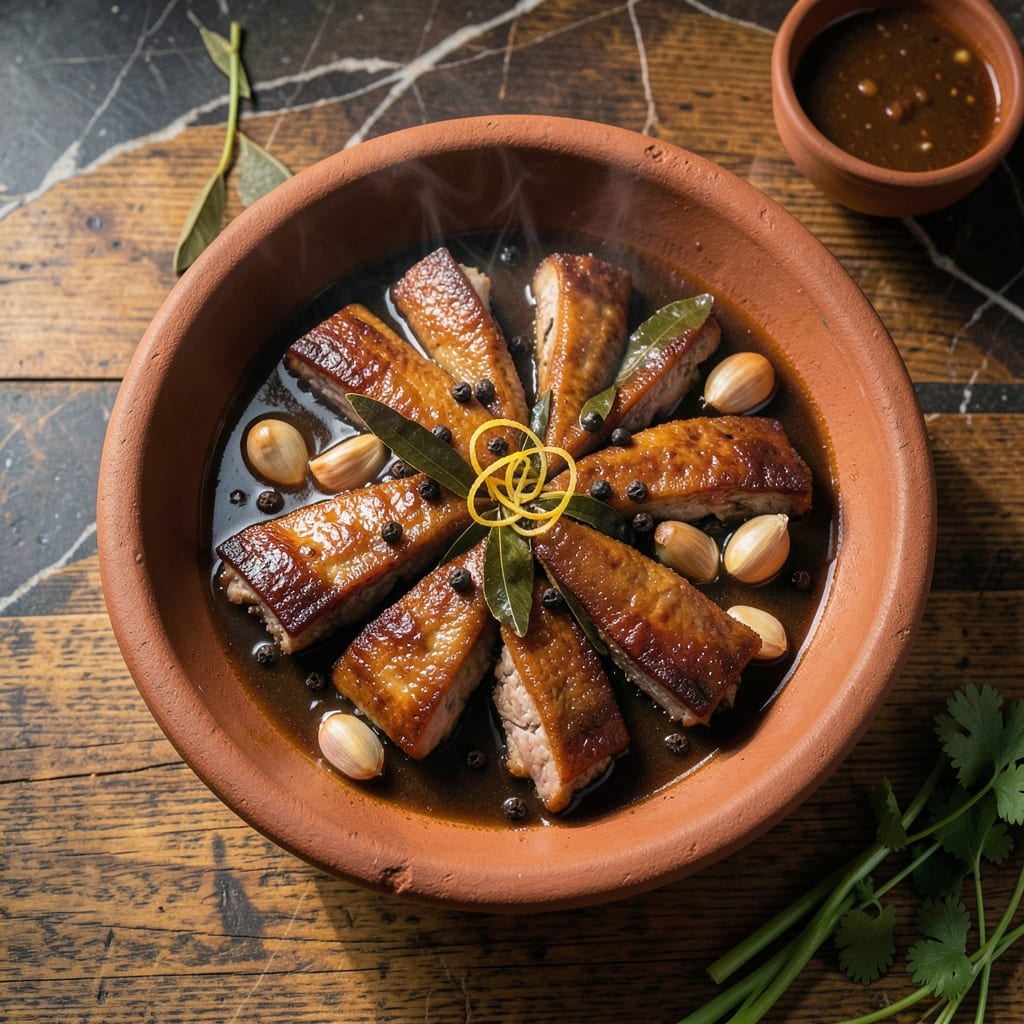
This Filipino-inspired pork spare ribs recipe brings bold adobo flavors to your table with minimal effort. I developed this method to replicate the tender, fall-off-the-bone texture my family expects from traditional Pinoy cooking.
The secret lies in a 24-hour marinade with vinegar, soy sauce, garlic, and black peppercorns. This not only infuses flavor but tenderizes the meat naturally. The ribs then braise slowly until they reach that perfect melt-in-your-mouth consistency.
What emerges is meat so tender it nearly dissolves, coated in a rich, tangy sauce that’s characteristic of Filipino adobo. The vinegar mellows during cooking, leaving just the right balance of salty, sour, and savory notes.
Serve with steamed rice to soak up every drop of the sauce. This dish proves that authentic Pinoy flavors are achievable in any home kitchen.
Ingredients for Pork Spare Ribs Recipe Pinoy
Classic Pinoy flavors start with these pantry staples and a long marinade.
| Ingredient | Amount | Notes |
|---|---|---|
| Pork Spare Ribs 🥩 | 2 ½ lb | Cut into individual ribs |
| White Vinegar 🍶 | 1 cup | Distilled or cane vinegar works |
| Soy Sauce 🫙 | ¾ cup | Use Filipino brands like Silver Swan |
| Garlic Cloves 🧄 | 12 cloves | Peeled and smashed |
| Black Peppercorns 🌶️ | 2 tsp | Whole, not ground |
| Bay Leaves 🍃 | 3 pieces | Dried or fresh |
| Brown Sugar 🍚 | 3 tbsp | Balances the acidity |
| Water 💧 | 1 ½ cups | For braising liquid |
| Onion 🧅 | 1 whole | Medium, sliced into rings |
| Vegetable Oil 🫒 | 2 tbsp | For searing ribs |
| Salt 🧂 | 1 tsp | Adjust to taste |
| Green Onions 🧅 | 4 whole | Chopped, for garnish |
[recipe_ingredient_scaler]
The ribs are the star—look for meaty spare ribs with good marbling at your butcher or Costco. Filipino soy sauce is slightly sweeter than regular, so Silver Swan or Datu Puti are ideal (find them at Asian markets or online). The black peppercorns should be whole for the marinade—they release flavor slowly. Don’t skip the 24-hour marinade; it’s what makes the meat so tender.
No Filipino soy sauce? Regular soy sauce plus a pinch of sugar works in a pinch. Out of black peppercorns? Substitute one-third the amount of ground black pepper. Vinegar is non-negotiable (it’s what makes it adobo), but apple cider vinegar can replace white vinegar. The brown sugar balances the tang—coconut sugar adds a nice depth if you have it.
Marinated ribs keep in the fridge for 2 days before cooking. Leftover adobo ribs taste even better the next day—reheat gently with a splash of water. The sauce thickens as it cools, so thin with water if needed. Always serve with steamed rice (it’s mandatory for soaking up that sauce).
Why You’ll Love This Recipe
- One Pot Wonder: I just toss the ribs with soy sauce, vinegar, garlic, and peppercorns, then let it simmer—hardly any prep or cleanup.
- Garlic Soy Magic: That tangy vinegar and rich soy sauce combination with garlic cloves makes every bite ridiculously good.
- Feeds the Gang: Honestly, it’s my go-to for big family dinners or when friends drop by unannounced.
- Budget Stretcher: Pork spare ribs are affordable, and this recipe makes them taste like a million bucks.
Step-by-Step Instructions for Adobo-Marinated Pork Spare Ribs
This method ensures tender, flavorful ribs with that signature Filipino adobo taste.
Step 1: Marinate the Pork Spare Ribs
In a large bowl, combine the 2.5 lb Pork Spare Ribs, 1 cup White Vinegar, 0.75 cup Soy Sauce, 12 cloves Garlic Cloves, 2 tsp Black Peppercorns, 3 pieces Bay Leaves, and 3 tbsp Brown Sugar. Mix well to coat the ribs evenly with the marinade.
Cover the bowl and refrigerate for at least 1 hour, but I recommend marinating overnight for the deepest flavor. The vinegar will tenderize the meat while the soy sauce infuses it with rich, savory notes. Stir the mixture once or twice during marinating to redistribute the flavors.
This step is crucial for achieving that authentic adobo taste—don’t skip it.
Step 2: Sear the Ribs for Added Flavor
Remove the ribs from the marinade, reserving the liquid, and pat them dry with paper towels. Heat 2 tbsp Vegetable Oil in a large pot or Dutch oven over medium-high heat.
Working in batches if necessary, sear the ribs on all sides for 2-3 minutes per side until they develop a golden-brown crust. This step locks in the juices and adds a layer of depth to the flavor.
Be careful not to overcrowd the pot—this can cause the ribs to steam instead of sear. Transfer the seared ribs to a plate and set aside.
Step 3: Braise the Ribs Until Tender
In the same pot, add the reserved marinade, 1.5 cups Water, 1 whole Onion (sliced into rings), and 1 tsp Salt. Bring the mixture to a boil, then reduce the heat to low.
Return the seared ribs to the pot, ensuring they are mostly submerged in the liquid. Cover and simmer for 1.5 to 2 hours, turning the ribs occasionally, until the meat is fall-off-the-bone tender and the sauce has thickened slightly.
Check the ribs periodically and add a little more water if the liquid reduces too much before the meat is tender.
Step 4: Garnish and Serve
Once the ribs are tender, remove them from the pot and arrange them on a serving platter. Spoon some of the braising liquid over the top to keep them moist and flavorful.
Garnish with the 4 whole Green Onions, chopped, for a fresh, vibrant finish. The green onions add a pop of color and a mild oniony bite that complements the rich, tangy adobo sauce perfectly.
Serve the ribs hot with steamed rice to soak up every last bit of the delicious sauce.
Pro Tips For Making Pork Spare Ribs Recipe Pinoy
- Boil First, Then Simmer: Parboil the ribs in water with a splash of vinegar for 10 minutes to remove impurities—I learned this the hard way after my first few batches turned out cloudy and bitter.
- Crush the Peppercorns: Lightly crush the black peppercorns before adding them; whole ones float and won’t infuse the sauce as well, and I skip this when I’m lazy, but the flavor is noticeably better when I don’t.
- Don’t Skip the Vinegar: Use ¼ cup white vinegar in the marinade—it tenderizes the meat and balances the soy sauce’s saltiness. Sounds weird, but it works.
- Low and Slow Wins: After the initial boil, let the ribs simmer in the soy-garlic sauce for at least 45 minutes on low heat. After burning three batches, I finally figured out that patience is the thing that matters most here.
Wine and Beer Pairings for pork spare ribs recipe pinoy
Filipino Beer Pairings
For an authentic Pinoy experience, pair these ribs with San Miguel Beer—its crisp, light lager profile cuts through the rich adobo sauce beautifully. The mild bitterness complements the dish’s tangy-savory balance without overpowering it. 🍺
Local Craft Options
If you’re in Boston like me, try Harpoon IPA for a bolder pairing. The citrusy hops contrast nicely with the vinegar notes in the adobo. For a darker option, Samuel Adams Porsche adds caramel undertones that work surprisingly well.
Wine Alternatives
white wine lovers should try a Riesling—its natural sweetness balances the adobo’s tang. I prefer a German Kabinett Riesling for its light body and bright acidity. Serve chilled for the best experience.
Non-Alcoholic Choices
For a non-alcoholic option, calamansi juice (Filipino lime) with soda water makes a refreshing pairing. Its citrusy zing mirrors the adobo’s acidity. I also enjoy iced tea with lemon for a simpler approach.
Serving Temperature
All beverages should be served ice-cold to contrast with the warm, rich ribs. I keep my beers in the freezer for 15-20 minutes before serving for that perfect chill. This temperature contrast elevates every bite. ✨
Nutrition Facts
Frequently Asked Questions
Can I use baby back ribs instead?
Yes, but expect shorter cooking time. Baby backs are leaner, so reduce braising to 1-1.5 hours to prevent dryness. The adobo marinade works equally well with either cut.
Why is vinegar essential in the marinade?
Vinegar tenderizes the meat and balances the rich soy sauce. It also preserves the ribs longer and gives that signature adobo tang. Don’t substitute other acids like lemon.
How do I know when the ribs are done?
The meat should pull away from the bone easily when tested with a fork. If it resists, continue braising with a bit more water for 15-20 minutes.
Can I make this in a slow cooker?
Sear first, then cook on low for 6-8 hours or high for 4 hours. Add a splash of water if the sauce reduces too much.

Trained in classic French technique but raised on slow-cooked ribs and spicy rubs, she blends culinary skill with smoke and soul.
- Recipe for Boneless Pork Chops in Cast Iron Skillet: Sear and Baste to Juicy Perfection - October 3, 2026
- Recipe for Boneless Cross Rib Roast: Slow-Roasted Beef with Herb Crust - October 3, 2026
- Hamburgers in Sauce Recipe Crock Pot: Slow-Cooked Savory Delight - October 3, 2026