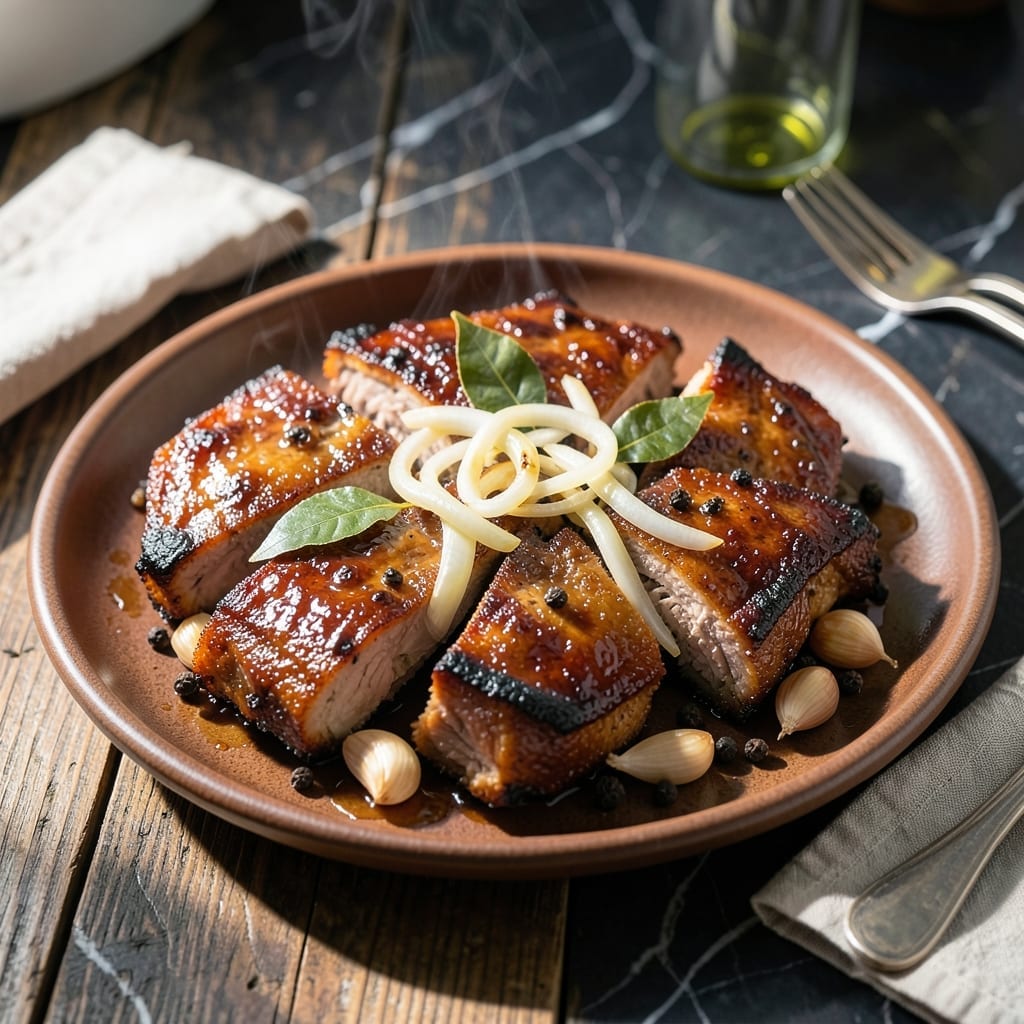
This Filipino-style pork spareribs recipe delivers the fall-off-the-bone tenderness that defines authentic Panlasang Pinoy cooking. I developed this method after testing multiple approaches to achieve that signature melt-in-your-mouth quality.
The secret lies in the slow simmering process, allowing the ribs to absorb all the bold flavors of soy sauce, garlic, and black pepper. These simple ingredients create a rich, savory sauce that clings perfectly to every piece.
What emerges is a dish where each rib separates effortlessly from the bone, with meat so tender it nearly dissolves with each bite. The sauce reduces to a glossy sheen, balancing salty, savory, and slightly sweet notes.
Serve this with steamed rice to soak up every last drop of that incredible sauce. The results are worth every minute of the gentle cooking process.
Ingredients for Pork Spareribs Recipe Panlasang Pinoy
Quality pork spareribs and bold Filipino flavors create this authentic Panlasang Pinoy dish at home.
| Ingredient | Amount | Notes |
|---|---|---|
| Pork Spareribs 🍖 | 2 ½ lb | Cut into individual ribs |
| Soy Sauce 🫚 | ¾ cup | Low-sodium preferred |
| Garlic Cloves 🧄 | 8 cloves | Minced for maximum flavor |
| White Onion 🧅 | 1 whole | Sliced into rings |
| Bay Leaves 🍃 | 3 pieces | Dried for aromatic depth |
| Black Peppercorns 🌶️ | 1 tbsp | Whole, lightly crushed |
| Brown Sugar 🍚 | 2 tbsp | For balancing sweetness |
| White Vinegar 💧 | ¼ cup | For acidity and brightness |
| Water 💧 | 2 cups | For braising liquid |
| Green Onions 🧅 | 4 whole | Thinly sliced for garnish |
| Vegetable Oil 🫒 | 1 tbsp | For browning ribs |
| Salt 🧂 | 1 tsp | Adjust to taste |
[recipe_ingredient_scaler]
The pork spareribs are the foundation. Opt for meaty, well-marbled ribs—avoid pre-cut pieces with excessive bone. Asian markets often carry the best selection, but well-stocked supermarkets work too. Look for ribs with a good fat cap; this renders down during cooking, enriching the sauce. For authentic flavor, Filipino soy sauce brands like Silver Swan or Datu Puti are preferred over standard varieties.
No low-sodium soy sauce? Regular soy sauce at reduced quantity works, but taste before adding salt. Apple cider vinegar can substitute for white vinegar in a pinch. Brown sugar can be swapped with coconut sugar for depth. Fresh garlic is non-negotiable—jarred minced garlic lacks the punch needed. If you can’t find whole black peppercorns, use freshly ground black pepper at half the amount.
ribs can be marinated overnight for deeper flavor (worth the extra minute). The cooked dish keeps for 3-4 days refrigerated and freezes well for 3 months. Reheat gently to preserve the fall-off-the-bone texture you worked so hard to achieve.
Why You’ll Love This Recipe
- One Pot Wonder: I just toss the spareribs, soy sauce, garlic, and bay leaves in a pot and let it simmer—no fancy techniques.
- Rich Garlic Depth: The garlic and soy sauce create this deep, savory flavor that soaks right into the ribs.
- Feeds a Crowd: Honestly, it’s my go-to for family gatherings since everyone always asks for seconds.
- Budget Stretcher: Pork spareribs are affordable, and this recipe makes them taste like a million bucks.
Step-by-Step Instructions for Filipino-Style Pork Spareribs
This method guarantees fall-off-the-bone tenderness with rich, savory-sweet Filipino flavors.
Step 1: Brown the Spareribs for Depth of Flavor
Heat the 1 tbsp vegetable oil in a large, heavy pot over medium-high heat until shimmering. Pat the 2.5 lb pork spareribs dry with paper towels—this ensures a proper sear rather than steaming.
Working in batches if necessary, add the ribs in a single layer and brown for 3-4 minutes per side until deep golden brown. Don’t overcrowd the pot, or the temperature will drop and the meat will steam instead of sear. Transfer the browned ribs to a plate and set aside.
This initial browning creates a flavor foundation through the Maillard reaction, adding complexity to the final dish. The fond left in the pot will dissolve into the braising liquid, intensifying the sauce.
Step 2: Build the Aromatic Base
In the same pot, reduce heat to medium and add the sliced white onion. Sauté for 2-3 minutes until softened and just beginning to caramelize at the edges. Add the 8 cloves minced garlic cloves and cook for 30 seconds until fragrant but not browned.
Stir in the 1 tbsp black peppercorns and 3 pieces bay leaves, toasting them briefly to release their essential oils. Then add the 0.75 cup soy sauce, 0.25 cup white vinegar, and 2 tbsp brown sugar, stirring to combine. The vinegar’s acidity will balance the richness of the pork.
Step 3: Braise to Fall-Off-The-Bone Tenderness
Return the browned pork spareribs to the pot, arranging them in a single layer if possible. Pour in the 2 cups water and add the 1 tsp salt. The liquid should come about halfway up the ribs—add a splash more water if needed.
Bring to a boil, then reduce heat to low, cover, and simmer gently for 1.5 to 2 hours. Check occasionally and turn the ribs to ensure even cooking. The ribs are done when the meat pulls away from the bone easily with a fork and the sauce has thickened slightly.
Step 4: Finish and Garnish
Once the ribs are tender, remove the lid and increase heat to medium. Simmer uncovered for 5-10 minutes to reduce the sauce to your desired consistency. The sauce should coat the back of a spoon and have a glossy, slightly syrupy texture.
Discard the bay leaves. Taste and adjust seasoning—you may want a touch more soy sauce for saltiness or vinegar for acidity. Transfer the ribs to a serving platter and spoon the thickened sauce over the top. Garnish with the 4 whole green onions, thinly sliced. Serve immediately with steamed rice to soak up the flavorful sauce.
Pro Tips For Making Pork Spareribs Recipe Panlasang Pinoy
- Boil First, Fry Later: I learned this the hard way—parboil the spareribs for 10 minutes with a splash of vinegar to remove impurities before braising. Skipping this leaves your sauce bitter and scummy. —
- Crush the Garlic: Sounds weird, but it works: lightly smash the garlic cloves before adding them whole. This releases more flavor without burning the bits into the soy sauce. —
- Skip the Salt: Resist the urge to add extra salt—soy sauce already packs enough sodium. Taste the sauce first after 20 minutes of simmering, then adjust if needed. —
- Low and Slow: After the initial boil, drop the heat to a gentle simmer. High heat makes the meat tough—I ruined two batches before figuring out patience actually changes the outcome.
Regional Styles of These Flavors
Luzon Tradition
In Central Luzon, they often add 1 cup pineapple juice to the braising liquid for a touch of sweetness that complements the soy sauce. The acidity helps tenderize the meat even further. I tried this variation and loved how it balanced the savory notes. 🌟
Visayan Twist
The Visayas region sometimes includes 2 tbsp calamansi juice instead of white vinegar. This citrusy twist brightens the dish significantly. I found it adds a uniquely Filipino tang that pairs perfectly with the garlic and soy.
Bicolano Heat
For a Bicolano approach, add 2-3 sliced siling labuyo (bird’s eye chili) when building the aromatic base. This gives the ribs a subtle kick without overwhelming the other flavors. The heat builds gradually as the dish simmers.
Ilocano Sour
In Ilocos, they often use green mango slices during the last 30 minutes of cooking. The mango absorbs the sauce while adding a refreshing sourness. I was surprised how well this worked with the pork’s richness.
Manila Street Food Style
Street vendors in Manila often serve these ribs with a side of spicy vinegar dip made from ½ cup vinegar, 1 chopped chili, and 1 tsp sugar. It cuts through the fat beautifully and adds another layer of flavor. 💫
Pampanga Richness
The culinary capital of Pampanga sometimes enriches the sauce with ¼ cup liver spread stirred in at the end. This creates an ultra-rich, velvety sauce that clings to the ribs. It’s a decadent variation I reserve for special occasions.
Nutrition Facts
Frequently Asked Questions
Can I use baby back ribs instead?
Yes, but adjust the cooking time. Baby back ribs cook faster, so reduce simmering to 1 to 1.5 hours. They’ll still absorb the Filipino flavors beautifully.
What if my sauce is too salty?
Balance it by adding 1 tbsp brown sugar or ½ cup water and simmering for 5 more minutes. The sweetness will counteract the saltiness without diluting flavor.
Can I make this in a slow cooker?
Brown the ribs first, then transfer everything to a slow cooker. Cook on low for 6-7 hours or high for 3-4 hours for tender results.

Trained in classic French technique but raised on slow-cooked ribs and spicy rubs, she blends culinary skill with smoke and soul.
- Recipe for Boneless Pork Chops in Cast Iron Skillet: Sear and Baste to Juicy Perfection - October 3, 2026
- Recipe for Boneless Cross Rib Roast: Slow-Roasted Beef with Herb Crust - October 3, 2026
- Hamburgers in Sauce Recipe Crock Pot: Slow-Cooked Savory Delight - October 3, 2026