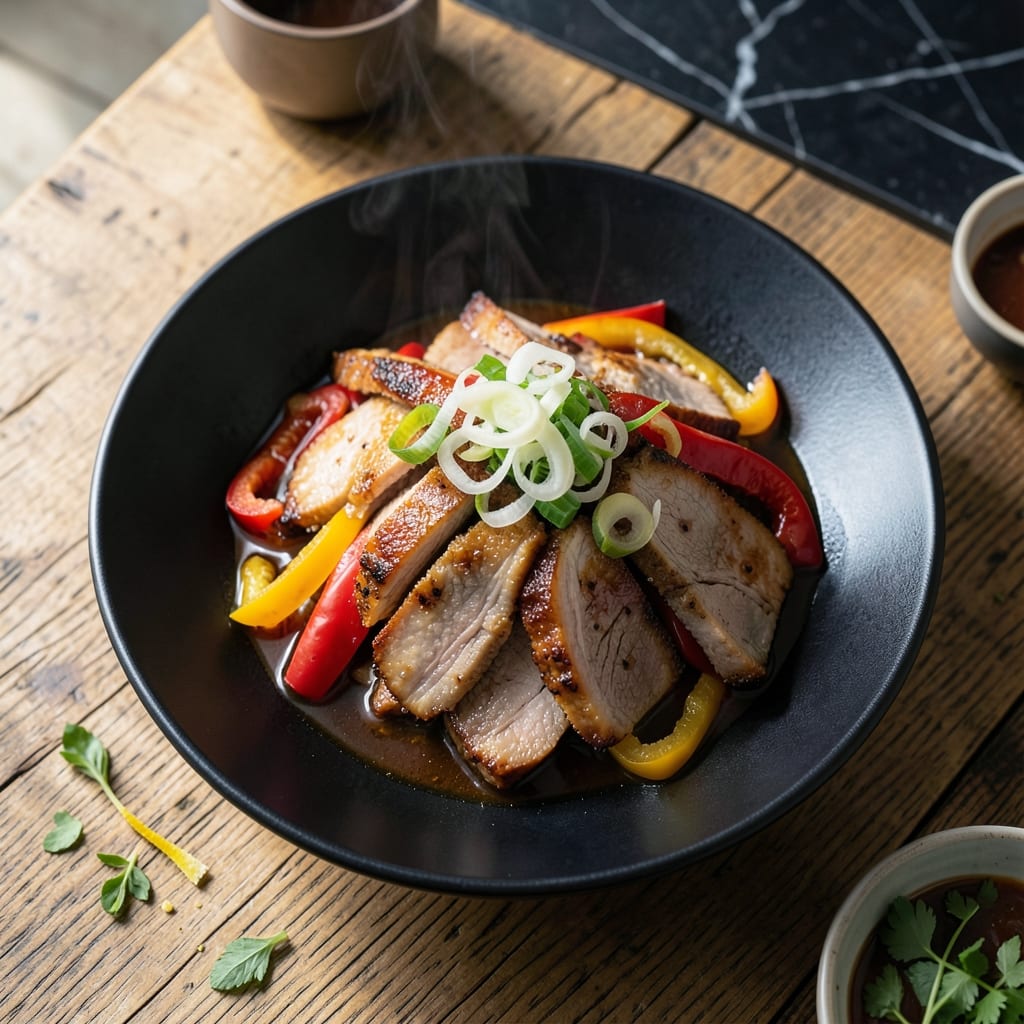
This wok-tossed pork stir fry delivers restaurant-quality results with a fraction of the effort. I developed this method after years of takeout disappointments, finally nailing the balance of tender meat and crisp vegetables.
The secret is high heat and quick cooking—3-4 minutes per batch ensures each ingredient retains its texture and color. Thinly sliced pork shoulder absorbs the sauce beautifully while staying juicy, and fresh vegetables add crunch.
What emerges is a dish with glossy, caramelized edges and a perfect sauce-to-ingredient ratio. The aroma alone will draw everyone to the table before the first bite.
Serve over steamed rice for a complete meal that’s ready in 20 minutes. This is weeknight cooking at its best.
Ingredients for Pork Stir Fry Recipe Woks of Life
Restaurant-quality wok-tossed pork stir fry starts with these carefully selected fresh ingredients.
| Ingredient | Amount | Notes |
|---|---|---|
| Pork Shoulder 🥩 | 1 ½ lb | Thinly sliced against grain |
| Soy Sauce 🫒 | ⅓ cup | Low-sodium preferred |
| Oyster Sauce 🫒 | 2 tbsp | Thick, savory variety |
| Shaoxing Wine 🍷 | 2 tbsp | Dry sherry substitute works |
| Cornstarch 🌾 | 2 tbsp | For velveting pork |
| Garlic Cloves 🧄 | 4 cloves | Minced finely |
| Fresh Ginger 🌿 | 1 tbsp | Grated or minced |
| Red Bell Pepper 🌶️ | 1 whole | Thinly sliced into strips |
| Broccoli Florets 🥦 | 2 cups | Cut into bite-sized pieces |
| Snap Peas 🌱 | 1 cup | Trimmed of strings |
| Carrot 🥕 | 1 whole | Julienned or thinly sliced |
| Green Onions 🧅 | 4 whole | Sliced, white and green parts separated |
| Vegetable Oil 🫒 | 3 tbsp | High smoke point for wok frying |
| Sesame Oil 🫒 | 1 tsp | Toasted, for finishing |
| Granulated Sugar 🧂 | 1 tsp | Balances savory flavors |
[recipe_ingredient_scaler]
The pork shoulder is non-negotiable for tenderness and flavor absorption. Look for well-marbled cuts at your butcher or Whole Foods meat counter—avoid pre-cut stir-fry mixes which are often leaner and drier. Velveting with cornstarch is the professional technique that makes the difference between homemade and takeout. For the Shaoxing wine, Asian markets carry authentic brands, but dry sherry from the grocery store works in a pinch.
No Shaoxing wine? Dry sherry at a 1:1 ratio is the closest substitute. For a vegetarian option, mushroom stir-fry sauce can replace the oyster sauce. Red bell pepper can be swapped for green or yellow (the latter adds nice color). Frozen vegetables work too—just thaw and pat dry first. The cornstarch is essential for that silky sauce texture, but arrowroot powder can be used at the same amount.
Prep all ingredients before heating the wok—this moves fast. The pork can marinate for 30 minutes or overnight. Leftovers keep for 3-4 days in the fridge, though the vegetables lose crispness. Reheat quickly in a hot pan to revive texture. Freeze without vegetables for up to 3 months.
Why You’ll Love This Recipe
- One Pan Wonder: I toss everything in the wok and it’s done in 20 minutes—no extra pots, no fuss.
- Umami Bomb: The combo of soy, oyster sauce, and Shaoxing wine hits that deep, savory note I crave every time.
- Feeds a Crowd: I make a big batch and it stretches for lunches all week without getting soggy.
- Budget Friendly: Pork shoulder stays cheap, and a little cornstarch makes it feel restaurant-worthy.
Step-by-Step Instructions for Pork Stir Fry
Master the wok technique with these precise steps for restaurant-quality results at home.
Step 1: Velvet the Pork Shoulder
In a bowl, combine the 1.5 lb Pork Shoulder with 2 tbsp Cornstarch, 2 tbsp Soy Sauce, and 2 tbsp Shaoxing Wine. I use my hands to ensure every thin slice is evenly coated—the cornstarch creates a protective layer that locks in moisture during high-heat cooking.
Let the mixture marinate for 15 minutes at room temperature. You’ll notice the pork becomes slightly opaque as it absorbs the liquid. This velveting process is what gives the pork its signature tender, silky texture in the final dish.
Step 2: Prepare the Aromatics and Vegetables
Mince the 4 cloves Garlic Cloves and grate the 1 tbsp Fresh Ginger together on a cutting board. Thinly slice the 1 whole Red Bell Pepper into uniform strips. Cut the 1 whole Carrot into julienne and trim the 1 cup Snap Peas.
Separate the 4 whole Green Onions into white and green parts, slicing both thinly. Keep all vegetables within arm’s reach of your wok—stir-frying moves quickly, and you won’t have time to prep once cooking begins. This mise en place approach prevents burning and ensures even cooking.
Step 3: Stir-Fry in Batches
Heat 2 tbsp Vegetable Oil in a wok over high heat until shimmering. Add half the velveted pork in a single layer, spreading it out to prevent steaming. Let it sear undisturbed for 1-2 minutes until the edges turn white and opaque.
Toss the pork vigorously with a wok spatula for another 30 seconds until just cooked through. Transfer to a clean plate and repeat with the remaining pork and 1 tbsp Vegetable Oil. This batch cooking prevents overcrowding, which would cause the pork to steam rather than sear.
Step 4: Cook the Vegetables and Build the Sauce
Add the remaining 1 tbsp Vegetable Oil to the wok. Stir-fry the garlic, ginger, and white parts of the green onions for 20 seconds until fragrant. Immediately add the red bell pepper, carrot, broccoli florets, and snap peas. Toss continuously for 2-3 minutes until the vegetables are crisp-tender and brightly colored.
Return the cooked pork to the wok. Add the remaining 0.33 cup minus 2 tbsp Soy Sauce, 2 tbsp Oyster Sauce, and 1 tsp Granulated Sugar. Toss everything together for 1-2 minutes until the sauce thickens and coats every piece evenly.
Step 5: Finish and Serve
Remove from heat and stir in the 1 tsp Sesame Oil and the green parts of the green onions. The sesame oil adds a nutty aroma that blooms in the residual heat. Toss once more to distribute the oil and garnish evenly.
Serve immediately while the pork is still glistening and the vegetables retain their vibrant color. The sauce should cling lightly to each ingredient, with a balance of savory depth from the oyster sauce and bright umami from the soy. This is best enjoyed fresh, as the textures are at their peak.
Pro Tips For Making Pork Stir Fry Recipe Woks Of Life
- Velvet the Pork: Toss the pork shoulder with cornstarch and a splash of Shaoxing wine before cooking—this keeps it absurdly tender. I learned this the hard way after my first few stir-fries came out chewy.
- Sear First: Start with high heat to brown the pork well before adding sauces. After burning three batches, I finally figured out that low heat just steams the meat instead of giving it that caramelized crust.
- Skip the Overcrowding: Cook the pork in batches if needed—crowding the pan steams the meat instead of frying it. Sounds weird, but it works: your wok needs space to maintain heat.
- Deglaze with Wine: After searing, pour in the Shaoxing wine to lift all those browned bits from the pan. My grandmother swore by this, and she was right: it adds depth you just can’t get otherwise.
Dietary Considerations for This Dish
Gluten-Free Adaptation
For a gluten-free version, swap the soy sauce for tamari—it has the same rich umami but without wheat. I use San-J Tamari from my local Boston market. Also check that your oyster sauce is certified gluten-free, as many brands contain wheat as a thickener.
Low-Sodium Option
Reduce sodium by using low-sodium soy sauce and cutting the oyster sauce to 1 tbsp. Boost flavor with extra garlic and ginger instead. I often add 1 tsp fish sauce for depth without the salt overload. 💡
Dairy-Free and Nut-Free
This recipe is naturally dairy-free and nut-free, making it safe for most allergies. Just verify your oyster sauce brand—some contain traces of shellfish or peanuts. I always double-check labels at the Asian market.
Vegetarian Variation
Replace pork with extra-firm tofu (pressed and cubed) or mushrooms. Use vegetarian oyster sauce (made from mushrooms) and add 1 tbsp hoisin sauce for extra richness. The velveting technique works the same way.
Keto-Friendly Adjustments
Skip the cornstarch and sugar, and use xanthan gum (¼ tsp) to thicken the sauce. Replace snap peas with zucchini strips or cabbage. I find the pork stays just as tender without the starch. 🔥
Meal Prep Notes
Pre-slice all ingredients and store separately in the fridge for up to 2 days. Velvet the pork just before cooking. Leftovers reheat well in a hot pan with a splash of water to revive the sauce.
Nutrition Facts
Frequently Asked Questions
What’s the best cut for stir-frying?
Pork shoulder is ideal for its marbling and tenderness. Slice it thinly against the grain for maximum tenderness. Avoid lean cuts like tenderloin, which can dry out quickly over high heat.
Can I skip the velveting step?
Velveting with cornstarch keeps the pork juicy. Without it, the meat may toughen during cooking. If short on time, marinate for at least 10 minutes to help.
How do I prevent soggy vegetables?
Cook in small batches over high heat and avoid overcrowding the wok. Stir-fry vegetables just until crisp-tender, about 2-3 minutes.
What can I use instead of Shaoxing wine?
Dry sherry is the closest substitute at a 1:1 ratio. In a pinch, use 1 tbsp rice vinegar + 1 tbsp water for a similar tang.

Trained in classic French technique but raised on slow-cooked ribs and spicy rubs, she blends culinary skill with smoke and soul.
- Recipe for Boneless Pork Chops in Cast Iron Skillet: Sear and Baste to Juicy Perfection - October 3, 2026
- Recipe for Boneless Cross Rib Roast: Slow-Roasted Beef with Herb Crust - October 3, 2026
- Hamburgers in Sauce Recipe Crock Pot: Slow-Cooked Savory Delight - October 3, 2026