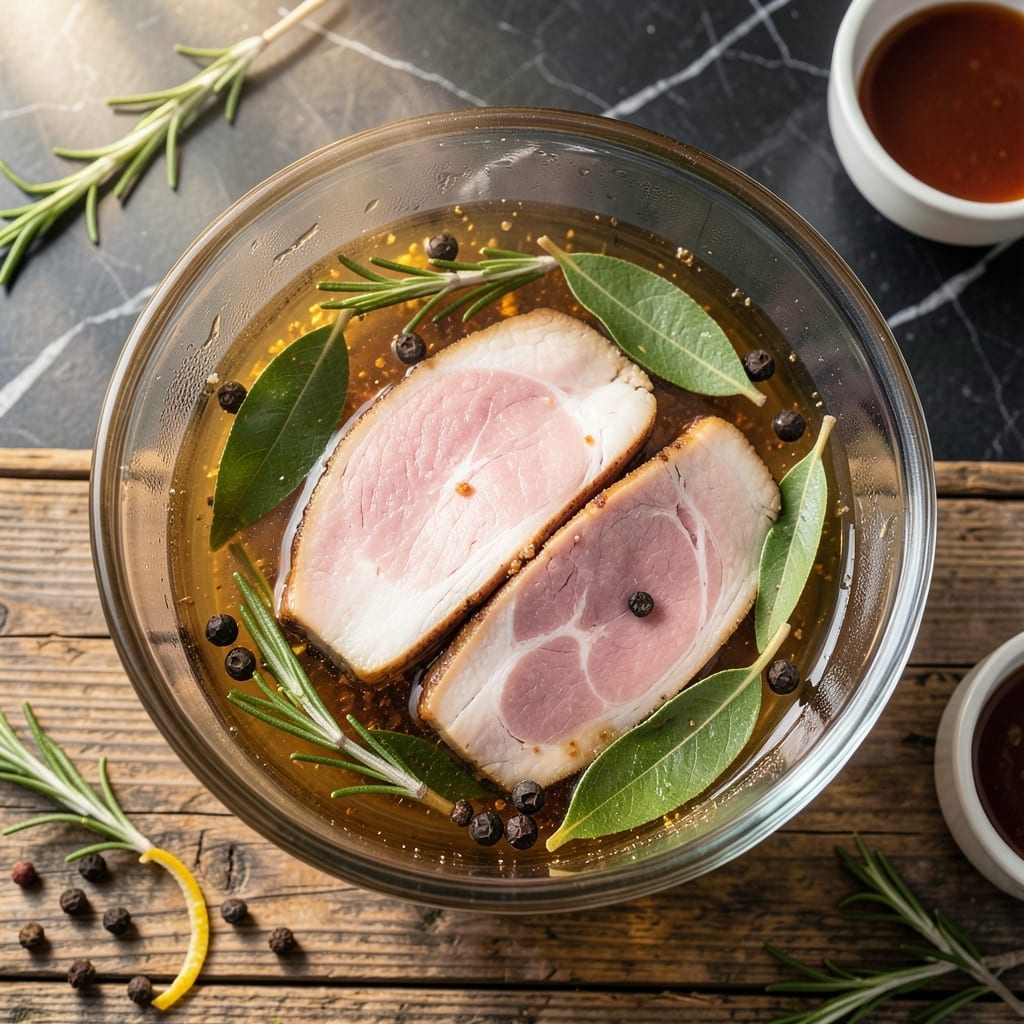
I’ve spent years perfecting the art of brining pork to lock in moisture and enhance flavor. This simple pre-soak transforms lean tenderloin into a juicy, flavorful masterpiece every time.
The science is straightforward: salt and sugar work together to break down muscle fibers while helping the meat retain its natural juices. Herbs and spices add depth, but the real magic happens during the soaking process.
What you get is pork that stays tender through cooking, never dry or tough. The difference between brined and unbrined pork is undeniable—this method ensures perfect results with minimal effort.
Use this brine for pork tenderloin, chops, or even larger cuts. The process is quick, the ingredients are pantry staples, and the outcome is consistently exceptional.
Ingredients for Pork Tenderloin Brine
Pantry staples create this flavor-packed brine for juicy, tender pork every time.
| Ingredient | Amount | Notes |
|---|---|---|
| Water 💧 | 4 cups | Cold, for dissolving salt |
| Kosher Salt 🧂 | ½ cup | Diamond Crystal preferred |
| Brown Sugar 🍚 | ¼ cup | Light or dark variety |
| Black Peppercorns 🌶️ | 1 tbsp | Whole, lightly crushed |
| Bay Leaves 🌿 | 2 whole | Dried, whole leaves |
| Fresh Rosemary 🌿 | 2 tbsp | Chopped, stems removed |
| Fresh Thyme 🌿 | 2 tbsp | Chopped, stems removed |
| Garlic Cloves 🧄 | 4 cloves | Smashed, peeled |
| Juniper Berries 🫒 | 1 tsp | Lightly crushed (optional) |
[recipe_ingredient_scaler]
The salt is the backbone—Diamond Crystal kosher salt dissolves cleanly and seasons evenly. Brown sugar balances the salt while adding caramel notes. Most grocery stores carry both, but Costco offers great bulk pricing for frequent briners. Fresh herbs (rosemary, thyme) add complexity—grab them from the produce section with bright green, non-wilted leaves for best results.
No kosher salt? Table salt at half the volume works, but watch the saltiness—kosher is less dense. Swap brown sugar for white sugar or maple syrup if needed. Dried herbs can replace fresh at one-third the amount. Missing juniper berries? Skip them—they’re subtle. For extra depth, add a splash of apple cider vinegar.
Store unused brine in the fridge for 3 days. Works for pork tenderloin, chops, or larger cuts. Always brine in a non-reactive container (glass or stainless steel) and discard after single use.
Why You’ll Love This Recipe
- 5-Minute Mix: I just stir water, salt, sugar, peppercorns, and bay leaves—no chopping, no fuss.
- Juicy Every Time: Honestly, the brown sugar in the brine makes the pork so tender it falls apart.
- Meal Prep Hero: I brine a few tenderloins on Sunday and roast them all week for lunches.
- Budget Stretch: Between us, a cheap pork tenderloin turns into company-worthy meat with this simple brine.
Step-by-Step Instructions for Pork Tenderloin Brine
This method ensures maximum moisture retention and perfectly seasoned pork every time.
Step 1: Dissolve Salt and Sugar in Water
In a large bowl or pot, combine the 4 cups Water with 0.5 cup Kosher Salt and 0.25 cup Brown Sugar. Stir vigorously until both the salt and sugar are completely dissolved—you shouldn’t see any crystals at the bottom.
I prefer using warm water initially to help dissolve the salt and sugar faster, but make sure the brine cools to room temperature before adding the pork. This prevents the meat from cooking prematurely and ensures even flavor distribution.
Step 2: Toast and Bloom the Aromatics
In a dry skillet over medium heat, lightly toast the 1 tbsp Black Peppercorns, 2 whole Bay Leaves, and 1 tsp Juniper Berries for 1-2 minutes until fragrant. Be careful not to burn them—just warm them enough to release their essential oils.
Add the toasted spices to the brine along with the 2 tbsp Fresh Rosemary, 2 tbsp Fresh Thyme, and 4 cloves Garlic Cloves. Press the garlic cloves slightly with the flat side of your knife to release more flavor, but leave them whole for easy removal later.
Step 3: Cool and Submerge the Pork
Let the brine cool completely to room temperature—this is critical. If it’s still warm, it will start cooking the pork, which you want to avoid. I often prepare the brine the night before and refrigerate it to ensure it’s fully chilled.
Once cooled, submerge the pork tenderloin in the brine, making sure it’s fully covered by the liquid. If the pork floats, place a small plate or weight on top to keep it submerged. The pork should soak for 12-24 hours in the refrigerator.
Step 4: Rinse and Pat Dry Before Cooking
Remove the pork from the brine and discard the liquid and aromatics. Rinse the pork briefly under cold water to remove excess salt from the surface, then pat it thoroughly dry with paper towels. This step is important because it prevents the surface from becoming too salty and helps achieve a good sear when cooking.
Let the pork sit at room temperature for 30 minutes before cooking. This allows the meat to cook more evenly. You’ll notice the pork retains moisture better and has a more uniform color throughout after brining.
Pro Tips For Making Pork Tenderloin Brine
- Brine Overnight: I learned this the hard way—pork tenderloin needs at least 12 hours in the brine to fully absorb the salt and brown sugar. Anything less and you’re just wasting ingredients.
- Dissolve the Salt: Always stir the brine until the kosher salt and brown sugar completely dissolve. Sounds obvious, but I’ve ruined a batch by skipping this and ending up with gritty, uneven seasoning.
- Skip the Boiling: Resist the urge to boil the brine to speed up dissolving—it can make the pork tough. Lukewarm water and a good stir work just fine.
- Rinse Before Cooking: After brining, give the pork a quick rinse under cold water to remove excess salt, then pat it dry. This keeps the flavor balanced and helps the crust form better when you sear it.
Regional Styles of pork tenderloin brine
Southern Style
Down here, we add 1 cup apple cider vinegar to the brine for tang. The acidity tenderizes while balancing the salt. I also toss in 1 tbsp smoked paprika and 2 dried chipotle peppers for that signature Southern heat. Soak for 12 hours max. 🔥
Asian Inspired
Swap the brown sugar for ½ cup honey and add ¼ cup soy sauce, 1 tbsp grated ginger, and 2 star anise pods. This creates a sweet-savory profile perfect for stir-fries. I forage wild ginger near coastal trails for extra zing.
French Technique
My French training shines here: add 1 cup dry white wine and 1 tbsp mustard seeds to the brine. Use fresh tarragon instead of rosemary. The wine adds complexity that pairs beautifully with a Dijon crust post-brine.
Midwestern Classic
Keep it simple with 1 tbsp pickling spice and 1 tsp celery seed. This blend nods to the region’s love for hearty, no-fuss flavors. I grab my pickling spice from the local Amish market—their mix is unbeatable.
Caribbean Twist
Add 1 cup coconut water, 1 habanero pepper (sliced), and 1 tbsp allspice berries for island flair. The coconut water adds a subtle sweetness that complements the pork beautifully. Remove the habanero before cooking if you prefer milder heat.
Herb-Forward
Double the fresh herbs: 4 tbsp rosemary, 4 tbsp thyme, and add 2 tbsp fresh sage. I often forage these wild along my coastal motorcycle routes. The herb intensity creates a fragrant, earthy crust on the pork. 🌿
Nutrition Facts
Frequently Asked Questions
How long should I brine pork tenderloin?
Soak for 12-24 hours in the refrigerator. Shorter brines won’t fully penetrate, while longer soaks can make the meat too salty.
Can I reuse the brine?
No, always discard after use. Reusing brine can spread bacteria and compromise food safety. Fresh brine ensures the best flavor.
Do I need to rinse after brining?
Yes, briefly rinse under cold water to remove excess salt. Pat dry thoroughly with paper towels for a good sear.
What if I don’t have kosher salt?
Use half the volume of table salt, as it’s denser. For best results, stick to Diamond Crystal kosher salt.

Trained in classic French technique but raised on slow-cooked ribs and spicy rubs, she blends culinary skill with smoke and soul.
- Recipe for Boneless Pork Chops in Cast Iron Skillet: Sear and Baste to Juicy Perfection - October 3, 2026
- Recipe for Boneless Cross Rib Roast: Slow-Roasted Beef with Herb Crust - October 3, 2026
- Hamburgers in Sauce Recipe Crock Pot: Slow-Cooked Savory Delight - October 3, 2026