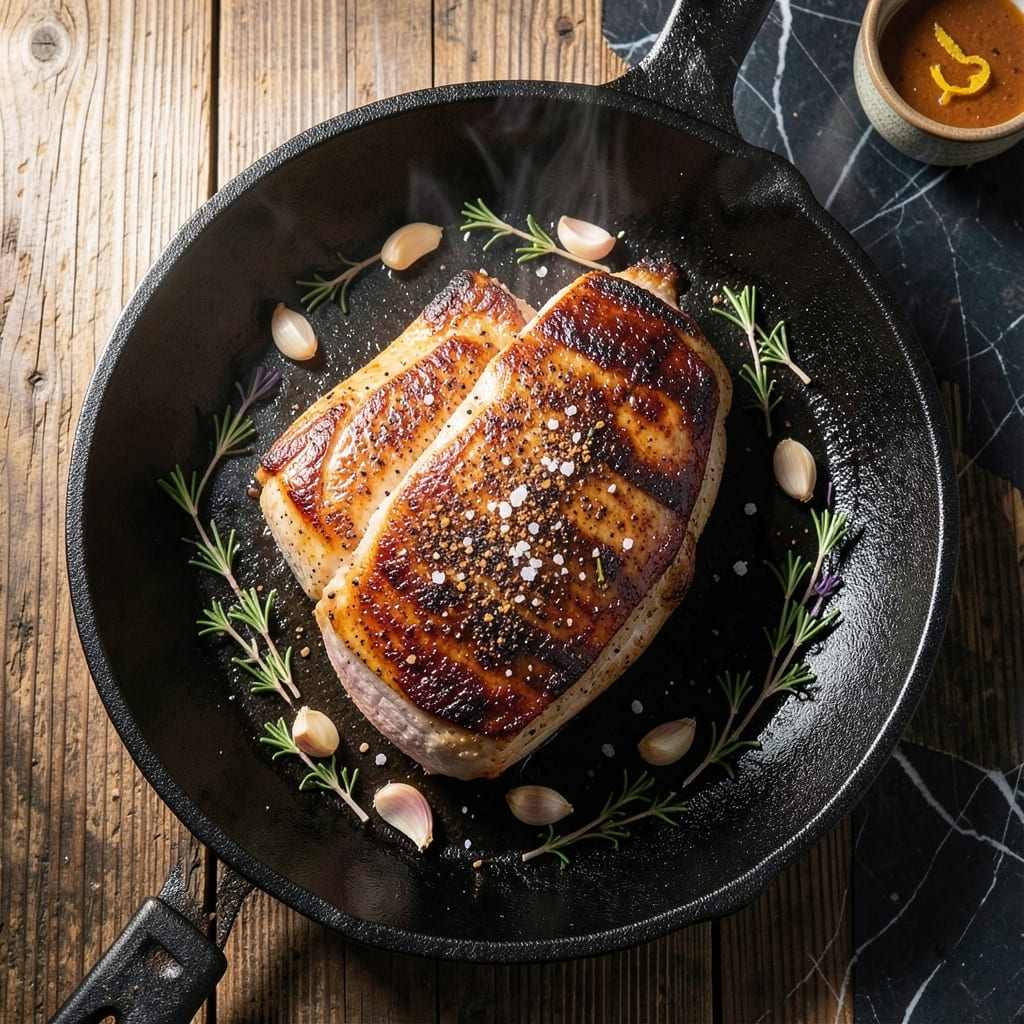
High-heat roasting transforms pork tenderloin into a tender, juicy masterpiece with minimal effort. This method locks in moisture while creating a flavorful crust that’s hard to resist.
At 500°F, the exterior sears quickly, sealing in natural juices for meat that stays succulent throughout. The key is monitoring internal temperature to avoid overcooking.
You’ll achieve restaurant-quality results with a simple seasoning blend and precise timing. The high heat ensures every bite is packed with flavor and perfect texture.
Serve with roasted vegetables or a fresh salad to complete the meal. This technique guarantees impressive results every time.
Ingredients for Pork Tenderloin Recipe 500 Degrees
High-heat roasting demands quality ingredients for that perfect crust and juicy interior.
| Ingredient | Amount | Notes |
|---|---|---|
| Pork Tenderloin 🥩 | 1 ½ lb | Trimmed of excess fat |
| Kosher Salt 🧂 | 1 ½ tsp | Diamond Crystal preferred |
| Freshly Ground Black Pepper 🌶️ | 1 tsp | Coarse grind ideal |
| Garlic Powder 🧄 | 1 tsp | Not garlic salt |
| Onion Powder 🧅 | 1 tsp | Fine grind preferred |
| Smoked Paprika 🌶️ | 1 tsp | Sweet or hot variety |
| Dried Thyme 🌿 | ½ tsp | Crushed for better release |
| Olive Oil 🫒 | 2 tbsp | High smoke point variety |
| Dijon Mustard 🟡 | 1 tbsp | Smooth, not whole grain |
| Fresh Rosemary 🌿 | 2 slices | Sprigs, finely chopped |
| Red Wine Vinegar 🍷 | 1 tbsp | For finishing touch |
[recipe_ingredient_scaler]
The pork tenderloin must be fresh with a vibrant pink color and minimal odor. Whole Foods or Costco offer excellent options with consistent quality. Look for 1.5 lb pieces—thicker cuts handle the high heat better. Trim any visible fat before seasoning to prevent burning. At this price point, organic isn’t mandatory, but avoid pre-marinated versions (they often contain excess sodium).
Out of smoked paprika? Regular paprika with a pinch of cayenne works in a bind. No Dijon? Whole grain mustard at half the quantity—strain the seeds if you prefer smoothness. Fresh thyme can replace dried at triple the amount. The rosemary is optional but adds depth (dried works at one-third the quantity). For the vinegar, apple cider is a fine substitute.
Store pork in its original packaging on a plate in the coldest part of your fridge—use within 2-3 days. Most spices keep for 6-12 months in a dark cabinet. The mustard and vinegar will last 1 year unopened, 6 months after opening. Always bring pork to room temperature before cooking for even cooking.
Why You’ll Love This Recipe
- Set and Forget: I rub it with salt, pepper, garlic and onion powder, pop it in the 500° oven, and let the heat do the work.
- Crispy Outside, Juicy Inside: That high heat locks in the juices while giving it a perfect caramelized crust.
- Weeknight MVP: It’s my go-to for busy evenings—ready in under 30 minutes, and the kids actually eat it.
- Leftovers for Days: One tenderloin feeds us twice, and the leftovers make killer sandwiches the next day. Honestly, that’s a win in my book.
Step-by-Step Instructions for Pork Tenderloin at 500 Degrees
This high-heat method delivers a perfect sear while keeping the inside remarkably juicy.
Step 1: Season the Pork Tenderloin Generously
Pat the 1.5 lb Pork Tenderloin completely dry with paper towels to ensure a good sear. In a small bowl, combine the 1.5 tsp Kosher Salt, 1 tsp Freshly Ground Black Pepper, 1 tsp Garlic Powder, 1 tsp Onion Powder, 1 tsp Smoked Paprika, and 0.5 tsp Dried Thyme.
Rub this spice mixture evenly over the surface of the pork tenderloin, pressing gently to adhere. The dry rub not only seasons the meat but also creates a flavorful crust when exposed to high heat.
Step 2: Sear the Pork Tenderloin in a Ripping Hot Pan
Place a heavy oven-safe skillet (cast iron works best) over medium-high heat and add the 2 tbsp Olive Oil. Once the oil begins to shimmer, carefully add the pork tenderloin. Sear undisturbed for 2-3 minutes per side until the surface develops a deep golden-brown crust.
Add the 2 slices Fresh Rosemary and the 1 tbsp Dijon Mustard to the pan, spooning the mustard and aromatic oil over the tenderloin as it sears. This builds layers of flavor while the high heat locks in juices.
Step 3: Transfer to the Oven for High-Heat Finishing
Preheat your oven to 500°F. Once the pork tenderloin is seared on all sides, transfer the skillet directly to the preheated oven. Roast for 10-12 minutes or until an instant-read thermometer inserted into the thickest part registers 145°F.
The high oven temperature ensures a quick cook time, preserving moisture while the exterior develops a rich, caramelized finish. Avoid overcrowding the pan to allow proper heat circulation.
Step 4: Rest and Finish with a Bright Acid Touch
Remove the pork tenderloin from the oven and transfer it to a cutting board. Tent loosely with foil and let it rest for 10 minutes. This allows the juices to redistribute, ensuring every slice is tender and flavorful.
Before slicing, drizzle the 1 tbsp Red Wine Vinegar over the top. The acidity cuts through the richness and brightens the overall dish. Slice against the grain into ½-inch thick pieces and serve immediately.
Pro Tips For Making Pork Tenderloin Recipe 500 Degrees
- Preheat That Pan: I learned this the hard way—crank your oven to 500°F first and let it sit for 10 minutes before the pork goes in. A screaming-hot start is the only way to get that golden crust on the outside while keeping the inside juicy.
- Pat Dry First: Sounds obvious, but I used to skip this and wondered why my seasoning never stuck. Blot the tenderloin with paper towels until it’s bone dry, then the salt, pepper, and powders actually cling.
- Pull at 145°F: Resist the urge to wait for 160°F—pork tenderloin keeps cooking as it rests. Yank it at 145°F internal temp, tent it with foil for 5-10 minutes, and it’ll hit perfect doneness every time.
- Use a Wire Rack: My grandmother swore by this, and she was right: Elevate the pork on a wire rack over a sheet pan so hot air circulates underneath. No soggy bottoms, just even browning all around.
Best Sauces and Condiments for These Flavors
Classic Mustard Sauce
Whisk ¼ cup Dijon mustard with 2 tbsp honey and 1 tbsp apple cider vinegar for a tangy-sweet glaze. This pairs perfectly with the smoky crust from your high-heat roast. I often add 1 tsp chopped fresh rosemary for extra depth. 💛
Garlic-Herb Butter
Mix 4 tbsp softened butter with 2 minced garlic cloves and 1 tbsp fresh thyme leaves. Dollop over sliced pork—it melts into the meat beautifully. Use European-style butter for richer flavor.
Red Wine Reduction
Simmer 1 cup dry red wine with 1 tbsp red wine vinegar and 1 tsp brown sugar until reduced by half. The acidity complements the pork’s richness while echoing the vinegar finish in the recipe.
Apple-Cider Glaze
Combine ½ cup apple cider, 2 tbsp maple syrup, and 1 tsp smoked paprika in a saucepan. Reduce to a syrupy consistency—this adds a fruity contrast to the savory spices. I use local orchard cider when available.
Creamy Horseradish
Blend ½ cup sour cream with 2 tbsp prepared horseradish and 1 tsp lemon zest. The sharp kick cuts through the richness, balancing the dish’s bold flavors. Serve chilled for best results. ⚡
Nutrition Facts
Frequently Asked Questions
Why use such high heat for pork tenderloin?
500°F creates a perfect sear quickly while locking in juices. The short cook time prevents drying out this lean cut. Expect tender results with a flavorful crust.
How do I know when it’s done?
Use a meat thermometer—145°F internal temperature is ideal. At this temp, it’s safe to eat and remains juicy. Remove from oven at 140°F as it will rise 5°F while resting.
Can I use a regular pan instead of cast iron?
Yes, but ensure it’s oven-safe and can handle 500°F. Stainless steel works well. Avoid nonstick pans as they may not withstand the high heat safely.
What if my tenderloin is smaller than 1.5 lb?
Reduce cooking time by 2-3 minutes for each ½ lb less. Check temperature early to avoid overcooking. Smaller cuts cook faster at high heat.

Trained in classic French technique but raised on slow-cooked ribs and spicy rubs, she blends culinary skill with smoke and soul.
- Recipe for Boneless Pork Chops in Cast Iron Skillet: Sear and Baste to Juicy Perfection - October 3, 2026
- Recipe for Boneless Cross Rib Roast: Slow-Roasted Beef with Herb Crust - October 3, 2026
- Hamburgers in Sauce Recipe Crock Pot: Slow-Cooked Savory Delight - October 3, 2026