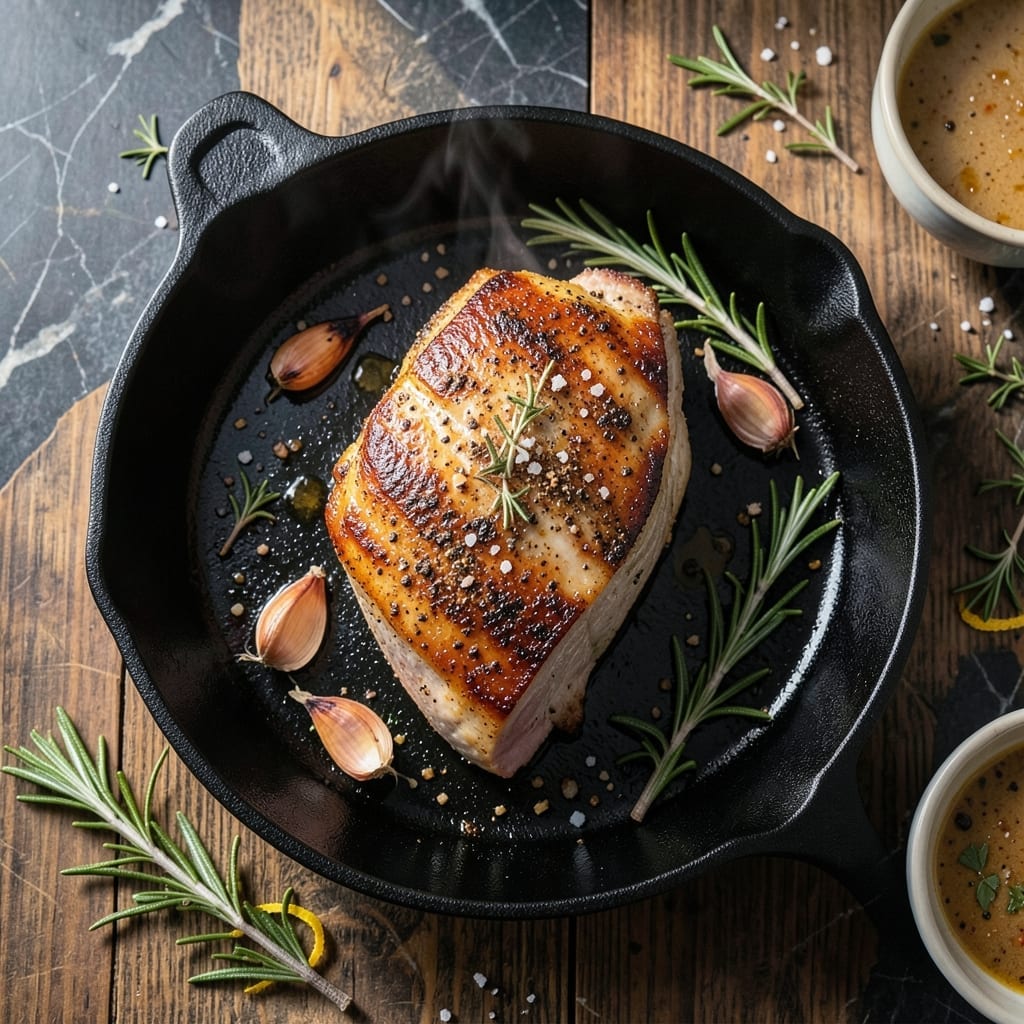
Cast iron transforms pork tenderloin into a masterpiece with seared crust and perfectly juicy centers every time. This method locks in flavor while creating a beautiful golden exterior.
With precise heat control and simple seasoning, you’ll achieve tender results that rival any restaurant. The skillet does most of the work, delivering professional-quality pork with minimal effort.
Ingredients for Pork Tenderloin Recipe Cast Iron
Cast iron plus simple seasonings create restaurant-quality results with minimal effort required.
| Ingredient | Amount | Notes |
|---|---|---|
| Pork Tenderloin 🥩 | 1 ½ lb | Trimmed of silver skin |
| Kosher Salt 🧂 | 1 ½ tsp | Diamond Crystal preferred |
| Freshly Ground Black Pepper 🌶️ | 1 tsp | Coarse grind for crust |
| Garlic Powder 🧄 | 1 tsp | Not garlic salt |
| Onion Powder 🧅 | 1 tsp | Fine grind for even coating |
| Dried Thyme 🍃 | 1 tsp | Crushed between fingers |
| Dried Rosemary 🌿 | 1 tsp | Crushed for better adhesion |
| Smoked Paprika 🌶️ | ½ tsp | For depth of flavor |
| Olive Oil 🫒 | 2 tbsp | High smoke point variety |
| Unsalted Butter 🧈 | 2 tbsp | For basting finish |
| Fresh Garlic Cloves 🧄 | 3 cloves | Smashed for basting |
| Fresh Rosemary Sprigs 🌿 | 2 sprigs | For aromatic basting |
[recipe_ingredient_scaler]
The pork tenderloin itself is paramount. Look for pieces around 1.5 lb with even thickness—avoid those with excessive fat or silver skin, as they won’t sear uniformly. Whole Foods or Costco typically stock high-quality options. The seasoning blend should be coarse enough to create a visible crust; Diamond Crystal kosher salt provides the ideal texture for this application.
Need to swap the fresh herbs? Dried at one-third the quantity works, though fresh delivers superior aroma during basting. No smoked paprika? Regular paprika plus a pinch of cayenne approximates the flavor. The olive oil must have a high smoke point—avocado oil is an excellent alternative. For the butter, ghee offers a richer, nuttier finish.
Pork tenderloin cooks quickly, so prep all ingredients before heating the skillet. Leftovers keep well in the fridge for 3-4 days or can be frozen for up to 3 months. Reheat gently to preserve the juicy texture you worked so hard to achieve.
Why You’ll Love This Recipe
- One Pan Magic: I love how the cast iron does all the work—sear the tenderloin, lock in juices, and no extra dishes to wash.
- Garlic-Kissed Crust: The mix of garlic powder and black pepper creates this insane crust that’s crispy outside, tender inside.
- Dinner or Leftovers: Honestly, it’s just as good cold in a sandwich the next day as it is hot off the pan.
- Budget-Friendly Feast: A single pork tenderloin feeds my family for two meals, and it’s cheaper than most proteins.
Step-by-Step Instructions for Pork Tenderloin in Cast Iron
This method guarantees a perfect sear with a tender, juicy interior every time.
Step 1: Season and Prepare the Pork Tenderloin
Pat the 1.5 lb Pork Tenderloin dry with paper towels to remove any moisture—this ensures a proper sear. In a small bowl, combine the 1.5 tsp Kosher Salt, 1 tsp Freshly Ground Black Pepper, 1 tsp Garlic Powder, 1 tsp Onion Powder, 1 tsp Dried Thyme, 1 tsp Dried Rosemary, and 0.5 tsp Smoked Paprika.
Rub this mixture evenly over the surface of the pork, pressing it into the meat so it adheres well. The coarse grind of the black pepper and crushed dried herbs will create a flavorful crust. Let the seasoned tenderloin sit at room temperature for 20-30 minutes to take the chill off before cooking.
Step 2: Sear the Tenderloin in Cast Iron
Place a cast iron skillet over medium-high heat and add the 2 tbsp Olive Oil. Once the oil shimmers and is just about to smoke, carefully add the pork tenderloin. Sear undisturbed for 3-4 minutes on each of the four sides until a deep, golden-brown crust forms.
Use tongs to rotate the tenderloin—don’t pierce it with a fork, as this will release precious juices. You’ll know it’s ready to turn when it releases easily from the pan. The goal is to develop a rich, caramelized exterior while keeping the center juicy.
Step 3: Baste with Aromatics and Finish Cooking
Reduce the heat to medium and add the 2 tbsp Unsalted Butter, 3 cloves Fresh Garlic Cloves (smashed), and 2 sprigs Fresh Rosemary Sprigs to the skillet. Tilt the pan slightly and use a spoon to baste the pork with the melted butter, garlic, and rosemary for 1-2 minutes.
This step infuses the pork with aromatic flavors while basting adds an extra layer of richness. Continue cooking until the internal temperature reaches 140-145°F on an instant-read thermometer, ensuring it stays tender and juicy.
Step 4: Rest and Slice
Transfer the pork tenderloin to a cutting board and tent loosely with aluminum foil. Let it rest for 10 minutes—this allows the juices to redistribute throughout the meat, ensuring every slice is moist and flavorful.
Slice the tenderloin against the grain into ½-inch thick medallions. The meat should be slightly pink in the center, with a well-browned crust. Serve immediately, spooning any pan juices over the top for added flavor.
Pro Tips For Making Pork Tenderloin Recipe Cast Iron
- Sear Hot, Finish Low: Crank the cast iron to smoking hot for the initial sear—about 2-3 minutes per side—then drop to medium-low to cook through without burning the spices. I learned this the hard way after ruining a perfect crust with overheated garlic powder.
- Pat It Dry: Blot the tenderloin with paper towels before seasoning; even a little moisture steams the meat instead of browning it. Sounds tedious, but it’s the difference between a soggy surface and that crackly, flavor-packed crust.
- Rest Under Foil: Let it rest 10 minutes under loose foil after cooking—skipping this makes all the juices spill onto the cutting board, not your plate. My grandmother swore by this, and she was right.
- Season Aggressively: Use more kosher salt and pepper than you think, especially with mild powders like onion and garlic. After under-seasoning my first three attempts, I finally realized tenderloin needs that bold kick to shine.
Pro Cooking Tips for Great pork tenderloin recipe cast iron
Perfect Searing Heat
Your cast iron needs to be screaming hot—I preheat mine on medium-high heat for 5 minutes before adding oil. The oil should shimmer but not smoke when ready. A Lodge 12-inch skillet is my go-to for even heat distribution.
Resting is Non-Negotiable
I cannot stress this enough: let your pork rest for the full 10 minutes before slicing. Skipping this step means all those beautiful juices will end up on your cutting board instead of in your meat. Tent with foil to keep it warm.
Internal Temperature Matters
Use an instant-read thermometer—I love my ThermoWorks MK4—and pull the pork at 140-145°F. The temp will rise another 5°F while resting, hitting the perfect doneness. This ensures juicy, tender meat every time. 🌡️
Even Thickness is Key
Look for tenderloins that are uniform in thickness—about 2-3 inches in diameter. This ensures even cooking. If one end is thinner, fold it under and secure with a toothpick so it cooks at the same rate as the rest.
Basting Technique
When basting, tilt the skillet and use a spoon to continuously pour the butter-garlic-rosemary mixture over the pork. This adds incredible flavor and helps build that beautiful crust. Do this for 1-2 minutes while cooking.
Slice Against the Grain
After resting, slice perpendicular to the muscle fibers. This shortens the fibers, making each bite more tender. Aim for ½-inch thick medallions for the perfect presentation. The meat should be slightly pink in the center.
Nutrition Facts
Frequently Asked Questions
How do I know when it’s done cooking?
Use a meat thermometer to check the internal temperature. Pull it at 140-145°F—the temp will rise to 150°F while resting. This ensures juicy, tender results every time.
Can I use a different type of oil?
Yes, any oil with a high smoke point works. Avocado oil or vegetable oil are great substitutes for olive oil. Avoid butter for searing—it burns at high heat.
Why does my pork come out dry?
Overcooking is the main culprit. Pork tenderloin cooks fast—10-12 minutes total in a hot skillet. Also, let it rest 10 minutes before slicing to retain juices.
Do I need to marinate it first?
Not necessary! A simple dry rub with salt, pepper, and herbs gives plenty of flavor. For extra tenderness, a 30-minute brine in saltwater works wonders.

Trained in classic French technique but raised on slow-cooked ribs and spicy rubs, she blends culinary skill with smoke and soul.
- Recipe for Boneless Pork Chops in Cast Iron Skillet: Sear and Baste to Juicy Perfection - October 3, 2026
- Recipe for Boneless Cross Rib Roast: Slow-Roasted Beef with Herb Crust - October 3, 2026
- Hamburgers in Sauce Recipe Crock Pot: Slow-Cooked Savory Delight - October 3, 2026