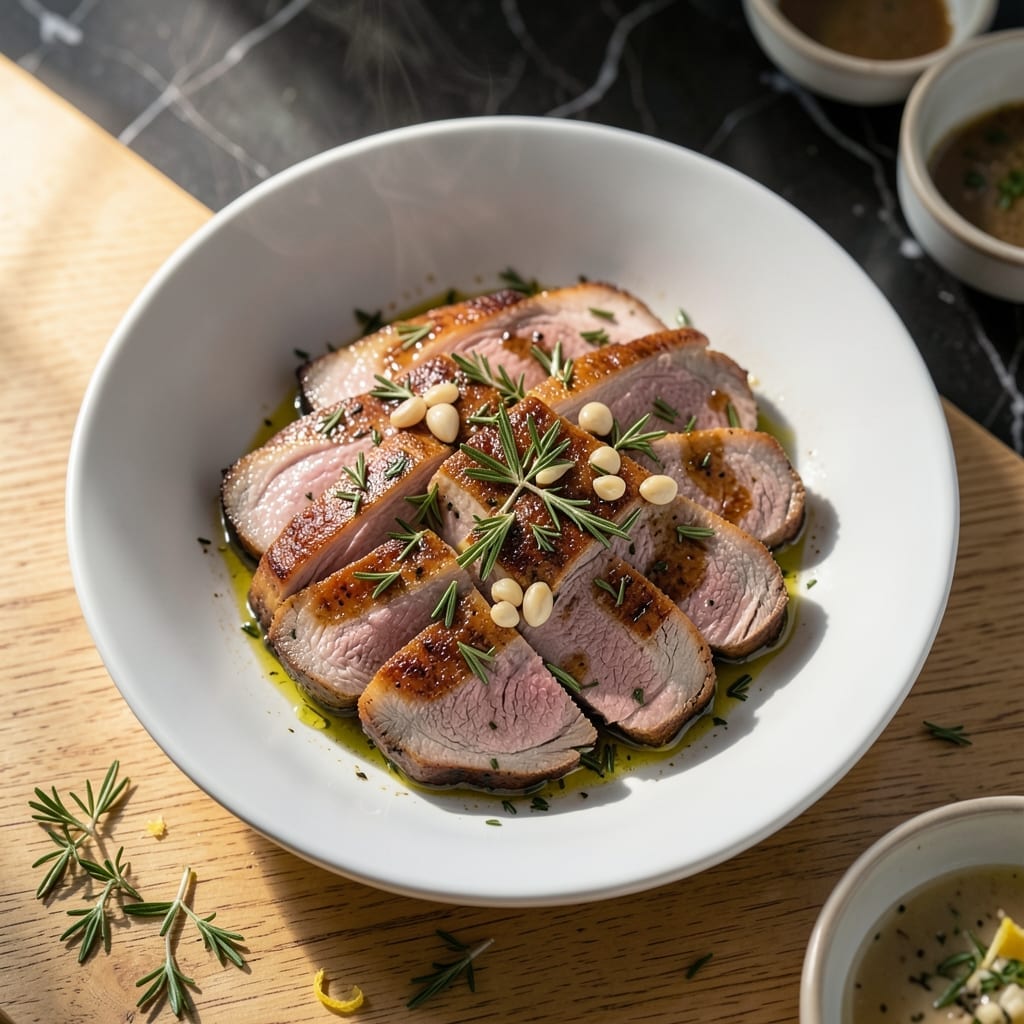
This pork tenderloin transforms a simple cut into an elegant centerpiece with minimal effort. The rosemary and garlic create a fragrant crust that locks in moisture, ensuring tender results every time.
I developed this method after years of testing in my small Boston kitchen, focusing on techniques that work in real home cooking conditions. A quick sear followed by roasting at 400°F guarantees perfect doneness without drying out the meat.
The herb-infused juices create a natural pan sauce that elevates the dish beyond ordinary. Each bite delivers the earthy pine notes of rosemary balanced with the sweetness of properly cooked pork.
Serve with roasted vegetables or mashed potatoes to soak up every flavorful drop. This recipe proves that impressive meals don’t require complicated steps.
Ingredients for Pork Tenderloin Recipe Rosemary
Elegant centerpiece starts with these carefully selected ingredients for perfect herb-infused pork every time.
| Ingredient | Amount | Notes |
|---|---|---|
| Pork Tenderloin 🥩 | 1 ½ lb | Trimmed of excess fat |
| Fresh Rosemary 🌿 | 3 tbsp | Finely chopped, stems removed |
| Garlic Cloves 🧄 | 6 cloves | Minced for maximum flavor |
| Olive Oil 🫒 | 3 tbsp | Extra-virgin, divided for searing and roasting |
| Kosher Salt 🧂 | 1 ½ tsp | Diamond Crystal preferred |
| Black Pepper 🌶️ | 1 tsp | Freshly ground for best results |
| Dijon Mustard 🟡 | 2 tbsp | For crust adhesion and depth |
| Dry White Wine 🍷 | ½ cup | For deglazing pan |
| Chicken Stock 🍲 | ½ cup | Low-sodium preferred |
| Unsalted Butter 🧈 | 2 tbsp | For finishing pan sauce |
| Shallot 🧅 | 1 whole | Finely minced for sauce |
| Fresh Thyme Sprigs 🍃 | 4 pieces | Optional, for additional herb depth |
[recipe_ingredient_scaler]
The pork tenderloin quality is paramount. Whole Foods or Costco offer consistent, well-trimmed cuts. Look for pieces with even thickness to ensure uniform cooking. The rosemary should be vibrant green and aromatic—avoid any stems with brown spots. For garlic, fresh heads from the produce section provide superior flavor to pre-minced varieties in jars.
No white wine? Apple cider vinegar diluted with water (1:1 ratio) works in a pinch. Fresh thyme can substitute for rosemary at equal amounts, though the flavor profile will shift slightly. For a dairy-free pan sauce, replace butter with olive oil. The Dijon mustard can be swapped for whole-grain mustard if preferred (the texture will be slightly coarser).
Pork tenderloin cooks best when brought to room temperature first—remove from fridge 30 minutes before starting. Leftovers keep 3-4 days refrigerated or freeze for 2 months. The herb-infused juices make excellent gravy—simply reduce further on the stovetop.
Why You’ll Love This Recipe
- I’ll be real: the sandwiches I make with the leftovers the next day are even better.
- One Pan Dinner: I love that I only need a sheet pan and five ingredients to get this in the oven.
- Herb-Infused Bite: The rosemary and garlic make every bite so aromatic and flavorful.
- Weeknight Hero: It’s my go-to for busy evenings—fancy enough for guests but quick enough for a Tuesday.
Step-by-Step Instructions for Herb-Crusted Pork Tenderloin
This method ensures a perfectly tender result with a fragrant herb crust every time.
Step 1: Prepare the Herb Marinade
In a small bowl, combine the 3 tbsp fresh rosemary (finely chopped), 6 cloves garlic cloves (minced), 2 tbsp olive oil, 1.5 tsp kosher salt, and 1 tsp black pepper. The rosemary should release its aromatic oils as you chop it.
Add the 2 tbsp Dijon mustard to the mixture and stir until fully incorporated. This creates a thick paste that will adhere beautifully to the pork. The mustard’s tanginess balances the richness of the pork while helping the herbs stick during cooking.
Step 2: Sear the Pork Tenderloin
Pat the 1.5 lb pork tenderloin dry with paper towels to ensure a good sear. Rub the herb marinade evenly over the entire surface of the pork, pressing gently so it clings. Heat the remaining 1 tbsp olive oil in a large oven-safe skillet over medium-high heat.
Sear the pork on all sides for 2-3 minutes per side until the exterior is golden brown. The marinade should caramelize slightly, forming a fragrant crust. Don’t rush this step—proper searing locks in juices and develops deep flavor.
Step 3: Roast to Perfection
Transfer the skillet to a preheated 400°F oven. Roast the pork for 15-20 minutes, or until an instant-read thermometer inserted into the thickest part registers 145°F. The pork should feel firm but still slightly springy to the touch.
If using the 4 pieces fresh thyme sprigs, tuck them around the pork in the skillet before roasting for an extra layer of herbaceous aroma. Baste the pork with the pan juices halfway through roasting to keep the crust moist and flavorful.
Step 4: Craft the Pan Sauce
Remove the pork from the skillet and let it rest on a cutting board, tented loosely with foil, for 10 minutes. Place the skillet over medium heat and add the finely minced 1 whole shallot. Sauté for 1-2 minutes until translucent and fragrant.
Deglaze the pan with the 0.5 cup dry white wine, scraping up any browned bits with a wooden spoon. Add the 0.5 cup chicken stock and simmer for 3-4 minutes until the liquid reduces by half. Finish by swirling in the 2 tbsp unsalted butter until the sauce is glossy and slightly thickened.
Slice the pork into ½-inch thick medallions and spoon the sauce over the top. The sauce should be rich and velvety, complementing the tender pork and herb crust perfectly.
Pro Tips For Making Pork Tenderloin Recipe Rosemary
- Sear First, Roast After: Start with a screaming hot pan—about 2 minutes per side—to get that golden crust, then finish in a 400°F oven. I learned this the hard way after my first few attempts turned out gray and dry.
- Bruise the Rosemary: Lightly crush the fresh rosemary sprigs with the flat side of your knife before using. Sounds weird, but it works: it releases way more aroma into the oil and garlic.
- Don’t Overcook: Pull the tenderloin at 145°F internal temp—it’ll rise to 150°F while resting. After burning three batches by waiting for 160°F, I finally figured out pork keeps cooking off the heat.
- Garlic Under Skin: Make small slits in the tenderloin and tuck thin garlic slices inside before searing. My grandmother swore by this, and she was right: it infuses flavor deep into the meat without burning.
Wine and Beer Pairings for This Dish
White Wine Pairings
This dish shines with a crisp Sauvignon Blanc from New Zealand. Its bright acidity cuts through the richness while complementing the rosemary’s earthy notes. I love how the citrus undertones bring out the garlic’s sweetness. 🍷
Red Wine Options
A light Pinot Noir from Oregon offers red fruit notes that harmonize beautifully with the pork’s natural sweetness. The wine’s subtle earthiness echoes the rosemary without overpowering the dish.
Craft Beer Choices
For beer lovers, a Belgian-style tripel provides interesting contrast. The spicy yeast character and higher alcohol content stand up to the herb crust. I often reach for Allagash Tripel from my Boston days.
Lighter Beer Pairings
A crisp pilsner works surprisingly well, especially with the pan sauce. The clean finish cleanses your palate between bites. Harpoon Pilsner from New England is my go-to.
Non-Alcoholic Option
Sparkling apple cider offers a festive alternative. The effervescence and natural sweetness balance the savory pork and herbs. Serve well-chilled for best results. ✨
Nutrition Facts
Frequently Asked Questions
How long should I let the pork rest before slicing?
Let it rest for 10 minutes after removing from the oven. This allows the juices to redistribute, ensuring each slice stays moist and flavorful.
Can I use dried rosemary instead of fresh?
Yes, but use 1 tbsp dried rosemary for every 3 tbsp fresh. Dried herbs are more concentrated, so adjust to avoid overpowering the dish.
What if my pork tenderloin is thicker on one end?
Fold the thinner end under and secure with kitchen twine before cooking. This ensures even cooking at 400°F for 15-20 minutes.
Can I make the pan sauce ahead of time?
The sauce is best made fresh, but you can prep ingredients in advance. Sauté shallots and deglaze just before serving for the richest flavor.

Trained in classic French technique but raised on slow-cooked ribs and spicy rubs, she blends culinary skill with smoke and soul.
- Recipe for Boneless Pork Chops in Cast Iron Skillet: Sear and Baste to Juicy Perfection - October 3, 2026
- Recipe for Boneless Cross Rib Roast: Slow-Roasted Beef with Herb Crust - October 3, 2026
- Hamburgers in Sauce Recipe Crock Pot: Slow-Cooked Savory Delight - October 3, 2026