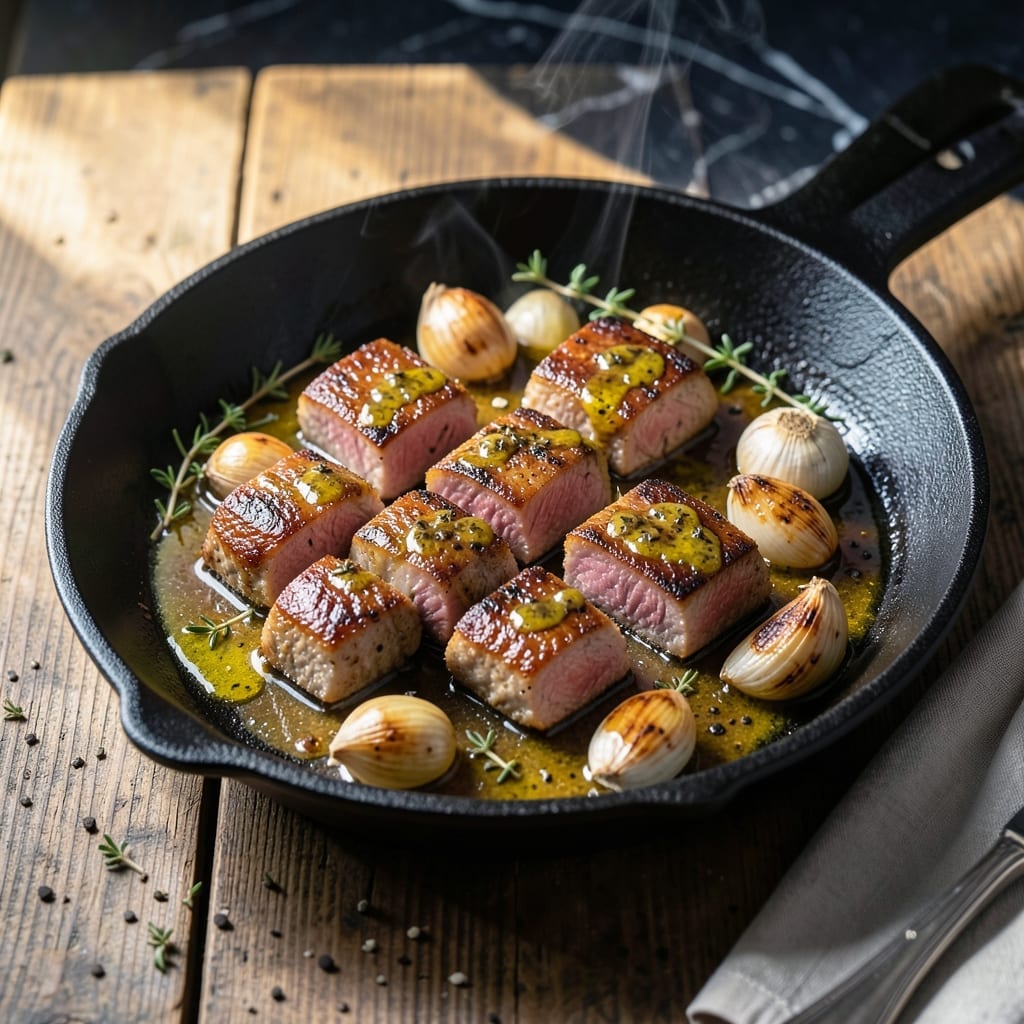
Mastering juicy pork tenderloin in a skillet is simpler than you think. This method delivers tender medallions with a golden pan sauce that elevates the dish from weeknight meal to restaurant-quality dinner.
I developed this technique after years of testing in my small Boston kitchen, focusing on precise timing and temperature control. The key is searing the meat quickly over high heat before finishing it gently to maintain moisture.
The pan sauce comes together in minutes using the fond left behind, creating a rich, flavorful accompaniment that ties everything together. Each bite delivers perfect texture and depth of flavor.
Serve with roasted vegetables or mashed potatoes for a complete meal that feels special without the fuss.
Ingredients for Pork Tenderloin Recipe Skillet
A handful of pantry staples and fresh herbs create this restaurant-worthy skillet dinner.
| Ingredient | Amount | Notes |
|---|---|---|
| Pork Tenderloin 🥩 | 1 ½ lb | Trimmed of silver skin |
| Kosher Salt 🧂 | 1 tsp | Diamond Crystal preferred |
| Black Pepper 🌶️ | ½ tsp | Freshly ground for best flavor |
| Garlic Cloves 🧄 | 3 cloves | Minced finely for sauce |
| Dijon Mustard 🟡 | 1 tbsp | Smooth, not grainy |
| Chicken Stock 🍲 | ¾ cup | Low-sodium preferred |
| Heavy Cream 🥛 | ¼ cup | Full-fat for richness |
| Unsalted Butter 🧈 | 2 tbsp | Divided for searing and sauce |
| Olive Oil 🫒 | 1 tbsp | High smoke point for searing |
| Fresh Thyme Sprigs 🌿 | 2 whole | Leaves stripped for sauce |
| Shallot 🧅 | 1 whole | Finely diced for sauce |
| Dry White Wine 🍷 | ¼ cup | Sauvignon Blanc or Pinot Grigio |
[recipe_ingredient_scaler]
The pork tenderloin is the star here. Whole Foods or Market Basket usually have the best selection in Boston—look for pieces around 1.5 lbs with even thickness. Trim any silver skin yourself (takes 2 minutes) or ask the butcher to do it. The fat should be bright white, not yellowed. I always buy an extra one to freeze for next time—it keeps beautifully for 3-4 months.
No white wine? Extra chicken stock with a squeeze of lemon works in a pinch. Fresh thyme can be swapped for rosemary or sage (use half as much). Shallots getting pricey? Regular yellow onion is fine—just dice it finer. The Dijon mustard adds tang, but whole grain mustard gives a nice texture too. For the cream, half-and-half is acceptable but won’t be as rich.
Leftovers keep in the fridge for 3-4 days—reheat gently to avoid drying out. The pan sauce thickens as it cools, so thin with a splash of stock when reheating. Not freezing this one; the cream separates. Best eaten fresh, which is rarely a problem.
Why You’ll Love This Recipe
- One Pan Wonder: I love that everything cooks together in one skillet—just sear the tenderloin, add garlic and Dijon, and let it work its magic.
- Garlic-Dijon Punch: The combo of crushed garlic and sharp Dijon creates a crust so flavorful, I’ve caught my kids licking their plates.
- Weeknight Hero: Honestly, it’s my go-to for busy evenings—start to finish in 25 minutes, and it pairs with anything from mashed potatoes to salad.
- Stretches Further: One tenderloin feeds four, and leftovers slice beautifully for sandwiches the next day. Between us, it’s basically two meals in one.
Step-by-Step Instructions for Pork Tenderloin in a Skillet
Here’s the method I use to get those juicy medallions with a rich pan sauce every time.
Step 1: Prep and Season the Tenderloin
Start by trimming the pork tenderloin of any silver skin using a sharp knife. Then cut it crosswise into 1-inch thick medallions—this ensures even cooking. Pat each piece dry with paper towels; moisture is the enemy of a good sear.
Season both sides generously with the 1 tsp Kosher Salt and 0.5 tsp Black Pepper. I like to press the seasoning in lightly so it adheres well. Let the medallions sit at room temperature for 10 minutes while you prep the rest.
Step 2: Sear the Medallions to Golden Perfection
Heat a large skillet over medium-high heat and add the 1 tbsp Olive Oil and 1 tbsp Unsalted Butter. When the butter stops foaming, add the pork medallions in a single layer—don’t overcrowd the pan or they’ll steam instead of sear.
Cook undisturbed for 4-5 minutes per side until they develop a deep golden crust and reach 145°F internally. Transfer the cooked medallions to a plate and tent with foil to keep warm.
Step 3: Build the Flavor Base for the Pan Sauce
In the same skillet, reduce heat to medium and add the finely diced 1 whole Shallot. Sauté for 2 minutes until softened and translucent. Then add the minced 3 cloves Garlic Cloves and the stripped leaves from the 2 whole Fresh Thyme Sprigs, cooking for 30 seconds until fragrant.
Pour in the 0.25 cup Dry White Wine to deglaze the pan, scraping up all those browned bits with a wooden spoon. Let it simmer for 2 minutes until reduced by half—this concentrates all that flavor into your sauce base.
Step 4: Finish with Creamy, Tangy Pan Sauce
Stir in the 1 tbsp Dijon Mustard and the remaining 1 tbsp Unsalted Butter, letting the butter melt completely. Then pour in the 0.75 cup Chicken Stock and bring to a gentle simmer. Let it reduce for 3-4 minutes until slightly thickened.
Lower the heat and stir in the 0.25 cup Heavy Cream. Simmer for another 2 minutes until the sauce coats the back of a spoon. Taste and adjust seasoning if needed—though the pork should already be well-seasoned from earlier.
Step 5: Plate and Serve
Return the pork medallions to the skillet and spoon the sauce over them. Let them warm through for 1-2 minutes—just enough to marry the flavors without overcooking the meat. The sauce should cling beautifully to each juicy piece.
Serve immediately, drizzling any extra sauce over the top. Each bite should deliver tender pork with a rich, velvety sauce that’s tangy from the mustard and wine, with a hint of sweetness from the shallots and cream.
Pro Tips For Making Pork Tenderloin Recipe Skillet
- Pat It Dry: Use paper towels to thoroughly dry the tenderloin before seasoning—this guarantees a better sear in the skillet. I learned this the hard way after my first few attempts turned out pale and soggy. —
- Don’t Overcrowd: Cook the tenderloin in batches if needed, or use a large enough skillet to give it space. Steaming from overcrowding turns the crust soft instead of crisp. —
- Rest Before Slicing: Let the pork rest for 5-10 minutes under foil after cooking—it keeps the juices inside instead of all over the cutting board. Sounds simple, but it actually changes the outcome. —
- Crush the Garlic: Smash the garlic cloves with the flat side of your knife before adding them to the skillet. It releases way more flavor than mincing, and you can remove the cloves before serving if you prefer.
Pro Cooking Tips for This Recipe
Perfect Searing Heat
I swear by medium-high heat for searing these medallions—hot enough to get that golden crust without burning the butter. My Boston kitchen stove runs hot, so I often start at medium and adjust. A cast-iron skillet is ideal for even heat distribution and retention. 🔥
Rest Before Searing
Letting the seasoned medallions sit at room temperature for 10 minutes before cooking makes a noticeable difference. This takes the chill off so they cook more evenly. I use this time to prep my shallots and garlic—multitasking is key in small spaces.
Don’t Overcrowd Pan
Cook in batches if needed to avoid steaming the pork. Each medallion needs space for the moisture to evaporate and the crust to form. I learned this the hard way in my tiny kitchen—patience pays off with better texture.
Internal Temperature
Use a meat thermometer to check for 145°F internal temperature. The pork will continue cooking slightly while resting, so pull it just before reaching temp. My ThermoWorks instant-read thermometer has never let me down.
Sauce Reduction
Let the wine reduce by half before adding stock—this concentrates the flavors. I scrape the fond aggressively with a wooden spoon; those browned bits are pure flavor. The sauce should coat the back of a spoon when ready. 💡
Final Touch
Return the pork to the sauce just to warm through—1-2 minutes max. Any longer and you risk overcooking. The sauce will thicken slightly as it cools, so serve immediately for the best consistency.
Nutrition Facts
Frequently Asked Questions
What’s the best skillet for this recipe?
A cast-iron skillet is ideal for even heat distribution and retention. A heavy stainless steel skillet also works well. Avoid nonstick pans as they won’t develop the same fond for the sauce.
Can I use a different cut of pork?
Pork tenderloin is best for this method, but pork loin medallions can work if cut to 1-inch thickness. Avoid tougher cuts like shoulder as they require longer cooking times and won’t yield the same tender result.
Why does my sauce sometimes break?
High heat can cause the cream to separate. Keep the sauce at a gentle simmer and stir frequently. If it breaks, quickly whisk in 1 tsp cold water to help re-emulsify the sauce.
How do I know when the pork is done?
Use a meat thermometer to check for 145°F internal temperature. The pork will continue cooking slightly while resting, so pull it just before reaching temp for perfect doneness.

Trained in classic French technique but raised on slow-cooked ribs and spicy rubs, she blends culinary skill with smoke and soul.
- Recipe for Pan Fried: Golden Crust with Savory Depth - October 3, 2026
- Recipe For Fried Chicken In A Pressure Cooker: Crispy Golden Bites in Half the Time - October 3, 2026
- Recipe For Leftover Fried Fish: Crunchy Leftovers Transformed - October 3, 2026