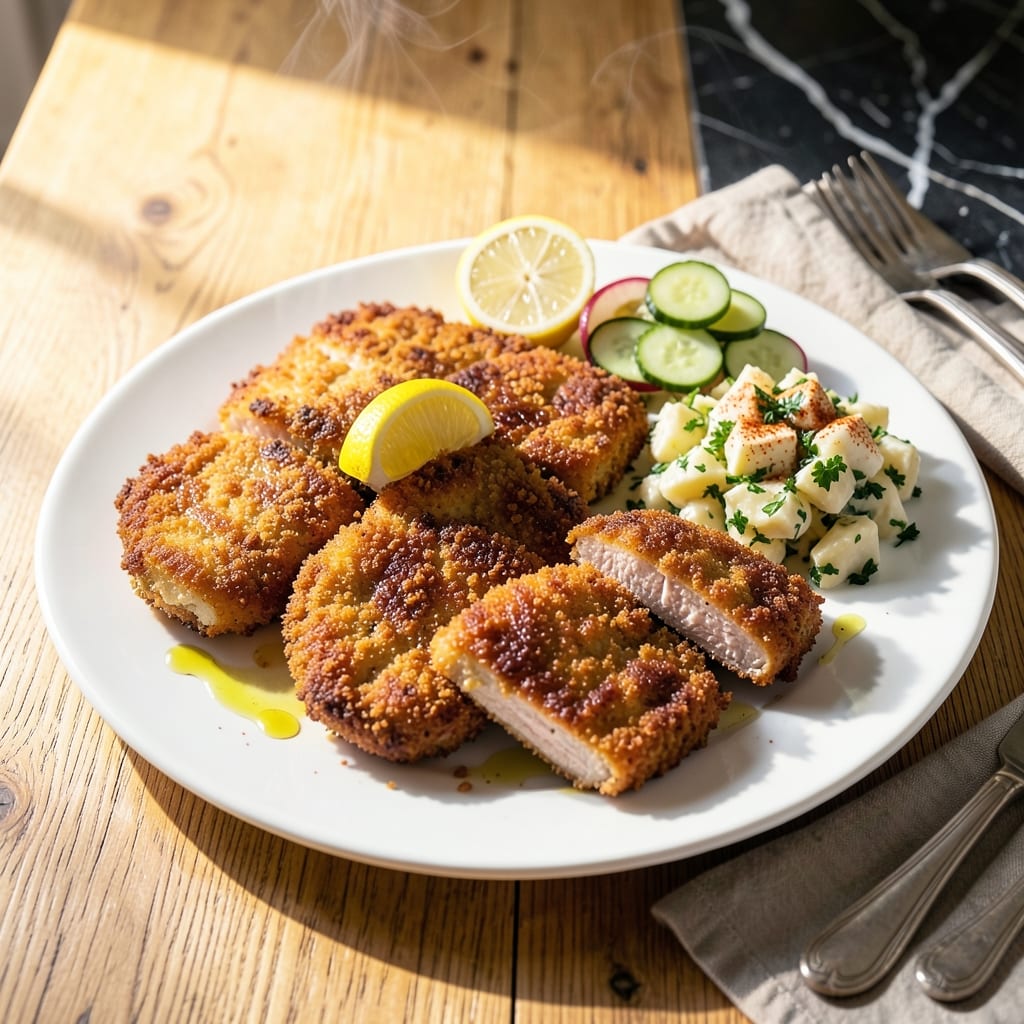
Achieving tender, juicy pork schnitzel at home is simpler than you think. The secret lies in proper pounding and quick cooking to lock in moisture.
I start with pork tenderloin, sliced into even cutlets and pounded thin. This ensures even cooking and that signature crispy exterior with a juicy center.
A three-step breading process—flour, egg, and breadcrumbs—creates the perfect golden crust. The key is using fresh breadcrumbs for better texture.
Pan-frying in hot oil for just 2-3 minutes per side yields cutlets that are crispy outside and remarkably tender inside. Serve immediately for best results.
Ingredients for Pork Tenderloin Schnitzel
Pantry staples meet fresh pork for golden, crispy cutlets with juicy centers every time.
| Ingredient | Amount | Notes |
|---|---|---|
| Pork Tenderloin 🥩 | 1 ½ lb | Trimmed, sliced into 8 cutlets |
| All-Purpose Flour 🌾 | ½ cup | For initial dredging step |
| Large Eggs 🥚 | 2 whole | Beaten for egg wash |
| Fresh Breadcrumbs 🍞 | 1 ½ cups | Panko works as substitute |
| Kosher Salt 🧂 | 1 tsp | Diamond Crystal preferred |
| Freshly Ground Black Pepper 🌶️ | ½ tsp | Coarse grind for texture |
| Sweet Paprika 🌶️ | 1 tsp | For color and mild flavor |
| Vegetable Oil 🫒 | 1 cup | For pan-frying cutlets |
| Unsalted Butter 🧈 | 2 tbsp | Optional for extra richness |
| Garlic Powder 🧄 | ½ tsp | Enhances breading flavor |
| Fresh Lemon Wedges 🍋 | 4 pieces | For serving garnish |
| Fresh Parsley 🌿 | ¼ cup | Chopped, for garnish |
[recipe_ingredient_scaler]
The pork tenderloin is non-negotiable here—look for uniform thickness (about 1-1.5 inches diameter) and a rosy color with minimal fat marbling. Whole Foods and Costco have great options, but any supermarket will do. Fresh breadcrumbs (from day-old bread) make the best crust, though Panko in a pinch gives extra crunch. The cutlets need to be pounded to about 1/4-inch thickness—don’t skip this step (worth the extra minute).
No fresh breadcrumbs? Dried breadcrumbs at half the amount work, but add a splash of milk to rehydrate them slightly. Out of pork tenderloin? Pork loin chops (pounded thin) are a decent substitute, though slightly less tender. Want extra flavor? Swap the paprika for smoked paprika or add a pinch of cayenne. The oil can be any neutral type—canola or peanut oil also work well.
Cooked schnitzel keeps in the fridge for up to 2 days—reheat in a single layer on a baking sheet at 350°F for 10 minutes to restore crispiness. Don’t stack them or they’ll steam. The breaded cutlets can be prepped 4 hours ahead and refrigerated before frying. Fresh parsley and lemon wedges add that final touch (the good stuff, not the pre-chopped kind).
Why You’ll Love This Recipe
- Minimal Effort: I pound the tenderloin thin, dip in flour, egg, and breadcrumbs—done. Honestly, the hardest part is waiting for the oil to heat.
- Crispy Perfection: That first bite with the golden crust giving way to juicy pork? Ridiculously good. The fresh breadcrumbs make all the difference.
- Weeknight Hero: I’ve served this for quick dinners, weekend lunches, and even impressing in-laws. Between us, it works every time.
- Budget Friendly: Pork tenderloin stays affordable, and a little goes a long way. I stretch leftovers into sandwiches the next day.
Step-by-Step Instructions for Pork Tenderloin Schnitzel
This method guarantees crispy cutlets with tender, juicy centers every time.
Step 1: Prep and Season the Pork Tenderloin
Slice the 1.5 lb Pork Tenderloin into 8 cutlets, about ½-inch thick. Place each between plastic wrap and pound gently to an even thickness—this ensures even cooking and prevents curling in the pan.
Season both sides of each cutlet with the 1 tsp Kosher Salt, 0.5 tsp Freshly Ground Black Pepper, and 1 tsp Sweet Paprika. I like to press the seasoning in lightly so it adheres well to the meat. The paprika adds a subtle sweetness and that signature golden hue to the finished dish.
Step 2: Set Up the Breading Station
Create a breading assembly line with three shallow dishes. In the first, place the 0.5 cup All-Purpose Flour mixed with the 0.5 tsp Garlic Powder. The garlic powder infuses the flour with extra flavor, enhancing every bite.
In the second dish, beat the 2 whole Large Eggs until smooth and slightly frothy. In the third, spread out the 1.5 cups Fresh Breadcrumbs. I use fresh breadcrumbs for their coarse texture, which creates a crisper, more rustic coating than fine store-bought versions.
Step 3: Bread the Cutlets Properly
Dredge each seasoned cutlet in the flour mixture, shaking off any excess. This initial layer helps the egg wash cling to the meat. Dip the floured cutlet into the beaten eggs, letting any excess drip off for 2-3 seconds.
Press the cutlet firmly into the breadcrumbs, turning to coat all sides completely. I press down gently with my palm to ensure the crumbs adhere well and create a thick, even layer. Place the breaded cutlets on a wire rack to rest for 5 minutes—this helps the coating set and prevents it from falling off during frying.
Step 4: Pan-Fry to Golden Perfection
Heat the 1 cup Vegetable Oil in a large skillet over medium-high heat until it shimmers and a breadcrumb dropped in sizzles vigorously. Add the 2 tbsp Unsalted Butter and let it melt completely—this adds richness to the oil for extra flavor.
Fry the cutlets in batches to avoid crowding the pan, which would lower the oil temperature. Cook for 2-3 minutes per side until the breading is deep golden brown and crispy. The cutlets should release easily from the pan when ready to flip. Transfer to a paper towel-lined plate to drain excess oil.
Step 5: Serve Immediately with Fresh Garnishes
These cutlets are best served fresh from the pan while the breading is at its crispiest. Arrange them on a platter and garnish with the 0.25 cup Fresh Parsley, chopped finely. The bright green adds a pop of color and freshness against the golden cutlets.
Serve with the 4 pieces Fresh Lemon Wedges on the side. A squeeze of lemon just before eating cuts through the richness and brightens all the flavors. The acidity also helps keep the meat juicy and tender, delivering on the promise of perfect texture in every bite.
Pro Tips For Making Pork Tenderloin Schnitzel
- Pound Evenly: Use the flat side of a meat mallet to pound the tenderloin to an even 1/4-inch thickness—this guarantees even cooking and a consistent crust.
- Season Each Layer: Salt the flour and the breadcrumbs separately before dredging; I learned this the hard way when my schnitzel tasted bland despite seasoning the meat.
- Skip the Overcrowding: Fry in batches with at least an inch between pieces, or the oil temperature drops and you’ll end up with greasy, soggy breading.
- Rest Before Serving: Give the schnitzel 3-4 minutes on a wire rack after frying to keep the crust crisp while the juices redistribute.
Dietary Considerations for pork tenderloin schnitzel
Gluten-Free Option
For a gluten-free version, swap the 0.5 cup All-Purpose Flour and 1.5 cups Fresh Breadcrumbs for certified gluten-free alternatives. I recommend King Arthur Gluten-Free Flour and Aleia’s Gluten-Free Breadcrumbs for best texture. 💪
Lower-Carb Approach
You can reduce carbs by using almond flour instead of all-purpose flour and crushed pork rinds in place of breadcrumbs. This creates a crispy coating with about 70% fewer carbs per serving while keeping the flavor intact.
Dairy-Free Modification
To make this dairy-free, simply omit the 2 tbsp Unsalted Butter and use only Vegetable Oil for frying. The cutlets will still achieve that perfect golden crispiness. I’ve tested this and honestly can’t tell the difference.
Egg-Free Breading
Replace the 2 whole Large Eggs with a mixture of 3 tbsp aquafaba (chickpea brine) or ¼ cup unsweetened almond milk with 1 tbsp cornstarch. Both options create a sticky wash that helps the breading adhere beautifully.
Leaner Protein Swap
If you prefer chicken, use 1.5 lb Chicken Breasts pounded to ¼-inch thickness. The cooking time remains the same—2-3 minutes per side in hot oil. The texture stays tender, and the flavor is equally delicious. 💛
Sodium Considerations
To reduce sodium, use low-sodium kosher salt or cut the amount in half. The 1 tsp Sweet Paprika and 0.5 tsp Garlic Powder still add plenty of flavor without the salt overload.
Nutrition Facts
Frequently Asked Questions
Why do I need to pound the cutlets thin?
Pounding ensures even thickness for consistent cooking and prevents curling in the pan. Aim for ¼-inch thickness so each bite is perfectly crispy outside and tender inside.
What oil works best for frying?
Vegetable or canola oil are ideal—they have a high smoke point and neutral flavor. Avoid olive oil; it burns at high temps. Heat oil to medium-high heat before adding cutlets.
How do I keep the breading from falling off?
Let breaded cutlets rest for 5 minutes before frying. Use a wire rack, not a plate, so moisture doesn’t soften the coating. Press crumbs firmly into each cutlet.
Can I bake instead of fry?
Yes! Place on a wire rack over a baking sheet at 400°F for 12-15 minutes, flipping halfway. Spray with oil for crispiness. It’s healthier but less crispy than pan-frying.

Trained in classic French technique but raised on slow-cooked ribs and spicy rubs, she blends culinary skill with smoke and soul.
- Recipe for Boneless Pork Chops in Cast Iron Skillet: Sear and Baste to Juicy Perfection - October 3, 2026
- Recipe for Boneless Cross Rib Roast: Slow-Roasted Beef with Herb Crust - October 3, 2026
- Hamburgers in Sauce Recipe Crock Pot: Slow-Cooked Savory Delight - October 3, 2026