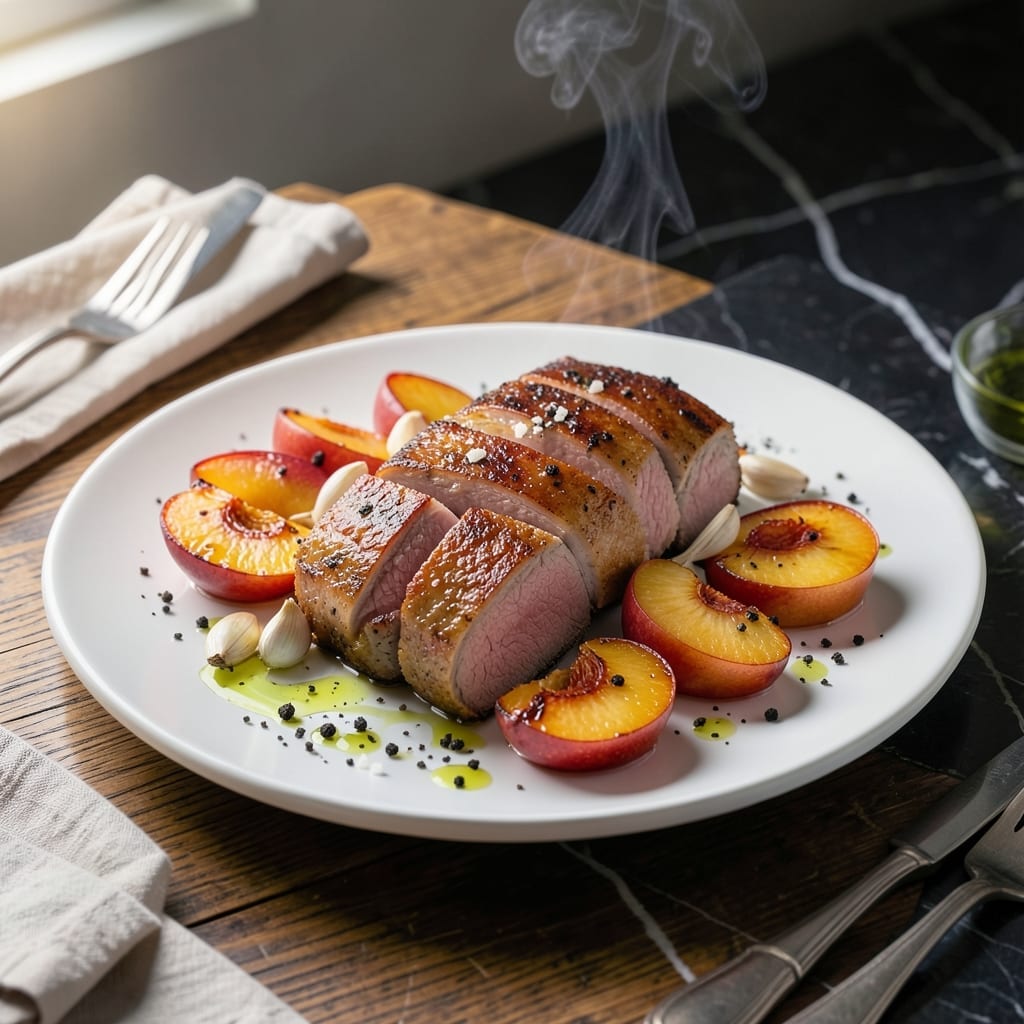
This dish brings together the richness of tender pork with the bright sweetness of summer peaches. I developed this recipe after a particularly memorable coastal ride when I stopped at a roadside stand overflowing with ripe fruit.
The key is searing the pork to create a flavorful crust, then finishing it on the grill with peach halves. The natural juices from the peaches caramelize slightly, creating a glaze that complements the savory meat perfectly.
You’ll end up with perfectly cooked pork that’s juicy and tender, paired with warm, jammy peaches that soak up all the delicious drippings. It’s a balance of flavors that feels special without being complicated.
Serve this with a simple green salad or grilled vegetables to let the main dish shine. The combination of smoky, sweet, and savory makes it ideal for summer gatherings.
Ingredients for Pork Tenderloin with Peaches
Pantry staples meet summer produce for this unforgettable grilled dish.
| Ingredient | Amount | Notes |
|---|---|---|
| Pork Tenderloin 🥩 | 1 ½ lb | Trimmed of silver skin |
| Ripe Peaches 🍑 | 4 whole | Halved, pits removed |
| Olive Oil 🫒 | 2 tbsp | Divided for searing and brushing |
| Kosher Salt 🧂 | 1 ½ tsp | Diamond Crystal preferred |
| Black Pepper 🌶️ | 1 tsp | Freshly ground |
| Garlic Cloves 🧄 | 3 cloves | Minced for rub |
| Fresh Rosemary 🌿 | 2 tbsp | Finely chopped |
| Fresh Thyme 🍃 | 2 tsp | Leaves stripped from stems |
| Honey 🍯 | 2 tbsp | For peach glaze |
| Balsamic Vinegar 💧 | 1 tbsp | Aged for depth |
| Dijon Mustard 🟡 | 1 tbsp | Smooth variety |
| Unsalted Butter 🧈 | 2 tbsp | For finishing peaches |
[recipe_ingredient_scaler]
The pork tenderloin should be a vibrant pink with fine marbling—Whole Foods or Costco have great options. Look for pieces around 1.5 pounds, which serve four perfectly. I always grab peaches that give slightly to pressure (they’ll soften more when grilled). Fresh herbs from the farmers market make a difference, but Trader Joe’s has solid pre-packaged rosemary and thyme if you’re in a pinch.
No fresh herbs? Dried at one-third the amount works fine—just add them to the rub. Short on peaches? Nectarines or plums give a similar sweet-tart vibe. If you don’t have balsamic, apple cider vinegar with a pinch of sugar gets close. The honey can be swapped for maple syrup (vegan-friendly), though the flavor will be slightly different.
This keeps in the fridge for 3-4 days, but honestly, it’s best fresh off the grill. Reheat gently in a skillet to avoid drying out the pork. The peaches won’t hold their shape as well the next day, so plan accordingly.
Why You’ll Love This Recipe
- One Pan Wonder: I toss the pork and peaches on a single sheet, pop it in the oven, and cleanup’s a breeze.
- Sweet & Savory Magic: The juicy peaches caramelize against the pork, making every bite ridiculously good.
- Weeknight Hero: Honestly, it’s ready faster than takeout but feels fancy enough for guests.
- Leftovers Win: The flavors deepen overnight, so lunch the next day tastes even better.
Step-by-Step Instructions for Pork Tenderloin With Peaches
Here’s my tested method for achieving perfectly tender pork with caramelized peaches every time.
Step 1: Prepare and Season the Pork Tenderloin
Pat the 1.5 lb Pork Tenderloin dry with paper towels, then trim any remaining silver skin. I always do this first—it ensures the seasoning adheres properly and the meat cooks evenly without curling.
In a small bowl, combine 1.5 tsp Kosher Salt, 1 tsp Black Pepper, minced 3 cloves Garlic Cloves, 2 tbsp Fresh Rosemary, and 2 tsp Fresh Thyme. Rub this mixture all over the pork, pressing it into the surface. Let it sit at room temperature for 20-30 minutes while you prep the rest.
This seasoning blend creates a fragrant crust that locks in moisture. The pork should look evenly coated with a slight sheen from the herbs and garlic.
Step 2: Sear the Pork to Golden Perfection
Heat a large oven-safe skillet over medium-high heat and add 1 tbsp Olive Oil. When the oil shimmers (but isn’t smoking), place the pork in the pan. Sear undisturbed for 3-4 minutes per side until deep golden brown.
I press down gently with tongs during the first minute to ensure full contact with the pan. You’ll know it’s ready to flip when it releases easily and the crust looks crispy. The pork should have a rich, caramelized exterior at this point.
Once seared, transfer the pork to a plate and tent loosely with foil. The internal temperature should be around 140°F at this stage—perfect for finishing later.
Step 3: Caramelize the Peaches
In the same skillet, reduce heat to medium and add the remaining 1 tbsp Olive Oil. Place the 4 whole Ripe Peaches (halved, pits removed) cut-side down in the pan. Cook undisturbed for 3-4 minutes until the cut sides develop a deep golden-brown crust.
While the peaches cook, whisk together 2 tbsp Honey, 1 tbsp Balsamic Vinegar, and 1 tbsp Dijon Mustard in a small bowl. Pour this glaze over the peaches and cook for another 1-2 minutes, basting occasionally with the pan juices.
The peaches should be tender but still hold their shape, with a glossy, caramelized surface. The glaze will thicken slightly as it reduces.
Step 4: Finish the Pork and Peaches Together
Return the pork to the skillet with the peaches, nesting it among them. Add 2 tbsp Unsalted Butter to the pan and spoon the melted butter and peach glaze over the pork repeatedly for 2-3 minutes.
This basting technique adds incredible flavor and ensures the pork stays moist. The internal temperature of the pork should reach 145°F—use an instant-read thermometer to check. The peaches will absorb some of the pork’s savory juices, creating a perfect sweet-savory balance.
You’ll notice the pork takes on a beautiful glaze from the peach mixture, and the entire dish will smell irresistibly fragrant.
Step 5: Rest and Serve
Transfer the pork to a cutting board and let it rest for 10 minutes—this allows the juices to redistribute. The peaches can stay in the warm skillet during this time; they’ll continue to absorb flavor.
Slice the pork into ½-inch thick medallions and arrange on a platter with the peaches. Spoon any remaining pan juices and glaze over the top. The pork should be tender and juicy, with the peaches offering a sweet, tangy contrast in every bite.
Serve immediately while the glaze is still glossy. The combination of the herb-crusted pork and caramelized peaches makes for an elegant yet approachable dish that’s sure to impress.
Pro Tips For Making Pork Tenderloin With Peaches
- Rest Before Slicing: Let the pork tenderloin rest for at least 5-10 minutes after cooking—this keeps the juices inside instead of all over your cutting board.
- Sear First, Then Roast: Start with a hot sear in olive oil for 2-3 minutes per side, then finish in the oven at 375°F to lock in moisture and get that golden crust.
- Use Firm Peaches: Skip overripe peaches—they’ll turn to mush. Choose ones that give slightly but still hold their shape when sliced.
- Salt the Pork Early: Season the tenderloin with kosher salt at least 20-30 minutes before cooking so the salt has time to penetrate and flavor the meat deeply.
Common Mistakes When Making pork tenderloin with peaches
Overcooking the Pork
Pork tenderloin cooks quickly, so it’s easy to overshoot the ideal 145°F internal temperature. I’ve ruined more than one by walking away for “just a minute.” Use an instant-read thermometer and start checking at 12-15 minutes of total cooking time. Remember it continues cooking while resting. 🌡️
Skipping the Rest
I learned the hard way that slicing pork immediately releases all its juices onto the cutting board. Always rest the pork for at least 10 minutes after cooking. Tent it loosely with foil to keep it warm while the juices redistribute throughout the meat.
Using Underripe Peaches
Hard peaches won’t caramelize properly and will taste starchy. Choose fruit that gives slightly when pressed. If your peaches are too firm, let them sit at room temperature for 1-2 days first. The natural sweetness develops beautifully when they’re perfectly ripe.
Crowding the Pan
When searing, give the pork space in the pan. Crowding causes steaming instead of browning. I use a 12-inch skillet for 1.5 lb of pork to ensure proper crust development. If your pan is too small, cook the peaches separately after the pork.
Neglecting the Glaze
The honey-balsamic glaze is what makes this dish special. Don’t let it burn in the pan. Cook the peaches over medium heat and baste frequently. If the glaze starts to darken too quickly, add a splash of water to the pan. 💡
Uneven Seasoning
Press the herb rub into the pork’s surface so it adheres during cooking. I’ve found that simply sprinkling the seasoning leads to uneven flavor. Take an extra minute to massage the rub into every nook of the tenderloin for maximum impact.
Nutrition Facts
Frequently Asked Questions
What’s the best way to tell when the pork is done?
Use an instant-read thermometer to check for 145°F internally. The meat should be slightly pink in the center but juicy. Remove it from heat at this temp—it continues cooking while resting.
Can I use canned peaches instead of fresh?
Fresh peaches work best for caramelizing, but canned (drained) can substitute in a pinch. Pat them dry first and reduce cooking time to 2 minutes per side to avoid mushiness.
How do I store leftovers?
Refrigerate in an airtight container for up to 3 days. Reheat gently in a skillet over low heat to preserve moisture. The peaches may soften further after storage.

Trained in classic French technique but raised on slow-cooked ribs and spicy rubs, she blends culinary skill with smoke and soul.
- Recipe for Fully Cooked Spiral Ham: Sweet Glaze and Effortless Elegance - October 3, 2026
- Recipe for Cream of Rice: Silky Smooth Breakfast Comfort - October 3, 2026
- Old Fashioned Beef and Noodles Recipe Crock Pot: Set-It-and-Forget-It Hearty Meal - October 3, 2026