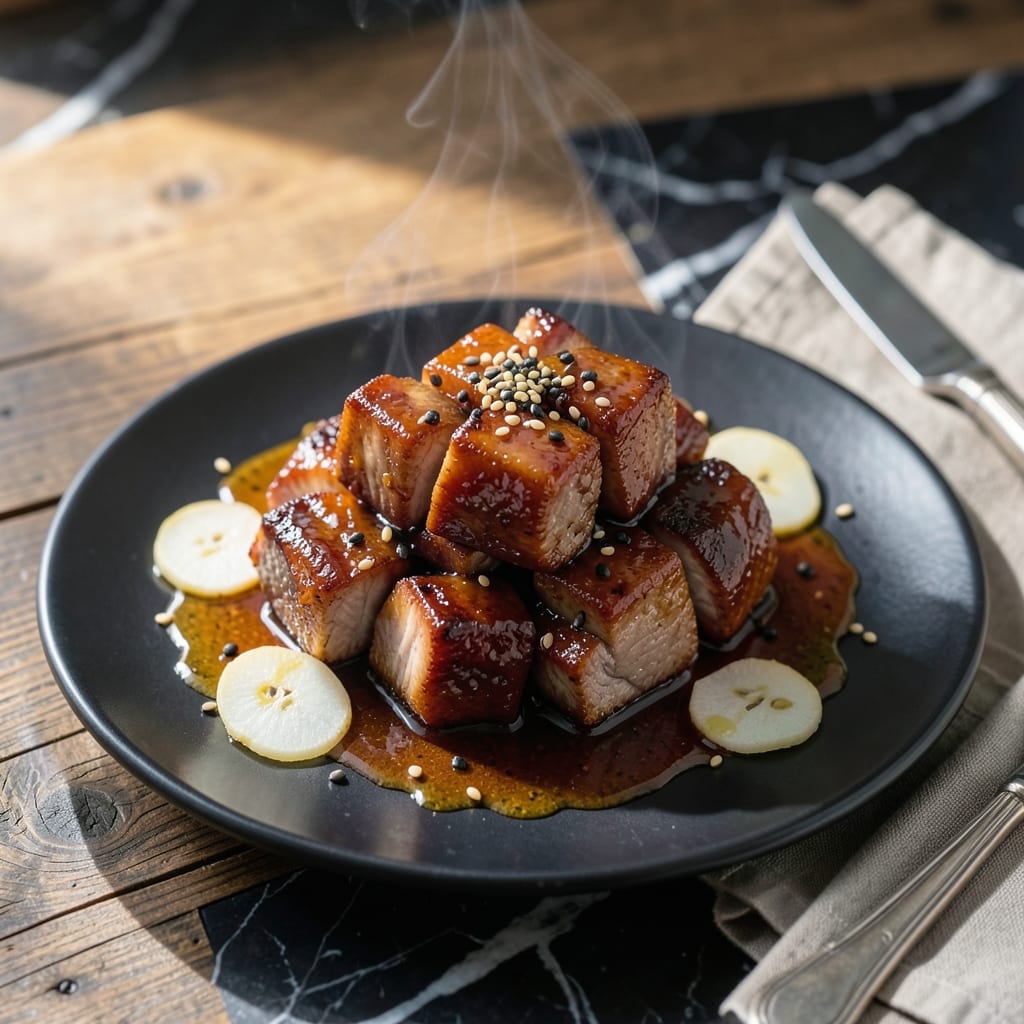
This Japanese-style pork teriyaki delivers tender meat coated in a glossy, sweet-savory glaze that’s impossible to resist. The secret lies in the traditional technique of searing the pork first, then simmering it in the homemade teriyaki sauce until perfectly caramelized.
I’ve refined this method over years of testing, ensuring the pork stays juicy while the sauce reduces to a thick, lustrous finish. The combination of soy sauce, mirin, and sake creates a depth of flavor that store-bought versions can’t match.
The dish comes together quickly—under 30 minutes—with simple ingredients, yet it feels special enough for a weekend dinner. Serve it over steamed rice with steamed vegetables for a complete meal.
This is comfort food with a touch of elegance, proving that homemade can outshine takeout every time.
Ingredients for Pork Teriyaki Recipe Japanese Style
Tender pork and glossy teriyaki sauce come from these carefully selected ingredients.
| Ingredient | Amount | Notes |
|---|---|---|
| Boneless Pork Shoulder 🥩 | 1 ½ lb | Cut into 1-inch cubes |
| Soy Sauce 💧 | ½ cup | Low-sodium preferred |
| Mirin 🍶 | ⅓ cup | Sweet rice wine |
| Sake 🍶 | ⅓ cup | Dry variety recommended |
| Granulated Sugar 🍚 | 2 tbsp | Or substitute honey |
| Fresh Ginger 🌿 | 1 tbsp | Peeled and grated |
| Garlic Cloves 🧄 | 3 cloves | Minced finely |
| Vegetable Oil 🫒 | 2 tbsp | High smoke point |
| Cornstarch 🌾 | 1 tbsp | For thickening sauce |
| Water 💧 | 2 tbsp | To mix with cornstarch |
| Green Onions 🧅 | 4 whole | Thinly sliced for garnish |
| Sesame Seeds 🌰 | 1 tsp | Toasted for garnish |
[recipe_ingredient_scaler]
The pork shoulder is non-negotiable here. Look for well-marbled cuts—this fat renders down during cooking, keeping the meat moist. Most Asian markets carry pork shoulder pre-cut for stir-fry, which saves time. For the sake and mirin, Kikkoman or Hakutsuru brands are widely available at Whole Foods or larger supermarkets. Avoid cooking sake labeled as such; opt for drinking sake instead.
No mirin? Substitute with 1 tbsp sugar per 2 tbsp rice vinegar. Sake can be replaced with dry white wine. The cornstarch slurry is essential for that signature glossy finish—don’t skip it. If you’re avoiding gluten, use tamari instead of soy sauce. The ginger and garlic should be fresh; jarred versions lack the necessary punch.
The cooked pork keeps well in the fridge for up to 4 days. For longer storage, freeze for up to 3 months—just thaw overnight before reheating. Garnishes like green onions and sesame seeds are best added fresh when serving.
Why You’ll Love This Recipe
- One Pan Wonder: Honestly, it’s just pork shoulder and a quick simmer in soy, mirin, and sake—no fancy steps, no extra dishes.
- Umami Bomb: The mix of soy and mirin creates this deep, sweet-savory glaze that clings to every bite.
- Meal Prep Hero: I make a big batch on Sunday and it reheats beautifully for lunches all week.
- Budget Friendly: Pork shoulder is cheap, and a little goes a long way with that rich teriyaki sauce.
Step-by-Step Instructions for Pork Teriyaki Japanese Style
Master the technique for tender pork with a glossy, caramelized teriyaki glaze using this refined method.
Step 1: Sear the Pork Shoulder to Lock in Juices
Heat 2 tbsp vegetable oil in a large skillet over medium-high heat until shimmering but not smoking. Add the 1.5 lb boneless pork shoulder (cut into 1-inch cubes) in a single layer, ensuring not to overcrowd the pan.
Sear undisturbed for 3-4 minutes per side until golden brown and slightly caramelized. Resist the urge to stir—this builds the fond that deepens the sauce’s flavor. The pork should release easily from the pan when properly seared.
Transfer the pork to a plate and set aside. The internal temperature should remain slightly underdone at this stage, as it will finish cooking in the sauce later.
Step 2: Build the Teriyaki Base with Aromatics
In the same skillet, reduce heat to medium and add 1 tbsp fresh ginger and 3 cloves garlic cloves (minced). Sauté for 30-45 seconds until fragrant but not browned—burnt garlic imparts bitterness that overpowers the dish.
Pour in 0.5 cup soy sauce, 0.33 cup mirin, 0.33 cup sake, and 2 tbsp granulated sugar. Stir to dissolve the sugar and scrape up any browned bits from the pan. This deglazing step ensures every layer of flavor is incorporated into the sauce.
Simmer for 3-4 minutes until the mixture slightly reduces and the alcohol smell dissipates. The sauce should look syrupy but not overly thick at this stage.
Step 3: Finish Cooking the Pork in the Sauce
Return the seared pork to the skillet, coating each piece thoroughly in the sauce. Reduce heat to medium-low and simmer uncovered for 8-10 minutes, turning the pork occasionally to ensure even cooking and glazing.
The pork is done when it reaches an internal temperature of 145°F and the sauce clings to each piece with a glossy sheen. If the sauce reduces too quickly, add a splash of water to prevent burning.
Step 4: Thicken the Glaze to Perfection
In a small bowl, whisk together 1 tbsp cornstarch and 2 tbsp water until smooth. Stir this slurry into the skillet and cook for an additional 1-2 minutes over medium heat until the sauce thickens to a lacquer-like consistency.
Watch closely—the sauce should coat the back of a spoon and ribbon off in a slow, steady stream. Over-thickening will result in a gummy texture, so remove from heat as soon as the desired consistency is reached.
Step 5: Garnish and Serve Immediately
Transfer the pork to a serving platter and drizzle any remaining sauce from the pan over the top. Garnish with 4 whole green onions (thinly sliced) and 1 tsp sesame seeds for a fresh, nutty finish.
Serve immediately while the glaze is still glossy and the pork is at its peak tenderness. The contrast of the sticky sauce, juicy pork, and crisp green onions creates the signature Japanese-style teriyaki experience.
Pro Tips For Making Pork Teriyaki Recipe Japanese Style
- Slice Thin Against Grain: Cut the pork shoulder into ¼-inch slices against the grain—I learned this the hard way after chewing through tough strips in my first few attempts.
- Reduce the Sauce First: Simmer the soy sauce, mirin, sake, and sugar for 3-4 minutes before adding the pork, or you’ll end up with a watery glaze that never thickens properly.
- Pat Pork Dry: Blot the pork slices with a paper towel before cooking, or the sauce won’t cling and you’ll steam the meat instead of searing it.
- Use a Lid for Tender Pork: After searing, cover the pan for 2-3 minutes to trap steam—this softens the pork shoulder without overcooking it, especially if it’s a tougher cut.
Dietary Considerations for This Recipe
Gluten-Free Adaptation
Swap regular soy sauce for tamari—it’s naturally gluten-free and has a deeper, more complex flavor. I find San-J brand tamari at New Seasons Market works beautifully. Also, ensure your cornstarch is certified gluten-free if cross-contamination is a concern. 💪
Lower Sugar Option
Replace the 2 tbsp granulated sugar with 1 tbsp honey or a sugar-free alternative like monk fruit sweetener. The mirin already adds sweetness, so you won’t lose the dish’s signature balance. Just taste and adjust as needed.
Dairy-Free Note
This recipe is naturally dairy-free, so no modifications are needed. The only potential concern is cross-contamination if using shared kitchen tools. I always clean my skillet thoroughly before starting to avoid any issues.
Low-Sodium Adjustments
Use low-sodium soy sauce or tamari and reduce the amount by 25%. Boost flavor with extra 1 tsp grated ginger and 1 additional garlic clove. The sauce will still taste rich and satisfying without the excess salt.
Protein Alternatives
For a leaner option, substitute pork with chicken thighs—they stay juicy and absorb the teriyaki glaze just as well. Cook for 6-8 minutes instead of 8-10 minutes to prevent drying out. 🔥
Vegetarian Option
Swap pork for extra-firm tofu pressed and cubed. Sear the tofu first to build a crispy exterior, then simmer in the sauce for 5-7 minutes. It’s a delicious way to enjoy the same flavors while keeping it plant-based.
Nutrition Facts
Frequently Asked Questions
What cut of pork works best?
Use well-marbled pork shoulder for the juiciest results. The fat renders down during cooking, keeping the meat tender. Avoid lean cuts like tenderloin, as they can dry out quickly.
Can I make the sauce ahead?
Yes! Mix the sauce ingredients up to 2 days in advance and store in the fridge. Simmer and thicken just before cooking the pork for the best texture and flavor.
How do I prevent the sauce from burning?
Cook on medium-low heat and stir frequently. If it starts to thicken too fast, add a splash of water. The cornstarch slurry at the end ensures a smooth, glossy finish without burning.
What should I serve with it?
Pair it with steamed jasmine rice and blanched broccoli or a crisp cucumber salad. The rice soaks up the extra sauce beautifully, creating a complete meal.

Trained in classic French technique but raised on slow-cooked ribs and spicy rubs, she blends culinary skill with smoke and soul.
- Recipe for Dumplings in Crock Pot: Fluffy Pillows with Minimal Effort - October 3, 2026
- Recipe For Diced Pork In Slow Cooker: Melt-In-Your-Mouth Tenderness All Day - October 3, 2026
- Recipe for Crock Pot Lasagna Using Ravioli: No-Boil Cheese Layers - October 3, 2026