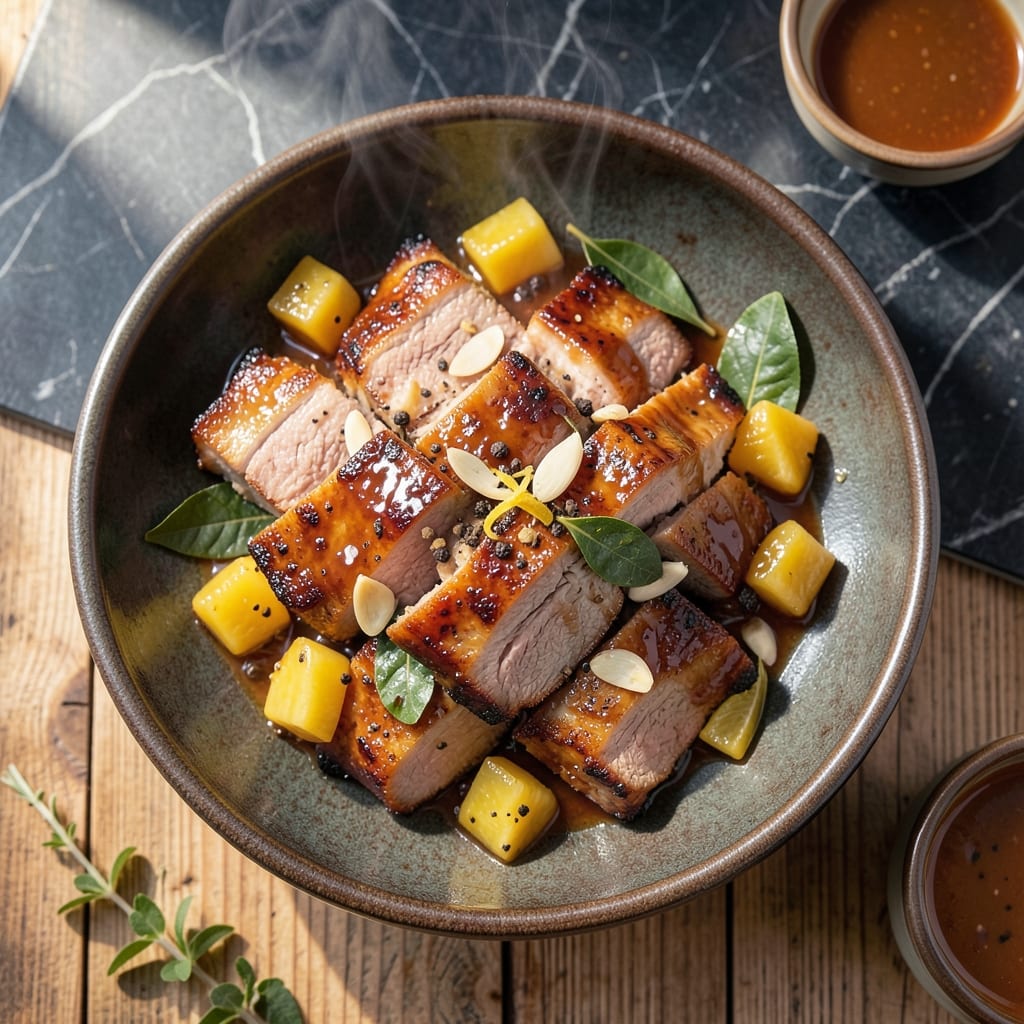
This Filipino-style pork tocino transforms affordable cuts into a sweet-savory masterpiece with a simple curing process. The pineapple juice tenderizes while adding natural sweetness that balances the garlic and soy sauce perfectly.
I developed this recipe after years of experimenting with different curing times and ingredient ratios. The key is allowing the pork to marinate for 24 hours, which ensures the flavors penetrate deeply and the meat stays juicy during cooking.
You’ll achieve restaurant-quality results with minimal effort—just mix the cure, wait, then pan-fry to caramelized perfection. The edges develop a glossy, slightly sticky coating that’s irresistibly flavorful.
Serve with garlic rice and fried eggs for a traditional silog breakfast, or enjoy as a main course with steamed vegetables. This method delivers consistent results every time.
Ingredients for Pork Tocino Recipe Pineapple Juice
This dish starts with simple ingredients that pack a huge flavor punch.
| Ingredient | Amount | Notes |
|---|---|---|
| Pork Shoulder 🥩 | 2 lb | Cut into 1-inch thick slices |
| Pineapple Juice 🍍 | 1 ½ cups | Unsweetened, canned or fresh |
| Soy Sauce 🫒 | ½ cup | Regular or all-purpose |
| Garlic Cloves 🧄 | 8 cloves | Peeled and minced |
| Brown Sugar 🍚 | ½ cup | Packed, for sweetness |
| Apple Cider Vinegar 🍏 | 2 tbsp | Balances sweetness and salt |
| Black Peppercorns 🌶️ | 1 tsp | Freshly cracked preferred |
| Bay Leaves 🌿 | 2 whole | Dried, for marinade |
| Salt 🧂 | 1 tsp | Kosher or sea salt |
| Cooking Oil 🫒 | 2 tbsp | Neutral-flavored for frying |
| Calamansi or Lime Juice 🍋 | 2 tbsp | Optional, for brightness |
| Ground Black Pepper 🌶️ | ½ tsp | For final seasoning |
[recipe_ingredient_scaler]
The pork is the star here. Pork shoulder (sometimes labeled as picnic shoulder) has the right fat-to-meat ratio for that tender, juicy result. I grab mine from Costco when they’ve got the big cuts—cheaper per pound, and I can portion it myself. Look for pieces with good marbling (those white streaks of fat). The pineapple juice is key for tenderizing, so use 100% juice—no added sugar or syrups.
No pineapple juice? Orange juice with a splash of vinegar works in a pinch, but the flavor won’t be the same. Fresh garlic is non-negotiable here—jarred minced garlic lacks that sharp, fresh punch. Brown sugar can be swapped for coconut sugar, but it’ll change the caramelization slightly. If you’re out of soy sauce, tamari or coconut aminos are solid backups.
The cured pork keeps in the fridge for up to 3 days before cooking, but it’s best used within 24-48 hours for optimal flavor. Leftovers? Store cooked tocino in an airtight container for 4-5 days. It reheats beautifully in a pan—just add a splash of water to keep it moist.
Why You’ll Love This Recipe
- Five Ingredient Magic: Honestly, just brown sugar, soy sauce, garlic, pineapple juice, and pork shoulder—no fancy shopping required.
- Sweet-Savory Bomb: That first bite where the caramelized brown sugar crashes into the tang of pineapple juice? Ridiculously good.
- Feeds The Week: I make a big batch Sunday and we’re still pulling it out for tacos and fried rice by Wednesday.
- Budget Hero: Pork shoulder stays cheap, and a single marinade does double duty as both flavor and tenderizer.
Step-by-Step Instructions for Pork Tocino With Pineapple Juice
Here’s the method I use for perfectly tender, caramelized tocino every time.
Step 1: Prepare the Marinade and Cure the Pork
In a large bowl, combine the 1.5 cups Pineapple Juice, 0.5 cup Soy Sauce, 8 cloves Garlic Cloves, 0.5 cup Brown Sugar, 2 tbsp Apple Cider Vinegar, 1 tsp Black Peppercorns, 2 whole Bay Leaves, and 1 tsp Salt. Stir until the brown sugar dissolves completely—this ensures even flavor distribution throughout the meat.
Add the 2 lb Pork Shoulder slices to the marinade, making sure each piece is fully submerged. Cover and refrigerate for at least 12 hours, but 24 hours is ideal for deeper flavor penetration. The longer cure time transforms the pork, infusing it with that signature sweet-savory balance.
Step 2: Drain and Dry the Marinated Pork
Remove the pork from the refrigerator and drain it in a colander, reserving the marinade. Discard the bay leaves and peppercorns at this point—they’ve done their job. Pat the pork slices thoroughly dry with paper towels; this step is crucial for achieving that coveted caramelized crust during cooking.
Let the pork sit at room temperature for 15-20 minutes while you heat the pan. This takes the chill off, ensuring even cooking. I’ve found that cold pork straight from the fridge steams rather than sears, and you want that beautiful brown exterior tocino is known for.
Step 3: Pan-Fry the Pork to Perfection
Heat the 2 tbsp Cooking Oil in a large skillet over medium heat. When the oil shimmers, add the pork slices in a single layer, being careful not to crowd the pan. Cook for 4-5 minutes per side until deeply browned and the internal temperature reaches 160°F.
As the pork cooks, you’ll notice the sugars in the marinade begin to caramelize. For extra flavor, pour in about ¼ cup of the reserved marinade and let it reduce into a glossy glaze, basting the pork occasionally. This creates that signature sticky, sweet-savory coating tocino is famous for.
Step 4: Finish and Rest Before Serving
Transfer the cooked pork to a serving plate. For a bright finish, drizzle with the 2 tbsp Calamansi or Lime Juice and sprinkle with 0.5 tsp Ground Black Pepper. The citrus cuts through the richness and adds a distinctly Filipino touch to the dish.
Let the pork rest for 5 minutes before serving. This allows the juices to redistribute, ensuring each bite is moist and flavorful. Serve with steamed rice and a side of pickled vegetables for a complete meal. The pork should be tender with a slightly sticky, caramelized exterior—this is how you know you’ve done it right.
Pro Tips For Making Pork Tocino Recipe Pineapple Juice
- Marinate Overnight: I learned this the hard way—pork shoulder needs at least 8 hours in the pineapple juice and soy sauce marinade to soak up the sweet-savory flavor, or you’ll end up with bland bites no matter how much sugar you add.
- Slice Thin and Even: Cut the pork shoulder into ¼-inch strips, not chunks—this guarantees even cooking and maximum surface area for the brown sugar to caramelize properly.
- Simmer, Don’t Boil: After searing, keep the heat at a gentle simmer when cooking the marinade down, or the sugar will burn and turn bitter before the pork is tender.
- Use Fresh Pineapple Juice: Skip the canned stuff; fresh pineapple juice makes a real difference in brightness and acidity, balancing the rich pork and soy without tasting flat.
Creative Variations of This pork tocino recipe pineapple juice
Spiced Rum Infusion
Swap ½ cup of pineapple juice with dark spiced rum for a boozy twist. The molasses notes in the rum deepen the caramelization, creating an almost candied crust. I use Captain Morgan—it’s affordable and adds warmth without overpowering the dish. 🌟
Coconut Milk Variation
Replace 1 cup pineapple juice with coconut milk for a creamy, slightly nutty flavor. This version is popular in the Visayas region of the Philippines. The milk tenderizes the pork while adding a subtle tropical richness.
Honey Glazed
Add ¼ cup honey to the marinade for extra gloss and sweetness. I prefer local Pacific Northwest wildflower honey from the Portland farmers market. Brush the pork with additional honey during the last 2 minutes of cooking for a sticky finish.
Citrus Forward
Increase the citrus by adding zest from 1 lime and 2 tbsp orange juice to the marinade. The bright acidity cuts through the richness, making the dish feel lighter. This works especially well for summer meals.
Smoky Chipotle
Stir 1 tsp chipotle powder into the marinade for a smoky, spicy kick. The heat builds slowly and pairs beautifully with the sweetness. I discovered this variation at a food truck in Cincinnati—it’s become a family favorite. 🔥
Quick 12-Hour Cure
Short on time? Use thin-cut pork slices (about ½ inch thick) and reduce the curing time to 12 hours. The flavors won’t penetrate as deeply, but you’ll still get great results. Perfect for weeknight dinners when you forget to prep ahead.
Nutrition Facts
Frequently Asked Questions
Can I use a different cut of pork?
Yes, but pork shoulder is ideal. Pork belly works well for extra richness, while tenderloin stays leaner. Avoid very lean cuts like pork loin as they can dry out during cooking.
Why is pineapple juice used in the marinade?
It naturally tenderizes the meat with bromelain enzymes and adds sweetness that balances the soy and garlic. The acidity also helps the flavors penetrate deeper during curing.
How do I store leftovers?
Keep cooked tocino in an airtight container in the fridge for up to 5 days. Reheat gently in a pan with a splash of water to maintain moisture.

Trained in classic French technique but raised on slow-cooked ribs and spicy rubs, she blends culinary skill with smoke and soul.
- Recipe For Fried Pork Chops In An Iron Skillet: Crispy Crust With Juicy Centers - October 3, 2026
- Recipe for Fully Cooked Spiral Ham: Sweet Glaze and Effortless Elegance - October 3, 2026
- Recipe for Cream of Rice: Silky Smooth Breakfast Comfort - October 3, 2026