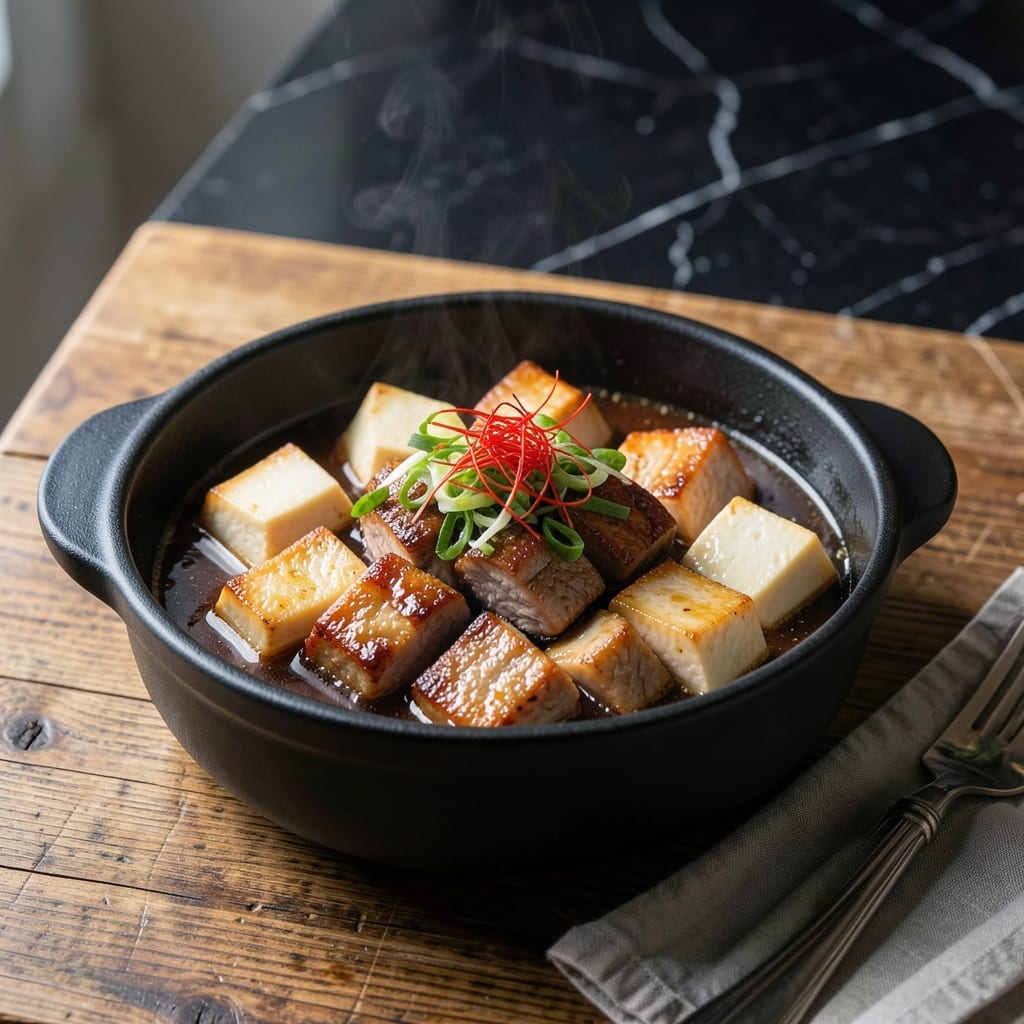
This Japanese donburi-style bowl combines tender pork and silky tofu in a savory simmered sauce that’s both comforting and deeply flavorful. The dish balances rich meat with delicate tofu, creating a perfect harmony of textures and tastes.
I developed this recipe after years of experimenting with traditional Japanese cooking techniques. The key is simmering the ingredients together so the flavors meld beautifully, with each bite delivering layers of umami and warmth.
The sauce clings to every piece of pork and tofu, making each spoonful irresistibly savory. It’s a dish that feels special but comes together with simple, accessible ingredients.
Serve it over steamed rice for a hearty, satisfying meal that’s sure to become a favorite.
Ingredients for Pork Tofu Recipe Japanese
Tender pork, silky tofu, and umami-rich sauce transform simple ingredients into something extraordinary.
| Ingredient | Amount | Notes |
|---|---|---|
| Pork Shoulder 🥩 | 1 lb | Cut into 1-inch cubes, trimmed of excess fat |
| Firm Tofu 🧈 | 14 oz | Pressed and cut into 1-inch cubes |
| Japanese Soy Sauce 🫒 | ½ cup | Low-sodium preferred for balance |
| Mirin 🍶 | ¼ cup | Sweet cooking rice wine essential |
| Sake 🍶 | ¼ cup | Dry variety for depth of flavor |
| Dashi Stock 🍲 | 1 cup | Homemade or instant kombu bonito |
| Granulated Sugar 🍚 | 1 tbsp | Balances savory elements perfectly |
| Fresh Ginger 🌿 | 1 tbsp | Peeled and finely grated |
| Garlic Cloves 🧄 | 4 cloves | Minced for aromatic base |
| Green Onions 🧅 | 4 whole | Thinly sliced, white and green parts separated |
| Toasted Sesame Seeds 🌰 | 1 tsp | For garnish, enhances nutty flavor |
| Steamed Japanese Short-Grain Rice 🍚 | 2 cups | Cooked, for serving base |
| Vegetable Oil 🫒 | 1 tbsp | Neutral flavor for cooking |
| Red Pepper Flakes 🌶️ | ¼ tsp | Optional for heat adjustment |
[recipe_ingredient_scaler]
The pork shoulder is non-negotiable for its marbling and tenderness after simmering. Look for well-marbled cuts at Japanese markets or specialty grocers like Whole Foods. For the tofu, firm or extra-firm holds its shape—avoid silken. Pressing is essential (30 minutes, weighted) to prevent crumbling. Dashi stock can be found in the Asian aisle or made fresh with kombu and bonito flakes for authentic depth.
No sake? Substitute dry white wine plus 1 tsp sugar. Mirin can be replaced with 1 tbsp sugar mixed into 3 tbsp rice vinegar. Vegetarian? Swap pork for shiitake mushrooms (soaked if dried). The soy sauce should be Japanese-style—Kikkoman or Yamasa are reliable. For gluten-free, use tamari but adjust salt levels as it’s often more concentrated.
The sauce base keeps 3-4 days refrigerated, but assemble the dish fresh for best texture. Cooked pork and tofu store separately for up to 3 days. Reheat gently to avoid breaking the tofu. Always serve over freshly steamed rice to absorb that incredible sauce.
Why You’ll Love This Recipe
- One Pan Wonder: I love that this comes together in a single pan—just sear the pork shoulder, add tofu and the soy-mirin-sake sauce, and let it simmer.
- Umami Bomb: The mix of soy sauce, mirin, and sake creates this deep, savory-sweet flavor that soaks right into the pork and tofu.
- Weeknight Hero: Honestly, it’s my go-to for busy evenings when I need something hearty but not complicated.
- Leftovers for Days: The flavors taste even better the next day, and it reheats beautifully for lunch or another quick dinner.
Step-by-Step Instructions for Savory Simmered Pork and Tofu Donburi-Style Bowl
Master this classic Japanese technique for a deeply flavorful one-bowl meal with perfect texture balance.
Step 1: Sear the Pork Shoulder for Rich Depth
Heat the 1 tbsp vegetable oil in a deep skillet or Dutch oven over medium-high heat. When the oil shimmers, add the 1 lb Pork Shoulder cubes in a single layer. I sear them undisturbed for 3-4 minutes per side until they develop a deep golden-brown crust.
This searing step creates the Maillard reaction, building complex flavors that will infuse the entire dish. The pork should release easily from the pan when properly browned. Transfer the seared pork to a plate and set aside, leaving the rendered fat in the pan for the next steps.
Step 2: Build the Aromatic Foundation
In the same pan, reduce heat to medium and add the 14 oz Firm Tofu cubes. Sear them for 2-3 minutes per side until they develop a light golden color. Remove the tofu and set aside with the pork.
Add the 4 cloves Garlic Cloves, 1 tbsp Fresh Ginger, and white parts of the 4 whole Green Onions to the pan. Sauté for 1 minute until fragrant, being careful not to burn the garlic. This aromatic base is crucial for authentic Japanese flavor development.
Step 3: Create the Simmering Liquid
Pour in the 0.5 cup Japanese Soy Sauce, 0.25 cup Mirin, 0.25 cup Sake, 1 cup Dashi Stock, and 1 tbsp Granulated Sugar. Stir to combine, scraping up any browned bits from the bottom of the pan.
Add the 0.25 tsp Red Pepper Flakes if using. Bring the mixture to a simmer, then reduce heat to maintain a gentle bubble. The liquid should smell deeply savory with a hint of sweetness from the mirin and sugar. This balance of flavors is characteristic of traditional Japanese simmered dishes.
Step 4: Simmer to Perfection
Return the pork and tofu to the pan, ensuring they’re mostly submerged in the liquid. Simmer uncovered for 25-30 minutes, occasionally spooning the liquid over the top, until the pork is tender and the liquid has reduced by about half.
The tofu will absorb the flavors beautifully while maintaining its shape. You’ll know it’s ready when the pork can be easily pierced with a fork and the sauce has thickened slightly to coat the back of a spoon.
Step 5: Serve Over Rice with Garnishes
Divide the 2 cups Steamed Japanese Short-Grain Rice among four bowls. Top each with equal portions of pork, tofu, and sauce. Garnish with the green parts of the 4 whole Green Onions and 1 tsp Toasted Sesame Seeds.
The final dish should have a glossy sauce that clings to each piece, with the pork fall-apart tender and the tofu perfectly infused with flavor. Serve immediately while hot, as the flavors will continue to meld beautifully in each steaming bowl.
Pro Tips For Making Pork Tofu Recipe Japanese
- Press the Tofu: Drain and press firm tofu for at least 20 minutes with a heavy pan on top—I learned this the hard way after my first three batches turned to mush in the sauce.
- Sear Pork First: Brown pork shoulder pieces in batches over medium-high heat, about 3-4 minutes per side, to lock in juices and add depth to the final dish.
- Deglaze with Sake: After removing pork, pour ¼ cup sake into the hot pan and scrape up those browned bits—this is where the real flavor hides.
- Simmer Gently: Once everything’s in the pot, keep it at a low simmer, not a rolling boil, or the tofu will break apart and the sauce will reduce too fast.
Wine and Beer Pairings for These Flavors
Japanese Sake Choices
For an authentic pairing, I recommend a dry junmai sake like Dassai 39. Its clean, crisp profile with subtle fruit notes complements the savory pork and tofu without overpowering. Serve chilled at 45-50°F for best results. 🍶
Craft Beer Options
A light Japanese lager such as Sapporo or Asahi works beautifully. The crisp, slightly sweet finish cleanses your palate between bites. I find the carbonation enhances the umami flavors in the dish.
White Wine Pairings
Surprisingly, a chilled Pinot Grigio from Northern Italy pairs wonderfully. Its bright acidity and citrus notes cut through the richness. Look for bottles from the Alto Adige region for that perfect balance.
Red Wine Alternatives
If you prefer red, a light-bodied Pinot Noir from Oregon works well. I’d suggest Domaine Serene from the Willamette Valley. Its earthy notes complement the pork while not overwhelming the tofu’s delicate flavor. 🍷
Non-Alcoholic Choices
For a zero-proof option, try genmaicha (brown rice green tea). The nutty, toasty flavors echo the sesame seeds in the dish. I also enjoy a cold ramune soda with lychee or original flavor for a refreshing contrast.
Serving Temperature Tips
Remember that sake and white wine should be served well-chilled, while red wine benefits from 15-20 minutes at room temperature before serving. The dish itself is best enjoyed hot, with the sauce still gently steaming. 💡
Nutrition Facts
Frequently Asked Questions
Can I use a different cut of pork?
Pork shoulder is ideal for its marbling, but pork tenderloin works too. Reduce simmering time to 15-20 minutes as it cooks faster. Avoid lean cuts like loin as they can dry out.
Why press the tofu first?
Pressing removes excess water so the tofu absorbs more flavor and holds its shape. Skip this and your tofu may crumble or taste bland. Use a tofu press or heavy books for 30 minutes.
Can I make this ahead?
The flavors deepen overnight! Store components separately in the fridge for up to 3 days. Reheat gently to avoid breaking the tofu. Assemble just before serving.
What if my sauce is too salty?
Balance it with a splash of mirin or a pinch of sugar. Dilute with a little dashi or water if needed. Taste as you go—Japanese cooking is all about harmony.

Trained in classic French technique but raised on slow-cooked ribs and spicy rubs, she blends culinary skill with smoke and soul.
- Recipe for Cream of Rice: Silky Smooth Breakfast Comfort - October 3, 2026
- Old Fashioned Beef and Noodles Recipe Crock Pot: Set-It-and-Forget-It Hearty Meal - October 3, 2026
- Recipe for Deep Fry Turkey: Crispy Golden Skin and Juicy Meat - October 3, 2026