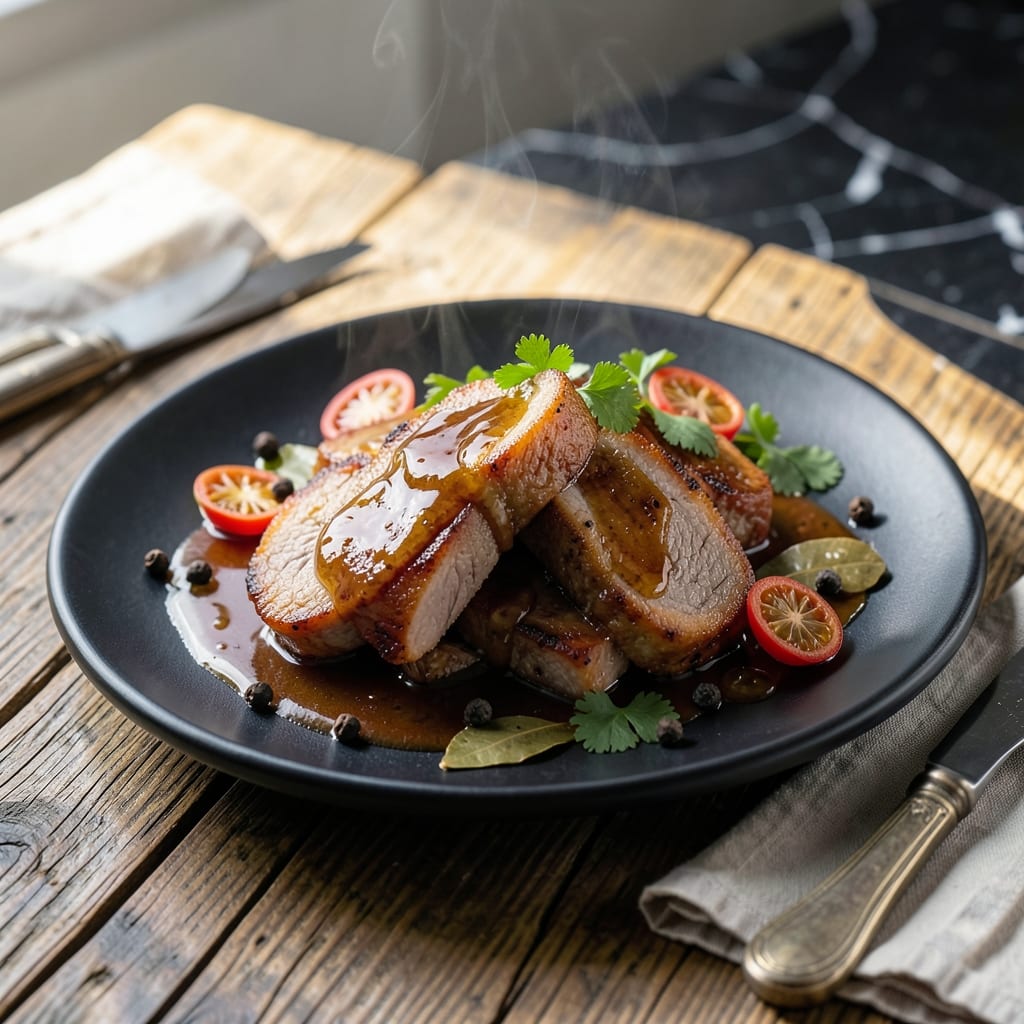
This Filipino-style braised pork tongue delivers tender results that melt in your mouth every time. The secret lies in patient simmering and a balance of savory, tangy flavors that define authentic panlasang pinoy cooking.
I’ve refined this method over years of testing to ensure the meat becomes fork-tender while absorbing the rich sauce. Traditional ingredients like soy sauce, calamansi, and bay leaves create layers of complex flavor that feel both comforting and special.
What you’ll achieve is a dish with perfectly tender meat and a glossy, deeply seasoned sauce that pairs beautifully with steamed rice. It’s a celebration of Filipino home cooking at its finest.
This recipe transforms a humble cut into a centerpiece worthy of any gathering.
Ingredients for Pork Tongue Recipe Panlasang Pinoy
These authentic ingredients create a deeply flavorful Filipino braised pork tongue dish.
| Ingredient | Amount | Notes |
|---|---|---|
| Pork Tongues 🐷 | 2 lb | Fresh, cleaned and trimmed |
| Soy Sauce 🫙 | ½ cup | Regular or light variety |
| Calamansi Juice 🍈 | ¼ cup | Freshly squeezed preferred |
| White Vinegar 🧪 | ¼ cup | Or substitute apple cider vinegar |
| Bay Leaves 🍃 | 3 pieces | Dried, whole leaves |
| Black Peppercorns 🌶️ | 1 tsp | Whole, lightly crushed |
| Garlic Cloves 🧄 | 6 cloves | Peeled and smashed |
| Yellow Onion 🧅 | 1 whole | Medium-sized, quartered |
| Water 💧 | 4 cups | For braising liquid |
| Salt 🧂 | 1 tsp | Adjust to taste |
| Brown Sugar 🍚 | 2 tbsp | Light or dark variety |
| Vegetable Oil 🫒 | 2 tbsp | For searing pork |
| Green Onions 🌱 | 3 whole | Thinly sliced for garnish |
[recipe_ingredient_scaler]
The pork tongues must be fresh and well-cleaned—ask your butcher to trim them. Most Asian markets carry them pre-cleaned, which saves time. For the soy sauce, Silver Swan or Datu Puti are traditional Filipino brands that deliver the right balance of saltiness and umami. Bay leaves should be whole and dried; fresh ones can be too potent and bitter.
No calamansi? Lime or lemon juice at half the amount works in a pinch. If you can’t find pork tongues, pork shoulder or beef tongue can be substituted, though the texture will differ slightly. The vinegar is essential for balancing the richness—don’t skip it. Brown sugar can be swapped for coconut sugar if you prefer a deeper flavor profile.
Braised pork tongue keeps well in the fridge for 4-5 days and the flavors intensify overnight. Freeze for up to 3 months in airtight containers. Reheat gently to maintain the tender texture.
Why You’ll Love This Recipe
- One Pot Wonder: I just dump the pork tongues, soy sauce, calamansi juice, and bay leaves in a pot and let it simmer—minimal effort, maximum payoff.
- Tangy Perfection: The mix of calamansi juice and vinegar gives it that bright, zesty kick that cuts through the richness of the pork tongue.
- Feeds a Crowd: I make a big batch for family gatherings, and it’s always the first dish to disappear.
- Budget Stretcher: Pork tongue is affordable, and this recipe turns it into something that tastes like a restaurant special.
Step-by-Step Instructions for Filipino-Style Braised Pork Tongue
Master the art of slow-braising with this precise method for melt-in-your-mouth results.
Step 1: Sear and Build the Flavor Base
Heat the 2 tbsp vegetable oil in a wide, heavy pot over medium-high heat until it shimmers. Add the 2 lb pork tongues and sear for 3-4 minutes per side until deeply browned on all surfaces. This step develops fundamental flavor and creates a rich foundation for the braising liquid.
Remove the pork tongues and set aside. In the same pot, add the 6 cloves garlic cloves and 1 whole yellow onion, cooking for 2-3 minutes until softened and aromatic. The residual oil and browned bits from the pork will infuse the aromatics with complex, meaty depth.
Step 2: Create the Braising Liquid
Pour in the 0.5 cup soy sauce, 0.25 cup calamansi juice, and 0.25 cup white vinegar. Add the 4 cups water, 3 pieces bay leaves, 1 tsp black peppercorns, 1 tsp salt, and 2 tbsp brown sugar. Stir well to dissolve the sugar and distribute the spices evenly.
Bring the mixture to a boil, then reduce heat to low. The liquid should have a balanced sweet-savory profile with a subtle tang from the vinegar and calamansi. This combination defines the characteristic Filipino adobo-inspired flavor profile.
Step 3: Braise to Tender Perfection
Return the pork tongues to the pot, ensuring they’re mostly submerged in the braising liquid. Cover and simmer gently for 2 to 2.5 hours, turning the tongues occasionally to ensure even cooking. The pork is done when a knife slides in with virtually no resistance.
Maintain a very gentle simmer—vigorous boiling will toughen the meat. As the liquid reduces, the flavors will concentrate, creating a rich, glossy sauce that clings to the tongues. Check occasionally and add a splash of water if the liquid reduces too quickly.
Step 4: Reduce and Finish
Once the pork tongues are fork-tender, remove the lid and increase heat to medium. Simmer uncovered for an additional 10-15 minutes to reduce the sauce to a thicker, more syrupy consistency. The sauce should coat the back of a spoon and have a deep, caramelized appearance.
Taste and adjust seasoning if needed, though the initial measurements should yield a perfectly balanced sauce. The pork tongues should be so tender they nearly fall apart, yet retain their shape when carefully handled.
Step 5: Garnish and Serve
Transfer the pork tongues to a serving platter and spoon the reduced sauce over the top. Garnish with the 3 whole green onions, thinly sliced. The fresh onion provides a bright, crisp contrast to the rich, tender pork.
Serve immediately while hot, with steamed rice to soak up the flavorful sauce. The meat should be tender enough to cut with a fork, and each bite should deliver the perfect balance of savory, sweet, and tangy notes characteristic of authentic Panlasang Pinoy cooking.
Pro Tips For Making Pork Tongue Recipe Panlasang Pinoy
- Parboil First: I learned this the hard way—simmer the pork tongues in water with a splash of vinegar for 10 minutes before cooking. It removes the strong odor and keeps the meat tender.
- Score the Tongue: After peeling, make shallow cuts on the surface so the marinade penetrates deeper. Sounds tedious, but it actually changes the outcome.
- Balance the Sour: Calamansi juice can overpower—start with half the amount, taste, then adjust. My grandmother swore by this, and she was right.
- Low and Slow: Once braising, keep the heat low and give it at least 1.5 hours. Resist the urge to rush, or the meat stays tough.
Flavor Customization for This Dish
Spicier Adobo Style
Add 2-3 chopped siling labuyo (Filipino bird’s eye chili) or 1 tbsp crushed red pepper flakes when creating the braising liquid. This adds authentic heat that many Filipino families love. I learned this variation from my neighbor in Portland who grew up in Pampanga. 🌶️
Sweeter Variation
Increase the brown sugar to 3 tbsp and add ¼ cup pineapple juice for a sweeter profile. This version reminds me of litson kawali glaze I tried at a Filipino festival in Ohio. The natural sweetness balances the soy sauce perfectly.
Tangier Twist
Replace the white vinegar with coconut vinegar and add 1 tbsp tamarind paste for extra tang. This brings out the sour notes that make Filipino dishes so distinctive. The coconut vinegar adds a subtle tropical note.
Creamy Addition
Stir in ½ cup coconut milk during the final 30 minutes of braising. This creates a richer, creamier sauce that’s popular in some regional variations. I love how it mellows the acidity while adding depth.
Citrus Forward
Double the calamansi juice to ½ cup and add zest from 1 calamansi. This brightens the entire dish and works beautifully with the pork’s richness. The extra citrus makes it perfect for summer gatherings. ✨
Herbal Infusion
Add 2 sprigs fresh thyme and 1 lemongrass stalk (bruised) to the braising liquid. These herbs complement the bay leaves and add aromatic complexity. I grow both in my Portland garden specifically for Filipino dishes.
Nutrition Facts
Frequently Asked Questions
How do I clean pork tongue before cooking?
Rinse under cold water and scrub with salt to remove any residue. Ask your butcher to trim and clean them for you to save time.
Can I substitute calamansi juice?
Yes, use lime or lemon juice at half the amount. The tangy flavor is essential for balancing the dish’s richness.
How long can I store leftovers?
Store in an airtight container in the fridge for 4-5 days. For longer storage, freeze for up to 3 months.
What if my sauce is too thin?
Remove the lid and simmer uncovered on medium heat for 10-15 minutes to reduce. Stir occasionally to prevent sticking.

Trained in classic French technique but raised on slow-cooked ribs and spicy rubs, she blends culinary skill with smoke and soul.
- Recipe for Boneless Pork Chops in Cast Iron Skillet: Sear and Baste to Juicy Perfection - October 3, 2026
- Recipe for Boneless Cross Rib Roast: Slow-Roasted Beef with Herb Crust - October 3, 2026
- Hamburgers in Sauce Recipe Crock Pot: Slow-Cooked Savory Delight - October 3, 2026