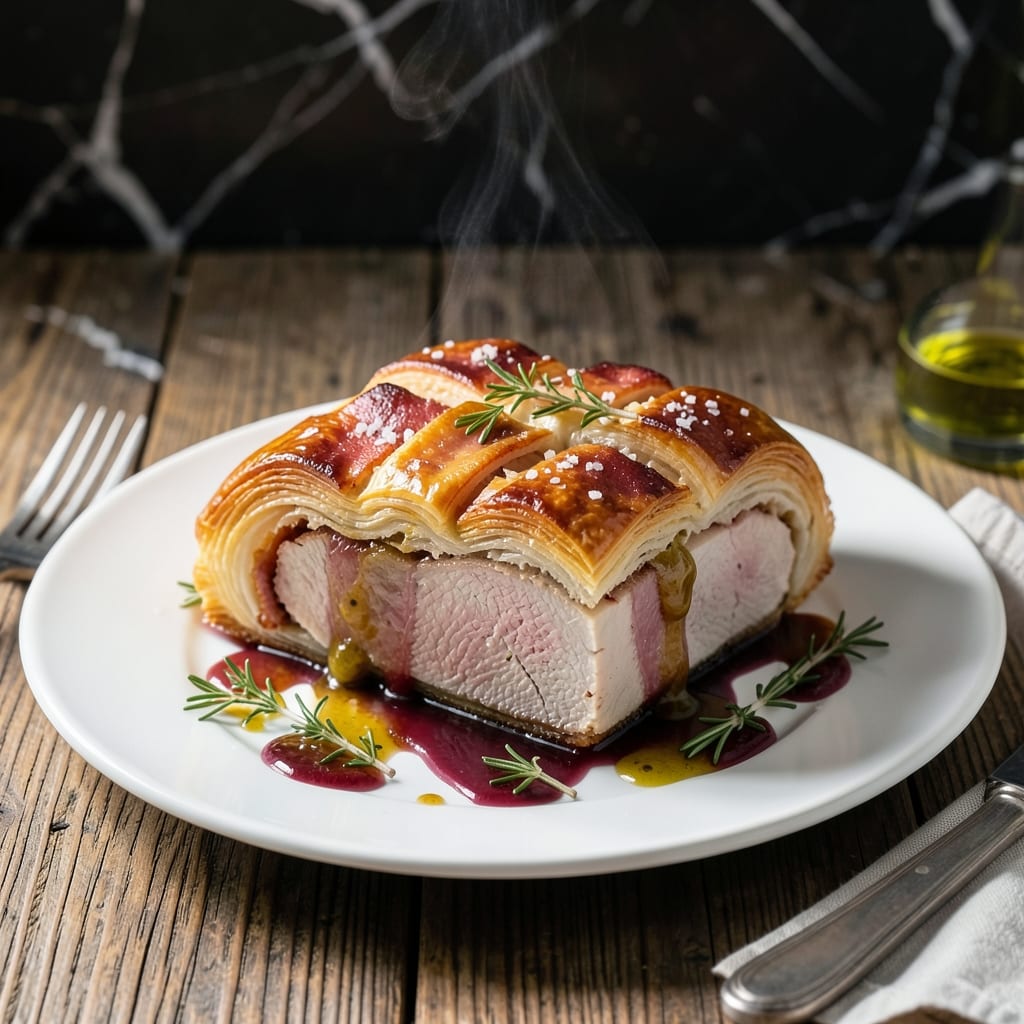
This dish elevates pork tenderloin to new heights with a flaky pastry crust and savory bacon layer that locks in juices. I developed this method after years of testing, ensuring every bite delivers perfect texture and flavor.
The bacon serves as both a flavor enhancer and moisture barrier, preventing the pastry from becoming soggy. Combined with herb-crusted pork and buttery puff pastry, it creates a showstopping centerpiece for any dinner table.
You’ll achieve golden, crisp pastry encasing tender pork with a rich, meaty depth from the bacon. The presentation alone makes this worth the effort, and the taste confirms it.
Serve with roasted vegetables or a simple green salad to balance the richness. This recipe delivers restaurant-quality results at home.
Ingredients for Pork Wellington Recipe with Bacon
Elevate your dinner with tender pork, crispy bacon, and flaky pastry layers.
| Ingredient | Amount | Notes |
|---|---|---|
| Pork Tenderloin 🍖 | 1 ½ lb | Trimmed of excess fat |
| Bacon Slices 🥓 | 8 slices | Thick-cut preferred |
| Puff Pastry 🥧 | 1 sheet | Thawed if frozen |
| Dijon Mustard 🟡 | 2 tbsp | For brushing pork |
| Fresh Thyme Leaves 🌿 | 2 tbsp | Chopped, or 2 tsp dried |
| Fresh Rosemary Leaves 🌿 | 2 tbsp | Chopped, or 2 tsp dried |
| Garlic Cloves 🧄 | 3 cloves | Minced finely |
| Shallot 🧅 | 1 whole | Finely diced |
| Salt 🧂 | 1 tsp | Kosher salt preferred |
| Black Pepper 🌶️ | ½ tsp | Freshly ground |
| Olive Oil 🫒 | 1 tbsp | For searing pork |
| Large Egg 🥚 | 1 whole | For egg wash |
| All-Purpose Flour 🌾 | 1 tbsp | For dusting surface |
[recipe_ingredient_scaler]
The pork tenderloin is the foundation—look for uniform thickness to ensure even cooking. Thick-cut bacon from the butcher counter adds richness and structure; avoid pre-cooked varieties. For the puff pastry, Dufour or Pepperidge Farm brands deliver consistent flakiness. Fresh herbs are non-negotiable here (thyme and rosemary pair perfectly), so grab them from the produce section the day you plan to cook.
No fresh herbs? Dried at one-third the amount works, but the flavor won’t be as vibrant. Out of Dijon? Whole-grain mustard adds nice texture, but yellow mustard in a pinch will do. If you can’t find thick-cut bacon, regular bacon layered slightly thicker can substitute. The egg wash is essential for that golden finish—don’t skip it.
Assemble this just before baking—pastry can get soggy if left wrapped too long. Leftovers keep well for 3-4 days refrigerated, though best served fresh. Reheat gently in the oven to preserve the pastry’s crispness.
Why You’ll Love This Recipe
- No-Fuss Assembly: I just wrap the pork in bacon, slather on mustard, and roll it in pastry—no fancy techniques.
- Flavor Bomb: The bacon and thyme make every bite rich, while the Dijon adds that perfect tangy kick.
- Dinner Party Hero: It looks impressive but honestly, it’s my lazy way to wow guests without stressing.
- Leftovers Win: Cold slices taste amazing in sandwiches the next day—my husband steals them for lunch.
Step-by-Step Instructions for Pork Wellington With Bacon
This method ensures a perfectly cooked center wrapped in flaky pastry every time.
Step 1: Sear and Season the Pork Tenderloin
Pat the 1.5 lb pork tenderloin dry with paper towels and season evenly with 1 tsp salt and 0.5 tsp black pepper. Heat 1 tbsp olive oil in a large skillet over medium-high heat until shimmering.
Sear the pork on all sides for 8-10 minutes total until golden brown. The surface should develop a deep crust that locks in juices. Transfer to a plate and let cool completely—this prevents the puff pastry from becoming soggy when assembled.
Step 2: Prepare the Herb and Bacon Layer
Lay out the 8 slices bacon in a single layer on a sheet of plastic wrap, slightly overlapping the edges. Spread 2 tbsp Dijon mustard evenly over the surface of the cooled pork tenderloin.
In a small bowl, mix the 2 tbsp fresh thyme leaves, 2 tbsp fresh rosemary leaves, 3 cloves minced garlic, and 1 finely diced shallot. Spread this herb mixture over the mustard-coated pork, pressing gently to adhere. Place the pork at one end of the bacon and tightly roll it up using the plastic wrap to compress the layers.
Step 3: Wrap in Puff Pastry
Lightly dust a clean surface with 1 tbsp all-purpose flour and roll out the 1 sheet puff pastry to a rectangle large enough to wrap around the bacon-encased pork. Unwrap the pork from the plastic and place it in the center of the pastry.
Fold the pastry over the pork, trimming excess if needed, and seal the edges by pressing with your fingers. Place the seam-side down on a parchment-lined baking sheet. Brush the entire surface with a beaten 1 whole large egg for a golden finish. Chill for 20 minutes to firm up the pastry.
Step 4: Bake to Golden Perfection
Preheat your oven to 400°F. Bake the chilled Wellington for 30-35 minutes until the pastry is deep golden brown and the internal temperature reaches 145°F.
Check for doneness by inserting a meat thermometer into the center—the juices should run clear, not pink. If the pastry begins to brown too quickly, tent loosely with foil. The bacon layer will render slightly, infusing the pork with smoky richness while keeping it moist.
Step 5: Rest and Slice
Remove from the oven and let rest for 10 minutes before slicing. This allows the juices to redistribute, ensuring each portion stays tender and flavorful. Use a sharp knife to cut into 1-inch thick slices.
Serve immediately while the pastry is still crisp. The layers should reveal the flaky pastry, the bacon weave, and the herb-crusted pork—each bite offering a balance of textures and savory depth. The mustard and herbs will have melded into the meat during cooking, creating a complex, aromatic center.
Pro Tips For Making Pork Wellington Recipe With Bacon
- Sear the Pork First: I learned this the hard way—browning the tenderloin in a hot pan for 2-3 minutes per side before wrapping guarantees a golden crust and locks in juices. Skip this and your Wellington will look pale and taste bland.
- Dry the Bacon: Pat the bacon slices dry with a paper towel before layering. Sounds weird, but it works: this prevents soggy pastry and helps the bacon crisp up properly inside the wrap.
- Chill Before Baking: After assembling, pop the Wellington in the fridge for 15-20 minutes. My grandmother swore by this, and she was right: it firms up the pastry so it holds its shape and doesn’t collapse in the oven.
- Use Cold Puff Pastry: Work with pastry straight from the fridge—it’s stiffer and easier to handle. After burning three batches, I finally figured out warm pastry sticks, tears, and ruins your perfect bacon-pork seal.
Regional Styles of pork wellington recipe with bacon
British Classic Style
This version stays true to the dish’s British roots, using English mustard instead of Dijon for a sharper kick. I often add a layer of sautéed mushrooms between the bacon and pastry, just like my grandmother taught me in Cincinnati. The mushrooms soak up the bacon fat beautifully.
French Inspired
For a French twist, I incorporate herbes de Provence into the herb mixture and use crème fraîche as a binding agent for the herbs. The French version often includes a thin layer of pâté spread on the pastry before wrapping, adding an extra layer of richness.
Southern Comfort
In the American South, I’ve seen this made with peach glaze brushed on the pastry before baking. The sweetness complements the savory pork and bacon wonderfully. Sometimes, pecans are added to the herb mixture for a delightful crunch. 💛
Pacific Northwest
Here in Portland, I love using local hazelnuts and fresh sage from my garden. The hazelnuts add a wonderful texture, and the sage pairs perfectly with the pork. I often serve this with a side of roasted rainbow carrots from the farmers market.
German Influence
For a German-inspired version, I replace the thyme and rosemary with caraway seeds and juniper berries. The caraway adds a distinct anise-like flavor that works surprisingly well with pork. A dark beer reduction can also be served on the side.
Mediterranean Flare
This variation incorporates sun-dried tomatoes and feta cheese into the herb layer. The tomatoes add a tangy sweetness, while the feta provides a salty contrast to the rich pork and bacon. I like to finish with a drizzle of balsamic glaze. 🌟
Nutrition Facts
Frequently Asked Questions
Should I use thick-cut or regular bacon?
Thick-cut is ideal as it holds up better during rolling and baking. Regular bacon can work if layered slightly thicker. The fat renders to keep the pork moist while adding smoky depth.
Can I prepare this ahead of time?
Assemble up to 2 hours ahead, but don’t wrap in pastry until ready to bake. The pastry can become soggy if left too long. Chill uncovered until baking time.
How can I prevent a soggy bottom?
Always bake on a parchment-lined sheet for airflow. Chilling the wrapped Wellington for 20 minutes before baking creates a barrier that prevents moisture from seeping into the pastry.
What internal temperature should I aim for?
Use a meat thermometer to check for 145°F in the center. This ensures perfectly cooked pork that’s juicy and safe to eat. Let it rest for 10 minutes before slicing.

Trained in classic French technique but raised on slow-cooked ribs and spicy rubs, she blends culinary skill with smoke and soul.
- Recipe For Leftover Fried Fish: Crunchy Leftovers Transformed - October 3, 2026
- Recipe for Crock Pot Swiss Steak: Slow-Cooked Beef With Mushroom Gravy - October 3, 2026
- Recipe for Kabsa Rice: Spiced Middle Eastern Feast in One Pot - October 3, 2026