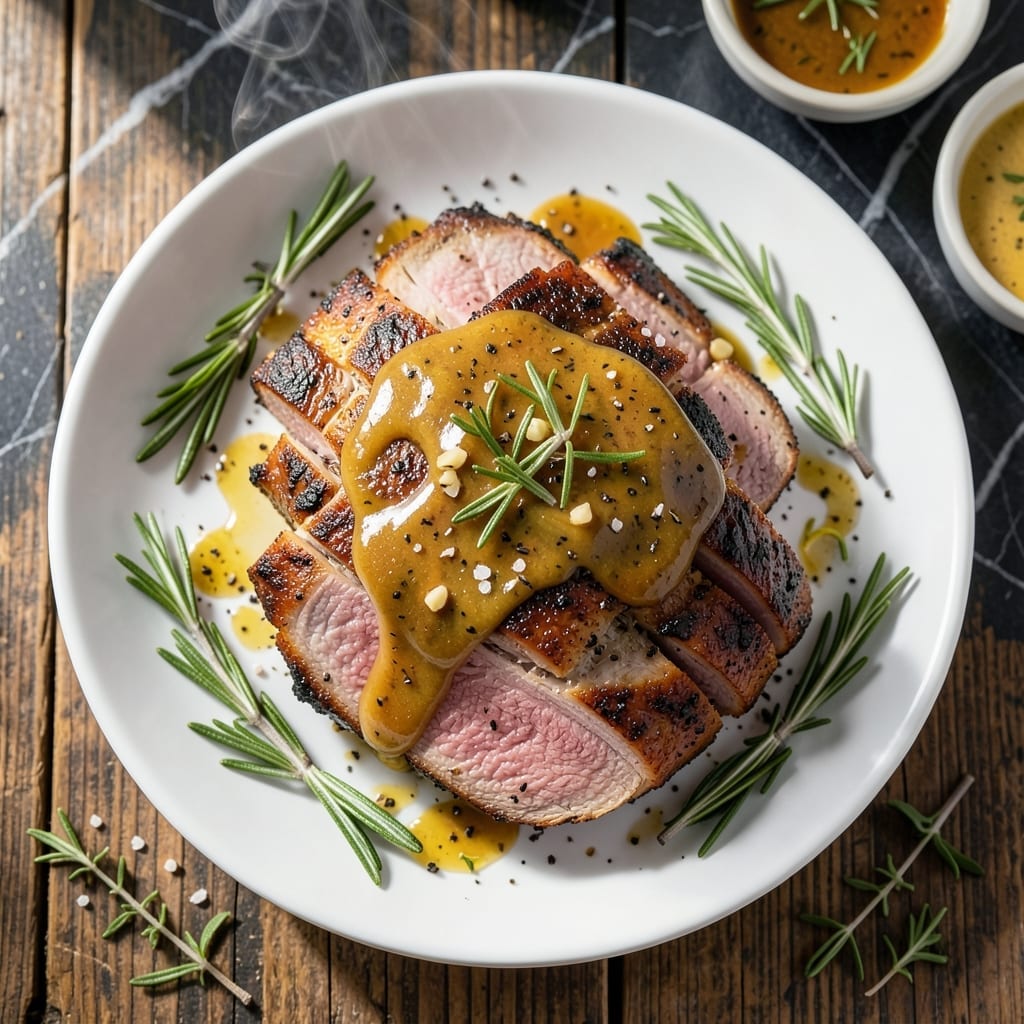
This dish transforms a simple pork tenderloin into a restaurant-worthy centerpiece with minimal effort. The combination of Dijon mustard and fresh rosemary creates a flavor profile that’s both bold and balanced.
I developed this recipe to showcase how tender pork can be when treated with care. The mustard-rosemary crust forms a golden seal that locks in juices while adding complex aromatics. It’s a technique that impresses without requiring advanced skills.
Ready in 45 minutes, this recipe proves that elegant meals don’t need hours in the kitchen. The tenderloin stays moist throughout cooking, with the herb crust adding texture and depth to every bite.
Perfect for Sunday suppers or dinner parties. The presentation speaks for itself.
Ingredients for Pork Tenderloin Recipe Dijon Mustard Rosemary
Elevated yet approachable ingredients transform this into a showstopping centerpiece.
| Ingredient | Amount | Notes |
|---|---|---|
| Pork Tenderloin 🥩 | 1 ½ lb | Trimmed of silver skin |
| Dijon Mustard 🟡 | ⅓ cup | Whole grain preferred |
| Fresh Rosemary 🌿 | 2 tbsp | Finely chopped |
| Garlic Cloves 🧄 | 3 cloves | Minced finely |
| Olive Oil 🫒 | 2 tbsp | Extra-virgin for richness |
| Kosher Salt 🧂 | 1 ½ tsp | Diamond Crystal preferred |
| Black Pepper 🌶️ | 1 tsp | Freshly ground |
| Breadcrumbs 🍞 | ½ cup | Panko for extra crunch |
| Dry White Wine 🍷 | ¼ cup | For deglazing pan |
| Unsalted Butter 🧈 | 2 tbsp | Melted for crust |
| Fresh Thyme 🍃 | 1 tbsp | Chopped, optional garnish |
| Shallot 🧅 | 1 whole | Finely minced |
[recipe_ingredient_scaler]
The pork tenderloin is the foundation—opt for organic or pasture-raised from Whole Foods or ButcherBox. Look for even marbling and a pale pink hue, indicative of quality. The Dijon mustard should be robust; Maille or Grey Poupon deliver the necessary punch. Fresh rosemary from the herb section (not dried) ensures the aromatic depth this dish demands.
No white wine? Chicken stock with a splash of apple cider vinegar mimics the acidity. Substitute dried rosemary at one-third the amount if fresh is unavailable, though texture will differ. For a gluten-free version, almond flour replaces breadcrumbs seamlessly. The butter can be swapped for ghee if avoiding dairy (though flavor will shift slightly).
Store raw pork in the coldest part of your fridge for up to 2 days, or freeze for 6 months. The herb crust mixture can be prepped a day ahead—cover and refrigerate. Leftovers reheat beautifully, retaining moisture for 3-4 days.
Why You’ll Love This Recipe
- One Pan Wonder: I just toss the pork with olive oil, rub on the Dijon and rosemary, and roast—no extra bowls, no mess.
- Flavor Explosion: The sharp tang of Dijon with the piney rosemary and garlic creates a crust that’s ridiculously good.
- Weeknight Friendly: Honestly, it’s ready in 30 minutes flat, so I can pull it off even on the busiest evenings.
- Makes Great Leftovers: The slices reheat beautifully in sandwiches or salads, so I get two meals out of one roast.
Step-by-Step Instructions for Herb-Crusted Pork Tenderloin
This method ensures a golden crust and juicy interior with minimal effort.
Step 1: Prepare and Season the Pork Tenderloin
Pat the 1.5 lb Pork Tenderloin dry with paper towels to ensure the crust adheres properly. Trim any remaining silver skin, as this can toughen during cooking. Season the meat evenly with 1.5 tsp Kosher Salt and 1 tsp Black Pepper, pressing gently to help the seasoning stick.
This step is crucial for flavor development and moisture retention. A dry surface also promotes better browning when searing. Let the seasoned pork sit at room temperature for 10-15 minutes while you prepare the crust, ensuring even cooking.
Step 2: Create the Herb and Mustard Crust
In a small bowl, combine 0.33 cup Dijon Mustard, 2 tbsp Fresh Rosemary, 3 cloves minced Garlic Cloves, and 2 tbsp Olive Oil. Stir until the mixture is uniform. The mustard’s tang will balance the richness of the pork, while the rosemary and garlic infuse aromatic depth.
Brush this mixture generously over the entire surface of the pork tenderloin, coating it evenly. Then, press 0.5 cup Breadcrumbs onto the mustard layer, ensuring full coverage. The breadcrumbs will create a crispy, golden crust as they toast during cooking.
Step 3: Sear and Roast to Perfection
Preheat your oven to 400°F. Heat an oven-safe skillet over medium-high heat and add 2 tbsp Unsalted Butter. Once the butter is foaming, place the crust-coated pork tenderloin in the skillet. Sear for 2-3 minutes per side until the crust turns golden brown.
Transfer the skillet to the preheated oven and roast for 15-20 minutes, or until the internal temperature reaches 145°F. The pork will continue cooking slightly as it rests, so remove it promptly once it hits this temperature to avoid overcooking.
Step 4: Rest and Prepare the Pan Sauce
Transfer the pork to a cutting board, tent loosely with foil, and let it rest for 10 minutes. This allows the juices to redistribute, ensuring a tender result. While the pork rests, place the skillet back on the stovetop over medium heat.
Add 1 whole Shallot, finely minced, to the skillet and sauté for 1-2 minutes until fragrant. Deglaze the pan with 0.25 cup Dry White Wine, scraping up any browned bits. Simmer for 2-3 minutes until the liquid reduces slightly. Drizzle this sauce over the sliced pork before serving, and garnish with 1 tbsp Fresh Thyme if desired.
Pro Tips For Making Pork Tenderloin Recipe Dijon Mustard Rosemary
- Pat It Dry: Blot the pork tenderloin with paper towels before seasoning—this guarantees a better sear and helps the dijon-rosemary crust cling properly.
- Slash the Garlic: Lightly crush the garlic cloves with the flat of your knife before mincing so they release more flavor into the mustard-rosemary marinade.
- Pull at 145°F: Use a meat thermometer and remove the pork at 145°F—it’ll hit 150°F while resting, staying juicy without overcooking.
- Rest Before Slicing: Let the tenderloin rest under foil for 5-10 minutes after cooking to keep the dijon-herb juices from pooling on the cutting board.
Make-Ahead Tips for This Recipe
Prep Ahead Crust
The Dijon mustard and rosemary mixture can be made 24 hours ahead. I mix it in a small bowl, cover with plastic wrap, and refrigerate. This actually deepens the flavors overnight. 💡
Breadcrumbs Boost
Toast the ½ cup panko in a dry skillet over medium heat for 2-3 minutes the day before. Cool completely and store in an airtight container. This ensures extra crunch when you press it onto the mustard crust.
Pork Prep Timeline
Trim and season the pork tenderloin up to 12 hours before cooking. I place it on a wire rack over a plate in the fridge. Pat it dry again before applying the crust mixture just before cooking.
Pan Sauce Prep
Mince the shallot and measure the ¼ cup white wine the night before. Store them together in a small airtight container in the fridge. This saves precious minutes during the final cooking steps. ❄️
Full Assembly
You can fully crust the pork 4 hours ahead, then refrigerate uncovered. This dries the surface slightly for better browning. Remove from fridge 30 minutes before cooking to bring it closer to room temperature.
Equipment Prep
Have your oven-safe skillet and thermometer ready. I keep my ThermoWorks instant-read on the counter. Everything moves fast once the pork hits the pan, so organization is key.
Nutrition Facts
Frequently Asked Questions
What internal temperature should I aim for?
Remove from oven at 145°F internal temperature. The pork will continue cooking while resting, reaching 150-155°F for perfect doneness. Use an instant-read thermometer for accuracy.
Can I substitute dried rosemary?
Yes, but use only 1 tsp dried for every 1 tbsp fresh. Dried herbs are more concentrated. Rehydrate in warm water for 10 minutes to restore some freshness.
How do I prevent the crust from burning?
Tent with foil if breadcrumbs brown too quickly. Check at 12 minutes of roasting. Lower oven rack position also helps prevent over-browning.
What if my pork tenderloin is larger?
For a 2 lb piece, increase roasting time to 20-25 minutes. Always verify with a thermometer rather than time alone. The crust mixture covers more surface area.

Trained in classic French technique but raised on slow-cooked ribs and spicy rubs, she blends culinary skill with smoke and soul.
- Recipe for Boneless Pork Chops in Cast Iron Skillet: Sear and Baste to Juicy Perfection - October 3, 2026
- Recipe for Boneless Cross Rib Roast: Slow-Roasted Beef with Herb Crust - October 3, 2026
- Hamburgers in Sauce Recipe Crock Pot: Slow-Cooked Savory Delight - October 3, 2026