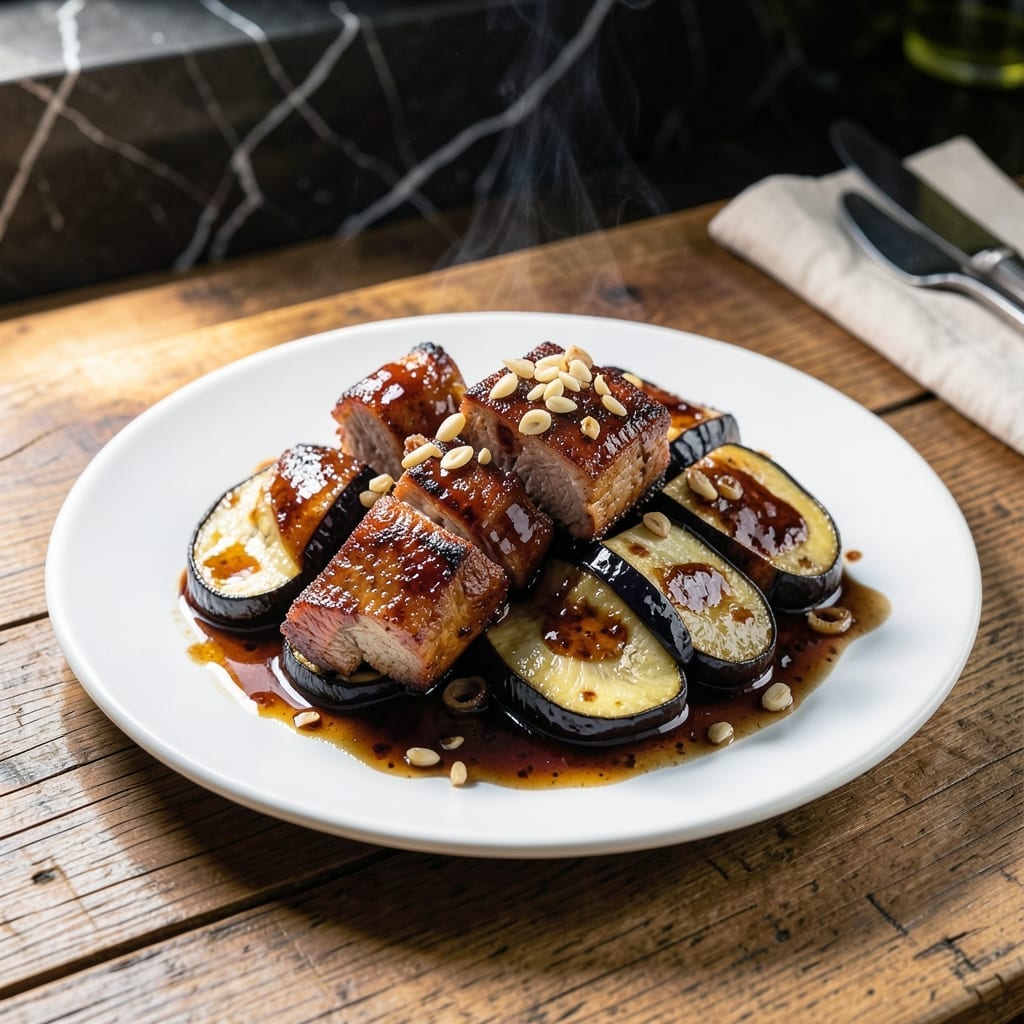
This Filipino-inspired dish brings the bold, balanced flavors of adobo to pork and eggplant. The combination of tangy vinegar, savory soy sauce, and sweet brown sugar creates a sauce that clings beautifully to every bite.
I developed this recipe after testing multiple vinegar-to-soy ratios, finally settling on the perfect sweet-savory harmony. The eggplant absorbs the rich sauce while maintaining its tender texture, and the pork becomes fall-apart tender after simmering.
The result is a hearty, comforting dish with layers of flavor that taste authentic without requiring hours in the kitchen. The sauce reduces to a glossy consistency that coats both the pork and eggplant perfectly.
Serve with steamed rice to soak up every drop of this delicious sauce. This is one meal that will have everyone asking for seconds.
Ingredients for Pork with Eggplant Recipe Filipino Style
Pantry staples and fresh produce come together for this bold adobo-inspired meal.
| Ingredient | Amount | Notes |
|---|---|---|
| Pork Shoulder 🥩 | 1 ½ lb | Cut into 1-inch cubes |
| Eggplant 🍆 | 2 whole | Medium-sized, cubed |
| Soy Sauce 🫙 | ½ cup | Low-sodium preferred |
| White Vinegar 🍶 | ½ cup | Or cane vinegar for authenticity |
| Brown Sugar 🧈 | 3 tbsp | Light or dark works |
| Garlic Cloves 🧄 | 6 cloves | Minced for depth of flavor |
| Onion 🧅 | 1 whole | Medium, thinly sliced |
| Bay Leaves 🍃 | 3 pieces | Dried, for aroma |
| Black Peppercorns 🌶️ | 1 tsp | Whole or ground |
| Olive Oil 🫒 | 2 tbsp | For sautéing pork and eggplant |
| Water 💧 | ½ cup | For adjusting sauce consistency |
| Salt 🧂 | ½ tsp | Adjust to taste |
[recipe_ingredient_scaler]
The pork is the foundation here. Pork shoulder gives you that melt-in-your-mouth texture (bonus points if you find it with good marbling). Asian markets often have it pre-cut, but any grocery store butcher can cube it for you. Eggplant should be firm and glossy—avoid any with soft spots. For the vinegar, cane vinegar (found at Filipino stores) hits the authentic note, but white vinegar works in a pinch.
No soy sauce? Coconut aminos are a great gluten-free swap. Brown sugar can be replaced with coconut sugar for a deeper flavor. If you’re missing bay leaves, a pinch of dried thyme adds similar earthiness. Garlic and onion are non-negotiable for the base, but if you’re out of fresh, 1 tbsp garlic powder and 1 tbsp onion powder can save the day (though fresh is always better).
This tastes even better the next day—sauce thickens and flavors meld. Keeps in the fridge for 4-5 days or freezes for 3 months. Reheat gently to keep the pork tender (microwave works, but stovetop is safer for leftovers).
Why You’ll Love This Recipe
- One Pan Wonder: I just toss the pork shoulder, eggplant, soy sauce, vinegar, and brown sugar in a pan and let it work its magic.
- Sweet-Savory Balance: The brown sugar caramelizes with the soy sauce and vinegar, giving that signature Filipino sweet-tangy kick.
- Feeds a Crowd: I make a big batch and it’s always a hit at family gatherings—even the picky eaters go back for seconds.
- Budget Friendly: Pork shoulder and eggplant stretch far, and honestly, it tastes like I spent way more than I did.
Step-by-Step Instructions for Pork With Eggplant Filipino Style
This method delivers tender pork and silky eggplant in a rich, tangy-sweet sauce.
Step 1: Brown the Pork Shoulder
Heat the 2 tbsp olive oil in a large pot over medium-high heat. Add the 1.5 lb pork shoulder cubes and cook for 5-7 minutes, turning occasionally, until they develop a golden-brown crust on all sides.
Don’t overcrowd the pot—work in batches if needed. The pork should release easily from the bottom when it’s ready to turn. This browning step builds deep flavor that carries through the entire dish.
Remove the pork and set aside. Leave the rendered fat in the pot—it’s packed with flavor for the next steps.
Step 2: Sauté Aromatics and Softens the Eggplant
In the same pot, add the onion, 6 cloves minced garlic, and 3 pieces bay leaves. Sauté for 2-3 minutes until the onion turns translucent and the garlic is fragrant.
Add the 2 whole cubed eggplant and cook for 5 minutes, stirring occasionally. The eggplant will start to soften and absorb the flavors from the pork fat and aromatics.
Sprinkle with the 0.5 tsp salt and 1 tsp black peppercorns to season as it cooks. This step ensures every bite is packed with savory depth.
Step 3: Build the Sauce and Simmer
Return the pork to the pot. Pour in the 0.5 cup soy sauce, 0.5 cup white vinegar, 3 tbsp brown sugar, and 0.5 cup water. Stir to combine, making sure to scrape up any browned bits from the bottom.
Bring the mixture to a boil, then reduce the heat to medium-low. Let it simmer uncovered for 30-40 minutes, stirring occasionally, until the pork is fork-tender and the sauce has thickened slightly.
The eggplant will break down further, blending into the sauce to create a rich, velvety texture. If it thickens too much, add a splash of water to reach your desired consistency.
Step 4: Adjust and Serve
Taste and adjust the seasoning if needed. The sauce should balance sweet, savory, and tangy flavors—add a bit more brown sugar for sweetness or vinegar for acidity if desired.
Discard the bay leaves before serving. The pork should be falling apart, and the eggplant should be melt-in-your-mouth tender. Serve hot over steamed rice to soak up every last bit of the delicious sauce.
Pro Tips For Making Pork With Eggplant Recipe Filipino Style
- Sear the Pork First: Brown the pork shoulder in batches over medium-high heat until deeply caramelized—this builds flavor before braising in the soy-vinegar sauce. I learned this the hard way after skipping it once and ending up with bland, gray meat.
- Salt the Eggplant: Sprinkle sliced eggplant with salt and let sit for 10 minutes to draw out bitterness, then pat dry. Sounds tedious, but it actually changes the outcome, especially with larger, seedier eggplants.
- Balance the Sauce: Taste before serving and adjust with a splash of vinegar if it’s too sweet or a pinch of sugar if it’s too sharp. My grandmother swore by this, and she was right: Filipino adobo-style dishes need that tangy-sweet harmony.
- Use Pork Fat: Render a little fat from the pork shoulder first, then use it to sauté the eggplant—it adds richness without extra oil. I was skeptical until I tried it, but now I never skip this step.
Best Sauces and Condiments for This Dish
Classic Vinegar Dip
I love serving this with a simple Filipino spiced vinegar dip—mix ¼ cup cane vinegar with 1 minced garlic clove, ½ tsp salt, and ¼ tsp black pepper. It cuts through the richness beautifully. 💡
Sweet Chili Sauce
A drizzle of Mae Ploy sweet chili sauce adds a sticky, slightly spicy contrast to the adobo flavors. I keep a bottle in my pantry from the Portland farmers market. Just 1-2 tbsp per serving is enough to elevate the dish.
Garlic Rice Pairing
For the ultimate combo, serve over garlic fried rice. I sauté 2 cups cooked rice with 3 minced garlic cloves and 1 tbsp olive oil until fragrant. The garlic echoes the pork’s seasoning while adding texture.
Fresh Herb Garnish
Fresh cilantro or green onions add brightness. Chop 2 tbsp cilantro or slice 3 green onions thinly and sprinkle on top just before serving. I grow both in my Pacific Northwest garden for easy access.
Spicy Banana Ketchup
For a Filipino twist, try Jufran banana ketchup on the side. Its sweet-tangy flavor complements the adobo perfectly. I find it at New Seasons Market in the international aisle. Just 1-2 tsp per serving adds a fun flavor boost.
Crispy Shallot Topping
Thinly slice 1 shallot and fry in ½ inch olive oil at 350°F for 2-3 minutes until golden. Drain on paper towels and sprinkle over the dish. This adds a satisfying crunch that contrasts the tender pork. 🌟
Nutrition Facts
Frequently Asked Questions
Can I use a different cut of pork?
Yes! While pork shoulder is ideal for tenderness, pork belly or pork loin work too. Shoulder needs 30-40 minutes to get fork-tender, while loin cooks faster at 20-25 minutes.
Why does the eggplant get mushy?
Eggplant absorbs liquid quickly. To prevent mush, salt the cubes and let them sit for 10 minutes before cooking, then pat dry. This draws out excess moisture.
What if my sauce is too sour?
Balance the tang by adding 1 tsp more brown sugar at a time until it mellows. A pinch of salt can also help round out the flavors.
Can I make this ahead?
The flavors deepen overnight. Store in an airtight container for up to 5 days in the fridge. Reheat gently on the stove with a splash of water.

Trained in classic French technique but raised on slow-cooked ribs and spicy rubs, she blends culinary skill with smoke and soul.
- Recipe for Boneless Pork Chops in Cast Iron Skillet: Sear and Baste to Juicy Perfection - October 3, 2026
- Recipe for Boneless Cross Rib Roast: Slow-Roasted Beef with Herb Crust - October 3, 2026
- Hamburgers in Sauce Recipe Crock Pot: Slow-Cooked Savory Delight - October 3, 2026