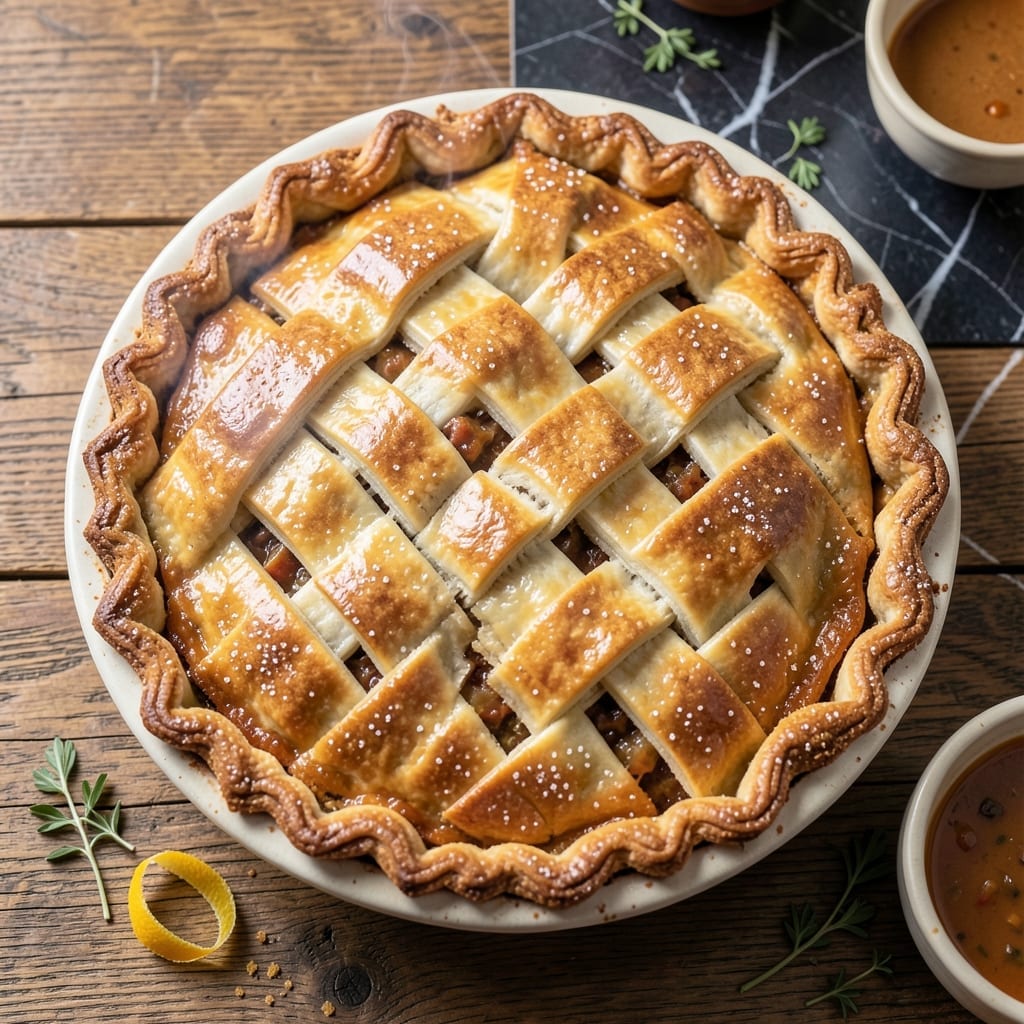
I developed this butter-only crust after my infamous 2019 pot pie disaster in that tiny Boston kitchen. The key to flaky layers without shortening is keeping everything ice-cold and working quickly.
This method uses only butter, flour, water, and salt, with a simple technique that prevents toughness. The cold butter creates steam as it bakes, which separates the dough into perfect, airy layers.
You’ll end up with a golden crust that’s crisp on the outside and tender inside, with visible flakes that pull apart beautifully. It’s the kind of crust that makes people think you spent hours in the kitchen.
Use this for pot pies, hand pies, or any dish where a flaky crust makes all the difference. The results speak for themselves.
Ingredients for Pot Pie Crust Recipe No Shortening
Just four essentials plus a few extras for that perfect golden finish.
| Ingredient | Amount | Notes |
|---|---|---|
| All-Purpose Flour 🌾 | 2 ½ cups | Spoon and level, don't scoop |
| Unsalted Butter 🧈 | 1 cup | Ice-cold, cut into cubes |
| Ice Water 💧 | ½ cup | Plus extra as needed |
| Kosher Salt 🧂 | 1 tsp | Diamond Crystal preferred |
| Granulated Sugar 🍚 | 1 tsp | Optional for color |
| White Vinegar 🍋 | 1 tbsp | Or lemon juice for acid |
| Large Egg 🥚 | 1 whole | For egg wash finish |
| Milk 🥛 | 1 tbsp | For egg wash thinning |
[recipe_ingredient_scaler]
The butter is everything here. European-style butter has higher fat content, which means flakier layers. I grab mine from Whole Foods—their store brand is reliable and always cold. If you’re at Trader Joe’s, their cultured unsalted butter works great too. Make sure it’s ice-cold straight from the fridge (or even the freezer for 10 minutes). The flour? Any all-purpose brand—King Arthur if you’re splurging, but the generic stuff is fine.
No unsalted butter? Salted works in a pinch—just skip the added salt. Out of vinegar? Lemon juice or even cold vodka (1:1 swap) adds that tenderizing acid. The egg wash is optional but gives that bakery-style shine. For a richer color, add a pinch of sugar to the flour. The water should be ice-cold too—fill a glass with ice cubes and water, then measure from that.
The dough keeps in the fridge for 2 days (wrapped tightly in plastic), or freeze for 3 months. Thaw overnight in the fridge before rolling. Baked crusts? They’re best the day they’re made, but leftovers keep 3-4 days at room temp in an airtight container.
Why You’ll Love This Recipe
- No Fuss Mixing: That buttery dough comes together with just flour, cold butter, and ice water—no special tools or shortening required.
- Buttery Perfection: Honestly, the rich flavor from real butter beats shortening every time, with that flaky, golden finish.
- Endless Fillings: I’ve stuffed it with everything from chicken to veggies to leftovers—it’s my blank canvas for any comfort meal.
- Pantry Staples: Between us, I always have these ingredients on hand, so a from-scratch pot pie is never more than 10 minutes away.
Step-by-Step Instructions for Pot Pie Crust Without Shortening
This all-butter method creates incredibly flaky layers with just a few simple steps.
Step 1: Mix Dry Ingredients and Cut in Cold Butter
In a large bowl, whisk together the 2.5 cups All-Purpose Flour, 1 tsp Kosher Salt, and 1 tsp Granulated Sugar until evenly combined. The sugar helps with browning, but you can omit it if you prefer a savory crust.
Add the 1 cup Unsalted Butter (cut into ½-inch cubes) to the flour mixture. Use a pastry cutter or your fingers to work the butter into the flour until the mixture resembles coarse crumbs with some pea-sized butter pieces remaining. This visible butter creates those flaky layers we’re after.
Real talk: keep your hands cold—if the butter starts to melt, pop the bowl in the fridge for 5 minutes to chill everything back down. Cold butter is non-negotiable for flaky crust.
Step 2: Add Liquid and Form the Dough
Combine the 0.5 cup Ice Water and 1 tbsp White Vinegar in a small bowl. The vinegar tenderizes the dough by inhibiting gluten development. Make a well in the center of your flour-butter mixture and pour in the liquid all at once.
Use a fork to gently mix the liquid into the flour until just combined. The dough will look shaggy—that’s perfect. Don’t overwork it or you’ll end up with a tough crust. If there are dry spots, add cold water 1 tablespoon at a time until the dough just comes together.
Turn the dough out onto a lightly floured surface and gently knead it 2-3 times just until it forms a cohesive ball. Divide into two equal portions, flatten into discs, wrap in plastic, and refrigerate for 1 hour or up to 2 days.
Step 3: Roll and Fit the Crust
On a lightly floured surface, roll one dough disc into a 12-inch circle about ⅛-inch thick. I like to roll from the center outward, turning the dough 45 degrees after each roll to maintain an even thickness.
Transfer the rolled dough to your pie dish, easing it in gently without stretching. Trim the edges, leaving a ½-inch overhang. Fold the overhang under and crimp decoratively. For a double-crust pie, repeat with the second disc for the top crust.
Step 4: Add Egg Wash and Bake to Golden Perfection
Whisk together the 1 whole Large Egg and 1 tbsp Milk to make an egg wash. Brush this evenly over the crust. The egg wash gives that beautiful golden-brown finish and adds a subtle sheen.
Cut 4-5 slits in the top crust if using a double crust to allow steam to escape. Bake according to your pie recipe instructions, typically at 375-400°F until the crust is deep golden brown and the filling is bubbly.
Here’s the thing—if your crust starts browning too quickly, tent it loosely with foil. The butter in this dough can brown faster than shortening-based crusts, so keep an eye on it during the last 15-20 minutes of baking.
Pro Tips For Making Pot Pie Crust Recipe No Shortening
- Chill the Butter: Cut unsalted butter into small cubes and freeze for 15 minutes before mixing—this keeps it from melting too fast when you work it into the flour. I learned this the hard way after ending up with dense, tough crusts.
- Use Ice Cold Water: Measure your water, add ice cubes to it, and let it sit for 5 minutes before using. The colder the water, the flakier the crust.
- Don’t Overwork Dough: Mix just until the dough comes together, even if it looks a little shaggy. Overworking develops gluten, and nobody wants a chewy pot pie crust.
- Rest Before Rolling: Wrap the dough and refrigerate for at least 30 minutes before rolling. This relaxes the gluten and makes it easier to handle—plus, it prevents shrinking during baking.
Pro Cooking Tips for This Dish
Temperature Control
Keep your kitchen cold—I turn my AC down to 68°F when making this crust. If your kitchen runs warm, chill your mixing bowl and flour for 15 minutes before starting. Cold is your best friend for flaky layers. ❄️
Butter Prep
Cut your 1 cup Unsalted Butter into ½-inch cubes and return to the fridge while prepping other ingredients. I use European-style butter from Whole Foods for its higher fat content. Freeze cubes for 10 minutes if your kitchen is warm.
Minimal Handling
Work the butter into flour just until pea-sized pieces remain. Overworking develops gluten, which makes crust tough. I use my fingers in a pinching motion rather than squeezing to avoid melting the butter.
Resting Time
Don’t rush the 1-hour chill in the fridge. This relaxes the gluten and firms up the butter. For extra flakiness, I let my dough rest overnight—I notice a visible difference in the layers.
Rolling Technique
Roll from the center outward, turning the dough 45 degrees after each pass. Use a light dusting of flour only as needed—too much makes the crust dry. I aim for ⅛-inch thickness for perfect flakiness.
Baking Watch
Butter-based crusts brown faster than shortening. Check at 30 minutes and tent with foil if needed. Bake until deep golden brown, not just light gold—that’s when you know it’s truly crisp. 🔥
Nutrition Facts
Frequently Asked Questions
Can I use lard instead of butter?
Yes, but swap by weight, not volume. ¾ cup lard replaces 1 cup butter. Lard creates an even flakier texture but lacks butter’s flavor. For best results, chill lard thoroughly before using.
Why does my crust turn out tough?
Overworking the dough develops gluten. Mix just until combined and handle minimally. Also, ensure all ingredients stay ice-cold throughout the process.
How do I prevent a soggy bottom crust?
Pre-bake (blind bake) the bottom crust for 10 minutes at 375°F before adding filling. Also, avoid overfilling and cut steam vents in the top crust.
Can I make this ahead of time?
The dough keeps 2 days refrigerated or 3 months frozen. Baked crusts are best fresh but keep 3-4 days in an airtight container.

Trained in classic French technique but raised on slow-cooked ribs and spicy rubs, she blends culinary skill with smoke and soul.
- Recipe For Oven Baked Haddock: Buttery Crumbs With Zesty Lemon Topping - October 3, 2026
- Recipe For Fried Salmon Patties With Flour: Crispy Golden Crust With Flaky Centers - October 3, 2026
- Meat and Potato Recipe Ideas: Savory Pairings for Hearty Meals - October 3, 2026