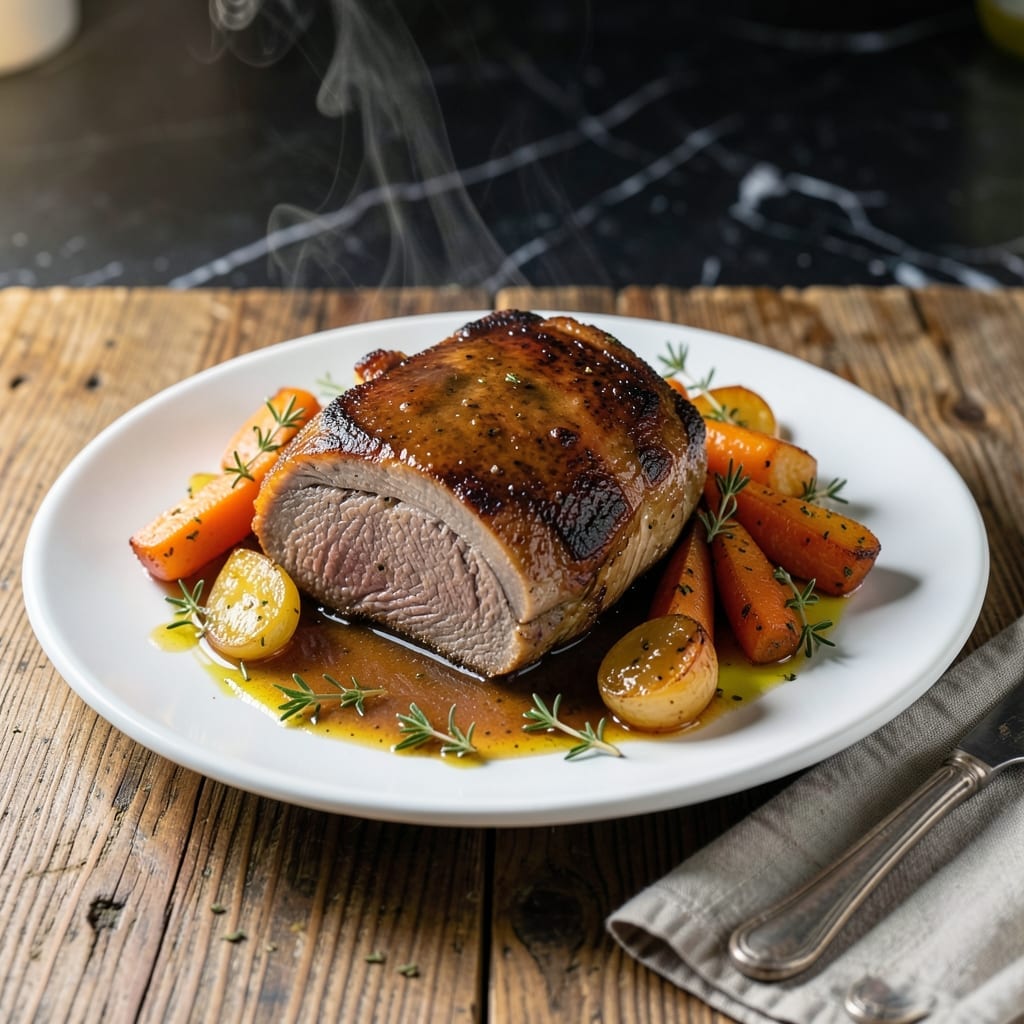
There’s nothing like the rich aroma of pot roast filling the kitchen on a Sunday afternoon. This slow-braised beef with caramelized vegetables transforms tough cuts into tender, fall-apart perfection through patience and low heat.
I developed this method after years of testing in my tiny Boston kitchen, learning that searing the meat properly and deglazing the pot makes all the difference. The vegetables soak up the beef’s juices as they cook together for hours.
What emerges is melt-in-your-mouth beef surrounded by carrots, potatoes, and onions that have caramelized in the savory broth. The result is a complete meal that tastes like it simmered all day—because it did.
This is the kind of dish that turns a simple Sunday into something special. The process is straightforward, but the results are anything but ordinary.
Ingredients for Pot Roast Recipe Video
Slow-braised beef and vegetables transform into something extraordinary with patience and quality ingredients.
| Ingredient | Amount | Notes |
|---|---|---|
| Chuck Roast 🥩 | 3 lb | Well-marbled, trimmed of excess fat |
| Kosher Salt 🧂 | 2 tsp | Diamond Crystal preferred for even seasoning |
| Black Pepper 🌶️ | 1 tsp | Freshly ground for best flavor |
| Olive Oil 🫒 | 2 tbsp | Divided for searing and deglazing |
| Yellow Onions 🧅 | 2 whole | Large, cut into thick wedges |
| Carrots 🥕 | 4 whole | Peeled, cut into 3-inch chunks |
| Yukon Gold Potatoes 🥔 | 1 ½ lb | Peeled, cut into large pieces |
| Garlic Cloves 🧄 | 6 cloves | Smashed, peeled left whole |
| Dried Thyme 🌿 | 1 tsp | Rubbed between fingers to release oils |
| Dried Rosemary 🍃 | 1 tsp | Crushed lightly before adding |
| Bay Leaves 🌿 | 2 whole | Fresh or dried, removed before serving |
| Red Wine 🍷 | 1 cup | Dry, bold variety like Cabernet Sauvignon |
| Beef Broth 🥣 | 2 cups | Low-sodium preferred for control |
| Tomato Paste 🍅 | 2 tbsp | For depth and umami richness |
| Worcestershire Sauce 💧 | 1 tbsp | Adds savory complexity to braising liquid |
[recipe_ingredient_scaler]
The beef is everything here. Chuck roast with good marbling (look for those white streaks) breaks down beautifully—avoid lean cuts like sirloin. I grab mine from Whole Foods or a trusted butcher; their beef is consistently well-marbled. Don’t trim too much fat (about 1/4-inch is fine), as it adds flavor. For the wine, any bold, dry red works—no need for anything fancy, just avoid cooking wine.
No red wine? Substitute beef broth plus 1 tbsp balsamic vinegar for acidity and depth. Short on time? Skip peeling the carrots and potatoes (just scrub well). Dried herbs work perfectly here—just rub them between your fingers. If you don’t have Yukon Golds, russets or red potatoes hold up well too. The tomato paste can be swapped for 2 tbsp ketchup in a pinch, but the paste gives better flavor.
This tastes even better the next day—2-3 days in the fridge is ideal. Freezes beautifully for up to 3 months. Store leftovers in the braising liquid to keep the meat moist (worth the extra container). Reheat gently on the stove or in the microwave, stirring occasionally.
Why You’ll Love This Recipe
- Set It and Forget: I toss the chuck roast with salt, pepper, and onions, then let the oven do the work.
- Feeds the Whole Week: I make a big batch and we’re eating pot roast sandwiches, tacos, and stews for days.
- Budget Hero: A cheap chuck roast and a few pantry staples turn into a meal that feels like a million bucks.
Step-by-Step Instructions for Slow-Braised Beef With Caramelized Vegetables
Here’s my foolproof method for tender beef and deeply flavored vegetables every time.
Step 1: Sear the Chuck Roast to Build Flavor
Pat the 3 lb chuck roast dry with paper towels, then season generously with the 2 tsp kosher salt and 1 tsp black pepper. This step is non-negotiable—dry meat sears better, and proper seasoning ensures every bite is flavorful.
Heat 1 tbsp olive oil in a Dutch oven over medium-high heat until shimmering. Add the chuck roast and sear undisturbed for 4-5 minutes per side until deeply browned. You want a rich, mahogany crust; this creates the fond that will deepen your braising liquid. Transfer the roast to a plate and set aside.
Step 2: Caramelize the Vegetables for Sweetness and Depth
In the same pot, add the remaining 1 tbsp olive oil if needed. Add the 2 whole yellow onions, 4 whole carrots, and 1.5 lb Yukon Gold potatoes, arranging them in a single layer. Cook over medium heat for 8-10 minutes, stirring occasionally, until the onions begin to soften and brown at the edges.
Add the 6 cloves garlic cloves, 1 tsp dried thyme, 1 tsp dried rosemary, and 2 whole bay leaves. Stir in the 2 tbsp tomato paste and cook for 1-2 minutes until it darkens slightly and coats the vegetables. This step intensifies the umami and ensures the vegetables absorb all the aromatic flavors.
Step 3: Deglaze and Build the Braising Liquid
Pour in the 1 cup red wine and scrape the bottom of the pot with a wooden spoon to release all the browned bits. Let it simmer for 2-3 minutes until the liquid reduces by half. The alcohol should cook off, leaving behind a concentrated, rich base.
Add the 2 cups beef broth and 1 tbsp Worcestershire sauce, then return the seared chuck roast to the pot, nestling it into the vegetables. The liquid should come about halfway up the roast. If it doesn’t, add a splash more broth.
Step 4: Braise Low and Slow for Fall-Apart Tenderness
Cover the pot and transfer it to a preheated 325°F oven. Braise for 2.5 to 3 hours, turning the roast halfway through, until the beef yields easily to a fork and the vegetables are caramelized and tender. You’ll know it’s ready when the beef shreds effortlessly and the liquid has thickened into a glossy sauce.
Real talk: if the liquid reduces too much during cooking, add a splash of water or broth to maintain the level. This keeps the meat moist and prevents burning.
Step 5: Rest and Serve for Maximum Flavor
Carefully remove the 2 whole bay leaves and discard them. Transfer the chuck roast to a cutting board and let it rest for 10-15 minutes before slicing or shredding. This resting period allows the juices to redistribute, ensuring every bite is juicy and flavorful.
Serve the beef with the caramelized vegetables, spooning the rich braising liquid over the top. The sauce should be thick enough to cling to the meat but still pourable. If it’s too thin, simmer the pot uncovered for a few minutes to reduce slightly before serving.
Pro Tips For Making Pot Roast Recipe Video
- Sear Hard: Crank the heat to medium-high and don’t move the chuck roast for at least 3-4 minutes per side—I learned this the hard way after ending up with gray, steamed meat instead of that deep brown crust.
- Salt Generously: Use about 1 teaspoon of kosher salt per pound of chuck roast, and do it at least 40 minutes before cooking. Sounds like a lot, but it actually changes the outcome by pulling moisture out then reabsorbing it for juicier meat.
- Skip Cold Meat: Pull the roast from the fridge 30-45 minutes before searing. My grandmother swore by this, and she was right: cold meat seizes up in the pan and never browns properly.
- Slice Against Grain: After cooking, let it rest 10 minutes then slice against the grain—yes, even if you’re impatient like me. It makes a real difference in tenderness, especially with chuck roast’s tough fibers.
Troubleshooting This Recipe
Tough Beef Fixes
If your beef turns out tough, it likely didn’t braise long enough. Return it to the oven at 300°F with extra ½ cup beef broth for another 30-45 minutes. I test with a fork—if it doesn’t slide in easily, keep cooking. 💡
Dry Meat Solutions
Overcooked or dry meat often means not enough liquid. Add 1 cup hot water or broth, cover, and braise for 20 more minutes. Slicing against the grain also helps break up tough fibers.
Thin Sauce Fix
For a watery sauce, transfer the meat and veggies to a platter. Simmer the liquid uncovered on medium-high heat for 5-10 minutes until thickened. A cornstarch slurry (1 tbsp cornstarch + 1 tbsp water) works too.
Bland Flavor Rescue
Boost flavor with 1 tbsp Worcestershire sauce or 1 tsp soy sauce stirred in at the end. A splash of red wine vinegar adds brightness. Taste and adjust salt—you’d be surprised how often this fixes it. 🔥
Vegetable Troubles
Mushy veggies? Next time, add them in the last 1 hour of cooking. If they’re undercooked, return them to the pot with extra liquid for 15-20 minutes. Cutting them larger helps too.
Burnt Bottom Prevention
If the bottom burns, you likely had the heat too high. Always deglaze thoroughly and check liquid levels every 45 minutes. A heavy Dutch oven like Le Creuset helps distribute heat evenly.
Nutrition Facts
Frequently Asked Questions
What’s the best cut for this dish?
Use chuck roast—its marbling breaks down beautifully during slow cooking. Avoid lean cuts like sirloin, as they dry out. Look for well-marbled pieces with 1/4-inch fat for best results.
Can I make this in a slow cooker?
Yes! Sear the beef first, then transfer everything to a slow cooker. Cook on low for 8-10 hours or high for 5-6 hours. The flavor will be slightly different but still delicious.
How do I store leftovers?
Keep in an airtight container with the braising liquid for 2-3 days in the fridge or freeze for up to 3 months. Reheat gently to maintain moisture.
Why is my sauce too thin?
Simmer uncovered for 5-10 minutes to reduce, or mix 1 tbsp cornstarch with 1 tbsp water and stir in. The sauce should coat the back of a spoon when done.

Trained in classic French technique but raised on slow-cooked ribs and spicy rubs, she blends culinary skill with smoke and soul.
- Recipe for Fried Prawns Batter: Ultra-Crispy Golden Shell - October 3, 2026
- Indian Lamb Curry Recipe Pressure Cooker: Fragrant Spices in a Fraction of the Time - October 3, 2026
- Recipe for Oven Roasted: Golden Crisp Perfection Without the Fryer - October 3, 2026