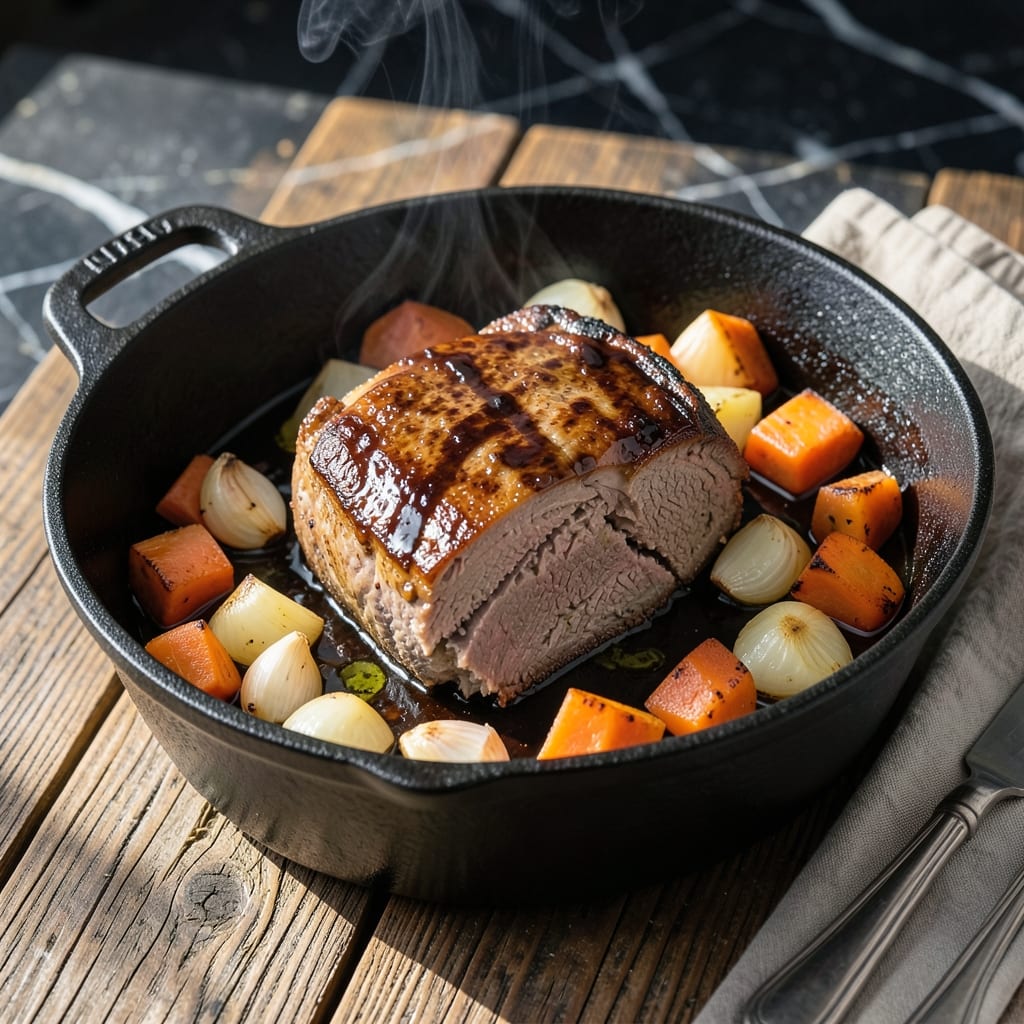
This pot roast transforms tough cuts of beef into meltingly tender perfection through slow braising with balsamic vinegar.
The vinegar adds a subtle sweetness and depth that complements the rich, savory beef. Low and slow cooking ensures every bite falls apart effortlessly.
With simple ingredients and a hands-off method, this dish delivers restaurant-quality results with minimal effort. The aroma alone will draw everyone to the table.
Serve with mashed potatoes or crusty bread to soak up the rich, flavorful juices.
Ingredients for Pot Roast Recipe with Balsamic Vinegar
Transform tough beef into melting tenderness with these carefully selected ingredients for braising.
| Ingredient | Amount | Notes |
|---|---|---|
| Chuck Roast 🥩 | 3 lb | Well-marbled, boneless preferred |
| Balsamic Vinegar 🍷 | ½ cup | Aged for depth of flavor |
| Olive Oil 🫒 | 2 tbsp | Extra-virgin for richness |
| Yellow Onion 🧅 | 1 whole | Large, roughly chopped |
| Garlic Cloves 🧄 | 6 cloves | Peeled, smashed for robust flavor |
| Carrots 🥕 | 3 whole | Peeled, cut into chunks |
| Celery Stalks 🌿 | 3 pieces | Trimmed, cut into large pieces |
| Beef Stock 🥣 | 2 cups | Low-sodium preferred for control |
| Dry Red Wine 🍷 | 1 cup | Bold variety like Cabernet Sauvignon |
| Tomato Paste 🍅 | 2 tbsp | For rich umami depth |
| Fresh Thyme Sprigs 🌿 | 3 pieces | Tied with kitchen twine |
| Fresh Rosemary Sprigs 🌿 | 2 pieces | Tied with kitchen twine |
| Bay Leaves 🍃 | 2 pieces | Dried, whole |
| Kosher Salt 🧂 | 1 ½ tsp | Diamond Crystal preferred for even seasoning |
| Black Pepper 🌶️ | 1 tsp | Freshly cracked for best aroma |
[recipe_ingredient_scaler]
The chuck roast is non-negotiable here. Look for well-marbled pieces—fat equals flavor and tenderness. Most butchers will cube it for you, or Whole Foods often carries pre-cut stew meat. The balsamic vinegar should be aged at least 12 years for the right balance of sweetness and acidity. A bottle from Olive Garden’s store section or a specialty grocer like Eataly works beautifully.
No red wine? Additional beef stock with a splash of apple cider vinegar approximates the depth. For the herbs, dried thyme and rosemary at one-third the amount are acceptable, but fresh delivers superior aroma. If you lack tomato paste, substitute 1 tbsp ketchup plus 1 tbsp tomato sauce—not ideal, but functional. The olive oil can be any neutral oil, though extra-virgin adds complexity.
Store the roast in its juices for up to 4 days—it reheats wonderfully. The cooked vegetables and beef freeze beautifully for 3 months. For best results, chill the fat and skim it off before reheating (worth the extra minute).
Why You’ll Love This Recipe
- Set It and Forget: I toss everything in one pot, cover it, and let the oven do the work while I do literally anything else.
- Rich, Tangy Depth: The balsamic vinegar and garlic turn the chuck roast into this tender, caramelized masterpiece I crave all week.
- Sunday Dinner Hero: It’s my go-to for feeding a crowd or just prepping meals—I serve it over mashed potatoes or in sandwiches the next day.
- Leftovers for Days: Honestly, it tastes even better the second time, and it stretches to at least three more meals without trying.
Step-by-Step Instructions for Slow-Braised Pot Roast With Balsamic Vinegar
Master this technique for fall-apart tender meat with rich, complex flavors developed through patient braising.
Step 1: Sear the Chuck Roast for Deep Flavor
Pat the 3 lb Chuck Roast dry with paper towels and season generously with the 1.5 tsp Kosher Salt and 1 tsp Black Pepper. This ensures a perfect sear and well-seasoned meat throughout.
Heat the 2 tbsp Olive Oil in a large Dutch oven over medium-high heat until shimmering. Add the chuck roast and sear undisturbed for 4-5 minutes per side until deeply browned. You’ll know it’s ready to flip when it releases easily from the pot. Transfer the roast to a plate and set aside.
Step 2: Sauté Aromatics and Deglaze the Pot
In the same pot, add the roughly chopped 1 whole Yellow Onion, chunked 3 whole Carrots, and large pieces of 3 pieces Celery Stalks. Cook for 5 minutes until the vegetables begin to soften and brown slightly.
Add the 6 cloves Garlic Cloves, 2 tbsp Tomato Paste, 3 pieces Fresh Thyme Sprigs, 2 pieces Fresh Rosemary Sprigs, and 2 pieces Bay Leaves. Stir for 1 minute to toast the tomato paste, which deepens its flavor. Pour in the 1 cup Dry Red Wine to deglaze, scraping up all the browned bits from the bottom of the pot.
Step 3: Braise the Roast Low and Slow
Return the chuck roast to the pot along with any accumulated juices. Pour in the 2 cups Beef Stock and 0.5 cup Balsamic Vinegar. The liquid should come about halfway up the roast—add a splash of water if needed.
Bring to a gentle simmer, then reduce the heat to low. Cover and braise for 3 to 3.5 hours, turning the roast halfway through. You’ll know it’s ready when the meat yields easily to a fork and nearly falls apart. This slow cooking process transforms the tough cut into buttery tenderness.
Step 4: Reduce the Sauce and Serve
Once the roast is tender, transfer it to a cutting board and tent loosely with foil. Skim any excess fat from the surface of the braising liquid, then simmer over medium heat for 8-10 minutes until the sauce reduces slightly and thickens to a gravy-like consistency.
Slice or shred the roast and return it to the pot to coat in the sauce. Discard the thyme, rosemary, and bay leaves before serving. The sauce should be rich, glossy, and deeply flavored with the tang of the balsamic vinegar. Serve hot with the braised vegetables.
Pro Tips For Making Pot Roast Recipe With Balsamic Vinegar
- Sear the Chuck: I learned this the hard way—browning the chuck roast in olive oil before braising adds a depth of flavor that skipping this step just can’t match.
- Reduce the Balsamic: After burning a batch years ago, I now simmer the balsamic vinegar for 2-3 minutes first to mellow its sharpness and concentrate the flavor.
- Don’t Rush the Onions: Cook the yellow onions until they’re deeply caramelized, about 10-12 minutes—this builds the sweet base that balances the balsamic’s tang.
- Use a Meat Thermometer: Pull the roast at 195°F internal temp; it’ll be fork-tender and juicy every time, no more guessing or overcooking.
Make-Ahead Tips for Leftovers
Overnight Prep
You can sear the roast and sauté the aromatics the night before. Store the seared roast, vegetables, and all braising liquids in the Dutch oven in your fridge. The next morning, just bring everything to a simmer and let it braise as usual. This actually deepens the flavors further. 💡
Partial Cook Method
Start the braising process in the morning on low heat for 2 hours, then let it cool and finish the final 1-1.5 hours before dinner. This splits the cooking time while maintaining perfect tenderness.
Vegetable Prep
Chop all your vegetables the day before and store them in airtight containers. This saves 15-20 minutes on cooking day. I keep mine in glass containers to avoid plastic odors.
Sauce Reduction
The braising liquid can be reduced and stored separately for up to 3 days. When ready to serve, just reheat the sauce with the roast. The flavors will meld beautifully during storage.
Freezing Tips
Cool the roast completely in its juices, then freeze in quart-size bags for up to 3 months. Thaw overnight in the fridge before reheating. The balsamic vinegar helps preserve the meat’s texture. ❄️
Reheating Strategy
Gently reheat the roast in its sauce on the stovetop over low heat for 20-30 minutes. Add a splash of water if needed. This prevents drying while restoring that melt-in-your-mouth quality.
Nutrition Facts
Frequently Asked Questions
Can I use a different cut of beef?
Chuck roast is ideal for its marbling, but brisket or short ribs work too. Avoid lean cuts like sirloin—they’ll dry out during the 3-3.5 hour braise.
Why add balsamic vinegar?
The vinegar balances richness with subtle sweetness and tang. Its acidity also helps break down collagen for extra tenderness. Use aged balsamic for best results.
Can I make this in a slow cooker?
Yes! Sear the roast first, then transfer everything to a slow cooker. Cook on low for 8-10 hours or high for 5-6 hours. The flavors will still shine.
How do I fix a sauce that’s too thin?
Simmer uncovered for 10-15 minutes to reduce. For faster results, mix 1 tbsp cornstarch with water and stir into the sauce.

Trained in classic French technique but raised on slow-cooked ribs and spicy rubs, she blends culinary skill with smoke and soul.
- Recipe for French Pork Spread Gorton: Savory Gallic Flavors in a Spreadable Delight - October 3, 2026
- Recipe for Pan Fried: Golden Crust with Savory Depth - October 3, 2026
- Recipe For Fried Chicken In A Pressure Cooker: Crispy Golden Bites in Half the Time - October 3, 2026