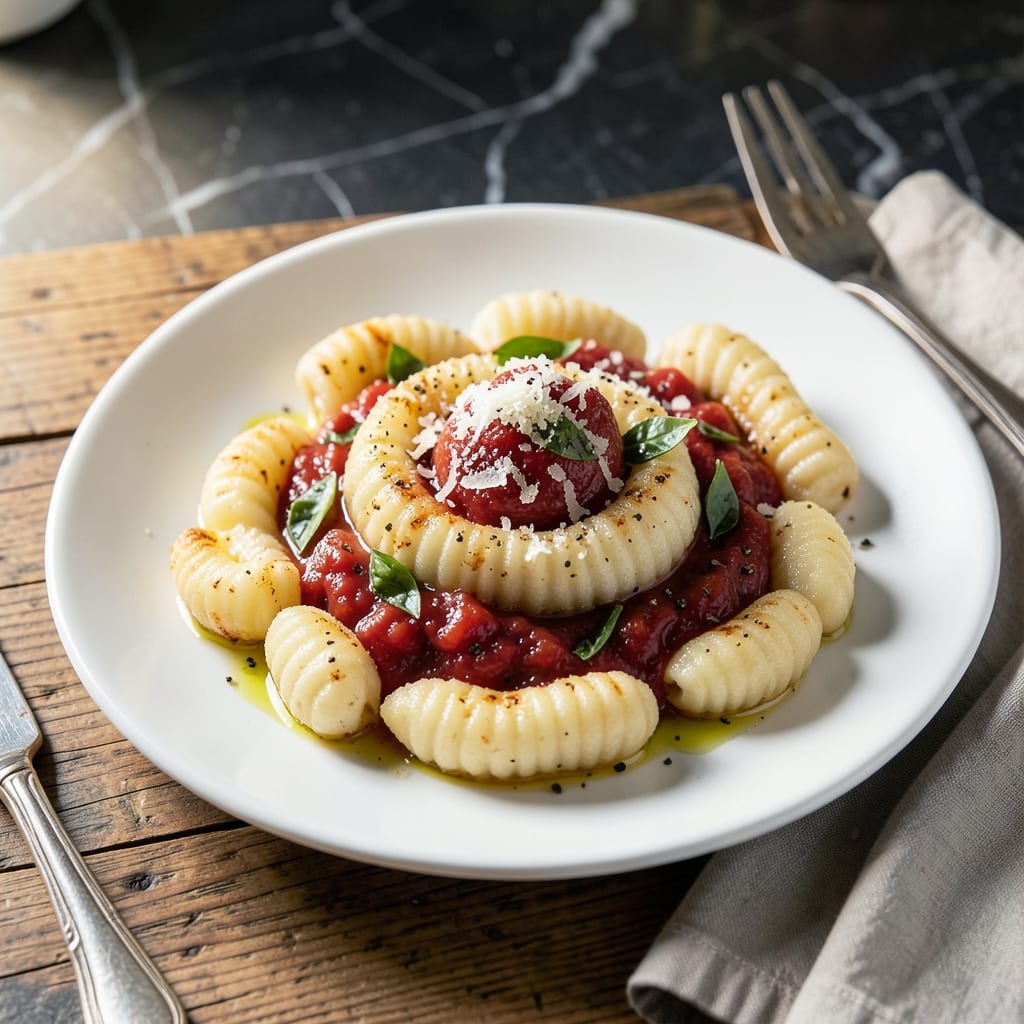
Standing on a stool helping Nonna roll gnocchi taught me that the best dishes often come from the simplest ingredients. This recipe brings that same rustic Italian charm to your own kitchen with pillowy results every time.
The secret lies in the potato-to-flour ratio and gentle handling. Too much flour makes them dense, while underworking the dough creates tender, melt-in-your-mouth bites. I’ve tested this method repeatedly to ensure foolproof results.
These soft dumplings boil up light and airy, ready to soak up your favorite sauce. Whether you serve them with a rich ragù or simple brown butter and sage, they deliver restaurant-quality flavor at home.
Perfect for a cozy weeknight or impressing guests with handmade pasta. Here’s how to master them.
Ingredients for Potato Gnocchi Recipe Ideas
Simple, rustic ingredients transform into pillowy Italian dumplings with ease.
| Ingredient | Amount | Notes |
|---|---|---|
| Russet Potatoes 🥔 | 2 lb | Baked until tender, not boiled |
| All-Purpose Flour 🌾 | 1 ½ cups | Plus extra for dusting |
| Large Egg 🥚 | 1 whole | Room temperature, lightly beaten |
| Fine Sea Salt 🧂 | 1 tsp | Adjust to taste |
| Freshly Ground Black Pepper 🌶️ | ¼ tsp | For seasoning dough |
| Fresh Nutmeg 🌰 | 0.125 tsp | Grated, for depth |
| Extra-Virgin Olive Oil 🫒 | 1 tbsp | For finishing and serving |
| Parmesan Cheese 🧀 | ½ cup | Freshly grated, vegetarian rennet |
| Semolina Flour 🌾 | ½ cup | For rolling gnocchi |
| Fresh Sage Leaves 🍃 | ¼ cup | For brown butter sauce |
| Unsalted Butter 🧈 | 4 tbsp | For brown butter sauce |
[recipe_ingredient_scaler]
The potatoes are everything here. Russets give that classic light, fluffy texture—waxy varieties just won’t work. I get mine from Whole Foods (they’ve got the best selection), but any grocery store will do. Bake them, don’t boil—boiling makes them waterlogged. Look for potatoes that feel heavy for their size (that’s how you know they’re fresh). And for God’s sake, don’t use the green ones.
No Russets? Yukon Golds are your backup—they’re waxier but still decent. Egg-free? Skip it, but your gnocchi might be denser. For the flour, 00 flour (the Italian kind) makes them even lighter, but all-purpose is totally fine. The Parmesan needs to be vegetarian rennet—check the label. Most supermarkets carry at least one brand that fits the bill.
Fresh gnocchi don’t keep well—make them the same day. Cooked leftovers? 2-3 days in the fridge, max. Freeze uncooked on a tray first (so they don’t stick), then bag them—they’ll last 2 months. That’s it. Simple enough.
Why You’ll Love This Recipe
- One Pot Wonders: I love that I only need a pot, a bowl, and a fork—no fancy equipment, just my hands and those russets.
- Pillowy Perfection: That first bite of soft, buttery potato gnocchi with a hint of pepper? Ridiculously good.
- Freezer’s Best Friend: Honestly, I double the batch and freeze half—dinner in 10 minutes next week.
- Pantry Staples Only: Between us, I always have potatoes, flour, and eggs on hand, so this is my last-minute lifesaver.
Step-by-Step Instructions for Potato Gnocchi
Follow my tested method and you’ll achieve light, pillowy gnocchi with that signature rustic texture.
Step 1: Bake and Rice the Russet Potatoes
Preheat your oven to 400°F. Pierce the 2 lb Russet Potatoes all over with a fork and bake directly on the oven rack for 45-60 minutes until tender when pierced with a knife. Baking, not boiling, keeps the potatoes dry for the perfect gnocchi texture.
Let the russet potatoes cool slightly, then split them open and rice them through a potato ricer or fine mesh sieve onto a clean surface. This creates a light, fluffy base without lumps. Discard any skins and let the riced potatoes cool completely before proceeding—hot potatoes would cook the egg prematurely.
Step 2: Form and Season the Dough
Mound the riced russet potatoes on a clean work surface and create a well in the center. Add the 1 whole Large Egg, 1 tsp Fine Sea Salt, 0.25 tsp Freshly Ground Black Pepper, and 0.125 tsp Fresh Nutmeg to the well. Using a fork, gently beat the egg and spices together, then gradually incorporate the potatoes.
Sprinkle 1.5 cups All-Purpose Flour over the potato mixture. Gently fold the flour into the potatoes using your hands or a bench scraper, being careful not to overwork the dough. The dough should be soft and slightly sticky but not wet. Overworking develops gluten, which makes gnocchi tough rather than tender.
Step 3: Shape and Roll the Gnocchi
Divide the dough into 4 equal portions. Lightly dust your work surface with some of the 0.5 cup Semolina Flour. Take one portion of dough and roll it into a rope about ¾-inch thick. Cut the rope into 1-inch pieces using a bench scraper or knife.
For the classic ridged texture, roll each piece over a gnocchi board or the tines of a fork, pressing gently with your thumb. This creates grooves that help hold sauce later. Place the shaped gnocchi on a baking sheet dusted with the remaining semolina flour to prevent sticking while you finish shaping the rest.
Step 4: Cook the Gnocchi and Prepare the Brown Butter Sauce
Bring a large pot of salted water to a gentle boil. Add the gnocchi in batches, being careful not to overcrowd the pot. They’re done cooking when they float to the surface after 1-2 minutes. Remove them with a slotted spoon and transfer to a plate.
While the gnocchi cook, melt the 4 tbsp Unsalted Butter in a large skillet over medium heat. Once the butter begins to foam, add the 0.25 cup Fresh Sage Leaves and cook for 2-3 minutes until the butter turns a rich golden brown and the sage becomes crisp. Immediately remove from heat to prevent burning.
Add the cooked gnocchi to the brown butter sauce, tossing gently to coat. Sprinkle with 0.5 cup Parmesan Cheese and drizzle with 1 tbsp Extra-Virgin Olive Oil before serving. The gnocchi should be light and tender with a delicate, buttery sauce clinging to each piece.
Pro Tips For Making Potato Gnocchi Recipe Ideas
- Bake the Potatoes: Roast russets whole at 400°F until fork-tender—about 45-60 minutes. I learned this the hard way: boiling makes them waterlogged, and gummy gnocchi is the sad result.
- Rice While Hot: Press the peeled potatoes through a ricer immediately after baking. Sounds weird, but it works: waiting lets them turn gluey, and nobody wants dense dumplings.
- Start With Less Flour: Use about 1 cup flour per pound of potatoes, then add more only if needed. My grandmother swore by this, and she was right: over-flouring turns them into hockey pucks.
- Test One First: Drop a single gnocchi in simmering water before shaping the whole batch. If it falls apart, add 1-2 tablespoons more flour to the dough—saves you from a pot full of potato soup.
Common Mistakes When Making potato gnocchi recipe ideas
Overworking the Dough
The biggest mistake I see is over-kneading the dough. As soon as you add the 1.5 cups All-Purpose Flour, gently fold it in just until combined. Overworking develops gluten, turning your gnocchi into dense, rubbery lumps instead of pillowy bites. 💪
Using Wet Potatoes
Always bake, never boil, your 2 lb Russet Potatoes. Boiling makes them waterlogged, which leads to gummy gnocchi. After baking, let them cool completely and rice them while still warm—the steam from hot potatoes can cook the egg prematurely.
Too Much Flour
Resist the urge to add extra flour if the dough feels sticky. The 1.5 cups is perfect for 2 lb of riced potatoes. Adding more flour makes them heavy. If it’s too wet, your potatoes might have been too watery—next time, bake them longer.
Skipping the Test Cook
Before shaping all your gnocchi, cook one test piece. If it falls apart in the water, your dough needs more flour. If it’s tough, you overworked it. This 1-minute test saves the whole batch. I learned this the hard way after my first few failed attempts.
Crowding the Pot
Cook gnocchi in batches to avoid sticking. Drop them into gently boiling salted water, and don’t stir too vigorously—they’re delicate. They’ll float to the top in 1-2 minutes. Remove them immediately with a slotted spoon.
Ignoring the Grooves
Rolling each piece over a fork or gnocchi board isn’t just for looks. Those grooves help sauce cling to every bite. Press gently with your thumb as you roll—don’t skip this step, or your sauce will slide right off. 🍃
Nutrition Facts
Frequently Asked Questions
Can I use a different type of potato?
Russets work best for light, fluffy texture, but Yukon Golds are a decent backup. Avoid waxy red potatoes—they make dense gnocchi.
How do I know when they’re done cooking?
They’re ready when they float to the surface after 1-2 minutes. Remove them immediately with a slotted spoon to prevent overcooking.
Can I make gnocchi without a potato ricer?
Yes! A fine mesh sieve or food mill works too. The key is creating a light, lump-free base. Press the potatoes through gently.
Why did my gnocchi fall apart in the water?
This usually means the dough was too wet or didn’t have enough flour. Next time, test-cook one piece first and adjust the dough if needed.

Trained in classic French technique but raised on slow-cooked ribs and spicy rubs, she blends culinary skill with smoke and soul.
- Recipe for Boneless Pork Chops in Cast Iron Skillet: Sear and Baste to Juicy Perfection - October 3, 2026
- Recipe for Boneless Cross Rib Roast: Slow-Roasted Beef with Herb Crust - October 3, 2026
- Hamburgers in Sauce Recipe Crock Pot: Slow-Cooked Savory Delight - October 3, 2026