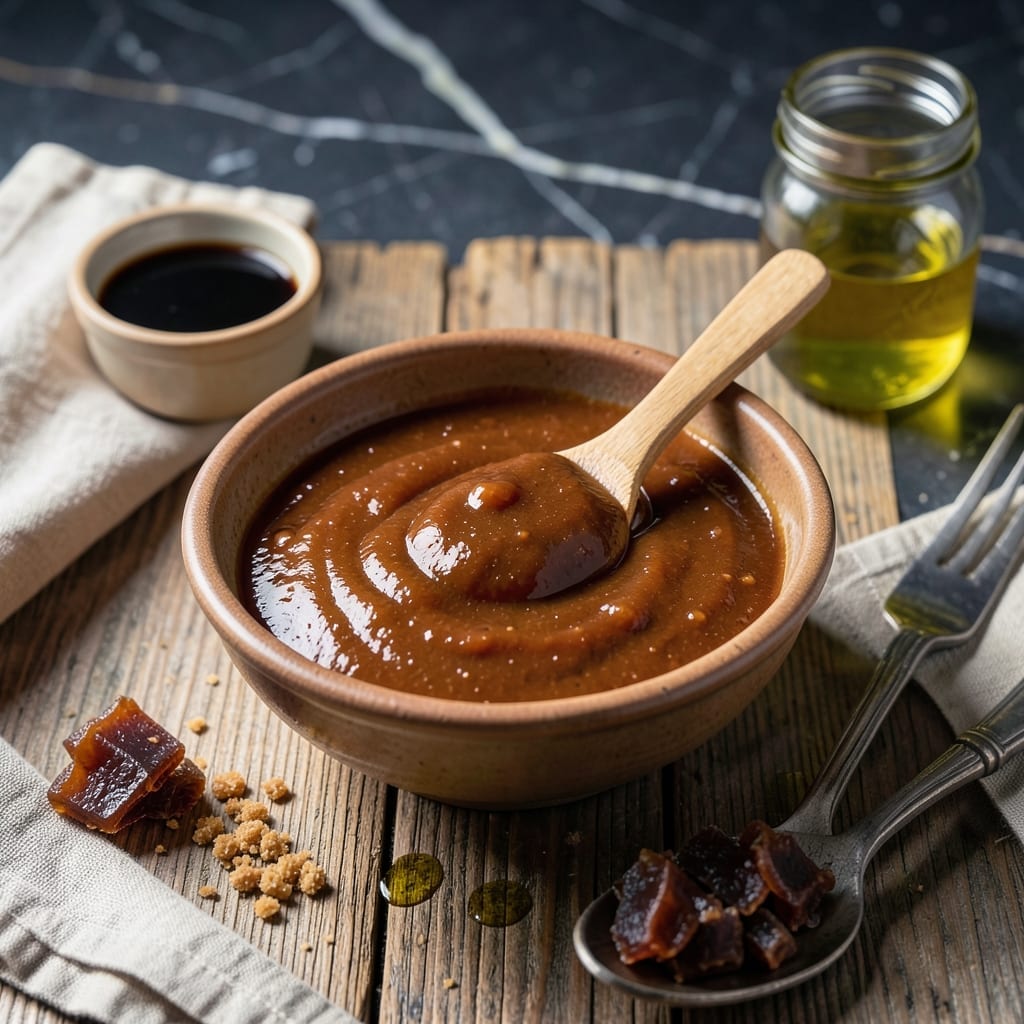
This pressure cooker method delivers rich, molasses-deep BBQ sauce in a fraction of the time.
I’ve streamlined the process to capture complex, smoky-sweet flavors without hours of simmering. The result is a quick, versatile sauce that elevates any dish.
Ingredients for Pressure Cooker Bbq Sauce
Nine pantry staples transform into complex, smoky-sweet sauce with minimal effort.
| Ingredient | Amount | Notes |
|---|---|---|
| Ketchup 🍅 | 2 cups | High-quality, no high-fructose corn syrup |
| Molasses 🫙 | ½ cup | Unsulphured for cleaner flavor |
| Apple Cider Vinegar 🍎 | ¼ cup | Raw, unfiltered preferred |
| Brown Sugar 🍚 | ½ cup | Light or dark variety |
| Worcestershire Sauce 🫒 | 2 tbsp | Vegan variety (Annie's recommended) |
| Dijon Mustard 🟡 | 2 tbsp | Smooth, no seeds |
| Smoked Paprika 🌶️ | 1 tbsp | Provides depth and smoke |
| Garlic Powder 🧄 | 1 tbsp | Freshly ground if possible |
| Onion Powder 🧅 | 1 tbsp | Fine, uniform texture |
| Salt 🧂 | 1 tsp | Diamond Crystal kosher preferred |
[recipe_ingredient_scaler]
The molasses is non-negotiable for that deep, caramelized richness. Grandma’s or Brer Rabbit are reliable brands for unsulphured varieties. Ketchup quality matters—Heinz Organic or Annie’s avoid the artificial aftertaste of cheaper options. Apple cider vinegar should be raw and unfiltered (look for the mother in the bottle) for authentic tang. Most supermarkets carry these in the baking or condiment aisle.
No molasses? Dark corn syrup at a 1:1 ratio works, though the flavor profile shifts slightly sweeter. Swap Worcestershire for soy sauce plus 1 tsp liquid smoke if you can’t find vegan versions. Brown sugar can be replaced with coconut sugar (same amount), but expect a subtle coconut undertone. For extra heat, add half a teaspoon of cayenne (don’t skip the smoked paprika though—it’s doing heavy lifting here).
Sauce keeps in an airtight jar in the fridge for 2 weeks or can be frozen in ice cube trays for 6 months. The flavors actually deepen after 24 hours, so make it a day ahead if possible. Stir before using as ingredients may settle.
Why You’ll Love This Recipe
- Set It and Forget: I toss everything in the pressure cooker, seal the lid, and walk away—no stirring, no fuss.
- Tangy Sweet Balance: The molasses and apple cider vinegar hit that perfect sweet-tart note every time.
- Slathers on Everything: I’ve used this on ribs, as a meatloaf glaze, even stirred into baked beans for potlucks.
- Pantry Staples Only: Between us, I always have these ingredients on hand, so I can make a fresh batch whenever the craving hits.
Step-by-Step Instructions for Pressure Cooker BBQ Sauce
This streamlined process delivers rich, complex flavor in a fraction of the traditional simmering time.
Step 1: Combine Wet Ingredients in Pressure Cooker
Add the 2 cups Ketchup, 0.5 cup Molasses, and 0.25 cup Apple Cider Vinegar to your pressure cooker. Stir until the molasses fully incorporates—the mixture should appear smooth with no visible streaks of dark syrup.
I always use unsulphured molasses here for its cleaner, more pronounced flavor profile. The vinegar’s acidity will balance the sweetness as the sauce develops. Ensure your pressure cooker’s inner pot is clean and free of any residual flavors from previous cooking.
Step 2: Add Remaining Ingredients and Deglaze
Stir in the 0.5 cup Brown Sugar, 2 tbsp Worcestershire Sauce, 2 tbsp Dijon Mustard, 1 tbsp Smoked Paprika, 1 tbsp Garlic Powder, 1 tbsp Onion Powder, and 1 tsp Salt. The mixture will thicken slightly as the brown sugar dissolves.
Add 1 cup of water and use a wooden spoon to deglaze the bottom of the pot, scraping up any browned bits. This prevents the “burn” notice on electric pressure cookers. The liquid should look slightly thinned at this stage—this is normal and necessary for proper pressure building.
Step 3: Pressure Cook and Natural Release
Secure the lid and set the valve to sealing. Cook on high pressure for 10 minutes. The cooker will take approximately 10-15 minutes to come to pressure before the timer begins. You’ll hear a faint hissing sound during this pre-heating phase.
After the cooking cycle completes, allow for a full natural pressure release, which typically takes 15-20 minutes. Don’t be tempted to quick-release—the gradual pressure reduction helps the flavors meld and prevents sauce from spraying through the valve. The float valve will drop when it’s safe to open.
Step 4: Finish and Adjust Consistency
Open the lid carefully, tilting it away from your face to avoid steam. Stir the sauce—it should have deepened in color and developed a glossy sheen. The texture will be thinner than traditional BBQ sauce at this point, which is perfect for the next step.
Switch to the sauté function on medium heat and simmer uncovered for 8-12 minutes, stirring frequently. The sauce will reduce by about one-third and coat the back of a spoon. Watch for it to reach your desired thickness—it should ribbon off the spoon but still pour easily. Taste and adjust salt if needed, though the initial measurement typically suffices.
Step 5: Cool and Store
Remove from heat and let the sauce cool to room temperature, which takes about 30-45 minutes. As it cools, it will thicken further. Transfer to airtight containers—glass jars work particularly well for this.
The sauce will keep in the refrigerator for up to 2 weeks or can be frozen for 3 months. For best results, allow it to sit for 24 hours before using to let the flavors fully develop. This resting period allows the smoked paprika and molasses to reach their full potential.
Pro Tips For Making Pressure Cooker Bbq Sauce
- Sauté Your Aromatics: I learned this the hard way—always sauté any onions or garlic in the pressure cooker first, before adding the liquids. It adds depth that raw aromatics just can’t match.
- Deglaze Thoroughly: After sautéing, pour in a splash of the apple cider vinegar and scrape the bottom hard. Those browned bits are pure flavor, and skipping this risks burnt bits in your sauce.
- Skip the Overfill: Resist the urge to double the batch—pressure cookers need at least 1/3 empty space, or you’ll get messy sputters and uneven cooking.
- Use Dark Molasses: Sounds weird, but it works: dark molasses (not light or blackstrap) gives the right balance of bitterness and sweetness with the ketchup and brown sugar.
Common Mistakes When Making pressure cooker bbq sauce
🔥 Overcooking the Sauce
Pressure cookers can turn your BBQ sauce bitter or overly thick if left too long. The high heat caramelizes sugars quickly, leading to a burnt taste or a gluey texture.
Fix: Set a timer for the recommended cook time (usually 10-15 minutes on high pressure) and use a quick-release method to stop cooking immediately.
🌡️ Skipping the Sauté Step
Jumping straight to pressure cooking without sautéing aromatics like onions and garlic can leave your sauce lacking depth. Raw ingredients won’t develop the rich, layered flavors BBQ sauce needs.
Fix: Always sauté onions, garlic, and spices in the pressure cooker first using the “Sauté” function until fragrant (about 3-4 minutes).
🥘 Not Adjusting Liquid Levels
Too much liquid can dilute flavors, while too little risks burning. Pressure cookers require a minimum liquid amount (usually 1 cup) to build steam, but BBQ sauce needs the right balance for thickness.
Fix: Stick to the recipe’s liquid measurements. If your sauce is too thin after cooking, simmer it uncovered in the pot to reduce and thicken.
🎯 Ignoring Acid Balance
BBQ sauce needs acidity (vinegar, lemon juice) to cut through sweetness and add tang. Skipping or overdoing it can make the sauce flat or harsh.
Fix: Taste as you go! Start with the recipe’s suggested acid amount, then adjust with small additions of vinegar or lemon juice until the flavor pops.
Nutrition Facts

Trained in classic French technique but raised on slow-cooked ribs and spicy rubs, she blends culinary skill with smoke and soul.
- Recipe for Boneless Pork Chops in Cast Iron Skillet: Sear and Baste to Juicy Perfection - October 3, 2026
- Recipe for Boneless Cross Rib Roast: Slow-Roasted Beef with Herb Crust - October 3, 2026
- Hamburgers in Sauce Recipe Crock Pot: Slow-Cooked Savory Delight - October 3, 2026