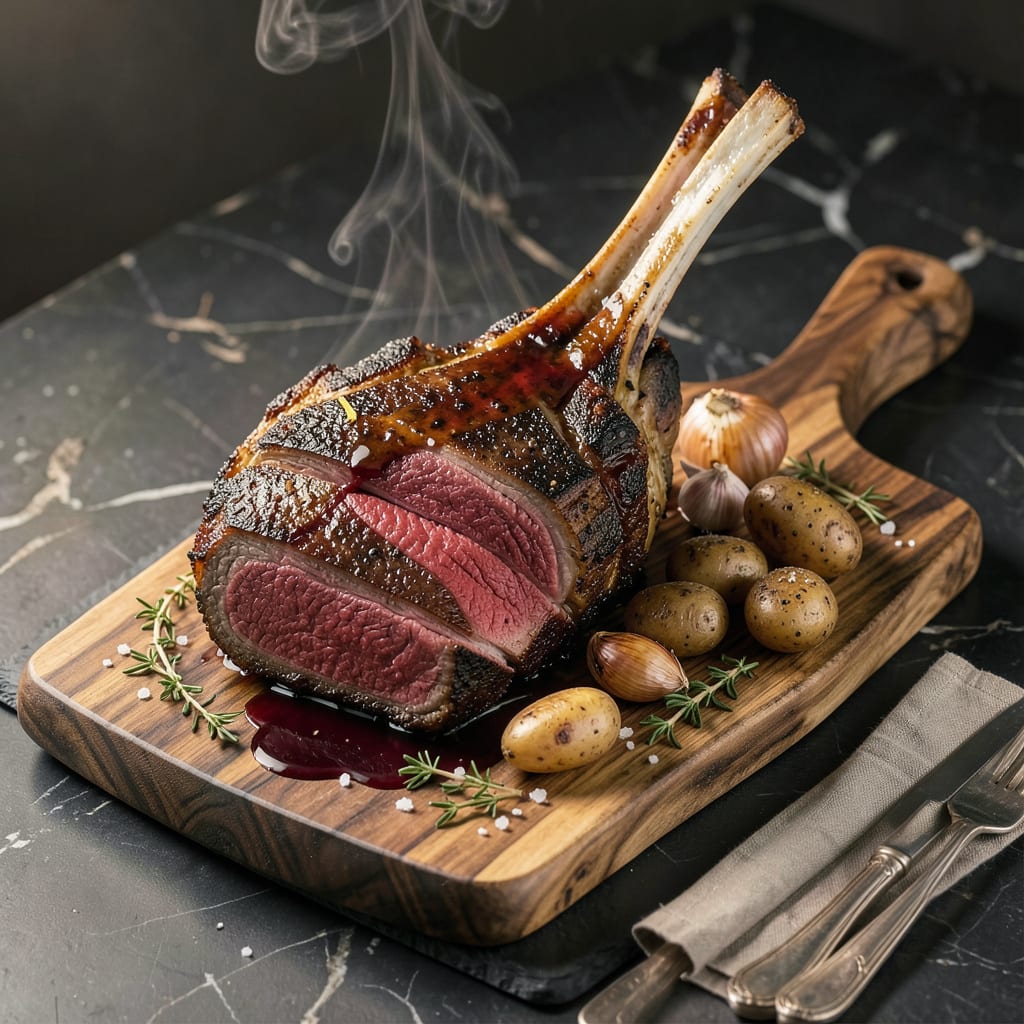
A prime rib tomahawk is a bone-in ribeye roast with an extended frenched rib bone, offering rich marbling and bold beef flavor. It’s typically 2-4 inches thick, weighing 3-6 pounds, and cooked using dry-heat methods for a showstopping centerpiece.
This cut stands out because of its dramatic presentation—the long, cleaned rib bone resembles a tomahawk axe handle, making it a favorite for special occasions. 🔥 The bone doesn’t just look impressive; it actually enhances flavor by insulating the meat during cooking, keeping it juicier than boneless roasts. I’ve found that the marbling in this cut rivals that of premium ribeyes, but the bone-in structure gives it an extra depth of beefy richness that’s hard to match.
What surprises many home cooks is how versatile this cut can be—whether you’re reverse-searing it for a perfect crust or slow-roasting it for a melt-in-your-mouth texture. ✨ The key is treating it like a hybrid between a steak and a roast, which means paying close attention to both internal temperature and searing technique.
💡 In This Article
- What Makes a Tomahawk Prime Rib Cut Unique
- Step-by-Step Guide to Cooking Tomahawk Prime Rib
What Makes a Tomahawk Prime Rib Cut Unique
This cut comes from the rib primal section, specifically ribs 6-12, where the longissimus dorsi muscle (the same one that gives us ribeye steaks) meets the rib bones.
The magic happens when butchers leave the rib bone intact and french it—a precise technique where meat and fat are cleaned from the bone to expose 5-8 inches of pristine white handle.
This isn’t just for show; the bone acts as a natural heat conductor, distributing warmth more evenly during cooking than a boneless roast ever could.
The tomahawk’s signature flavor comes from its exceptional marbling—those white fat streaks that melt at 130-140°F and baste the meat from within. 🔥 Prime grade tomahawks (USDA’s highest rating) have marbling scores of Modest+ to Abundant, meaning 8-12% intramuscular fat.
Compare that to Choice grade’s 4-7%, and you’ll taste why chefs insist on Prime for this cut. The bone itself contributes minerals during cooking, subtly enhancing the beef’s natural umami profile in ways science is still unpacking.
What most home cooks miss is how the bone affects cooking times and methods. That 1.5-2 pound bone acts like a heat sink, requiring you to adjust oven temps by 25-50°F lower than boneless roasts to prevent overcooking near the bone.
I’ve found that reverse-searing (starting at 200°F then finishing with a 450°F sear) works best because it gives the bone time to warm through without drying out the outer layers. The Frenching also creates more surface area for crust development—something I exploit with a 50/50 salt-pepper rub applied 12 hours before cooking.
The tomahawk’s history traces back to 19th-century English “standing rib roasts,” but it was American steakhouses in the 1980s that popularized the dramatic bone-in presentation. Today’s versions often weigh 3-6 pounds with the bone accounting for 20-25% of that weight.
That’s why butchers charge by the pound including the bone—a $25/lb Prime tomahawk might only yield 4-5 pounds of edible meat after accounting for the bone and fat cap trimming.
Here’s what’s fascinating about the anatomy: The rib bones are connected to the spine via costal cartilage, which softens during cooking and contributes gelatin to the au jus. When you carve parallel to the bone (never perpendicular!), you’re working with the muscle grain that runs diagonally across the rib section.
This grain direction is why tomahawk slices have that perfect chew—firm enough to hold together but tender enough to melt.
The presentation isn’t just about the bone length—it’s about the 1.5-2 inch thickness that allows for a perfect medium-rare gradient from edge to center. ✨ I’ve served these at competitions where judges specifically look for the “bullseye” effect: a dark crust, pink ring, and deep red center.
That visual only happens when you understand how the bone’s thermal mass interacts with the meat’s fat distribution.
Pro tip: Ask your butcher for the “chuck-end” of the rib primal if you want more connective tissue that renders into unctuous gelatin during cooking. The loin-end cuts have finer grain but less collagen.
Either way, you’re working with a cut that represents less than 2% of the entire carcass—which is why true tomahawks command premium prices at specialty butchers.

Trained in classic French technique but raised on slow-cooked ribs and spicy rubs, she blends culinary skill with smoke and soul.
- Meatball Curry Recipe Kerala Style: Coconut-Spiced Gravy With Tender Bites - October 3, 2026
- Recipe for Curried Tofu: Aromatic Spices With Crispy Edges - October 3, 2026
- Recipe for Dumplings in Crock Pot: Fluffy Pillows with Minimal Effort - October 3, 2026