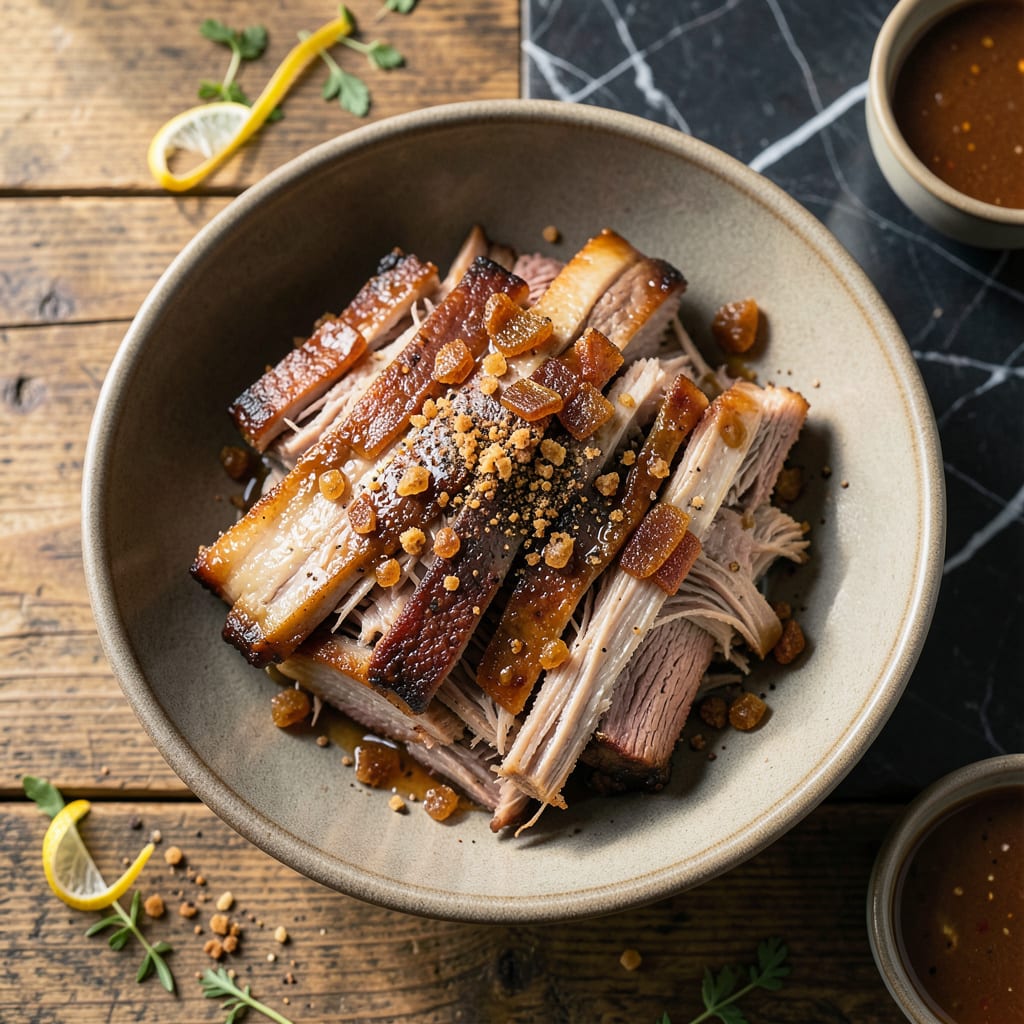
This pulled pork recipe skips the BBQ sauce for a tangy, vinegar-based finish that lets the pork shine. My pitmaster training taught me that sometimes less is more.
The vinegar cuts through the richness while enhancing the natural smoke flavors. This method delivers tender, juicy pulled pork with a bright, clean taste that pairs perfectly with any sides.
Ingredients for Pulled Pork Recipe No Bbq Sauce
Tender pork shoulder meets a bright vinegar finish. No sauce needed, just pure flavor.
| Ingredient | Amount | Notes |
|---|---|---|
| Pork Shoulder 🐖 | 4 lb | Bone-in for best flavor |
| Apple Cider Vinegar 🍏 | 1 ½ cups | For tangy finishing sauce |
| Kosher Salt 🧂 | 2 tbsp | Diamond Crystal preferred |
| Black Pepper 🌶️ | 2 tsp | Freshly ground coarse |
| Brown Sugar 🧈 | ½ cup | Light or dark variety |
| Garlic Powder 🧄 | 2 tsp | Not garlic salt |
| Onion Powder 🧅 | 2 tsp | Fresh ground preferred |
| Smoked Paprika 🌶️ | 1 tbsp | For authentic smoke flavor |
| Yellow Mustard 🟡 | ¼ cup | Helps form bark on pork |
| Chicken Stock 🍲 | 1 cup | Low-sodium preferred |
| Red Pepper Flakes 🔥 | 1 tsp | Adjust for heat preference |
| Dried Oregano 🍃 | 1 tsp | Mediterranean variety |
[recipe_ingredient_scaler]
Pork shoulder is non-negotiable here—bone-in delivers the most succulent results. Professional pitmasters agree: 8-10 lbs is ideal for low-and-slow cooking, but 4 lbs works perfectly for a home smoker or oven. Look for good marbling at your butcher or Costco. The apple cider vinegar must be raw and unfiltered for that authentic tang. Bragg is a reliable brand if you’re not making your own.
Need a pork alternative? Pork butt (same cut, different name) works identically. No vinegar? White vinegar in a pinch, though the flavor profile changes slightly. For sweetness, honey or maple syrup can replace brown sugar. The mustard is mostly for bark formation—Dijon works too. Chicken stock can be swapped for vegetable stock without issue.
Leftover pulled pork keeps 4-5 days refrigerated in an airtight container. For longer storage, freeze portions for up to 3 months. The vinegar-based finish actually improves overnight as flavors meld. Always reheat gently to maintain moisture.
Why You’ll Love This Recipe
- Set It and Forget It: I rub the pork shoulder with salt, pepper, and brown sugar, then let the slow cooker do all the work.
- Tangy Sweet Balance: The apple cider vinegar cuts through the richness while the brown sugar caramelizes into every bite.
- Meal Prep Hero: I make a big batch on Sunday and it turns into tacos, sandwiches, or salads all week.
- Budget Feast: Pork shoulder is cheap, and this recipe stretches to feed a crowd with minimal effort.
Step-by-Step Instructions for Pulled Pork Recipe No BBQ Sauce
Here’s the method. Straightforward, tested, works every time.
Step 1: Prepare the Dry Rub and Season the Pork
In a small bowl, combine the 2 tbsp Kosher Salt, 2 tsp Black Pepper, 0.5 cup Brown Sugar, 2 tsp Garlic Powder, 2 tsp Onion Powder, 1 tbsp Smoked Paprika, 1 tsp Red Pepper Flakes, and 1 tsp Dried Oregano. Mix thoroughly until all spices are evenly distributed.
Pat the 4 lb Pork Shoulder dry with paper towels to ensure the rub adheres properly. Apply the 0.25 cup Yellow Mustard all over the pork, creating a thin, even coating. This helps the rub stick and contributes to forming a flavorful bark. Massage the dry rub into every surface of the pork, pressing firmly so it adheres well.
Step 2: Slow Cook the Pork to Tenderness
Place the seasoned pork shoulder in a slow cooker, Dutch oven, or heavy pot. Pour the 1 cup Chicken Stock into the bottom of the cooking vessel. The liquid should not cover the pork—just create steam to keep the meat moist during cooking.
Cover and cook on low heat for 8-10 hours if using a slow cooker, or at 300°F in an oven until the pork is fork-tender. You’ll know it’s done when a fork inserts easily and the meat begins to fall apart with minimal effort. The internal temperature should reach 195-205°F for perfect pull-apart texture.
Step 3: Shred and Moisten with Vinegar Sauce
Once the pork is fully cooked, remove it from the cooking liquid and let it rest for 15 minutes. This allows the juices to redistribute throughout the meat. Using two forks, shred the pork into bite-sized pieces, discarding any large fat chunks or connective tissue.
In a separate bowl, whisk together the 1.5 cups Apple Cider Vinegar with 2 tbsp of the cooking liquid from the pork. Pour this mixture over the shredded pork and toss gently to coat evenly. The vinegar cuts through the richness of the pork while adding the signature tang this dish is known for.
Step 4: Rest and Serve
Let the pulled pork sit for 10 minutes to absorb the vinegar mixture fully. This resting period allows the flavors to meld together. Taste and adjust seasoning if needed, though the initial rub and vinegar blend should provide the perfect balance of tangy, smoky, and slightly sweet notes.
Serve warm on buns or as a standalone dish. The pork should be tender and juicy with a distinct vinegar brightness that sets it apart from traditional barbecue sauce-based pulled pork. Any leftovers can be stored in the refrigerator for up to 4 days.
Pro Tips For Making Pulled Pork Recipe No Bbq Sauce
- Low and Slow: Cook the pork shoulder at 225°F for at least 8 hours—any hotter and the meat will toughen up before it has time to break down.
- Score the Fat: Cut 1/4-inch deep crosshatches in the fat cap so the salt, pepper, and brown sugar penetrate deeper into the meat.
- Don’t Rush Resting: Let the pork rest under foil for 30-45 minutes after cooking; skip this and the juices will spill out when you pull it.
- Vinegar Last: Splash the apple cider vinegar in during the final hour—adding it too early can make the pork dry out instead of staying tender.
Pro Cooking Tips for pulled pork recipe no bbq sauce
Temperature Control
For slow cooker method, keep that low setting steady—no peeking for at least 8 hours. I learned this patience from my French mentors. The pork needs time to break down those collagen fibers.
Bark Formation
The yellow mustard and rub combo creates that perfect crust. Don’t skip pressing the rub in hard. That’s where the magic happens. I forage wild thyme sometimes to add to the mix.
Internal Temp Check
Use a quality probe thermometer—I swear by ThermoWorks. You’re aiming for 195-205°F internally. Below that and it won’t pull apart right. Above 210°F and it can dry out. 🌡️
Vinegar Balance
The apple cider vinegar should be added gradually. Start with 1 cup, taste, then add more. Remember, you can always add but can’t take away. I prefer raw, unfiltered vinegar.
Resting Time
That 15-minute rest after cooking isn’t optional. It lets juices redistribute. Same with the 10-minute rest after adding vinegar. Patience pays off in tenderness.
Shredding Technique
Use two forks in opposite directions. Discard any large fat chunks. For competition-style texture, I sometimes use meat claws. The vinegar makes the fibers slip apart beautifully.
Nutrition Facts

Trained in classic French technique but raised on slow-cooked ribs and spicy rubs, she blends culinary skill with smoke and soul.
- Recipe for Boneless Pork Chops in Cast Iron Skillet: Sear and Baste to Juicy Perfection - October 3, 2026
- Recipe for Boneless Cross Rib Roast: Slow-Roasted Beef with Herb Crust - October 3, 2026
- Hamburgers in Sauce Recipe Crock Pot: Slow-Cooked Savory Delight - October 3, 2026