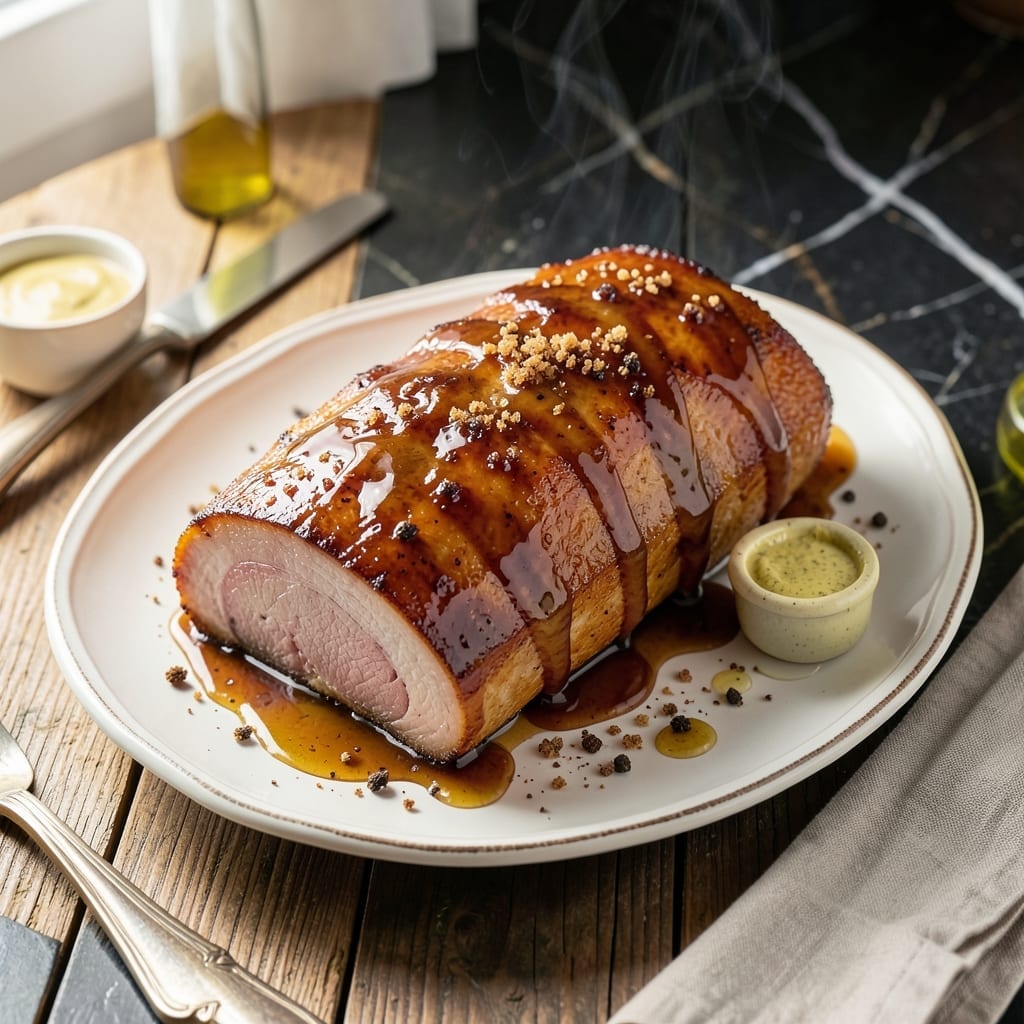
This glaze transforms any ham into a showstopper with minimal effort. The brown sugar base creates a sweet and sticky coating that caramelizes beautifully under the broiler.
Ready in 5 minutes, it combines pantry staples for a quick finish. Perfect for holidays or weeknight dinners, with enough for a 10-pound ham.
Ingredients for Quick Ham Glaze Recipe Brown Sugar
A few pantry staples create this caramelized glaze with minimal effort and maximum impact.
| Ingredient | Amount | Notes |
|---|---|---|
| Light Brown Sugar 🍚 | 1 ½ cups | Packed for rich caramelization |
| Honey 🍯 | ½ cup | For natural sweetness and shine |
| Dijon Mustard 🟡 | 2 tbsp | Adds tangy depth |
| Apple Cider Vinegar 🍏 | 2 tbsp | Balances sweetness with acidity |
| Ground Cloves 🌿 | ¼ tsp | Warm spice for complexity |
| Ground Cinnamon 🌶️ | ½ tsp | Enhances caramelized flavor |
| Unsalted Butter 🧈 | ½ cup | Melted for silky texture |
| Vanilla Extract 🌿 | 1 tsp | Pure extract for depth |
[recipe_ingredient_scaler]
The brown sugar is the foundation here—Domino or C&H brands deliver consistent caramelization. Light brown sugar (the kind with molasses) is ideal, but dark works too (just slightly more intense). For the honey, raw, unfiltered varieties add a floral note that elevates the glaze. The Dijon mustard should be smooth and tangy—Grey Poupon is a reliable choice for balanced acidity without overpowering.
No honey? Maple syrup at a 1:1 ratio works beautifully. Swapping Dijon for yellow mustard? Use half the amount to avoid bitterness. Out of apple cider vinegar? White vinegar in a pinch, though the flavor will be sharper. The cloves and cinnamon are non-negotiable for that classic ham glaze warmth—don’t skip them. Unsalted butter is key (salted can make the glaze too salty as it reduces).
This glaze keeps 1 week in the fridge, though it’s best used fresh. To store, let it cool completely, then transfer to an airtight jar. For longer storage, freeze for up to 3 months. Reheat gently before using to restore the silky texture.
Why You’ll Love This Recipe
- Five-Minute Mix: I stir these five ingredients together while the ham’s in the oven and it’s done.
- Sweet-Spicy Kick: Brown sugar and honey mellow the sharp Dijon and vinegar into a glaze that’s both rich and tangy.
- Holiday to Tuesday: I slather it on a weeknight ham or save it for Easter—same effort, same rave reviews.
- Stretches Far: A double batch costs pennies and covers a 10-pound spiral ham with glaze to spare.
Step-by-Step Instructions for Quick Ham Glaze
This method delivers a glossy, caramelized finish in minutes with precise technique.
Step 1: Melt and Combine the Base
In a medium saucepan over medium heat, melt the 0.5 cup Unsalted Butter. I use a light-colored pan so I can monitor the color change as the butter browns slightly—this adds depth to the final glaze.
Once melted, add the 1.5 cups Light Brown Sugar and 0.5 cup Honey. Stir constantly with a wooden spoon for 1-2 minutes until the mixture bubbles and the sugar fully dissolves. You’re looking for a smooth, molten consistency without any graininess.
Step 2: Incorporate the Tangy Elements
Reduce heat to low and carefully whisk in the 2 tbsp Dijon Mustard and 2 tbsp Apple Cider Vinegar. The mustard will create a temporary emulsion with the butter-sugar mixture—stir vigorously to prevent separation.
This is where the balance happens: the vinegar’s acidity cuts through the sweetness while the mustard adds complexity. Let it simmer for 30 seconds to meld the flavors. Watch for the mixture to thicken slightly and develop a glossy sheen.
Step 3: Add Warm Spices and Finish
Remove the saucepan from heat and immediately stir in the 0.25 tsp Ground Cloves, 0.5 tsp Ground Cinnamon, and 1 tsp Vanilla Extract. The residual heat will bloom the spices without burning them.
The cloves should be barely perceptible—enough to add warmth but not overpower the glaze. The vanilla extract, added off heat, preserves its delicate aromatic compounds. Stir for 10 seconds until fully incorporated and fragrant.
Step 4: Test and Adjust Consistency
Let the glaze cool for 1 minute—it will thicken as it cools. Dip a spoon in the mixture and let it drip back in. The glaze should coat the back of the spoon and ribbon off slowly. If it’s too thick, return it to low heat and stir in 1 tsp of water at a time until it reaches the desired consistency.
For ham glaze, you want it thick enough to cling to the meat but thin enough to brush easily. The final product should have a deep amber color with a slight sheen, indicating proper caramelization of the sugars.
Pro Tips For Making Quick Ham Glaze Recipe Brown Sugar
- Simmer, Don’t Boil: Keep the glaze at a gentle simmer—boiling makes it thicken too fast and can turn the brown sugar bitter.
- Bloom the Cloves: Toast the ground cloves in the pan for 10 seconds before adding liquids to wake up their flavor.
- Thin With Vinegar: If the glaze gets too thick, a splash of apple cider vinegar loosens it without adding sweetness.
- Rest Before Glazing: Brush the glaze on the ham in the last 20 minutes of baking so the sugar doesn’t burn.
Dietary Considerations for These Flavors
Keto-Friendly Options
For a keto-compliant version, replace brown sugar with a low-carb sweetener like erythritol or monk fruit. These alternatives mimic the caramelized flavor of brown sugar without the added carbs.
Pair the glaze with a sugar-free mustard or a splash of apple cider vinegar to balance the sweetness. Always check labels to ensure your ingredients align with keto guidelines.
Gluten-Free
This quick ham glaze is naturally gluten-free if you use certified gluten-free brown sugar and avoid cross-contamination. Some mustards or pre-made sauces may contain gluten, so opt for labeled gluten-free products.
If thickening the glaze, use cornstarch or arrowroot powder instead of flour. These are safe, gluten-free alternatives that work just as well.
Allergens
Common allergens in this recipe may include mustard or additives in pre-packaged brown sugar. To minimize risk, use pure brown sugar and prepare the glaze from scratch.
If nut allergies are a concern, ensure your cooking environment is free from cross-contact with nuts, as some brown sugars are processed in facilities that handle tree nuts.
Vegetarian Modifications
This glaze is inherently vegetarian, but if you’re serving it with ham, consider vegetarian ham substitutes like seitan or tofu ham. These options absorb the glaze’s flavors beautifully.
For added depth, incorporate maple syrup or agave nectar as a brown sugar alternative, which are plant-based and vegetarian-friendly.
Low-Sodium
To reduce sodium, use low-sodium mustard or skip it entirely, relying on the sweetness of the brown sugar and a touch of apple cider vinegar for tang.
Avoid pre-seasoned ham, as these often contain high levels of sodium. Instead, opt for fresh, unseasoned ham and control the salt content in your glaze.
Nutrition Facts

Trained in classic French technique but raised on slow-cooked ribs and spicy rubs, she blends culinary skill with smoke and soul.
- Recipe for Boneless Pork Chops in Cast Iron Skillet: Sear and Baste to Juicy Perfection - October 3, 2026
- Recipe for Boneless Cross Rib Roast: Slow-Roasted Beef with Herb Crust - October 3, 2026
- Hamburgers in Sauce Recipe Crock Pot: Slow-Cooked Savory Delight - October 3, 2026