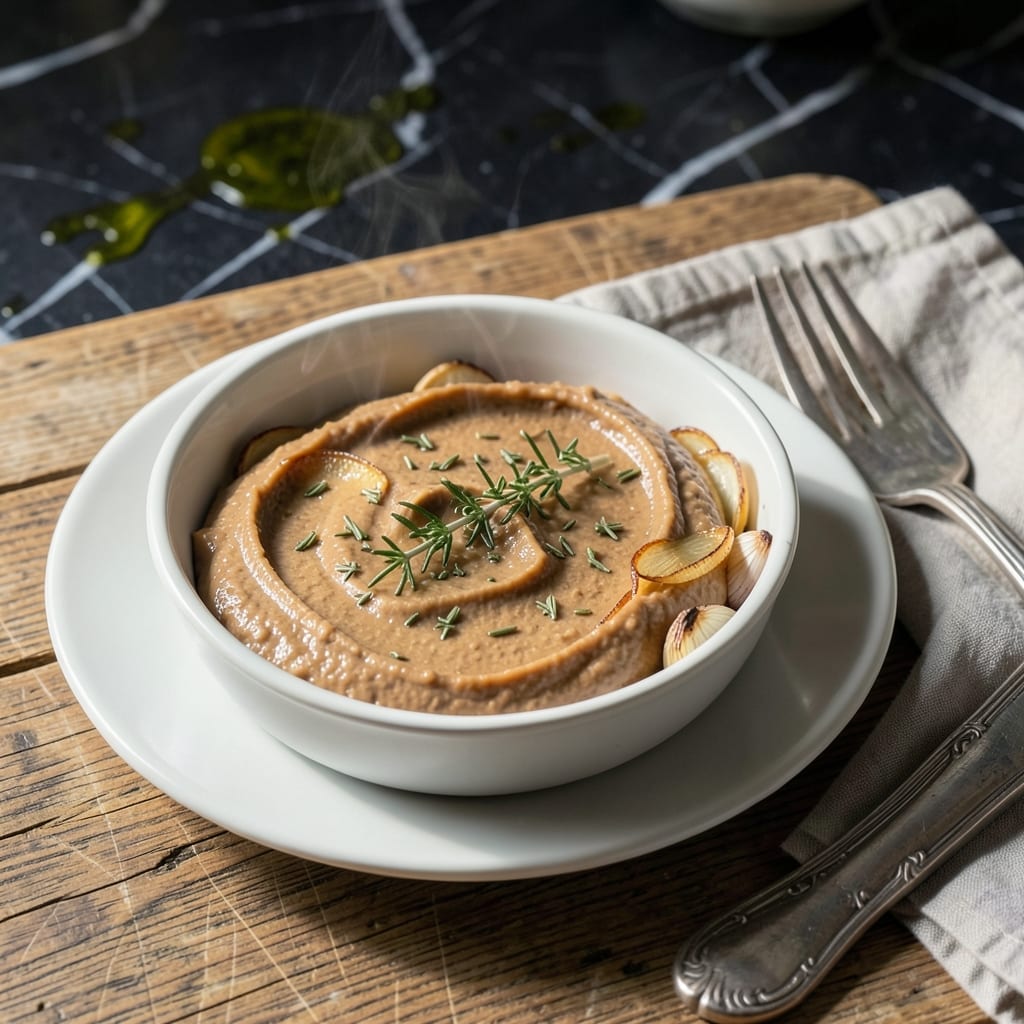
This rabbit pâté delivers silky-smooth texture with the rustic depth of fresh herbs and earthy undertones. Classic French technique meets traditional flavors in a spread that elevates any charcuterie board.
I developed this method to highlight rabbit’s natural richness while keeping the process approachable. The key is slow cooking with aromatic vegetables, then blending to achieve that signature velvety consistency.
What emerges is a sophisticated spread with balanced seasoning and a luxuriously smooth finish. The herb notes linger without overpowering the delicate rabbit flavor.
Serve chilled with crusty bread or crackers for an elegant appetizer. The results speak for themselves.
Ingredients for Rabbit Pate
Rich rabbit and aromatic herbs create an elevated spread with velvety texture and refined depth.
| Ingredient | Amount | Notes |
|---|---|---|
| Rabbit Meat 🐇 | 1 ½ lb | Boneless, skin-on preferred for richness |
| Unsalted Butter 🧈 | ½ cup | European-style for superior creaminess |
| Shallots 🧅 | 2 whole | Finely minced for aromatic base |
| Garlic Cloves 🧄 | 3 cloves | Freshly crushed for pungent depth |
| Fresh Thyme Sprigs 🌿 | 4 sprigs | Leaves stripped, stems discarded |
| Fresh Rosemary Sprigs 🍃 | 2 sprigs | Finely chopped for earthy undertones |
| Dry White Wine 🍷 | ¼ cup | Sauvignon Blanc or Pinot Grigio recommended |
| Heavy Cream 🥛 | ¼ cup | Full-fat for luxurious texture |
| Chicken Livers 🍗 | ½ lb | Optional, enhances richness and depth |
| Salt 🧂 | 1 tsp | Diamond Crystal kosher for precision |
| Ground Black Pepper 🌶️ | ½ tsp | Freshly ground for optimal aroma |
| Brandy 🥃 | 1 tbsp | Optional, adds complex depth |
| Bay Leaves 🍂 | 2 pieces | Dried, whole for infusion |
| Fresh Parsley 🌿 | ¼ cup | Chopped, for finishing garnish |
[recipe_ingredient_scaler]
The rabbit is the foundation—source from a reputable butcher or specialty grocer like Whole Foods for the freshest quality. Look for meat with a light pink hue and minimal odor. The livers (if using) should be deep red and smooth; avoid any with a greenish tint. European-style butter, such as Plugrá, has higher fat content, crucial for that signature silky finish.
No brandy? Cognac or Armagnac work as direct substitutes. Swap chicken livers for duck livers if preferred, or omit entirely for a lighter spread. The wine can be replaced with vermouth or apple cider, though the flavor profile will shift slightly. For a non-alcoholic version, use chicken stock with a splash of lemon juice.
Pâté keeps beautifully for 5 days in the fridge, covered with a thin layer of melted butter to seal out air. For longer storage, freeze in airtight containers for up to 3 months. Always serve chilled to maintain the velvety texture.
Why You’ll Love This Recipe
- One Pot Magic: Honestly, it’s just sear, blend, and chill—no fancy techniques, just rabbit meat, butter, and a few aromatics doing all the work.
- Rich and Earthy: The rabbit and shallots deepen into this velvety spread, while the thyme and garlic add layers that make it irresistibly savory.
- Spread or Serve: I slather it on crusty bread for picnics, dollop it on charcuterie boards, or even stir a spoonful into sauces for extra depth.
- Budget Stretcher: A little goes a long way, and rabbit is often cheaper than other meats—this batch lasts me weeks in the fridge.
Step-by-Step Instructions for Rabbit Pate
This refined method ensures a velvety texture with balanced herbaceous notes throughout.
Step 1: Prepare and Sear the Rabbit and Livers
Cut the 1.5 lb Rabbit Meat into 1-inch pieces, ensuring uniform size for even cooking. Heat a large skillet over medium-high heat and add 2 tablespoons of the 0.5 cup Unsalted Butter. When the butter foams, add the rabbit pieces in a single layer.
Sear undisturbed for 3-4 minutes until golden brown on one side, then flip and repeat. Add the 0.5 lb Chicken Livers to the pan and cook for 2-3 minutes until browned but still slightly pink inside. Remove from heat and transfer everything to a plate.
Step 2: Sauté the Aromatics
In the same skillet, reduce heat to medium and add the remaining unsalted butter. Add the 2 whole Shallots (finely minced) and cook for 3-4 minutes until translucent and fragrant. Add the 3 cloves Garlic Cloves (crushed) and cook for 30 seconds until aromatic.
Stir in the 4 sprigs Fresh Thyme Sprigs (leaves stripped) and 2 sprigs Fresh Rosemary Sprigs (finely chopped). Add the 2 pieces Bay Leaves and cook for 1 minute to bloom the herbs. Deglaze the pan with the 0.25 cup Dry White Wine, scraping up all browned bits.
Step 3: Simmer and Blend to Silky Perfection
Return the rabbit and chicken livers to the skillet along with any accumulated juices. Pour in the 0.25 cup Heavy Cream and 1 tsp Salt, then add the 0.5 tsp Ground Black Pepper and 1 tbsp Brandy. Simmer over low heat for 10-12 minutes until the mixture thickens slightly.
Remove the bay leaves and discard. Transfer the mixture to a food processor or high-powered blender. Pulse until completely smooth, scraping down the sides as needed. The texture should be velvety with no visible chunks—this may take 2-3 minutes of blending.
Step 4: Chill and Finish
Transfer the pate to a clean bowl or ramekins. Press plastic wrap directly onto the surface to prevent a skin from forming. Refrigerate for at least 4 hours (overnight is ideal) to allow the flavors to meld and the texture to set properly.
Before serving, bring the pate to room temperature for 30 minutes. Garnish with the 0.25 cup Fresh Parsley (chopped) and serve with crusty bread, cornichons, or a simple green salad. The pate should have a rich, spreadable consistency with a pronounced herb depth.
Pro Tips For Making Rabbit Pate
- Chill the Meat First: Partially freeze the rabbit meat for 20-30 minutes before grinding—it firms up the texture and makes it easier to handle, especially when blending with the butter.
- Sauté Shallots Slow: Cook the shallots and garlic on low heat until translucent, about 8-10 minutes; rushing this step gives them a raw bite that ruins the pâté’s smoothness.
- Don’t Overwork the Butter: Fold in the butter at the end just until combined—overmixing turns the pâté greasy instead of silky.
- Use Fresh Thyme Leaves: Strip the thyme leaves from the stems before cooking; the woody stems don’t soften and can leave an unpleasant texture in the finished pâté.
Regional Styles of These Flavors
French Country Style
In Provence, I’ve seen rabbit pâté enriched with herbes de Provence—a mix of thyme, rosemary, and savory. They often add 1 tbsp of the blend to the aromatic base. The region’s wild herbs give it an earthy, rustic character that’s hard to replicate. 🗺️
Belgian Tradition
Belgian versions incorporate juniper berries and allspice for a warming depth. I crush 5-6 juniper berries and add them with the garlic. The result is a pâté with a subtle piney note that pairs beautifully with dark beer.
German Hunter’s Style
German Jäger-style rabbit pâté often includes 1 tsp caraway seeds and 1 tbsp of sauerkraut for tang. I toast the caraway lightly before adding it to the skillet. This version has a bold, almost smoky flavor profile.
Spanish Rustic
In Catalonia, they add smoked paprika and sherry to rabbit pâté. I use 1 tsp sweet paprika and replace the white wine with dry sherry. The smoky, nutty undertones make it perfect for tapas-style serving.
British Game Style
British versions often mix rabbit with pork fat and port wine. I swap half the butter for lard and add 2 tbsp port during deglazing. The result is richer, with deep, fruity notes.
Nutrition Facts
Frequently Asked Questions
Can I use chicken instead of rabbit?
Yes, boneless chicken thighs work well as a substitute. Use the same 1.5 lb quantity and follow the recipe as written. The flavor will be milder, so consider adding an extra 1 tsp of herbs for depth.
Why do I need to chill it before serving?
Chilling for at least 4 hours allows the flavors to meld and the texture to set properly. This step ensures a velvety, spreadable consistency rather than a runny mixture.
What can I serve with this pâté?
Pair it with crusty bread, crackers, or cornichons for a classic presentation. It also complements a simple green salad or charcuterie board beautifully.
How do I store leftovers?
Cover with melted butter to seal out air and refrigerate for up to 5 days. For longer storage, freeze in airtight containers for up to 3 months.

Trained in classic French technique but raised on slow-cooked ribs and spicy rubs, she blends culinary skill with smoke and soul.
- Recipe for Boneless Pork Chops in Cast Iron Skillet: Sear and Baste to Juicy Perfection - October 3, 2026
- Recipe for Boneless Cross Rib Roast: Slow-Roasted Beef with Herb Crust - October 3, 2026
- Hamburgers in Sauce Recipe Crock Pot: Slow-Cooked Savory Delight - October 3, 2026