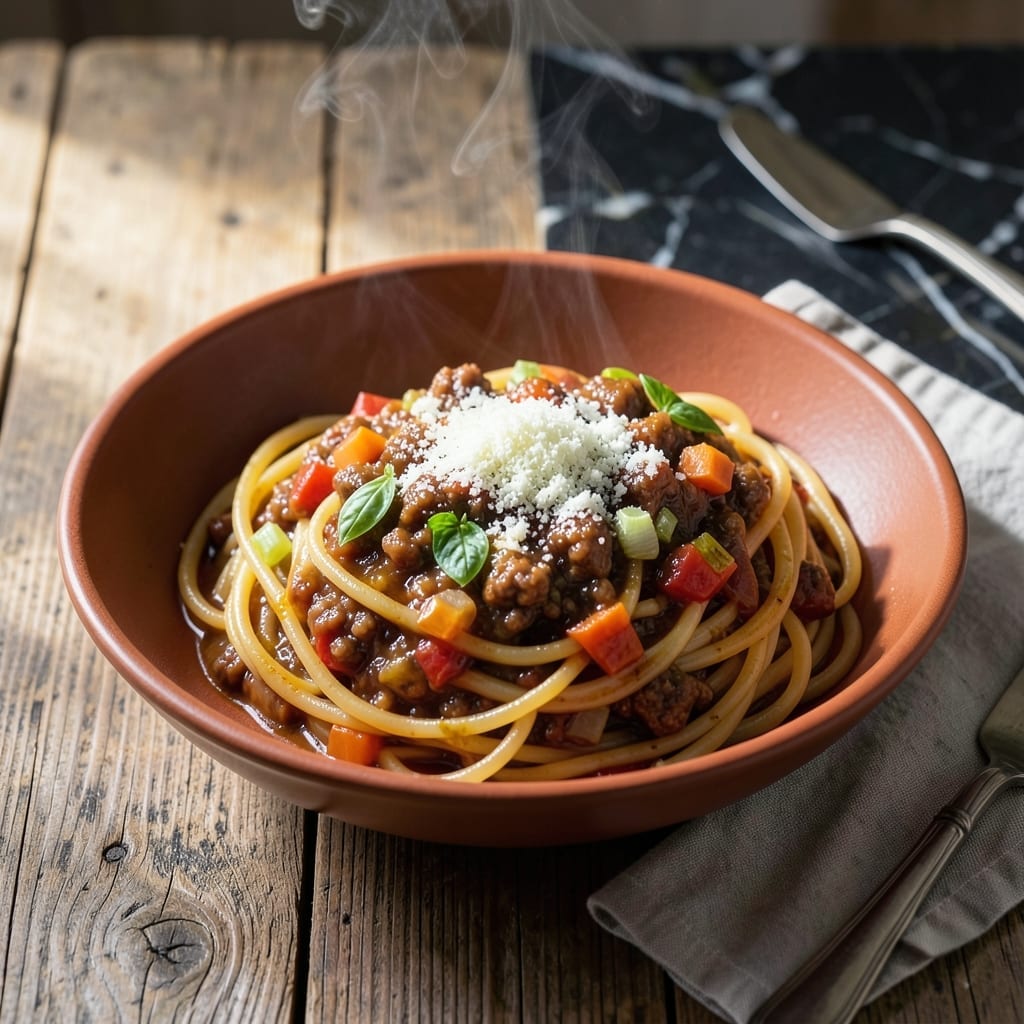
This rich ragu sauce transforms simple pasta into a restaurant-worthy dish with its deep tomato flavor and slow-simmered complexity.
I developed this recipe to bring authentic Italian taste to your kitchen with just a few quality ingredients and patient cooking.
Ingredients for Ragu Spaghetti Sauce
Rich, slow-simmered depth with quality ingredients you likely have on hand already.
| Ingredient | Amount | Notes |
|---|---|---|
| Ground Beef Chuck 🥩 | 1 lb | 80/20 fat ratio preferred |
| San Marzano Canned Tomatoes 🍅 | 28 oz | Whole, peeled, crushed by hand |
| Tomato Paste 🍅 | 3 tbsp | Double-concentrated preferred |
| Yellow Onion 🧅 | 1 whole | Finely diced for base |
| Carrots 🥕 | 2 whole | Medium, finely chopped |
| Celery Stalks 🌿 | 2 whole | Finely diced for soffritto |
| Garlic Cloves 🧄 | 4 cloves | Minced for depth |
| Dry Red Wine 🍷 | ½ cup | Bold variety like Chianti |
| Whole Milk 🥛 | ½ cup | For richness and balance |
| Olive Oil 🫒 | 3 tbsp | Extra-virgin for sautéing |
| Bay Leaves 🍃 | 2 whole | Dried, removed before serving |
| Dried Oregano 🌿 | 1 tsp | Mediterranean variety preferred |
| Kosher Salt 🧂 | 1 ½ tsp | Diamond Crystal brand recommended |
| Freshly Ground Black Pepper 🌶️ | ½ tsp | Coarse grind for texture |
[recipe_ingredient_scaler]
The beef is critical here. Ground chuck with 80/20 fat ratio delivers the rich, meaty foundation this sauce demands. For the tomatoes, San Marzano cans are non-negotiable—their sweetness and low acidity create that authentic Italian profile. Most Whole Foods or specialty Italian markets carry them, but even standard grocery stores now stock them in the canned goods aisle. Fresh oregano can be used at double the quantity if you’ve got it.
No red wine? Beef broth with a splash of balsamic vinegar mimics the depth, though the alcohol does cook off entirely. The milk might seem unusual, but don’t skip it—it tempers the acidity and adds a velvety finish. Celery can be omitted in a pinch, but the classic soffritto (onion, carrot, celery) is what builds the layered flavor. Pre-chopped mirepoix from the produce section saves time without sacrificing quality.
This sauce develops more complexity overnight, so make it a day ahead if possible. Stores in the fridge for up to 5 days or freezes beautifully for 3 months. Portion into airtight containers for easy pasta nights ahead.
Why You’ll Love This Recipe
- One Pot Wonder: I brown the beef chuck, toss in the onions and carrots, then let the San Marzano tomatoes simmer—minimal cleanup, maximum flavor.
- Rich and Deep: The combo of tomato paste and slow-cooked beef chuck gives it that hearty, meaty taste that clings to every strand of spaghetti.
- Feeds a Crowd: I make a big batch on Sunday and it’s ready for quick dinners all week—pasta night, lasagna, or even meatball subs.
- Budget Stretcher: Ground chuck and canned tomatoes keep costs low, but the flavor tastes like it simmered for hours. Honestly, it’s my wallet’s best friend.
Step-by-Step Instructions for Ragu Spaghetti Sauce
Master this technique for a rich, deeply flavored sauce that elevates any pasta dish.
Step 1: Build the Soffritto Base
Heat 3 tbsp olive oil in a heavy pot over medium heat. Add 1 whole yellow onion, 2 whole carrots, and 2 whole celery stalks, all finely diced. Sauté for 8-10 minutes until the vegetables soften and begin to turn translucent.
This aromatic foundation, known as soffritto, develops sweetness and complexity as the vegetables caramelize. Maintain steady heat—too high will burn the onions, while too low will result in a watery mixture lacking depth.
Step 2: Brown the Beef and Deglaze
Increase heat to medium-high and add 1 lb ground beef chuck. Cook, breaking it up with a wooden spoon, until deeply browned, about 6-8 minutes. The meat should develop a rich, caramelized crust.
Pour in 0.5 cup dry red wine and scrape up all browned bits from the bottom of the pot. Simmer for 2-3 minutes until the wine reduces by half and the alcohol smell dissipates. This deglazing step captures all the concentrated beef flavor.
Step 3: Develop the Tomato Base
Stir in 3 tbsp tomato paste and cook for 1-2 minutes until it darkens slightly. This step intensifies its natural sweetness. Add 4 cloves minced garlic cloves, 1 tsp dried oregano, 1.5 tsp kosher salt, and 0.5 tsp freshly ground black pepper, cooking for 30 seconds until fragrant.
Pour in 28 oz San Marzano canned tomatoes, crushing them by hand as you add them. Include 2 whole bay leaves and 0.5 cup whole milk. The milk tempers the acidity while adding richness to the sauce.
Step 4: Simmer to Perfection
Reduce heat to low and partially cover the pot. Simmer for 1.5-2 hours, stirring occasionally, until the sauce thickens and develops a deep, brick-red color. The long cooking time allows flavors to meld and intensify.
As it cooks, the sauce should reduce by about one-third. If it becomes too thick before the time is up, add a splash of water. Taste and adjust seasoning with additional kosher salt if needed, but remember the flavors will concentrate as it reduces.
Remove the bay leaves before serving. The sauce should coat the back of a spoon with a velvety texture, ready to cling beautifully to pasta.
Pro Tips For Making Ragu Spaghetti Sauce
- Brown the Beef Well: Don’t rush the ground chuck—cook it until deeply browned, not just gray, to build rich flavor into your ragu base. I learned this the hard way after years of pale, bland sauce.
- Use Whole San Marzanos: Crush the canned tomatoes by hand instead of using pre-crushed versions—the texture is better and you control the chunkiness. Sounds tedious, but it actually changes the outcome.
- Sauté Veggies Slowly: Let the onion and carrots cook down for at least 10 minutes until soft and sweet—this builds the foundation for a smooth, balanced ragu.
- Bloom the Tomato Paste: Cook the tomato paste in the pot for 2-3 minutes until it darkens slightly—this removes the raw taste and deepens the flavor. My grandmother swore by this, and she was right.
Best Sauces and Condiments for This Dish
Classic Parmesan Boost
Freshly grated Parmesan-Reggiano is my non-negotiable topping for this sauce. I use a microplane to get ½ cup of ultra-fine shavings that melt beautifully into the hot ragu. The nutty depth complements the rich tomato base perfectly. 🧀
Herb Finishing Touch
Just before serving, stir in 2 tbsp chopped fresh basil—the bright, peppery notes cut through the richness. If basil isn’t available, flat-leaf parsley works in a pinch, though it’s slightly more bitter. Always add fresh herbs at the end to preserve their vibrant color and flavor.
Red Pepper Heat
For those who love a kick, I keep a small bowl of crushed red pepper flakes on the table. A pinch (¼ tsp) adds warmth without overpowering the sauce’s complexity. The heat builds gradually, so remind guests to taste as they go.
Creamy Swirl Option
A dollop of ricotta cheese (1 tbsp per serving) swirled into each bowl adds a luxurious creaminess. I prefer whole-milk ricotta for its rich texture. This is my go-to when I’m craving something extra indulgent.
Balsamic Drizzle
Aged balsamic glaze adds sweet-tart complexity that elevates the dish. I drizzle 1 tsp per plate in a zigzag pattern just before serving. Look for a thick, syrupy reduction from specialty shops. 💛
Garlic Bread Pairing
Serve with crusty garlic bread to soak up every last bit of sauce. I brush baguette slices with olive oil and minced garlic, then toast until golden. The crisp texture contrasts beautifully with the silky ragu.
Nutrition Facts
Frequently Asked Questions
Can I use ground turkey instead of beef?
Yes, but use dark meat turkey for best flavor. The 80/20 beef fat ratio is ideal for richness, so turkey may produce a leaner result. Consider adding 1 tbsp olive oil to compensate.
Why add milk to a tomato sauce?
The 0.5 cup milk balances acidity and adds velvety texture. It’s a classic Italian technique that mellows harsh tomato notes without making it creamy.
How do I fix a too-thin sauce?
Simmer uncovered for 10-15 minutes to reduce. For quick fixes, mash a few tomatoes or add 1 tsp tomato paste. Avoid cornstarch—it dulls the flavor.
Can I make this in a slow cooker?
Brown the meat first, then transfer all ingredients to the cooker. Set on low for 6-8 hours or high for 3-4 hours. Stir occasionally for even cooking.

Trained in classic French technique but raised on slow-cooked ribs and spicy rubs, she blends culinary skill with smoke and soul.
- Recipe for Boneless Pork Chops in Cast Iron Skillet: Sear and Baste to Juicy Perfection - October 3, 2026
- Recipe for Boneless Cross Rib Roast: Slow-Roasted Beef with Herb Crust - October 3, 2026
- Hamburgers in Sauce Recipe Crock Pot: Slow-Cooked Savory Delight - October 3, 2026