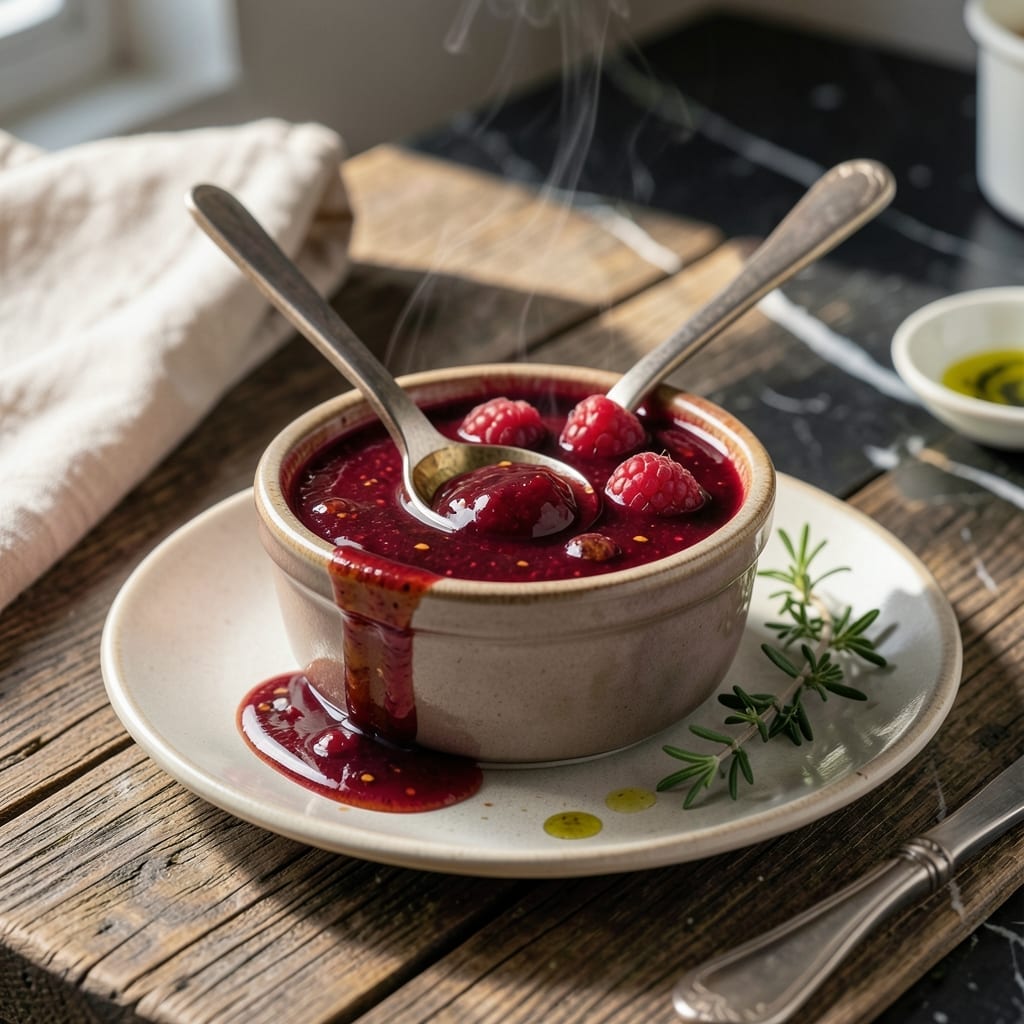
This sauce transforms ordinary grilled dishes into restaurant-quality creations. The raspberries add a bright, fruity depth that perfectly balances smoky barbecue flavors.
With just 15 minutes of simmering, you’ll have a glossy, tangy glaze that clings beautifully to ribs, chicken, or pork. It keeps well in the fridge for up to 2 weeks.
Ingredients for Raspberry Barbecue Sauce
Ten ingredients for a sauce that upgrades every grill session instantly.
| Ingredient | Amount | Notes |
|---|---|---|
| Fresh Raspberries 🍇 | 2 cups | Or frozen, thawed and drained |
| Ketchup 🍅 | 1 ½ cups | Use organic for cleaner flavor |
| Apple Cider Vinegar 🍏 | ¼ cup | For tangy brightness balance |
| Maple Syrup 🍁 | ¼ cup | Grade A or B works |
| Molasses 🫙 | 2 tbsp | Adds deep caramel notes |
| Worcestershire Sauce 🫒 | 1 tbsp | Use vegan variety |
| Dijon Mustard 🟡 | 1 tbsp | Smooth, not grainy |
| Garlic Cloves 🧄 | 3 cloves | Minced for even distribution |
| Smoked Paprika 🌶️ | 1 tsp | Essential for smoky depth |
| Sea Salt 🧂 | ½ tsp | Adjust to taste preference |
[recipe_ingredient_scaler]
The raspberries are the star here. Fresh from a farmers market gives the brightest flavor, but frozen works too—just thaw and drain them first (no one wants watery sauce). Ketchup quality matters more than you think—organic or natural brands without high-fructose corn syrup let the fruit shine. Maple syrup adds that vegan-friendly sweetness; Grade B has a deeper flavor if you can find it.
No fresh raspberries? Frozen are perfect—just don’t skip the draining step. Out of molasses? Brown sugar plus a splash of water gets you close. For the Worcestershire, Annie’s or Edward & Sons make vegan versions that won’t break the bank. Dijon mustard can be swapped for yellow in a pinch, but the smooth texture really helps the sauce cling to whatever you’re glazing.
This keeps like a champ—2 weeks in the fridge, easy. For longer storage, freeze in ice cube trays, then pop into bags. Thaw just what you need (worth the extra minute). The flavors actually get better after a day or two as everything melds together.
Why You’ll Love This Recipe
- 20-Minute Magic: I toss everything in a saucepan and let it simmer—no fancy techniques, just fresh raspberries and a few pantry staples.
- Sweet-Tangy Punch: The maple syrup and molasses balance the apple cider vinegar so well it’s ridiculous. Honestly, I catch myself licking the spoon.
- Grill or Fridge: Slather it on ribs, mix into meatballs, or just drizzle over roasted veggies. Between us, it’s my secret for making leftovers disappear.
- Budget-Friendly Batch: A pint of raspberries and ketchup stretch into a jar of sauce that lasts me two weeks. I’ll be real: it’s cheaper than store-bought and twice as good.
Step-by-Step Instructions for Raspberry Barbecue Sauce
This method delivers a perfectly balanced sauce with minimal fuss and maximum flavor impact.
Step 1: Prepare the Raspberry Base
Combine the 2 cups Fresh Raspberries and 0.25 cup Apple Cider Vinegar in a medium saucepan. I use fresh raspberries here, but thawed and drained frozen work just as well if that’s what you have on hand.
Cook over medium heat for 5-7 minutes, stirring frequently with a wooden spoon, until the raspberries break down completely and the mixture takes on a jam-like consistency. You’ll notice the color deepen and the aroma become intensely fruity.
This initial cooking concentrates the raspberry flavor and breaks down the fruit’s structure, which prevents chunks in your final sauce. The vinegar adds the necessary brightness to balance the sweetness we’ll add later.
Step 2: Build the Flavor Foundation
Stir in the 1.5 cups Ketchup, 0.25 cup Maple Syrup, 2 tbsp Molasses, 1 tbsp Worcestershire Sauce, 1 tbsp Dijon Mustard, 3 cloves Garlic Cloves (minced), 1 tsp Smoked Paprika, and 0.5 tsp Sea Salt. The mixture will look thin at first, but the reduction process will thicken it beautifully.
Bring the mixture to a gentle simmer over medium-high heat, then immediately reduce to low heat. This gradual temperature change prevents scorching and ensures all the flavors meld together properly.
Here’s where the magic happens: the molasses adds its signature caramel depth, the smoked paprika provides that essential BBQ character, and the mustard gives it a subtle sharpness that cuts through the sweetness.
Step 3: Simmer to Perfection
Let the sauce simmer uncovered for 20-25 minutes, stirring every 5 minutes to prevent sticking. You’ll see the mixture reduce by about a third and thicken to the consistency of commercial barbecue sauce.
The color will darken to a rich, mahogany hue, and the aroma will shift from bright and fruity to deep and complex. This is the transformation that makes the sauce truly special – the raspberry flavor intensifies while the other ingredients create that classic barbecue profile.
If you notice the sauce thickening too quickly or sticking to the bottom, reduce the heat slightly. The goal is a steady, gentle simmer that cooks the flavors together without burning.
Step 4: Finish and Adjust
Remove the sauce from heat and let it cool for 10 minutes. As it cools, it will thicken slightly more. This is the perfect time to taste and adjust the seasoning if needed.
I prefer to err on the side of less salt initially, as the ketchup and Worcestershire sauce already contribute saltiness. If you find it needs more, add a pinch at a time until it reaches your desired balance.
The finished sauce should have a glossy appearance and coat the back of a spoon thickly. It will keep in an airtight container in the refrigerator for up to 2 weeks, and the flavors will continue to develop over time.
Pro Tips For Making Raspberry Barbecue Sauce
- Simmer Low and Slow: Keep the heat at medium-low to let the raspberries break down without scorching the sugars in the maple syrup and molasses—I learned this the hard way after burning two batches.
- Strain the Seeds: Press the cooked raspberries through a fine-mesh sieve to remove seeds—your sauce will be smoother, and no one wants a crunchy BBQ experience.
- Balance the Sweetness: Taste before adding extra maple syrup; the raspberries and molasses already bring plenty of sweetness, and too much can overpower the tang from the vinegar.
- Use Ripe Raspberries: Overripe or slightly mushy raspberries actually work better here—they collapse faster and release more juice, saving you time and effort.
Wine and Beer Pairings for This raspberry barbecue sauce
Wine Pairings
A fruity sauce like this calls for wines with good acidity to cut through the sweetness. I love a chilled Pinot Noir from Oregon—its red fruit notes complement the raspberry beautifully. For whites, a crisp Riesling from Washington state balances the tang with its mineral brightness. 🍷
Bold Red Options
If you prefer bolder reds, try a Zinfandel from California’s Dry Creek Valley. Its jammy berry flavors mirror the raspberry while the peppery finish cleanses your palate. Serve slightly chilled to enhance the fruit-forward profile.
Beer Pairings
For beer lovers, an American Amber Ale works wonderfully—the caramel malts echo the molasses while the hops provide contrast. I particularly like Fat Tire Amber Ale for its smooth balance. A Belgian-style Dubbel also pairs surprisingly well with its dark fruit and spice notes. 🍺
Cider Alternative
Don’t overlook hard cider for a refreshing pairing. A dry English-style cider like Strongbow Dry cuts through the sweetness with its tart apple character. The effervescence also helps cleanse your palate between bites.
Non-Alcoholic Choice
Sparkling raspberry lemonade makes a festive non-alcoholic option. The carbonation and citrus brightness mirror the sauce’s tang while reinforcing the raspberry theme. I add a sprig of fresh mint for extra flair.
Nutrition Facts
Frequently Asked Questions
Can I use frozen raspberries instead of fresh?
Just thaw and drain them well first to remove excess liquid. The flavor will be just as vibrant.
How long does this sauce keep in the fridge?
It stays fresh in an airtight container for up to 2 weeks. The flavors actually deepen after a day or two.
What if my sauce turns out too thin?
Simmer it uncovered for 5-10 more minutes to thicken. Avoid high heat to prevent burning.
Can I make this spicier?
Add 1/2 tsp cayenne or a dash of hot sauce while simmering. Taste and adjust gradually.

Trained in classic French technique but raised on slow-cooked ribs and spicy rubs, she blends culinary skill with smoke and soul.
- Recipe for Boneless Pork Chops in Cast Iron Skillet: Sear and Baste to Juicy Perfection - October 3, 2026
- Recipe for Boneless Cross Rib Roast: Slow-Roasted Beef with Herb Crust - October 3, 2026
- Hamburgers in Sauce Recipe Crock Pot: Slow-Cooked Savory Delight - October 3, 2026