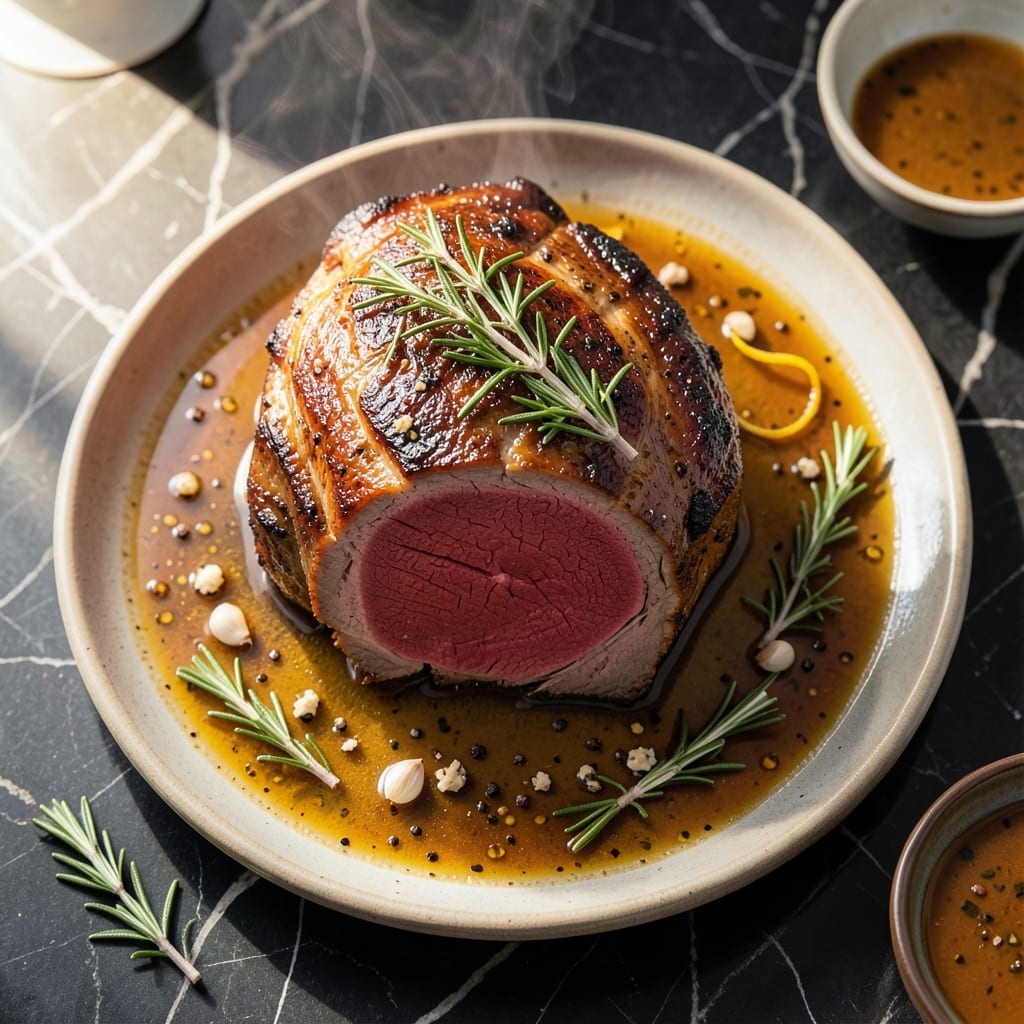
This prime rib roast transforms any gathering into a special occasion. The herb crust creates a fragrant seal that locks in juices while adding deep flavor to every bite.
I developed this method after testing multiple techniques to ensure perfectly medium-rare results. The key is starting with a high-heat sear before finishing at a lower temperature for even cooking.
What emerges is a centerpiece with a crispy herb crust and tender, rosy meat inside. The aroma alone will have your guests gathering around the table in anticipation.
Pair with roasted vegetables and red wine for a complete holiday meal that feels effortlessly elegant.
Ingredients for Recipe for 4 Lb Prime Rib Roast
Prime rib, aromatic herbs, and bold seasonings create this elegant holiday centerpiece with minimal effort.
| Ingredient | Amount | Notes |
|---|---|---|
| Prime Rib Roast 🥩 | 4 lb | Bone-in, well-marbled preferred |
| Kosher Salt 🧂 | 2 tbsp | Diamond Crystal preferred |
| Freshly Ground Black Pepper 🌶️ | 1 tbsp | Coarse grind recommended |
| Fresh Rosemary 🌿 | 3 tbsp | Finely chopped, stems removed |
| Fresh Thyme Leaves 🍃 | 3 tbsp | Stems discarded, loosely packed |
| Garlic Cloves 🧄 | 6 cloves | Minced into paste consistency |
| Dijon Mustard 🟡 | ¼ cup | Smooth, not whole grain |
| Extra-Virgin Olive Oil 🫒 | ¼ cup | High-quality, fruity finish |
| Unsalted Butter 🧈 | 4 tbsp | Softened to room temperature |
| Red Wine 🍷 | 1 cup | Dry variety like Cabernet Sauvignon |
| Beef Stock 🥩 | 1 cup | Low-sodium preferred for control |
| All-Purpose Flour 🌾 | 2 tbsp | For thickening pan juices |
| Shallot 🧅 | 1 whole | Finely minced for sauce |
[recipe_ingredient_scaler]
The prime rib is the foundation—sourced from a reputable butcher ensures quality marbling and proper aging. Look for USDA Prime or Choice grades with a bright red color and creamy white fat. Costco and Whole Foods often carry excellent options. The bone-in cut provides superior flavor and juiciness. For the herb crust, fresh rosemary and thyme are non-negotiable; dried herbs won’t deliver the same aromatic intensity.
No red wine? Substitute beef stock with a splash of balsamic vinegar for acidity. Short on fresh herbs? Use half the amount of dried, though the flavor profile will be less vibrant. Unsalted butter can be replaced with high-quality European-style butter if salt levels are carefully monitored. Dijon mustard alternatives include whole-grain mustard for texture (strain if smoothness is desired).
The herb crust can be prepared 1 day ahead and refrigerated. The roast itself should be brought to room temperature before cooking. Leftover prime rib keeps beautifully in the fridge for 3-4 days or freezes for 3 months. Slice only what you need and store the rest whole for optimal freshness.
Why You’ll Love This Recipe
- Almost Hands-Off: I season it the night before, pop it in the oven, and let the rosemary and thyme do the work while I relax.
- Rich & Herby: That crust of kosher salt and black pepper with fresh rosemary and thyme? It’s the kind of flavor that makes people close their eyes mid-bite.
- Holiday Hero: Between us, this is my secret for stress-free holiday dinners—impressive enough for guests but simple enough for a Sunday supper.
- Leftovers for Days: A 4-pound roast means sandwiches, tacos, or hash for the next three meals. Honestly, the leftovers might be better than the first serving.
Step-by-Step Instructions for Herb-Crusted Prime Rib Roast
Master these techniques for a show-stopping roast with perfect medium-rare doneness and rich jus.
Step 1: Prepare the Herb Crust and Season the Roast
In a small bowl, combine the 2 tbsp Kosher Salt, 1 tbsp Freshly Ground Black Pepper, 3 tbsp Fresh Rosemary, 3 tbsp Fresh Thyme Leaves, 6 cloves Garlic Cloves, 0.25 cup Dijon Mustard, and 0.25 cup Extra-Virgin Olive Oil. Stir until it forms a thick, aromatic paste that clings to the spoon.
Pat the 4 lb Prime Rib Roast completely dry with paper towels—this ensures the crust adheres properly. Rub the herb mixture evenly over the entire surface, pressing it into the meat. Let it sit at room temperature for 1 hour to allow the flavors to penetrate before roasting.
Step 2: Sear the Roast for a Flavorful Crust
Preheat your oven to 450°F. Place the roast bone-side down in a roasting pan. This high-heat sear creates a deep, flavorful crust. Roast for 20 minutes at this temperature until the exterior develops a rich, golden-brown color.
Watch for the edges to begin caramelizing—this visual cue signals the Maillard reaction, which develops complex, savory flavors. The high initial heat also helps render some of the fat, creating a crispy exterior that locks in juices.
Step 3: Roast at Lower Temperature to Perfection
Reduce the oven temperature to 325°F and continue roasting. For medium-rare, cook until an instant-read thermometer inserted into the thickest part of the meat registers 125-130°F, which should take approximately 1.5 to 2 hours total cooking time.
Baste the roast with the accumulated pan juices every 30 minutes to enhance browning and moisture. The internal temperature will rise 5-10°F during resting, so remove it from the oven just before it reaches your desired doneness.
Step 4: Make the Red Wine Pan Sauce
Transfer the roast to a cutting board and tent it loosely with foil. Place the roasting pan on the stovetop over medium heat. Add the 1 whole Shallot and cook for 2 minutes until softened. Stir in the 2 tbsp All-Purpose Flour and cook for 1 minute to remove the raw taste.
Pour in the 1 cup Red Wine and deglaze the pan, scraping up all the browned bits. Add the 1 cup Beef Stock and 4 tbsp Unsalted Butter, then simmer for 5-7 minutes until the sauce thickens and coats the back of a spoon. Strain if desired for a smoother texture.
Slice the roast against the grain and serve with the rich, velvety pan sauce spooned over the top.
Pro Tips For Making Recipe For 4 Lb Prime Rib Roast
- Dry the Roast: Pat the prime rib completely dry with paper towels before seasoning—this guarantees a deep, crispy crust instead of a steamed exterior. I learned this the hard way after my first few attempts came out pale and soft.
- Salt Generously: Use about 1 tablespoon of kosher salt per pound, pressing it into the meat the night before if possible. Sounds like a lot, but prime rib can handle it, and the flavor penetrates deep.
- Avoid Overcrowding: Skip the roasting pan with high sides—use a shallow one so heat circulates evenly and the rosemary and thyme don’t steam the meat. After burning one batch in a deep pan, I finally switched.
- Rest Before Carving: Tent the roast with foil and let it rest for at least 15-20 minutes after pulling it from the oven. I was skeptical until I tried it—every slice stays juicier when you wait.
Essential Equipment for This Dish
Roasting Pan Essentials
Invest in a heavy-duty stainless steel roasting pan with a rack—I use All-Clad from New Seasons Market. The rack elevates the roast, allowing heat to circulate for even cooking. A 14-inch pan accommodates a 4 lb prime rib with room for vegetables.
Thermometer Accuracy
An instant-read thermometer is non-negotiable for perfect results. I trust my ThermoWorks Thermapen—it reads in 2-3 seconds and is accurate to ±0.7°F. Check the thickest part, avoiding bones. This prevents overcooking and guarantees medium-rare perfection. 🌡️
Carving Tools
A sharp carving knife makes clean slices that showcase the meat’s beauty. My Wüsthof 8-inch chef’s knife glides through the crust effortlessly. Pair it with a carving fork to steady the roast as you slice between the ribs.
Basting Setup
Use a long-handled basting spoon to avoid oven burns. I keep a heat-resistant silicone brush handy for spreading pan juices evenly. Basting every 30 minutes ensures a glossy, flavorful crust that locks in moisture.
Resting Station
Prepare a resting area with a cutting board and aluminum foil tent to keep the roast warm. The foil should be loose to prevent steam from softening the crust. Resting for 20-30 minutes lets juices redistribute for maximum tenderness. 💡
Pan Sauce Tools
A wooden spoon is ideal for scraping up browned bits when making the sauce. I also keep a fine-mesh strainer nearby for a silky-smooth finish. These small tools make a big difference in creating that restaurant-quality pan sauce.
Nutrition Facts
Frequently Asked Questions
How long should I rest the roast before slicing?
Let it rest for 20-30 minutes under a loose foil tent. This allows juices to redistribute throughout the meat for maximum tenderness and flavor.
Can I cook it from frozen?
No, always thaw completely in the refrigerator first. Cooking from frozen results in uneven doneness and can compromise food safety. Plan for 24-48 hours of thawing time.
What if my roast cooks too fast?
If it browns too quickly, tent it with foil and reduce oven temperature to 300°F. This prevents burning while allowing the center to reach 125-130°F for perfect medium-rare.
Do I need to tie the roast?
Only if the bones have been removed. For bone-in roasts, tying isn’t necessary. The bones help the roast hold its shape during cooking.

Trained in classic French technique but raised on slow-cooked ribs and spicy rubs, she blends culinary skill with smoke and soul.
- Smoked Whitefish Recipe: Wood-Fired Flakes with Herbed Butter Drizzle - October 15, 2026
- Smoked Teriyaki Beef Jerky Recipe: Umami-Deep Flavor in Every Chewy Bite - October 15, 2026
- Stewed Beef Brisket Recipe: Deep-Rich Flavor After 8 Hours of Slow Simmering - October 15, 2026