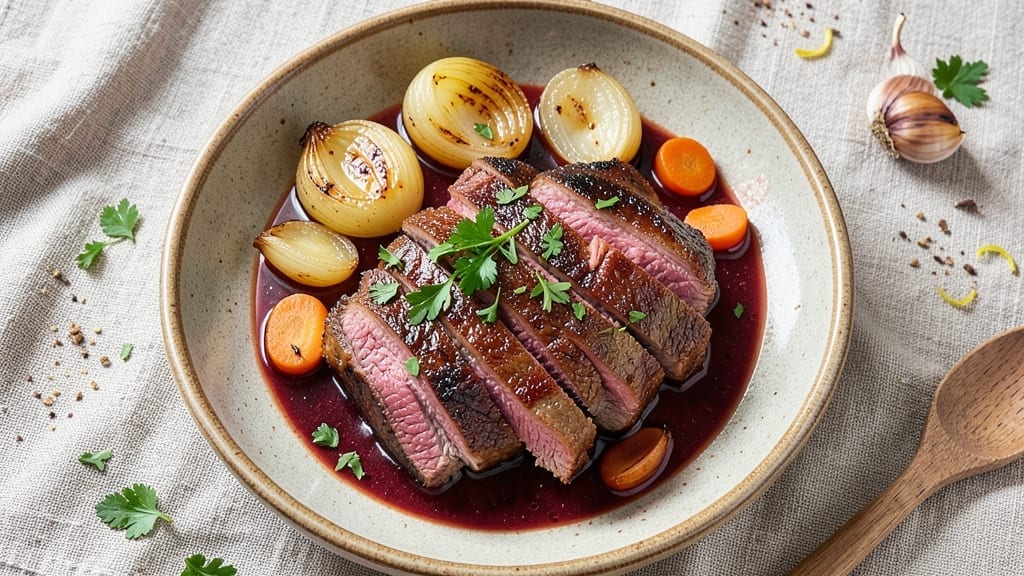
Stewed beef brisket transforms tough cuts into melt-in-your-mouth tenderness through a slow, patient process that rewards you with deep, caramelized flavors after hours of simmering. I remember standing in my Nonna’s kitchen as a kid, watching her work her magic with a brisket that had been cooking all day—how the rich aroma filled the triple-decker, turning even the simplest meal into something special. That memory is why this recipe stays with me: it’s not just about following steps, but about letting time do the work while you focus on the details that make all the difference.
The key to success lies in the slow simmer—8 hours of gentle cooking at a steady temperature—where collagen breaks down into gelatin, creating that signature velvety texture.
You’ll start with a simple marinade of garlic, herbs, and red wine to build flavor, then brown the meat thoroughly for depth before it spends hours in the pot.
This isn’t a quick weeknight meal, but the result—a dish that tastes even better the next day—makes it worth every minute of waiting. The secret? Patience, and a pot that’s large enough to keep the liquid moving without boiling over.
By the end, you’ll have tender, fork-shreddable beef swimming in a rich, aromatic broth that clings to every bite. The edges will be caramelized from the slow reduction, while the meat itself falls apart with just a touch.
This is the kind of stew that feeds a crowd, warms a winter evening, and turns even the simplest meal into something memorable. Serve it with crusty bread to soak up every last drop, or pair it with mashed potatoes for the full comfort-food experience.
What makes this recipe foolproof is the balance between tradition and modern convenience—you can use a slow cooker for hands-off cooking, or a Dutch oven on the stovetop for more control.
Either way, the result is the same: restaurant-quality stewed beef that tastes like home. Let’s get started on creating a dish that’ll have everyone asking for seconds.
Ingredients for stewed beef brisket
Sixteen simple ingredients transform into restaurant-quality brisket after hours of slow cooking.
| Ingredient | Amount | Notes |
|---|---|---|
| Beef Brisket 🥩 | 3 lb | Flat cut preferred, trimmed of excess fat |
| Yellow Onion 🧅 | 1 whole | Chopped into 1/2-inch pieces |
| Carrots 🥕 | 2 lb | Whole, peeled, cut into 1-inch chunks |
| Garlic Cloves 🧄 | 6 cloves | Smashed, not minced |
| Red Wine 🍷 | 1 ½ cups | Bold dry variety like Cabernet |
| Beef Broth 💧 | 4 cups | Low-sodium preferred |
| Tomato Paste 🍅 | ½ cup | Smooth, not chunky |
| Fresh Thyme 🌿 | ¼ cup | Stems removed, loosely packed |
| Fresh Rosemary 🌿 | ¼ cup | Needles only, chopped |
| Bay Leaves 🍃 | 2 whole | Dried, standard size |
| Black Peppercorns 🌶️ | 1 tbsp | Crushed, not ground |
| Kosher Salt 🧂 | 1 ½ tbsp | For seasoning and adjusting |
| Olive Oil 🫒 | ¼ cup | For searing meat |
| All-Purpose Flour 🌾 | 2 tbsp | For dusting brisket |
[recipe_ingredient_scaler]
The brisket is the star—flat cut gives you more surface area for browning, which builds that deep caramelized flavor. Costco and Whole Foods usually carry pre-trimmed brisket flats, but if you’re buying whole, ask the butcher to remove the fat cap. The onions and carrots should be sturdy, not soft—local farmers markets often have better quality than the grocery store. For the wine, any bold red works—Cabernet, Merlot, whatever’s open. The tomato paste? Trader Joe’s has the best prices on the squeeze tubes, and they keep forever in the pantry.
No red wine? Beef broth with 1 tbsp balsamic vinegar gets you close. Fresh thyme and rosemary are ideal, but dried works at one-third the amount. The bay leaves can be dried or fresh—just remove them before serving. Short on carrots? Baby carrots work too, but they’ll cook faster. For the peppercorns, crush them lightly with the side of your knife—this releases more flavor than pre-ground. The flour is just for dusting before searing, so don’t worry about exact measurements there.
This reheats beautifully—honestly tastes better the next day once everything melds together. Keeps 4-5 days in the fridge, freezes for 3 months. I always make a double batch because it’s perfect for meal prep. Portion into containers with some of the broth so it stays moist. The leftovers? Even better for sandwiches the next day—just warm through with a splash of broth.
Why You’ll Love This Recipe
- One-Pot Magic: I swear by this recipe because it’s literally dump-and-simmer. No fancy techniques—just brisket, onions, carrots, and wine in one pot. My lazy Sundays just got a whole lot cozier.
- Wine-Infused Richness: That splash of red wine? It’s not just for flavor—it melts into the brisket, turning tough cuts into something so tender and deep, I’ve been known to eat it straight from the pot. (Don’t judge me.)
- Lunchbox Hero: Between us, this stew is perfect for meal prep. The flavors get better overnight, and I pack it in thermoses for work—my coworkers think I’m a saint. (They’re not wrong.)
- Budget-Friendly Feast: Brisket on sale? Grab it. Carrots and onions last forever. A bottle of wine you’ve been saving? Use it. This recipe stretches every dollar without sacrificing taste—my wallet and my taste buds thank me weekly.
Step-by-step instructions for stewed beef brisket
Here’s how to transform tough brisket into melt-in-your-mouth perfection through slow cooking.
Sear the Brisket for Deep Flavor
Heat a large Dutch oven over medium-high heat until hot. Add the 0.25 cup olive oil and swirl to coat the bottom. Pat the 3 lb beef brisket completely dry with paper towels – this ensures maximum browning. Season both sides generously with 1 tablespoon of the 1.5 tablespoons kosher salt and all of the 1 tablespoon crushed black peppercorns.
Place the brisket in the hot Dutch oven and sear for 5-6 minutes per side until deeply browned. I press down gently on the brisket during the first minute – this prevents it from curling and ensures even contact with the pan. The edges should develop a rich, caramelized crust while the interior remains slightly pink. Remove the brisket and set it aside on a plate.
Build the Flavor Base
In the same Dutch oven, add the chopped 1 whole yellow onion and cook for 3-4 minutes until softened. Add the smashed 6 cloves garlic and cook for another 30 seconds until fragrant – don’t let the garlic burn, or it will turn bitter. Stir in the 0.5 cup tomato paste and cook for 1 minute, stirring constantly to prevent sticking.
Sprinkle the 2 tablespoons all-purpose flour over the tomato paste mixture and stir vigorously for 1 minute. This creates a roux that will help thicken our stew. Pour in the 1.5 cups red wine and scrape up any browned bits from the bottom of the pot – these contain concentrated flavor. Let the wine simmer for 2-3 minutes until reduced by half.
Simmer the Brisket Low and Slow
Return the seared brisket to the Dutch oven along with any accumulated juices. Add the peeled 2 lb carrots cut into 1-inch chunks, the 0.25 cup fresh thyme, the 0.25 cup fresh rosemary, and the 2 whole bay leaves. Pour in the 4 cups beef broth and bring everything to a gentle simmer.
Here’s the crucial part: cover the pot tightly and reduce heat to maintain a bare simmer. The liquid should bubble gently at the edges but remain mostly still. Simmer for 6 hours, checking occasionally to ensure there’s enough liquid. If it reduces too much, add a splash of water or broth. The brisket is ready when it’s fork-tender and pulls apart easily.
Finish and Adjust Seasoning
Remove the brisket from the stew and let it rest on a cutting board for 10 minutes. Using two forks, shred the meat into bite-sized pieces and return it to the pot. Taste the stew and adjust seasoning with additional kosher salt if needed – the brisket should be rich but not salty.
Simmer uncovered for another 15-20 minutes to allow the flavors to meld and the sauce to thicken slightly. The final stew should coat the back of a spoon and have a velvety texture. Serve immediately with crusty bread or over mashed potatoes to soak up every last bit of that flavorful sauce.
Pro Tips For Making Stewed Beef Brisket
- Sear the Brisket Hard: I learned this the hard way—skipping the sear means flavor hiding in the sauce instead of clinging to the meat. Get that brisket screaming hot in a dry pan for 5-7 minutes per side until deep brown, even if it’s not perfectly even. The crust locks in juices and carries the caramelized depth straight into your bite.
- Slice Onions Thinly: Thick onion chunks? They’ll turn to mush and make your stew gloppy. Dice those yellow onions into 1/8-inch slices—almost translucent when raw—and they’ll soften just enough to melt into the sauce without disappearing. (Yes, even if you’re impatient like me.)
- Deglaze with Wine Early: Don’t wait until the end to add that red wine—pour it in right after searing the brisket while the pan’s still smoking. The alcohol burns off faster, leaving behind richer, more concentrated flavor instead of a boozy afterthought. Stir like you mean it; those browned bits are pure gold.
- Check Carrot Doneness Mid-Cook: Carrots in stews often get overlooked, but overcooking turns them to mush. After 2 hours, pull one out and taste—it should be fork-tender but still hold shape. If they’re falling apart, fish them out early and finish them in a separate pot with a splash of broth. (Your future self will thank you.)
Serving suggestions for this dish
Crusty Bread Pairing
There’s nothing like a warm, crusty loaf of bread to soak up every last drop of that rich brisket sauce. I always reach for a baguette or sourdough from my local Italian deli—their sturdy crust holds up to the stew’s moisture while absorbing the deep, caramelized flavors.
For extra authenticity, toast the bread lightly before serving so it’s warm but not soggy. 🥖
If you’re feeling fancy, try a focaccia—its olive oil richness complements the stew beautifully. Or, for a more rustic touch, serve with cornbread if you’re in the mood for a Southern twist. Just remember: the more crust, the better for sopping up those precious juices.
Mashed Potato Perfection
Creamy mashed potatoes are the classic partner for stewed brisket, and I’ve perfected my go-to method: buttery Yukon Golds boiled until tender, then mashed with warm milk, salt, and a generous pat of European-style butter.
The key is to keep them smooth but not gluey—just a touch of cream if you want extra richness. Serve them in a separate bowl so everyone can customize their plate.
For a twist, try garlic mashed potatoes—mix in minced garlic and parsley for an extra layer of flavor. Or, if you’re watching carbs, cauliflower mash works surprisingly well with the hearty stew. Either way, the contrast between the smooth potatoes and tender brisket is pure comfort food magic.
Vegetable Sides
A simple but vibrant green salad cuts through the richness of the stew. I toss mixed greens with shaved Parmesan, toasted walnuts, and a balsamic vinaigrette for a bright, refreshing balance. The acidity of the dressing helps cleanse your palate between bites of brisket. 🥗
For something heartier, roasted root vegetables—like parsnips, turnips, and carrots—add natural sweetness and texture. Toss them in olive oil, rosemary, and sea salt, then roast at 400°F for 30-40 minutes until caramelized. The earthy flavors pair perfectly with the stew’s depth.
Wine and Beer Pairings
A bold red wine is the classic choice, and I always reach for a Cabernet Sauvignon or Malbec—their tannins stand up to the brisket’s richness while complementing the red wine in the stew. For something lighter, a Pinot Noir offers a smoother, fruitier contrast. 🍷
If you prefer beer, a dark ale or stout adds a malty depth that enhances the stew’s caramelized notes. I love pairing it with a Guinness or a Belgian dubbel for a rich, slightly sweet contrast. Just avoid anything too hoppy, as it can overpower the dish.
Garnish Like a Pro
Fresh herbs elevate the dish instantly. A sprinkle of chopped parsley or thyme right before serving adds a bright, aromatic finish. I also like a drizzle of high-quality olive oil and a pinch of flaky sea salt to highlight the flavors.
For a pop of color, red pepper flakes add a subtle heat that balances the richness.
If you’re feeling adventurous, a few drops of truffle oil (just a teaspoon!) add a luxurious touch that feels restaurant-worthy. Or, for a smoky note, a sprinkle of smoked paprika ties into the stew’s deep, slow-cooked flavors. Garnish just before serving so the herbs stay fresh and vibrant.
Nutrition facts
Frequently asked questions
Can I use a slow cooker instead of a Dutch oven?
For a 6-hour cook time, sear the brisket first in a skillet, then transfer it to the slow cooker with all ingredients. Use the “low” setting and add 1 cup extra broth since slow cookers evaporate more liquid. The texture will be just as tender—just check occasionally to prevent overflow.
What if my brisket isn’t tender after 6 hours?
Check your heat level—it should simmer gently, not boil vigorously. If the meat is still tough, cover and cook 2 more hours on low heat. For extra tenderness, add 1 cup warm water and a 1-inch piece of beef bouillon cube to boost collagen breakdown. Patience is key!
How do I store leftovers?
Let the stew cool completely, then transfer to airtight containers with some broth. It keeps 4-5 days in the fridge or 3 months frozen. Reheat gently on low heat with a splash of broth to maintain moisture. The flavors actually improve overnight!
Can I substitute red wine with something else?
Yes! Use 1.5 cups beef broth + 1 tbsp balsamic vinegar for depth, or 1 cup beef broth + 1/2 cup tomato juice. For a non-alcoholic version, try 1.5 cups apple cider—it adds subtle sweetness. Just avoid vinegar-heavy substitutes like Worcestershire sauce.
What’s the best way to shred the brisket?
Let it rest 10 minutes after cooking, then use two forks to pull it apart against the grain. For larger pieces, cut with kitchen shears. If it’s too tough, simmer 15 more minutes with extra liquid. The goal is fork-tender meat that falls apart easily.

Trained in classic French technique but raised on slow-cooked ribs and spicy rubs, she blends culinary skill with smoke and soul.
- Stewed Beef Brisket Recipe: Deep-Rich Flavor After 8 Hours of Slow Simmering - October 15, 2026
- Beef Brisket Rolls Recipe: Flaky Layers and Smoky Sweet Filling - October 15, 2026
- Masterbuilt Smoker Beef Brisket Recipe: Bark-To-Meat Ratio Hack for Unmatched Flavor - October 15, 2026