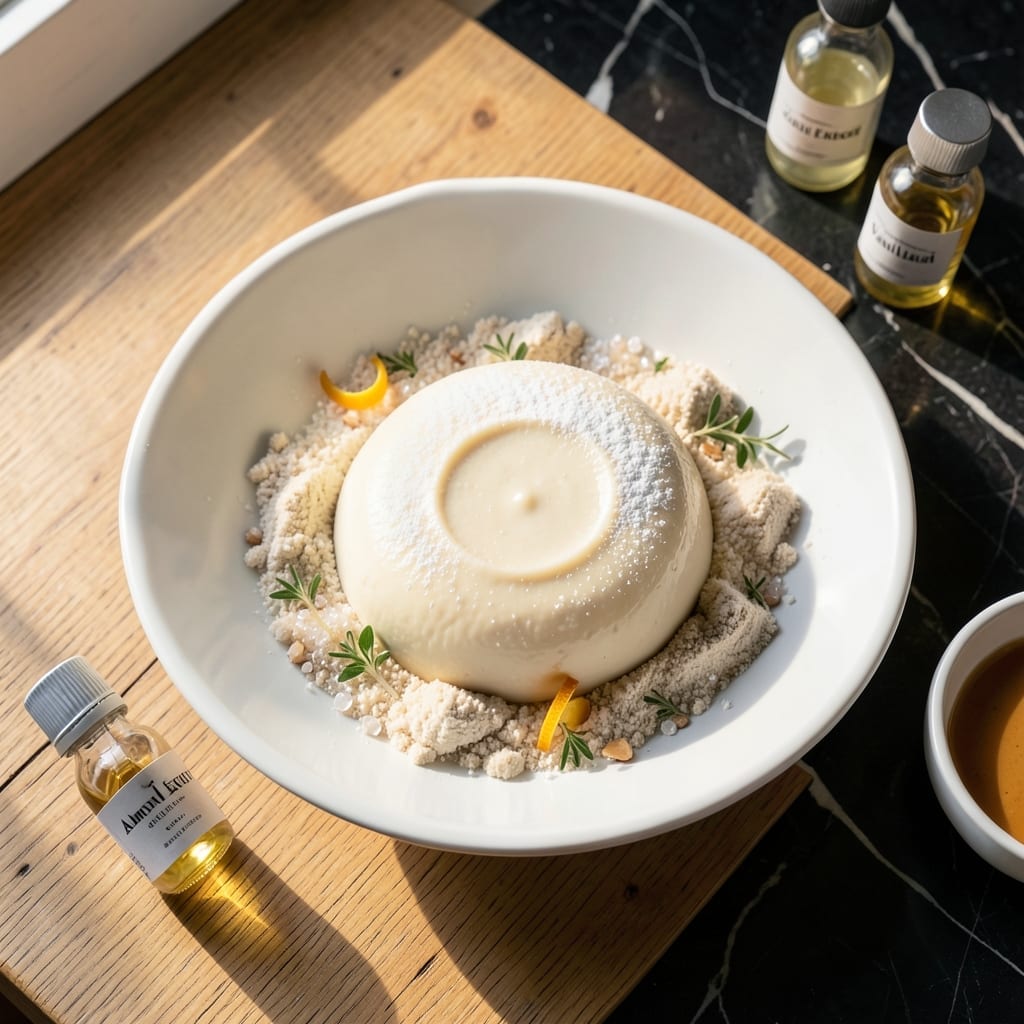
This homemade paste delivers pure almond flavor with a smooth, workable texture that store-bought versions can’t match.
With just almonds, sugar, and a touch of almond extract, you’ll create a versatile base for pastries, candies, or simple snacks.
Ingredients for Recipe for Almond Paste or Marzipan
A handful of pure ingredients transforms into rich, versatile almond paste with ease.
| Ingredient | Amount | Notes |
|---|---|---|
| Blanched Almond Flour 🥜 | 2 cups | Fine, sifted if lumpy |
| Powdered Sugar 🍚 | 1 ½ cups | Sifted for smoothness |
| Granulated Sugar 🍚 | ½ cup | For texture balance |
| Almond Extract 💧 | 1 tsp | Pure, not imitation |
| Vanilla Extract 🌿 | ½ tsp | Complements almond flavor |
| Water 💧 | 1 tbsp | As needed for consistency |
| Salt 🧂 | ¼ tsp | Fine sea salt preferred |
| Lemon Juice 🍋 | ½ tsp | Fresh, optional for brightness |
[recipe_ingredient_scaler]
Almond flour is non-negotiable here—Bob’s Red Mill or King Arthur brands are reliable and widely available. Look for blanched (skin removed) for the smoothest texture. The powdered sugar should be ultra-fine; if yours is lumpy, sift it before measuring. I always buy almond flour in bulk at Costco (cheaper, and I use it constantly).
No almond extract? Skip it entirely—don’t substitute with another flavor, as it’ll clash. Granulated sugar can be swapped for coconut sugar (though the color will darken). For a marzipan-like texture, reduce the water slightly and knead longer. Need a nut-free version? Sunflower seed flour works, but the taste won’t be the same.
Keeps in an airtight container at room temp for 1 week, or refrigerate for 1 month. Freeze for up to 3 months (portion first for easy use). Bring to room temp before shaping—cold paste cracks.
Why You’ll Love This Recipe
- One Bowl Wonder: I just dump almond flour, powdered sugar, and a splash of almond extract in a bowl—no fancy equipment, no fuss.
- Sweet Nostalgia: That first bite of vanilla-kissed almond paste takes me right back to my grandma’s kitchen, so rich and pure.
- Bake or Shape: I roll it into marzipan fruits one day, then crumble it over cakes the next. Honestly, it’s my edible playdough.
- Pantry Stash: A batch keeps in the fridge for weeks, so I always have a sweet, nutty backup for last-minute desserts.
Step-by-Step Instructions for Almond Paste or Marzipan
This method delivers smooth, pliable almond paste with professional texture every time.
Step 1: Combine Dry Ingredients for Foundation
In a large mixing bowl, whisk together the 2 cups Blanched Almond Flour, 1.5 cups Powdered Sugar, 0.5 cup Granulated Sugar, and 0.25 tsp Salt until fully incorporated. I always sift the almond flour first if it appears lumpy—this prevents grainy texture in the final product.
The combination of powdered and granulated sugar creates the perfect balance: the powdered sugar dissolves quickly for smoothness, while the granulated sugar adds subtle texture. You’ll notice the mixture looks like fine sand at this stage, which is exactly what you want before adding the wet ingredients.
Step 2: Incorporate Flavorings and Moisten
Create a well in the center of your dry mixture. Add the 1 tsp Almond Extract, 0.5 tsp Vanilla Extract, and 0.5 tsp Lemon Juice. The lemon juice might seem unusual, but it brightens the almond flavor beautifully without making it taste citrusy.
Pour in the 1 tbsp Water and begin mixing with a wooden spoon. The dough will seem dry at first, but keep working it—you’ll see it start to come together into a crumbly mass. If it’s not holding, add water 1 teaspoon at a time until it just begins to clump when pressed.
Step 3: Knead to Smooth Perfection
Turn the mixture onto a clean work surface. The dough will be stiff and crumbly at first, but don’t be tempted to add more liquid yet. Begin kneading with the heels of your hands, pressing down firmly and folding the dough over itself repeatedly.
After about 2-3 minutes of kneading, you’ll notice the texture transform from crumbly to smooth and slightly tacky. This is when you know it’s ready. If it’s still too dry, dampen your hands with a bit of water and continue kneading. The finished paste should be pliable but not sticky, with a consistency similar to Play-Doh.
Step 4: Rest and Store for Optimal Texture
Shape the almond paste into a log or disk, then wrap it tightly in plastic wrap. Let it rest at room temperature for 30 minutes before using. This resting period allows the sugars to fully hydrate and the flavors to meld together.
For storage, keep the paste wrapped tightly in the refrigerator for up to 1 week, or freeze for 3 months. Before using, let it come to room temperature and knead briefly to restore its smooth texture. The paste should be firm but easily moldable, with a clean break when sliced.
Pro Tips For Making Recipe For Almond Paste Or Marzipan
- Chill Before Rolling: After mixing, wrap your marzipan in plastic and refrigerate for at least 30 minutes—I learned this the hard way when my first batch stuck to everything like glue.
- Sift the Sugar: Powdered sugar clumps fast, so sift it first or you’ll end up with weird little lumps in your otherwise smooth almond paste.
- Use Real Almond Extract: Skip the imitation stuff; a teaspoon of pure almond extract makes a real difference compared to the artificial version, which tastes flat.
- Dust with Powdered Sugar: Lightly dust your work surface and rolling pin with powdered sugar instead of flour—it prevents sticking without changing the flavor.
Regional Styles of This recipe for almond paste or marzipan
German Style 🇩🇪
German marzipan, known as Lübecker Marzipan, is a protected regional specialty from Lübeck. It’s made with a high ratio of almonds to sugar, often 70-80% almonds, giving it a rich, nutty flavor. Traditionally, it’s shaped into small loaves or figures and dusted with powdered sugar. Rosewater or vanilla may be added for subtle floral notes.
Spanish Style 🇪🇸
In Spain, mazapán is a beloved treat, especially in Toledo, where it has been crafted since the Middle Ages. Spanish marzipan often includes honey and egg whites for binding, creating a denser texture. It’s commonly molded into intricate shapes like fruits or animals and is a staple during Christmas celebrations.
French Style 🇫🇷
French almond paste, or pâte d’amande, is smoother and slightly less sweet than other varieties. It often incorporates apricot kernel oil for a delicate aroma. This style is frequently used in pastries like galette des rois or as a filling for chocolates, showcasing its versatility in French confectionery.
Italian Style 🇮🇹
Italian marzipan, or pasta di mandorla, is prominent in Sicily and often flavored with citrus zest or pistachios for a bright, fresh twist. It’s a key ingredient in traditional sweets like frutta martorana, where it’s shaped and painted to resemble real fruit, a testament to its artistic and culinary heritage.
Nutrition Facts

Trained in classic French technique but raised on slow-cooked ribs and spicy rubs, she blends culinary skill with smoke and soul.
- Recipe for Curried Lamb Chops: Spice-Rubbed and Pan-Seared to Succulence - October 3, 2026
- Recipe for Boneless Leg of Lamb Roast in the Oven: Herb-Crusted and Rosy Pink Inside - October 3, 2026
- Meat Loaf Recipe With Beef And Pork: Homestyle Blend With Rich Gravy - October 3, 2026