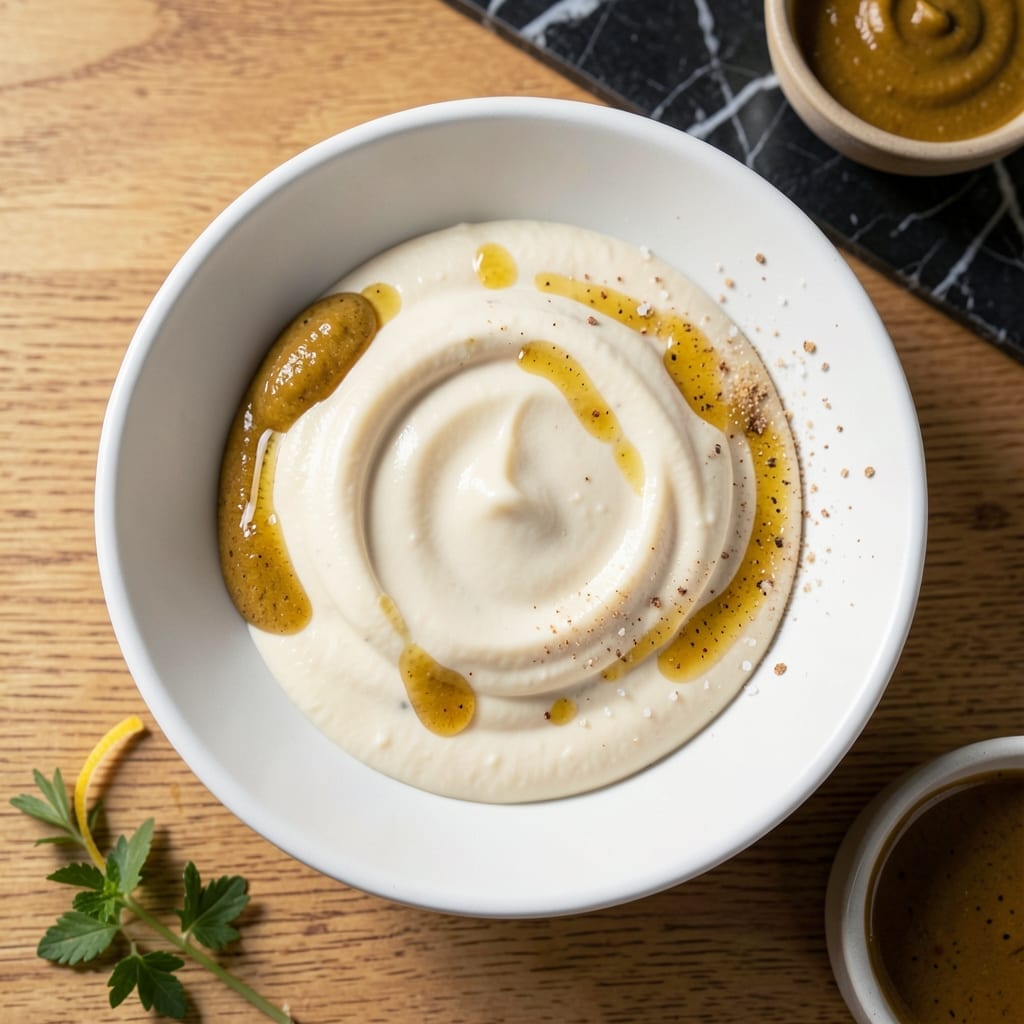
Creating a vegan mayonnaise without soy is simpler than you might think. This recipe uses aquafaba as the magic ingredient to achieve that classic creamy texture.
With just a few pantry staples and a blender, you can make a silky emulsion that rivals traditional mayo. It’s perfect for sandwiches, dressings, or dipping.
Ingredients for Vegan Mayonnaise Recipe Without Soy
Eight simple ingredients create that silky, creamy emulsion you crave without soy.
| Ingredient | Amount | Notes |
|---|---|---|
| Aquafaba 🥫 | ⅓ cup | Liquid from canned chickpeas |
| Neutral-Flavored Oil 🫒 | ¾ cup | Avocado or light olive oil |
| Dijon Mustard 🟡 | 1 tsp | Or yellow mustard in pinch |
| Apple Cider Vinegar 🍏 | 1 tbsp | Or white vinegar or lemon juice |
| Garlic Powder 🧄 | ¼ tsp | Optional for flavor depth |
| Sea Salt 🧂 | ½ tsp | Adjust to taste preference |
| Maple Syrup 🍁 | ½ tsp | Balances acidity and flavor |
| White Pepper ⚪ | 0.125 tsp | Optional for subtle heat |
[recipe_ingredient_scaler]
The aquafaba is everything here—canned chickpeas from Whole Foods or Trader Joe’s give the best results (the liquid is thicker, more stable). I always use Chosen Foods avocado oil for its neutral taste, but any light oil works. Check the canned chickpea label: low-sodium or no-salt-added keeps the flavor clean. The mustard acts as an emulsifier, so don’t skip it (even a teaspoon makes a difference).
No aquafaba? Reduce the oil slightly and use flax or chia gel, but the texture won’t be quite as light. Swap apple cider vinegar for lemon juice or white wine vinegar—same tang, different brightness. Want it sweeter? Agave or date syrup works instead of maple. For a garlic kick, fresh minced garlic (half a clove) replaces the powder, but strain it if you dislike texture.
Keeps in an airtight jar in the fridge for 1 week. The emulsion might separate over time—just whisk or blend again. For longer storage, freeze in ice cube trays for up to 3 months. Thaw in the fridge overnight before using.
Why You’ll Love This Recipe
- Blender Magic: I just dump everything in and blend—no whisking, no fuss, just creamy mayo in minutes.
- Tangy Perfection: The apple cider vinegar and Dijon mustard give it that classic mayo zing without any weird aftertaste.
- Sandwich Savior: Honestly, it’s my go-to for burgers, wraps, even dipping fries—way better than store-bought.
- Budget Keeper: Aquafaba is basically free if I’m already making chickpeas, so this saves me a ton compared to pricey vegan brands.
Step-by-Step Instructions for Vegan Mayonnaise Without Soy
Here’s the method I use to create a perfectly silky emulsion every time.
Step 1: Build Your Flavor Base
In a medium bowl, I whisk together the 0.33 cup Aquafaba, 1 tsp Dijon Mustard, 1 tbsp Apple Cider Vinegar, 0.5 tsp Sea Salt, 0.5 tsp Maple Syrup, 0.25 tsp Garlic Powder, and 0.125 tsp White Pepper until fully combined. The Aquafaba should look slightly frothy at this stage.
This is where the magic starts. The mustard acts as an emulsifier, while the vinegar and maple syrup balance the flavors. Don’t skip the whisking—you want everything uniformly distributed before adding the oil.
Step 2: Begin the Emulsion with Slow Oil Incorporation
With the whisk in one hand and the 0.75 cup Neutral-Flavored Oil in the other, start adding the oil in a very thin, steady stream while whisking constantly. I mean literally a drop at a time at first—this is crucial for a stable emulsion.
After about 1 minute of whisking, you’ll notice the mixture beginning to thicken. This is your visual cue that the emulsion is forming. Keep the stream slow and steady. If you add the oil too quickly at this stage, the mixture will break and separate.
Step 3: Increase Oil Flow as Emulsion Strengthens
Once the mixture has visibly thickened (it should look like a thin mayonnaise), you can increase the oil to a slightly faster but still controlled stream. Continue whisking vigorously as you add the remaining oil.
The color will lighten as you add more oil, and the texture will become creamier. This process should take about 5-7 minutes total. I’ve found that using a neutral-flavored oil like avocado or light olive oil gives the cleanest flavor for this recipe.
Step 4: Adjust and Perfect Your Vegan Mayonnaise
After all the oil is incorporated, give it a final whisk for 30 seconds to ensure everything is fully emulsified. The finished mayonnaise should be thick, creamy, and pale with a slight sheen.
Taste and adjust seasoning if needed—I sometimes add a pinch more sea salt or a few drops of apple cider vinegar for balance. If it’s too thick, whisk in 1 teaspoon of water at a time until it reaches your desired consistency. Store in an airtight container in the refrigerator for up to 1 week.
Pro Tips For Making Vegan Mayonnaise Recipe Without Soy
- Drip Oil Slowly: Add the oil in a thin, steady stream—about 1 teaspoon every 5 seconds—while blending. I learned this the hard way after my first batch broke because I poured too fast.
- Chill the Aquafaba: Use cold aquafaba straight from the fridge. It emulsifies better and holds the mayo together, unlike room-temp liquid which can turn out thin.
- Skip the Overmixing: Once the mayo thickens, stop blending immediately. Overmixing after it sets can cause it to separate, and nobody wants a puddle of oil.
- Use a Tall Container: A narrow jar or tall cup works best with an immersion blender. Sounds weird, but it works: the deep shape helps create a vortex that pulls in the oil evenly.
Pro Cooking Tips for This Recipe
💡 Master the Emulsion
Achieving a smooth, creamy texture is all about slow and steady. Start by whisking the aquafaba vigorously before adding oil—this builds a stable base. Then, drizzle the oil in a thin, continuous stream while blending to help the mixture bind properly. Patience is key here; rushing can cause separation.
🌡️ Temperature Matters
For the best results, ensure all ingredients are at room temperature. Cold aquafaba or oil can disrupt the emulsion process, leading to a broken or lumpy mayo. If your kitchen is chilly, let ingredients sit out for 15-20 minutes before starting. Consistency in temperature ensures a silky finish.
✨ Flavor Boosting Secrets
Elevate your vegan mayo with freshly squeezed lemon juice or apple cider vinegar for brightness. A pinch of mustard powder or a dash of garlic powder adds depth. Adjust seasonings gradually—taste as you go to avoid overpowering the creamy base.
🎯 Troubleshooting Tips
If your mayo separates, don’t panic. Try re-blending with 1 tsp of hot water to encourage re-emulsification. If it’s too thick, thin it with a splash of aquafaba or plant-based milk. For a thinner consistency, blend in small increments until just right.
Nutrition Facts

Trained in classic French technique but raised on slow-cooked ribs and spicy rubs, she blends culinary skill with smoke and soul.
- Recipe for Boneless Pork Chops in Cast Iron Skillet: Sear and Baste to Juicy Perfection - October 3, 2026
- Recipe for Boneless Cross Rib Roast: Slow-Roasted Beef with Herb Crust - October 3, 2026
- Hamburgers in Sauce Recipe Crock Pot: Slow-Cooked Savory Delight - October 3, 2026