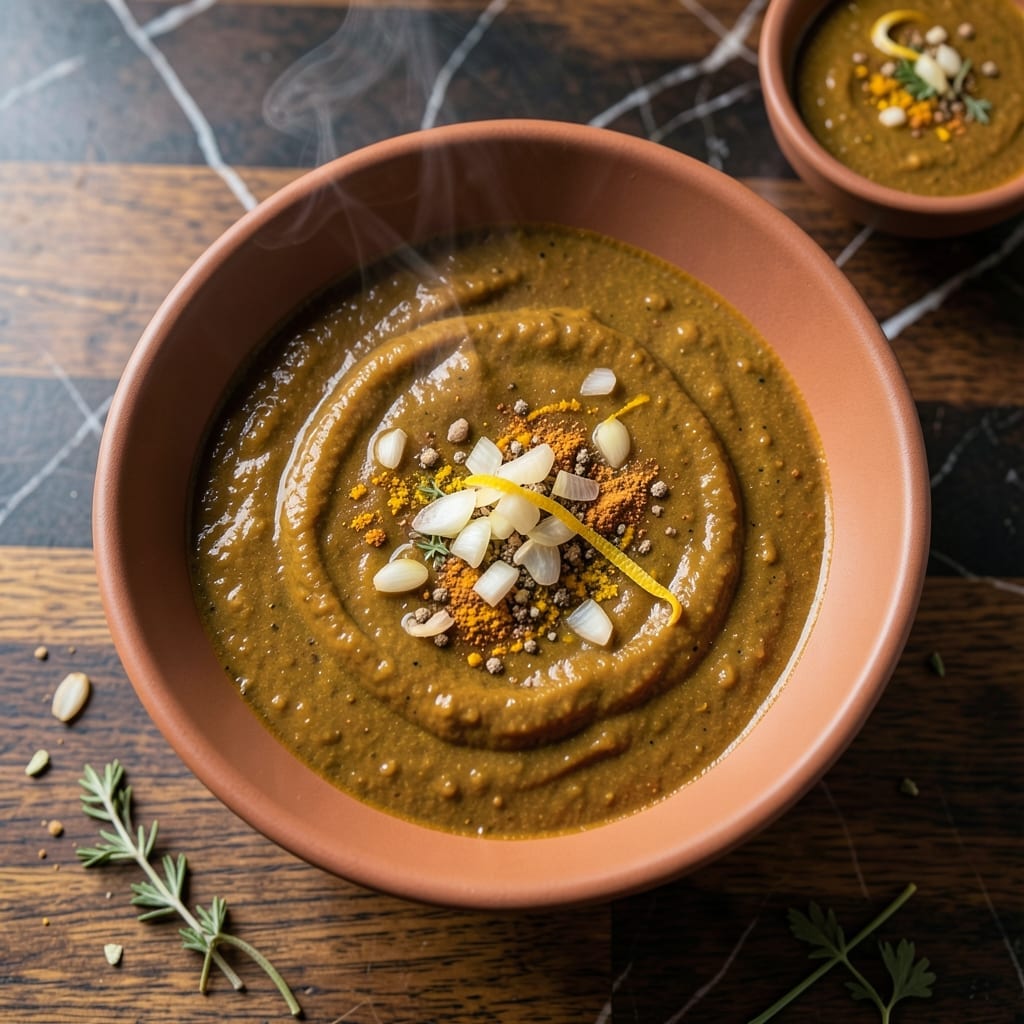
This basic curry sauce serves as a versatile foundation for countless dishes. Simple ingredients come together to create a rich, aromatic base.
Perfect for stir-fries, marinades, or soups, it adapts easily to your preferred spice level. Make a batch and keep it on hand for quick, flavorful meals.
Ingredients for Recipe for Basic Curry Sauce
A handful of pantry staples creates this aromatic, adaptable sauce base for endless dishes.
| Ingredient | Amount | Notes |
|---|---|---|
| Onion 🧅 | 1 whole | Finely diced, yellow preferred |
| Garlic Cloves 🧄 | 4 cloves | Minced for depth of flavor |
| Fresh Ginger Root 🌿 | 1 tbsp | Peeled and grated fine |
| Curry Powder 🌶️ | 2 tbsp | Mild or hot variety |
| Ground Cumin 🌿 | 1 tsp | Toasted for aromatic warmth |
| Ground Coriander 🌿 | 1 tsp | Complements the cumin perfectly |
| Turmeric Powder 🌶️ | ½ tsp | For color and earthiness |
| Coconut Milk 🥥 | 1 can | Full-fat for creaminess |
| Tomato Paste 🍅 | 2 tbsp | Concentrated for rich base |
| Vegetable Broth 🥕 | 1 cup | Low-sodium preferred for control |
| Olive Oil 🫒 | 2 tbsp | For sautéing aromatics |
| Salt 🧂 | 1 tsp | Adjust to taste at finish |
[recipe_ingredient_scaler]
The curry powder is the backbone. Penzeys or a high-turnover spice shop ensures freshness—old spices taste like dust. Full-fat coconut milk (look for Thai Kitchen or Native Forest at Whole Foods or Trader Joe’s) gives that velvety texture. The ginger and garlic should be fresh (the jarred stuff lacks punch). If your onion is particularly pungent, a quick rinse under cold water tames the bite without losing flavor.
No coconut milk? Heavy cream works in a pinch (though it changes the flavor profile). Swap curry powder for 1 tbsp garam masala plus 1 tsp each cumin and coriander if that’s what you’ve got. Chicken broth can replace vegetable broth, but reduce the salt. Tomato paste tubes from Trader Joe’s mean no waste—worth the $2 investment. Fresh ginger paste (sold in tubes) saves grating time.
Sauce keeps 5 days refrigerated in an airtight container. Freeze in ice cube trays for 3 months—pop out cubes and store in bags. The flavors deepen overnight, so make it a day ahead if possible (worth the extra minute).
Why You’ll Love This Recipe
- One Pan Wonder: I just toss in the onion, garlic, ginger, and spices—no fancy techniques, just straightforward flavor.
- Warm Spice Hug: The curry powder and cumin bloom into this rich, cozy aroma that fills the kitchen.
- Endless Meal Starter: I use it as a base for everything from chicken to chickpeas, even just with rice.
- Pantry Hero: Honestly, it’s all shelf-stable staples, so I can make it whenever a curry craving hits.
Step-by-Step Instructions for Basic Curry Sauce
This foolproof method ensures a rich, aromatic sauce that serves as the perfect base for countless dishes.
Step 1: Sauté the Aromatics
Heat the 2 tbsp Olive Oil in a medium saucepan over medium heat. Add the 1 whole Onion (finely diced) and cook for 5-6 minutes until soft and translucent, stirring occasionally to prevent browning.
Add the 4 cloves Garlic Cloves (minced) and 1 tbsp Fresh Ginger Root (grated). Sauté for 1-2 minutes until fragrant, being careful not to let the garlic burn. This builds the flavor foundation for the entire sauce.
Step 2: Toast the Spices
Stir in the 2 tbsp Curry Powder, 1 tsp Ground Cumin, 1 tsp Ground Coriander, and 0.5 tsp Turmeric Powder. Cook for 1 minute, stirring constantly, until the spices become deeply aromatic and slightly darker in color.
Toasting the spices in the hot oil releases their essential oils, which is critical for developing the sauce’s depth. You’ll notice the mixture becomes thick and pasty—that’s how you know it’s ready for the next step.
Step 3: Build the Sauce Base
Add the 2 tbsp Tomato Paste and cook for 1-2 minutes, stirring frequently, until it darkens slightly. This step intensifies the tomato flavor and helps thicken the sauce naturally.
Pour in the 1 cup Vegetable Broth and scrape up any browned bits from the bottom of the pan. These bits ( called fond) add incredible depth. Bring the mixture to a gentle simmer.
Step 4: Incorporate the Coconut Milk
Reduce the heat to low and slowly pour in the 1 can Coconut Milk, stirring constantly to combine. Use full-fat coconut milk for the creamiest texture.
Simmer the sauce for 10-12 minutes, stirring occasionally, until it thickens slightly and the flavors meld together. The sauce should coat the back of a spoon but still be pourable.
Season with the 1 tsp Salt, then adjust to taste. Real talk: the sauce will taste even better after sitting for a few minutes, as the spices continue to develop.
Pro Tips For Making Recipe For Basic Curry Sauce
- Bloom the Spices: Cook the curry powder and cumin in the oil for 30 seconds before adding liquids—I learned this the hard way after my first few batches tasted flat.
- Grate the Ginger: Use a microplane for the fresh ginger root instead of mincing; it releases more juice and blends into the sauce better.
- Low and Slow Onions: Let the onions cook down to a deep golden brown over medium-low heat, about 8-10 minutes—rushing this step leaves them raw and harsh.
- Skip the Garlic Press: Finely chop the garlic cloves instead of pressing; it prevents the sauce from developing a bitter edge during cooking.
Troubleshooting This Dish
🔥 Too Thin or Watery?
If your curry sauce lacks thickness, it’s often due to insufficient cooking time or too much liquid. Simmering helps evaporate excess moisture and deepen flavors.
Quick Fix: Mix 1 tsp cornstarch with cold water, stir into the sauce, and simmer for 2-3 minutes. Alternatively, cook uncovered to reduce the liquid.
🍳 Too Thick or Gloppy?
Over-reduction or excessive thickeners (like flour or cornstarch) can make the sauce overly dense. Balance is key for a smooth, pourable consistency.
Quick Fix: Gradually whisk in warm water, broth, or coconut milk until it reaches your desired texture. Stir well to avoid lumps.
🌡️ Bland or Lacking Flavor?
Under-seasoning or insufficient spices can leave your curry sauce tasting flat. Fresh ingredients and proper blooming of spices are essential.
Quick Fix: Stir in ½ tsp salt, 1 tsp garam masala, or a splash of lime juice. Taste as you go and adjust with more spices if needed.
⏰ Sauce Separating or Oily?
Oil pooling on top usually means the sauce hasn’t emulsified properly. This can happen if the fat isn’t fully incorporated during cooking.
Quick Fix: Whisk vigorously to recombine, or blend briefly with an immersion blender. For prevention, cook spices in oil before adding liquids.
Nutrition Facts

Trained in classic French technique but raised on slow-cooked ribs and spicy rubs, she blends culinary skill with smoke and soul.
- Recipe for Boneless Pork Chops in Cast Iron Skillet: Sear and Baste to Juicy Perfection - October 3, 2026
- Recipe for Boneless Cross Rib Roast: Slow-Roasted Beef with Herb Crust - October 3, 2026
- Hamburgers in Sauce Recipe Crock Pot: Slow-Cooked Savory Delight - October 3, 2026