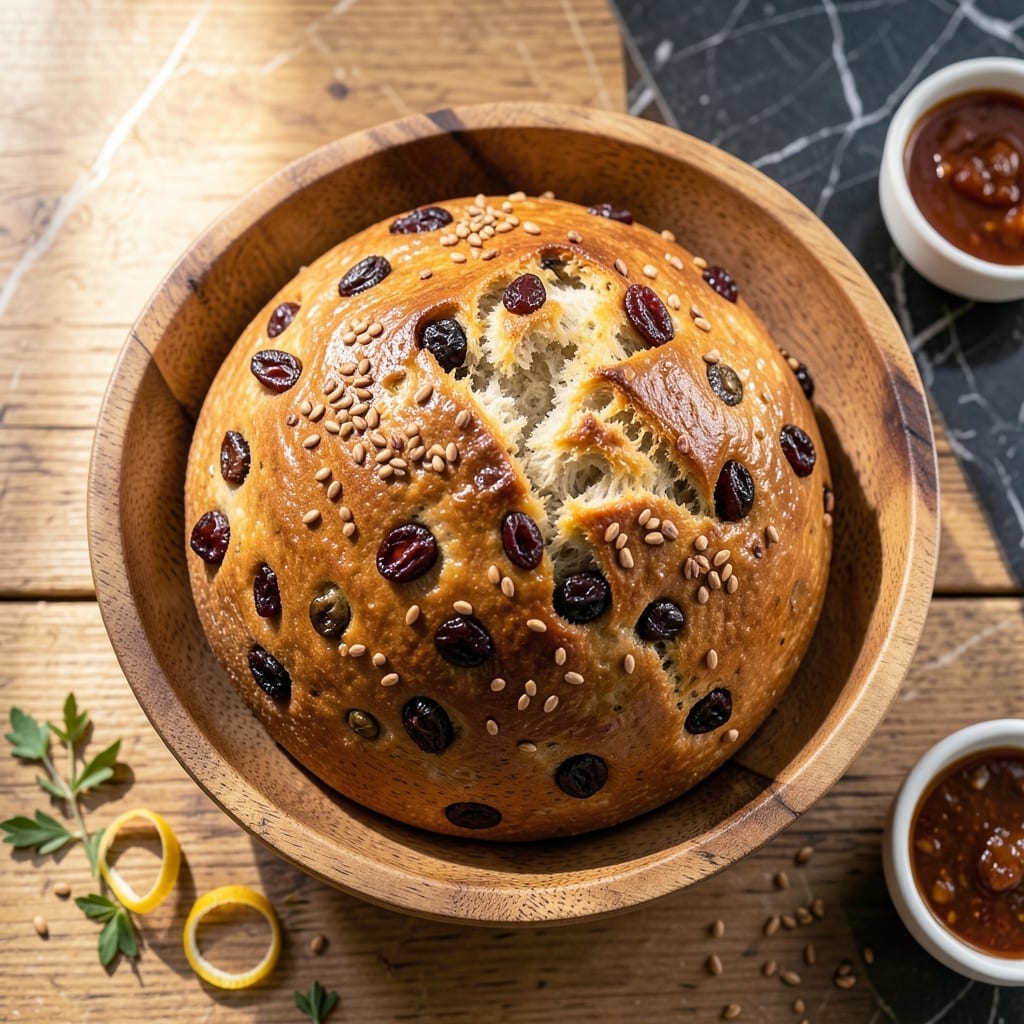
This ancient grain loaf captures the essence of traditional bread-making with a touch of sweetness from honey. The recipe honors historical methods while delivering a hearty, flavorful result.
With simple ingredients and a patient rise, it yields a loaf with a dense yet tender crumb and a rich, caramelized crust. Perfect for those seeking a connection to culinary history.
Ingredients for Recipe for Bible Bread
Ancient grains meet modern kitchens with these timeless, wholesome components for your loaf.
| Ingredient | Amount | Notes |
|---|---|---|
| Whole Wheat Flour 🌾 | 3 cups | Stone-ground preferred for authenticity |
| Bread Flour 🌾 | 1 cup | High protein for structure |
| Active Dry Yeast 🍞 | 2 ¼ tsp | One standard packet equivalent |
| Warm Water 💧 | 1 ¼ cups | 110°F for yeast activation |
| Honey 🍯 | ¼ cup | Raw or unfiltered for depth |
| Olive Oil 🫒 | 2 tbsp | Extra-virgin for richness |
| Kosher Salt 🧂 | 1 ½ tsp | Diamond Crystal preferred |
| Milled Flaxseed 🌿 | ¼ cup | Optional for ancient grain texture |
| Cracked Spelt Berries 🌾 | ½ cup | Soaked overnight for softness |
| Molasses 🍯 | 1 tbsp | Adds caramelized depth to crust |
| Cinnamon 🌿 | ½ tsp | Ground, for warm undertones |
| Raisins 🍇 | ½ cup | Plumped in warm water |
[recipe_ingredient_scaler]
The flour foundation is critical here. King Arthur offers excellent whole wheat and bread flour options with consistent protein levels. For the yeast, Fleischmann’s or Red Star active dry varieties are reliable. The honey should be raw and local if possible—farmer’s markets often have superior options. Cracked spelt berries can be found at Whole Foods or natural food stores with bulk sections.
No whole wheat flour? White whole wheat at a 1:1 ratio works well. Out of molasses? Dark brown sugar dissolved in warm water substitutes adequately. If you can’t find spelt berries, farro or wheat berries offer similar texture. The raisins are optional but recommended—golden raisins add milder sweetness if you prefer. For the olive oil, any neutral oil works in a pinch.
Store flour and grains in airtight containers in a cool, dark place for up to 6 months. The dough can be refrigerated overnight for enhanced flavor development. Baked loaves keep at room temperature for 3-4 days, or freeze for 1 month wrapped tightly in foil and plastic.
Why You’ll Love This Recipe
- No Fuss Mixing: I just dump the flours, yeast, honey, and warm water in one bowl and stir—no fancy steps, no stand mixer needed.
- Warm Honey Sweetness: The honey gives it this subtle, natural sweetness that makes it irresistible straight out of the oven.
- Feeds a Crowd: One loaf disappears fast, so I always double the batch for potlucks or Sunday brunch.
- Stays Fresh: Honestly, it tastes even better the next day toasted with butter.
Step-by-Step Instructions for Bible Bread
This method ensures optimal texture and flavor development for your ancient grain loaf.
Step 1: Activate the Yeast and Prepare Grains
Begin by combining the 2.25 tsp Active Dry Yeast with the 1.25 cups Warm Water in a small bowl. Let it stand for 5-10 minutes until foamy—this confirms the yeast is active and ready to work. Meanwhile, drain the 0.5 cup Cracked Spelt Berries if soaked overnight, and plump the 0.5 cup Raisins in warm water for 10 minutes.
The yeast mixture should develop a thick, bubbly layer on top. If it doesn’t, your water may have been too hot or cold. The spelt berries and raisins will absorb moisture and soften, ensuring they don’t draw liquid from the dough later.
Step 2: Mix and Knead the Dough
In a large mixing bowl, whisk together the 3 cups Whole Wheat Flour, 1 cup Bread Flour, 1.5 tsp Kosher Salt, 0.25 cup Milled Flaxseed, and 0.5 tsp Cinnamon. Add the yeast mixture, 0.25 cup Honey, 1 tbsp Molasses, and 2 tbsp Olive Oil. Stir until a shaggy dough forms.
Turn the dough onto a lightly floured surface and knead for 8-10 minutes until smooth and elastic. The dough will be slightly sticky due to the honey and molasses, but resist adding more flour—this moisture is key for the bread’s tender crumb. Fold in the drained spelt berries and plumped raisins during the last minute of kneading.
Step 3: First Rise and Shape
Place the dough in a lightly oiled bowl, cover with a damp cloth, and let it rise in a warm, draft-free spot for 1 to 1.5 hours, or until doubled in volume. The dough should spring back slowly when pressed lightly with a finger.
Once risen, gently deflate the dough and shape it into a round or oval loaf. Place it on a parchment-lined baking sheet. Cover again and let it rise for another 45-60 minutes until puffy and nearly doubled. Preheat your oven to 375°F during the final 20 minutes of rising.
Step 4: Bake to Golden Perfection
Just before baking, use a sharp knife or razor to score the top of the loaf with a shallow cross or decorative pattern. This allows the bread to expand properly in the oven. Bake on the center rack for 35-40 minutes, or until the crust is deep golden brown and the internal temperature reaches 190-200°F.
The loaf should sound hollow when tapped on the bottom. If the crust begins to darken too quickly, tent the bread loosely with aluminum foil. The honey and molasses in the dough will caramelize, creating a rich, slightly sticky crust with a deep, complex flavor.
Step 5: Cool and Serve
Transfer the baked loaf to a wire rack and let it cool for at least 1 hour before slicing. This cooling period allows the crumb to set and the flavors to meld. Slicing too soon can result in a gummy texture.
Serve the bread warm or at room temperature. The interior should be moist and studded with the chewy raisins and spelt berries, while the crust offers a subtle sweetness from the honey and molasses. This loaf pairs beautifully with cheese, fruit, or simply a smear of butter.
Pro Tips For Making Recipe For Bible Bread
- Test Your Yeast: Always bloom your active dry yeast in the warm water with a pinch of honey first—I learned this the hard way after wasting a batch when my yeast was dead. If it doesn’t foam within 5-10 minutes, start over.
- Balance the Flours: Use a 50/50 mix of whole wheat and bread flour for structure without density. My early loaves were bricks until I stopped skipping the bread flour entirely.
- Skip Cold Water: Warm water should feel like bathwater, around 110°F. Any colder slows activation, any hotter kills the yeast—after ruining two batches, I now use a thermometer.
- Add Honey Last: Stir honey into the yeast water after it’s foamed, not before. Sounds weird, but it works: the yeast activates faster without the sugar weighing it down initially.
Best Sauces and Condiments for This Dish
Sweet Accompaniments
This loaf’s honeyed depth pairs beautifully with warm honey butter—mix 4 tbsp softened butter with 2 tbsp honey and a pinch of cinnamon. The sweetness complements the caramelized crust while enhancing the ancient grain flavors. 💛
Savory Spreads
For contrast, try whipped goat cheese with herbs. Blend 8 oz goat cheese with 1 tbsp olive oil and 1 tsp fresh thyme. The tanginess cuts through the bread’s richness, creating a perfect balance.
Fruit Preserves
Fig jam or apricot preserves add a fruity dimension that echoes the raisins in the loaf. I recommend Bonne Maman brand for authentic texture. Spread generously on warm slices for a dessert-like treat.
Spiced Dips
A cinnamon-sugar dip is surprisingly simple yet effective. Combine ½ cup Greek yogurt with 1 tbsp brown sugar and ½ tsp cinnamon. The cool creaminess complements the warm, dense crumb.
Olive Oil Finishing
Drizzle high-quality extra-virgin olive oil over slices and sprinkle with flaky sea salt. This Mediterranean approach highlights the bread’s artisanal qualities. California Olive Ranch offers excellent options.
Nutrition Facts
Frequently Asked Questions
Can I use instant yeast instead of active dry?
Yes, but reduce the amount by 25% and skip the activation step. Instant yeast works faster, so monitor the rise time closely. The texture may be slightly denser but still delicious.
Why does the recipe include both whole wheat and bread flour?
The whole wheat flour adds hearty, ancient grain flavor, while bread flour provides structure. This combo ensures a tender crumb without being too dense or crumbly.
How do I know when the dough is kneaded enough?
The dough is ready when it passes the windowpane test: stretch a small piece thinly and hold it to light. If it’s translucent without tearing, it’s properly kneaded.
Can I make this without a stand mixer?
Knead by hand for 10-12 minutes on a floured surface. The process is more labor-intensive but yields equally good results.

Trained in classic French technique but raised on slow-cooked ribs and spicy rubs, she blends culinary skill with smoke and soul.
- Recipe for Boneless Pork Chops in Cast Iron Skillet: Sear and Baste to Juicy Perfection - October 3, 2026
- Recipe for Boneless Cross Rib Roast: Slow-Roasted Beef with Herb Crust - October 3, 2026
- Hamburgers in Sauce Recipe Crock Pot: Slow-Cooked Savory Delight - October 3, 2026