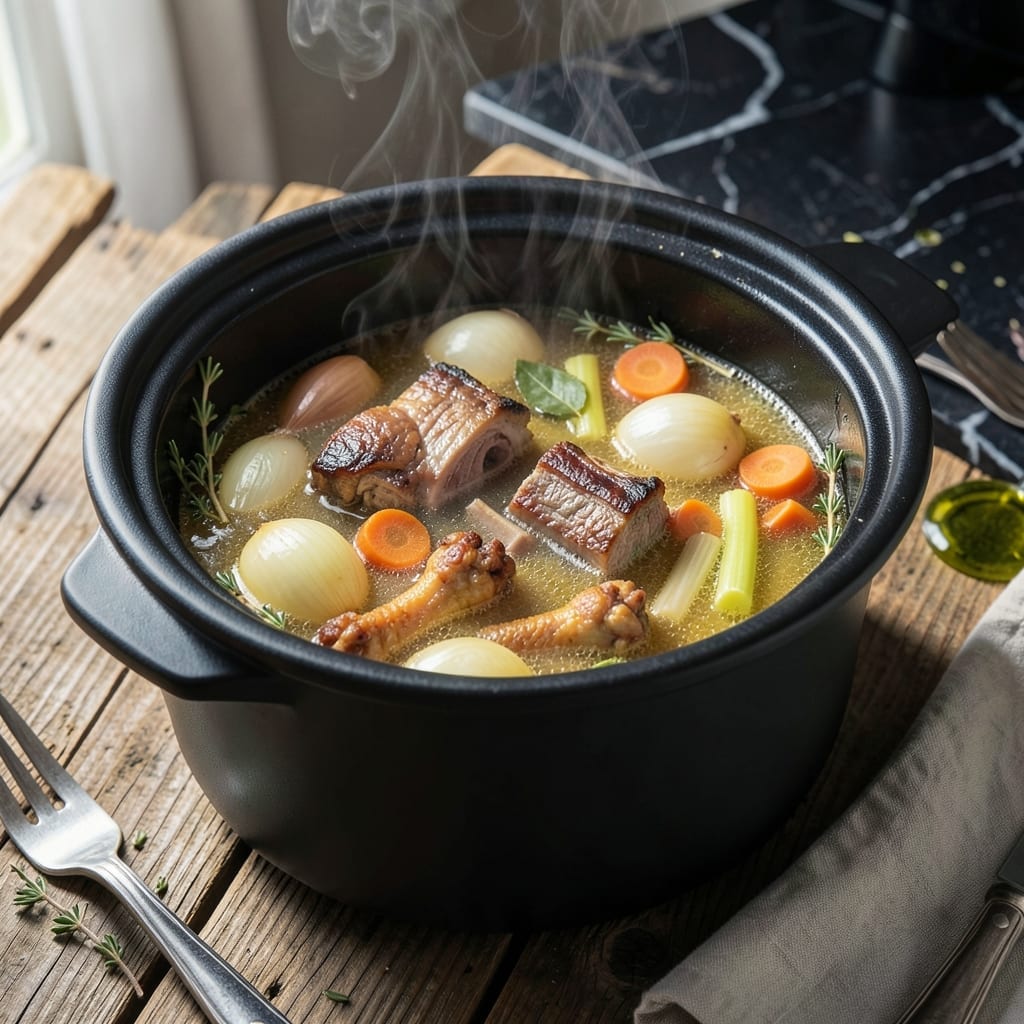
This slow-simmered broth extracts maximum nutrition with minimal effort. The crock pot transforms bones and aromatics into a rich, golden elixir over 12-24 hours.
No complicated techniques—just quality bones, vegetables, and time. The result is a deeply flavorful broth that forms the perfect base for soups or stands alone as a healing tonic.
Ingredients for Recipe for Bone Broth in Crock Pot
Quality bones and vegetables transform into a healing elixir with time and patience.
| Ingredient | Amount | Notes |
|---|---|---|
| Beef Bones 🥩 | 2 lb | Marrow or knuckle bones preferred |
| Chicken Feet or Neck Bones 🍗 | 1 lb | Optional for extra gelatin |
| Yellow Onions 🧅 | 2 whole | Quartered with skin on |
| Carrots 🥕 | 3 whole | Chopped into large chunks |
| Celery Stalks 🌿 | 3 whole | Including leafy tops if available |
| Garlic Bulb 🧄 | 1 whole | Cut in half crosswise |
| Apple Cider Vinegar 🍏 | 2 tbsp | Helps extract minerals from bones |
| Bay Leaves 🍃 | 2 pieces | Dried, whole leaves |
| Black Peppercorns 🌶️ | 1 tsp | Whole, not ground |
| Fresh Parsley 🌿 | ¼ cup | Stems and leaves included |
| Fresh Thyme Sprigs 🍃 | 4 pieces | Whole sprigs preferred |
| Cold Water 💧 | 12 cups | Filtered or spring water |
| Sea Salt 🧂 | 1 tsp | Adjust to taste after cooking |
[recipe_ingredient_scaler]
The bones are everything here. Grass-fed beef marrow or knuckle bones from Whole Foods or a trusted butcher yield the richest, most gelatinous broth. Chicken feet (available at Asian markets) add incredible body, but necks or backs work well too. Look for bones with plenty of connective tissue—this is what creates that silky texture. For vegetables, organic when possible (the skins and peels contribute flavor and nutrients).
No beef bones? Lamb or pork bones make excellent broth too. Skip the vinegar? A splash of lemon juice or white wine works in a pinch. Fresh herbs can be swapped for dried at one-third the amount. The onion skins add color, so don’t peel them. If you’re missing celery, fennel or leek greens bring a similar aromatic quality. Avoid starchy vegetables like potatoes—they make the broth cloudy.
Broth keeps 5 days in the fridge in airtight containers. For longer storage, freeze in pint or quart jars (leave headspace for expansion) for up to 12 months. Skim fat after chilling—save it for cooking. Strain and portion before storing for easiest use in future recipes.
Why You’ll Love This Recipe
- Set It and Forget: I toss everything in the crock pot before bed and wake up to rich, golden broth—no babysitting required.
- Deep, Rich Taste: The slow simmer pulls every bit of flavor from the beef bones and chicken feet, making it taste like it cooked all day (because it did).
- Meal Prep Magic: I use this broth for soups, rice, or just sipping—it’s my secret weapon for the whole week.
- Budget Stretcher: Honestly, turning scraps like onion peels and celery ends into liquid gold saves me a trip to the store.
Step-by-Step Instructions for Bone Broth in Crock Pot
This method ensures maximum nutrient extraction and a rich, flavorful result every time.
Step 1: Roast the Bones for Depth of Flavor
Preheat your oven to 400°F. Place the 2 lb Beef Bones and 1 lb Chicken Feet or Neck Bones on a baking sheet. Roast for 20-25 minutes until the bones are deeply browned and any exposed marrow begins to sizzle.
This roasting step is crucial—it caramelizes the natural sugars and proteins, creating a complex, savory base for your broth. Don’t skip this; the difference in flavor is substantial. The bones should develop a rich, golden-brown color, not black or burnt.
Step 2: Prepare Vegetables and Aromatics
While the bones roast, quarter the 2 whole Yellow Onions with the skin on (the skin adds depth and color), chop the 3 whole Carrots into large chunks, and roughly chop the 3 whole Celery Stalks. Cut the 1 whole Garlic Bulb in half crosswise, exposing the cloves inside.
Place all vegetables in the bottom of your crock pot. The direct contact with the heat source will help them break down and infuse the broth with their essence. Add the roasted bones on top of the vegetables, then pour in the 2 tbsp Apple Cider Vinegar. This helps draw minerals out of the bones and into your broth.
Step 3: Add Herbs, Spices, and Water
Add the 2 pieces Bay Leaves, 1 tsp Black Peppercorns, 0.25 cup Fresh Parsley, and 4 pieces Fresh Thyme Sprigs to the crock pot. These aromatics will steep during the long cooking process, imparting layers of flavor without overpowering the natural taste of the bones.
Pour in the 12 cups Cold Water, ensuring all ingredients are submerged. The water should cover everything by at least an inch. Add the 1 tsp Sea Salt now, though you can adjust the seasoning after the broth is finished. Stir gently to distribute the ingredients.
Step 4: Slow-Simmer for Maximum Extraction
Set your crock pot to low heat and cook for 18-24 hours. The extended cooking time is essential for breaking down the collagen in the bones and connective tissues, yielding a gelatinous, nutrient-rich broth. You’ll know it’s working when the surface develops a layer of fat and the broth takes on a deep amber color.
Avoid lifting the lid during cooking, as this releases heat and can extend the cooking time. If you notice the liquid level dropping below the bones, add a bit more water to keep everything submerged. The broth should gently bubble, not boil vigorously, to prevent cloudiness.
Step 5: Strain and Store
After cooking, carefully strain the broth through a fine-mesh sieve into a large bowl or another pot. Discard the solids—they’ve given all their flavor and nutrients to the broth. Let the broth cool slightly, then skim off any fat that rises to the surface if you prefer a leaner result.
Once cooled, transfer the broth to airtight containers. It will keep in the refrigerator for up to 5 days or in the freezer for 6 months. When chilled, the broth should have a jelly-like consistency, a sign of high gelatin content and a job well done.
Pro Tips For Making Recipe For Bone Broth In Crock Pot
- Roast the Bones First: I learned this the hard way—raw bones make a weak, dull broth. Toss them in a 400°F oven for 20-30 minutes until deep brown for a richer, more complex flavor.
- Skip the Peeling: Leave the skins on your onions and carrots—just give them a good scrub. Those papery bits add depth and color, and honestly, no one’s straining out perfectly peeled veggies later.
- Add Vinegar: Sounds weird, but it works: splash 2 tablespoons of apple cider vinegar into the crock pot. It pulls minerals from the bones, and after 24 hours, you’ll taste the difference in the richness.
- Wait 12 Hours: Resist the urge to dig in after 6-8 hours. Bone broth needs time—at least 12 hours, up to 24—to extract all the gelatin and collagen, especially from chicken feet or neck bones.
Health Benefits of This Recipe
Gut Healing Properties
This creation is packed with gelatin and collagen, which help repair the gut lining and support digestive health. The slow simmer extracts these compounds from bones and connective tissues. I notice less bloating when I include this regularly in my diet. 💪
Joint Support Power
The glycine and proline in this broth provide amino acids crucial for joint repair and flexibility. A single 1-cup serving contains about 10 grams of collagen, which may reduce joint pain over time. Athletes often use this as a recovery drink.
Immune Boosting Minerals
Bone broth is rich in zinc, iron, and calcium, minerals that support immune function. The apple cider vinegar in the recipe helps extract these minerals from the bones during the long cooking process. I always feel a boost during cold season.
Skin and Hair Benefits
The collagen peptides in this elixir support skin elasticity and hair strength. Many notice improved skin hydration and reduced wrinkles after regular consumption. The 18-24 hour cook time maximizes these beauty-boosting compounds.
Anti-Inflammatory Effects
Compounds like glucosamine and chondroitin in this broth have natural anti-inflammatory properties. These are the same compounds found in expensive joint supplements. The gelatin gives the broth its characteristic jelly-like texture when cooled. ✨
Hydration and Electrolytes
This isn’t just water—it’s a natural electrolyte solution containing sodium, potassium, and magnesium. Perfect for rehydrating after workouts or illness. I keep some in my fridge for quick sipping when I need a nutrient boost.
Nutrition Facts
Frequently Asked Questions
Do I need to roast the bones first?
Yes, roasting at 400°F for 20-25 minutes deepens flavor by caramelizing natural sugars. It’s worth the extra step for a richer, more complex broth.
Can I use frozen bones?
but thaw them first for even cooking. Frozen bones can be roasted directly from frozen, just add 5-10 minutes to the roasting time.
Why is my broth cloudy?
Boiling too vigorously causes cloudiness. Keep it at a gentle simmer and avoid lifting the lid. Skimming foam in the first hour also helps.
How do I know when it’s done?
After 18-24 hours, the broth should be deep amber with a jelly-like consistency when cooled. Bones should crumble easily.

Trained in classic French technique but raised on slow-cooked ribs and spicy rubs, she blends culinary skill with smoke and soul.
- Recipe for Boneless Pork Chops in Cast Iron Skillet: Sear and Baste to Juicy Perfection - October 3, 2026
- Recipe for Boneless Cross Rib Roast: Slow-Roasted Beef with Herb Crust - October 3, 2026
- Hamburgers in Sauce Recipe Crock Pot: Slow-Cooked Savory Delight - October 3, 2026