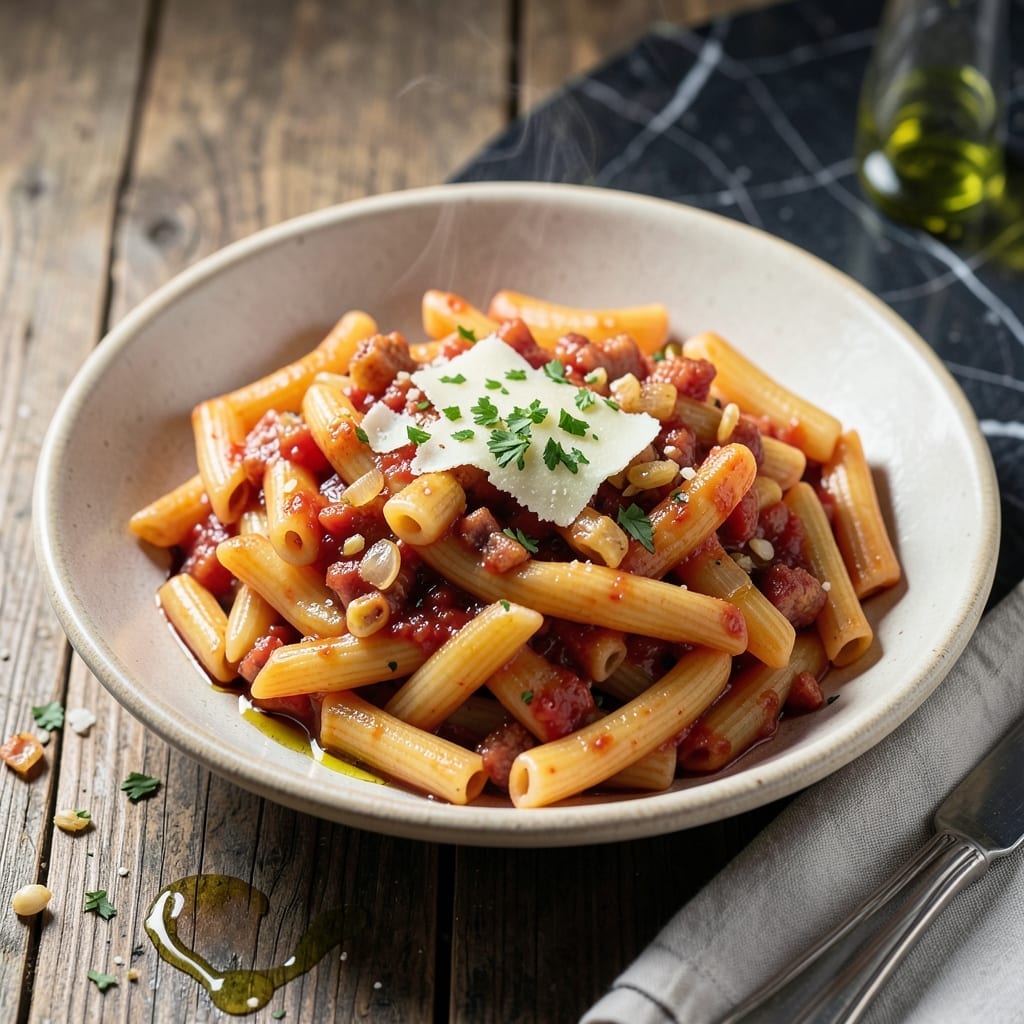
This classic Roman dish brings authentic Italian flavor to your kitchen with its rich tomato sauce and crispy pancetta.
The thick bucatini perfectly holds the savory sauce, creating a dish that’s both hearty and traditionally satisfying.
Ingredients for Recipe for Bucatini All’amatriciana
Classic Roman flavors start with thick bucatini and quality pancetta. Simple but bold.
| Ingredient | Amount | Notes |
|---|---|---|
| Bucatini Pasta 🍝 | 1 lb | Thick spaghetti-like strands preferred |
| Pancetta 🥓 | 4 oz | Diced, Italian cured pork belly |
| San Marzano Canned Tomatoes 🍅 | 1 can | 28 oz can, whole peeled preferred |
| Yellow Onion 🧅 | 1 whole | Medium, finely diced |
| Garlic Cloves 🧄 | 2 cloves | Minced for sauce |
| Dry Red Wine 🍷 | ½ cup | Bold and dry variety |
| Pecorino Romano Cheese 🧀 | 1 cup | Freshly grated from block |
| Red Pepper Flakes 🌶️ | ½ tsp | Adjust for heat preference |
| Extra-Virgin Olive Oil 🫒 | 3 tbsp | For sautéing and finishing |
| Kosher Salt 🧂 | 1 tsp | Diamond Crystal preferred |
| Freshly Ground Black Pepper 🌶️ | ½ tsp | Coarsely ground for texture |
| Fresh Parsley 🌿 | ¼ cup | Chopped, for garnish |
[recipe_ingredient_scaler]
The pancetta is non-negotiable here—Eataly or a good Italian deli will have the real deal (not just bacon). San Marzano tomatoes are the gold standard (look for the DOP label), but any good whole peeled tomatoes work in a pinch. Pecorino Romano has that sharp, salty bite that makes this dish sing. Shred it fresh; the pre-grated stuff has anti-caking agents that mute the flavor.
No pancetta? Thick-cut bacon is your best backup—just know it’s smokier. No wine? Substitute beef broth with a splash of balsamic vinegar. Out of Pecorino? Parmigiano-Reggiano works, but cut the salt a bit since it’s milder. The red pepper flakes can be omitted, but the dish will miss that signature Amatriciana kick (don’t skip it unless you really hate heat).
This keeps 3-4 days in the fridge, but the pasta soaks up the sauce the longer it sits. Freezes okay, but the bucatini can get mushy—undercook it by a minute if you plan to freeze. Reheat gently with a splash of water or wine to loosen the sauce.
Why You’ll Love This Recipe
- One-Pot Wonder: I love that this comes together in a single pan—just pancetta, tomatoes, and garlic simmering while the bucatini boils.
- Crave-Worthy Depth: The San Marzano tomatoes and crispy pancetta create this rich, slightly smoky sauce that clings to every strand.
- Weeknight Hero: Honestly, it’s my go-to for busy evenings when I need something hearty but not complicated.
- Budget-Friendly Feast: Pancetta stretches further than you’d think, and a can of tomatoes feeds four generously.
Step-by-Step Instructions for Bucatini All’Amatriciana
This Roman classic comes together with a few key steps and some patience.
Step 1: Render the Pancetta and Build the Base
Heat 3 tbsp extra-virgin olive oil in a large, heavy skillet over medium-low heat. Add the 4 oz diced pancetta and cook slowly for 8-10 minutes, stirring occasionally, until the fat has rendered out and the meat turns golden and crispy.
This slow rendering process is crucial—it builds a flavor foundation. Don’t rush it by cranking up the heat, or the pancetta will burn before the fat releases. You should have about 2-3 tbsp of rendered fat in the pan when it’s done.
Step 2: Sauté Aromatics and Deglaze with Wine
Add the finely diced 1 whole yellow onion to the pancetta and its fat. Cook for 5-6 minutes until translucent and soft, stirring frequently. Then add the minced 2 cloves garlic cloves and 0.5 tsp red pepper flakes, and cook for 1 minute until fragrant.
Pour in the 0.5 cup dry red wine and increase heat to medium-high. Simmer for 3-4 minutes until the liquid reduces by half, scraping up any browned bits from the bottom of the pan. This deglazing step incorporates all the concentrated flavors into your sauce.
Step 3: Simmer the Tomatoes and Develop the Sauce
Add the 1 can San Marzano canned tomatoes, crushing them by hand as they go into the pan. Stir in 1 tsp kosher salt and 0.5 tsp freshly ground black pepper. Reduce heat to medium-low and let the sauce simmer uncovered for 20-25 minutes.
You want the sauce to thicken and concentrate—it should reduce by about a third. Stir occasionally and break up any large tomato pieces with your wooden spoon. The sauce is ready when it’s rich and brick-red, with the oil slightly separated on the surface.
Step 4: Cook the Pasta and Combine
While the sauce simmers, bring a large pot of salted water to a boil. Add the 1 lb bucatini pasta and cook according to package directions until al dente (about 1 minute less than suggested cook time). Reserve 1 cup of pasta water before draining.
Transfer the cooked bucatini directly into the skillet with the sauce. Add ½ cup of the reserved pasta water and toss everything together over medium heat for 1-2 minutes. The starchy pasta water helps the sauce cling beautifully to the strands.
Remove from heat and stir in ½ cup of the 1 cup pecorino romano cheese, reserving the rest for serving. The cheese should melt into the sauce, creating a creamy, cohesive coating for the pasta.
Step 5: Plate and Garnish
Divide the bucatini among four warm bowls. Top each serving with the remaining ½ cup pecorino romano cheese and a sprinkle of the 0.25 cup fresh parsley. The cheese will melt slightly from the heat of the pasta, creating a beautiful finish.
Let the dishes rest for 2 minutes before serving. This allows the flavors to meld and the cheese to soften just enough. The final dish should have a glossy, rich sauce clinging to every strand of pasta with visible flecks of pancetta throughout.
Pro Tips For Making Recipe For Bucatini All’Amatriciana
- Render the Pancetta First: Start the pancetta in a cold pan over medium-low heat to render the fat slowly—I learned this the hard way after burning three batches at high heat. The fat will crisp up evenly and create a rich base for the sauce.
- Crush the Tomatoes: Use your hands to crush the San Marzano tomatoes as you add them to the pan. Sounds weird, but it works: this breaks them down just enough for a chunkier, more rustic texture without turning it into a smooth puree.
- Salt the Pasta Water: Use about 1 tablespoon of salt per quart of water—yes, it seems like a lot, but bucatini needs that bold seasoning to carry the rich pancetta and tomato sauce.
- Reserve Pasta Water Early: Before draining the bucatini, scoop out at least 1 cup of the starchy cooking water. I skip this when I’m lazy, but the dish is noticeably better when I don’t—it helps the sauce cling to the pasta.
Troubleshooting This Dish
Sauce Too Watery
If your sauce isn’t thickening after 20 minutes, increase heat to medium and cook uncovered. I find crushing the tomatoes more by hand helps release their juices faster. You can also mash them with a potato masher for quicker reduction. 💡
Pancetta Not Crispy
Pancetta needs slow cooking over medium-low heat for 8-10 minutes. If it’s not crisping, resist the urge to turn up the heat. Instead, spread the pieces in a single layer and give them more time to render their fat.
Pasta Sticks Together
Always use plenty of water—at least 4 quarts for 1 lb of bucatini. Stir frequently during the first 2 minutes of cooking. If it still sticks, add 1 tbsp olive oil to the boiling water before adding pasta.
Sauce Too Salty
Pecorino Romano is naturally salty. If your dish tastes too salty, add ½ cup pasta water and stir. The starch helps balance the saltiness. Taste before adding any additional salt to the sauce during cooking.
Bland Flavor
Did you use quality San Marzano tomatoes? If not, add a pinch of sugar to balance acidity. Also, ensure you’re using 4 oz pancetta—it’s the primary flavor base. A splash of red wine vinegar at the end can brighten the sauce. 🔥
Cheese Not Melting
Pecorino Romano melts best when freshly grated. If it’s clumping, remove the pan from heat and stir in 1-2 tbsp pasta water to help distribute it evenly. Pre-grated cheese often contains anti-caking agents that prevent smooth melting.
Nutrition Facts
Frequently Asked Questions
Can I substitute bacon for pancetta?
Yes, thick-cut bacon works in a pinch, but expect a smokier flavor. Use the same 4 oz amount and render it slowly over medium-low heat for 8-10 minutes to mimic pancetta’s texture.
Why is my sauce too acidic?
San Marzano tomatoes can vary in acidity. Balance it with a pinch of sugar or extra pecorino romano cheese. Simmering longer also helps mellow the sharpness.
How do I prevent the pasta from absorbing all the sauce?
Cook bucatini 1 minute less than package instructions, then finish it in the sauce with ½ cup pasta water. This keeps the strands perfectly coated.
Can I make this dish ahead of time?
Yes! Prepare the sauce up to 2 days ahead and store it in the fridge. Cook the pasta fresh and combine just before serving to avoid mushiness.

Trained in classic French technique but raised on slow-cooked ribs and spicy rubs, she blends culinary skill with smoke and soul.
- Recipe for Boneless Pork Chops in Cast Iron Skillet: Sear and Baste to Juicy Perfection - October 3, 2026
- Recipe for Boneless Cross Rib Roast: Slow-Roasted Beef with Herb Crust - October 3, 2026
- Hamburgers in Sauce Recipe Crock Pot: Slow-Cooked Savory Delight - October 3, 2026