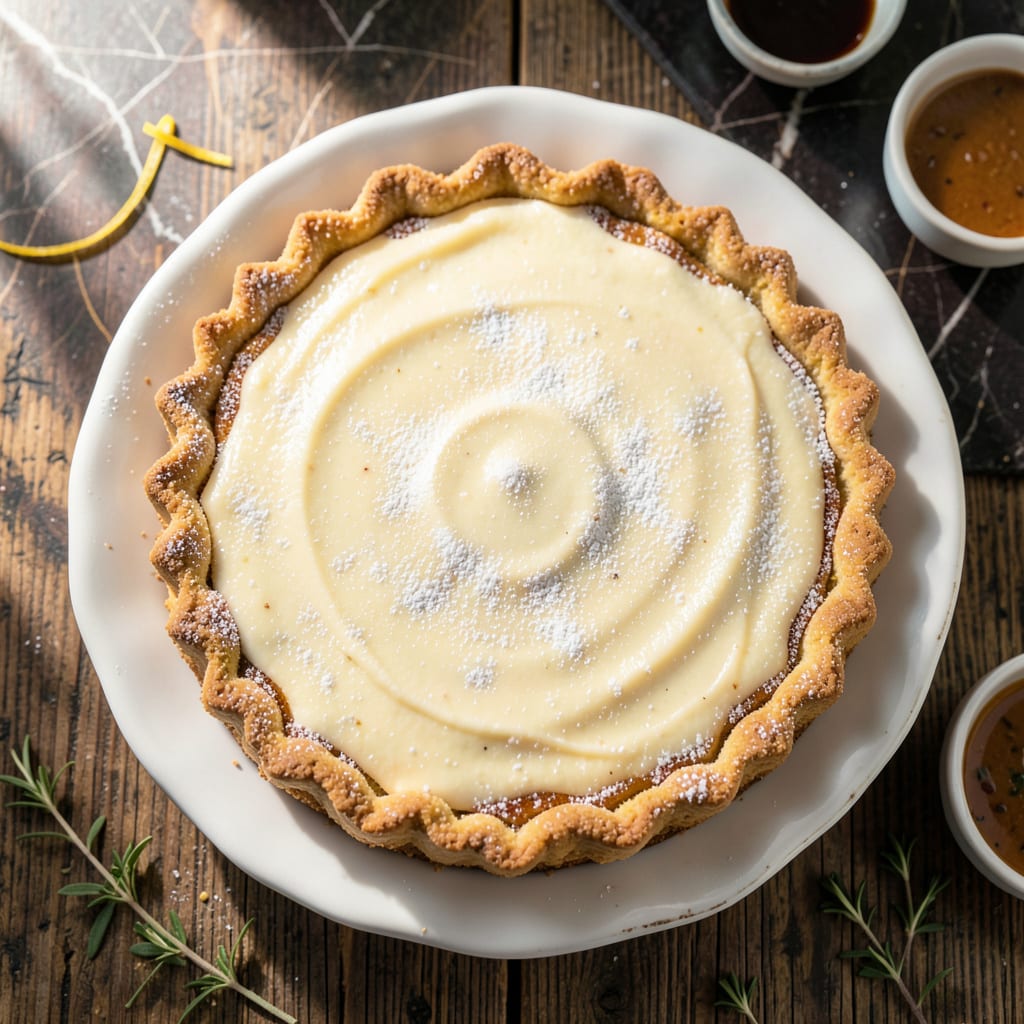
This chess cake delivers gooey, buttery layers that melt in your mouth. I perfected this recipe by decoding my grandmother’s vague notes into precise measurements anyone can follow.
Baked in a standard 9×13 pan, it creates a golden crust with a custard-like center. The simplicity of the ingredients belies the complex, irresistible texture that defines this classic dessert.
Ingredients for Recipe for Chess Cake
Simple ingredients, extraordinary texture. Grandma’s secret is in the layers.
| Ingredient | Amount | Notes |
|---|---|---|
| All-Purpose Flour 🌾 | 2 cups | Sifted for smooth texture |
| Granulated Sugar 🍚 | 2 cups | Fine white sugar preferred |
| Unsalted Butter 🧈 | 1 lb | Melted and cooled slightly |
| Large Eggs 🥚 | 4 whole | Room temperature for best results |
| Vanilla Extract 🌿 | 2 tsp | Pure vanilla, not imitation |
| Baking Powder 🧂 | 2 tsp | Check expiration date for potency |
| Salt 🧂 | ½ tsp | Fine sea salt or table salt |
| Yellow Cornmeal 🌽 | 2 tbsp | Fine grind for texture |
| Whole Milk 🥛 | ¼ cup | Room temperature for even mixing |
| Powdered Sugar 🍚 | ½ cup | For dusting finished cake |
[recipeingredientscaler]
The butter is everything here—Land O’Lakes unsalted is my go-to (the color tells you it’s fresh). Cornmeal adds that signature crumb, and Bob’s Red Mill fine grind works perfectly. Don’t skip sifting the flour (yes, even if it’s pre-sifted) because it prevents dense layers. I buy my vanilla in bulk from Costco—better price per ounce than those tiny bottles.
No yellow cornmeal? Fine white cornmeal works too—just don’t use coarse. Out of whole milk? 2% in a pinch, but the fat matters for richness. Need to make it ahead? Mix dry ingredients the night before. And if you’re feeling fancy, brown the butter first—adds a nutty depth that’s next-level.
Baked cake stays fresh 3-4 days at room temp, covered. Leftovers? Dust with powdered sugar before serving. Freezes beautifully for up to 3 months—slice first, then wrap individually. That crust stays crisp if you warm slices briefly.
Why You’ll Love This Recipe
- I’ll be real: leftovers taste just as good the next day, if they even last that long.
- One Bowl Wonder: I mix everything right in a single bowl—flour, sugar, butter, eggs, vanilla—no fancy equipment needed.
- Buttery Vanilla Magic: The butter and vanilla create this rich, melt-in-your-mouth flavor that’s both sweet and comforting.
- Feeds a Crowd: Honestly, it’s my go-to for potlucks, picnics, or just a lazy Sunday dessert.
Step-by-Step Instructions for Chess Cake
Here’s the method I use for perfect layers every time in a standard baking pan.
Step 1: Prepare the Crust Base
Preheat your oven to 350°F. In a medium bowl, whisk together the 2 cups All-Purpose Flour, 2 tbsp Yellow Cornmeal, and 0.5 tsp Salt until evenly combined. The cornmeal adds that signature texture to the base layer.
Cut in ½ lb of the 1 lb Unsalted Butter (cold, not melted) using a pastry cutter or fork until the mixture resembles coarse crumbs. Press this evenly into a greased 9×13-inch pan, creating a firm, even layer. Bake for 15 minutes until the edges just begin to turn light golden brown.
Step 2: Make the Gooey Filling
While the crust bakes, beat the remaining ½ lb Unsalted Butter (melted and cooled) with the 2 cups Granulated Sugar until smooth. Add the 4 whole Large Eggs one at a time, beating well after each addition. This ensures the filling has that rich, custard-like consistency.
Stir in the 2 tsp Vanilla Extract, 2 tsp Baking Powder, and 0.25 cup Whole Milk until just combined. The baking powder gives the filling a slight lift while keeping it dense and gooey. Pour this mixture over the hot crust—don’t let the crust cool completely, as the heat helps the layers bond.
Step 3: Bake Until Set
Return the pan to the 350°F oven and bake for 40-45 minutes. You’re looking for the center to be set but still have a slight jiggle when gently shaken. The top should be golden brown with a few darker spots—this indicates the sugars have caramelized slightly.
Real talk: If the top browns too quickly, tent the pan with foil for the last 10-15 minutes of baking. This prevents over-browning while allowing the center to finish cooking. The edges will pull away slightly from the pan when it’s done.
Step 4: Cool and Dust with Powdered Sugar
Let the cake cool completely in the pan on a wire rack—this takes about 2 hours. I know it’s hard to wait, but cooling allows the layers to set properly. If you cut too soon, the filling will ooze out instead of holding its shape.
Once cooled, dust the top evenly with the 0.5 cup Powdered Sugar. Use a fine-mesh sieve for an even, professional-looking finish. The contrast between the white dusting and the golden cake is what makes chess cake so visually appealing. Slice into squares and serve at room temperature.
Pro Tips For Making Recipe For Chess Cake
- Room Temp Ingredients: Pull your eggs, butter, and vanilla out 1-2 hours before baking—cold ingredients don’t cream properly and you’ll end up with a dense cake.
- Cream Thoroughly: Beat the butter and sugar for a full 3-4 minutes until it’s pale and fluffy; I learned this the hard way after my first few cakes came out flat.
- Skip Overmixing: Once you add the flour, mix just until the streaks disappear—any longer and you’ll develop gluten, making the cake tough instead of tender.
- Check Early: Start testing for doneness at 35 minutes with a toothpick; chess cake bakes fast and can go from perfect to dry in the blink of an eye.
Common Mistakes When Making recipe for chess cake
Overmixing the Filling
Beating the filling too much after adding flour can develop gluten, making your cake dense instead of tender. I mix just until the dry ingredients disappear—about 15-20 strokes with a spatula. The batter should look slightly lumpy, not smooth. 💡
Cold Ingredients
Using cold eggs or milk can cause the melted butter to solidify, creating a greasy texture. I always take my 4 large eggs and ¼ cup whole milk out 1 hour before baking. Room temperature ingredients emulsify better for a silky filling.
Underbaked Crust
The base needs that 15-minute head start at 350°F to set properly. If it’s pale when you add the filling, the bottom will be gummy. Look for those light golden edges—that’s your signal it’s ready for the topping.
Skipping the Tent
If your top browns before the center sets, cover loosely with foil. I start checking at 30 minutes and tent if needed. This prevents a burnt top while the custard layer finishes cooking through. ⏰
Cutting Too Soon
This cake needs 2 full hours to cool completely. I’ve ruined many a batch by slicing after 30 minutes—the filling just runs out. The waiting is painful, but the layers won’t hold otherwise.
Wrong Pan Size
A 9×13-inch pan is non-negotiable. Using an 8×8 makes the layers too thick and they won’t cook evenly. Glass or light-colored metal pans work best for even browning.
Nutrition Facts
Frequently Asked Questions
Why does my filling look runny?
It needs the full 2 hours to cool completely in the pan. The custard layer sets as it cools, so resist the urge to slice early.
Can I use a different pan size?
No, a 9×13-inch pan is essential for even cooking. Smaller pans create thick layers that won’t bake through properly.
What if the top browns too fast?
Tent the pan loosely with foil after 30 minutes. This prevents burning while the center finishes baking.
How do I know when it’s done?
The center should jiggle slightly when shaken, and edges pull away from the pan. Expect 40-45 minutes at 350°F.

Trained in classic French technique but raised on slow-cooked ribs and spicy rubs, she blends culinary skill with smoke and soul.
- Recipe for Boneless Pork Chops in Cast Iron Skillet: Sear and Baste to Juicy Perfection - October 3, 2026
- Recipe for Boneless Cross Rib Roast: Slow-Roasted Beef with Herb Crust - October 3, 2026
- Hamburgers in Sauce Recipe Crock Pot: Slow-Cooked Savory Delight - October 3, 2026