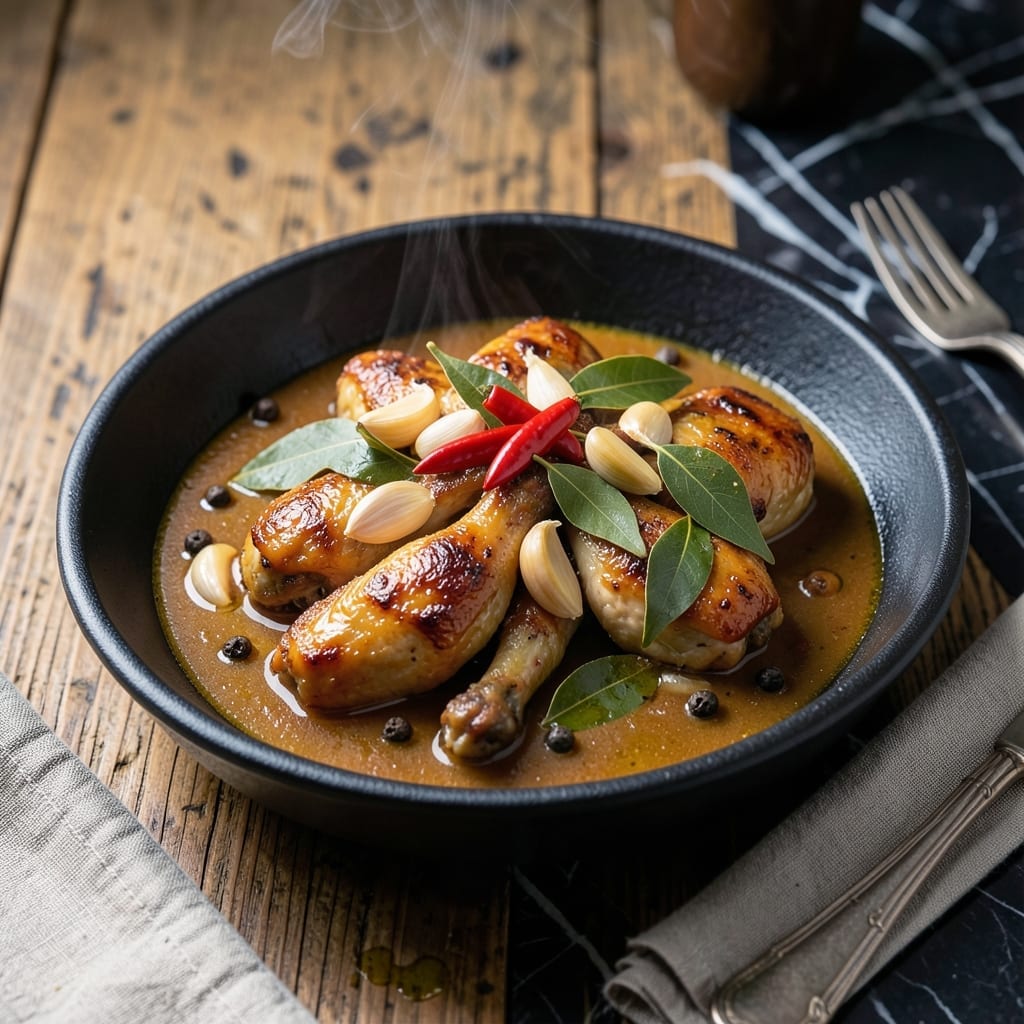
This traditional Filipino dish delivers perfectly balanced sweet, sour, and savory flavors in every bite.
Tender chicken thighs braise in a tangy garlic-soy sauce until fall-off-the-bone tender, creating a dish that’s both comforting and deeply flavorful.
Ingredients for Recipe for Chicken Adobo Tagalog
These authentic Filipino ingredients create a perfectly balanced braise with tangy depth.
| Ingredient | Amount | Notes |
|---|---|---|
| Chicken Thighs 🍗 | 2 lb | Boneless, skin-on preferred |
| Soy Sauce 🫒 | ¾ cup | Use Filipino brands like Silver Swan or Datu Puti |
| White Vinegar 💧 | ½ cup | Cane vinegar for authenticity |
| Garlic Cloves 🧄 | 12 cloves | Peeled, left whole for braising |
| Bay Leaves 🍃 | 3 whole | Dried, crumbled before use |
| Black Peppercorns 🌶️ | 1 tbsp | Lightly crushed for aroma |
| Brown Sugar 🍯 | 2 tbsp | Light or dark, for balance |
| Water 💧 | 1 cup | For braising liquid |
| Cooking Oil 🫒 | 2 tbsp | Neutral oil like vegetable or canola |
| Onion 🧅 | 1 whole | Medium, sliced into rings |
| Salt 🧂 | ½ tsp | Adjust to taste at end |
[recipe_ingredient_scaler]
The soy sauce is critical—Silver Swan or Datu Puti are the gold standard for Filipino adobo. Most Asian grocery stores carry them, or order online. Chicken thighs are non-negotiable here; their fat renders into the sauce, creating that signature richness. Look for skin-on, bone-in for the most flavor (remove skin if preferred). The vinegar should be white cane vinegar, not apple cider or white wine—it’s milder and lets the soy shine.
No Filipino soy sauce? Japanese or Chinese soy sauces work, but reduce salt elsewhere—they’re often saltier. Out of cane vinegar? White vinegar in a pinch (just add a pinch of sugar to mellow). Bay leaves can be fresh or dried, but dried hold up better during braising. For a sweeter profile, increase brown sugar to 3 tbsp. The garlic count isn’t negotiable—it’s the soul of the dish.
Leftovers taste even better the next day—3-4 days in the fridge, 3 months frozen. Reheat gently to preserve the sauce’s consistency. The vinegar’s tang mellows over time, so if serving immediately, let it sit 10 minutes off heat before eating (or the vinegar will overpower).
Why You’ll Love This Recipe
- One-Pan Wonder: I just toss chicken thighs, soy sauce, vinegar, and garlic into a pan and let it simmer—no fancy techniques, no extra dishes.
- Tangy Garlic Bomb: The soy-vinegar mix with loads of garlic creates this rich, tangy sauce that soaks right into the meat.
- Lunchbox Hero: It reheats beautifully, so I pack leftovers for work or school lunches all week long.
- Budget Stretcher: Chicken thighs stay juicy and cheap, and a little soy sauce goes a long way to feed my whole family.
Step-by-Step Instructions for Chicken Adobo Tagalog
Master the art of this classic Filipino dish with precise timing and technique.
Step 1: Sear the Chicken Thighs for Depth of Flavor
Heat the 2 tbsp Cooking Oil in a large, heavy pot over medium-high heat. Pat the 2 lb Chicken Thighs dry with paper towels to ensure a proper sear. When the oil shimmers, add the chicken skin-side down in a single layer, being careful not to overcrowd the pot.
Sear undisturbed for 5-6 minutes until the skin turns deep golden brown and crisp. Flip and sear the other side for another 3-4 minutes. This step builds a flavor foundation and renders fat for the sauce. Remove the chicken and set aside.
Step 2: Build the Aromatic Base
In the same pot, reduce heat to medium. Add the sliced 1 whole Onion and cook for 3 minutes until softened and translucent. Add the 12 cloves Garlic Cloves and cook for 1 minute, stirring constantly to prevent burning.
The garlic should release its fragrance without browning. Stir in the 1 tbsp Black Peppercorns and 3 whole Bay Leaves, toasting them briefly for 30 seconds to awaken their aromas. This creates the aromatic backbone of your adobo.
Step 3: Create the Braising Liquid
Pour in the 0.75 cup Soy Sauce, 0.5 cup White Vinegar, 1 cup Water, and 2 tbsp Brown Sugar. Stir to combine and deglaze the pot, scraping up all the browned bits from the bottom. These fond bits dissolve into the liquid, adding immense depth of flavor.
Bring the mixture to a gentle boil, then reduce heat to maintain a steady simmer. The vinegar’s sharpness will mellow as it cooks, balancing the soy sauce’s saltiness. Return the chicken to the pot, skin-side up, along with any accumulated juices.
Step 4: Braise to Perfection
Cover the pot and simmer gently for 35-40 minutes, occasionally spooning the braising liquid over the chicken. The chicken is done when it reaches an internal temperature of 165°F and the meat pulls away from the bone easily.
Uncover and simmer for an additional 5-10 minutes to reduce the sauce slightly and concentrate the flavors. The sauce should coat the back of a spoon but still be fluid enough to pour. Taste and adjust seasoning with the 0.5 tsp Salt if needed.
Step 5: Rest and Serve
Remove from heat and let the chicken rest in the sauce for 10 minutes. This allows the flavors to meld and the meat to reabsorb some of the braising liquid. The sauce will thicken slightly as it cools.
Serve hot over steamed rice, spooning the rich, tangy sauce generously over each piece. The chicken should be fall-off-the-bone tender with skin that’s still slightly crisp at the edges. The sauce will have a perfect balance of salty, tangy, and slightly sweet notes characteristic of authentic Tagalog adobo.
Pro Tips For Making Recipe For Chicken Adobo Tagalog
- Simmer, Don’t Boil: I learned this the hard way—let the sauce gently simmer for 25-30 minutes so the vinegar mellows and the chicken stays tender. Boiling hard makes the meat tough and the adobo bitter.
- Marinate First: Toss the chicken thighs with soy sauce, crushed garlic, and bay leaves for at least 30 minutes before cooking. Sounds like an extra step, but it deepens the flavor in every bite.
- Balance the Acid: Always use equal parts soy sauce and white vinegar—about ½ cup each for 2 lbs of thighs. Too much vinegar and the dish will be harsh; too little and it loses that tangy adobo soul.
- Use Thighs, Not Breast: Chicken thighs stay juicy even after long simmering, while breast meat tends to dry out. I tried both—thighs win every time for this dish.
Wine and Beer Pairings for This recipe for chicken adobo tagalog
White Wine Pairings
An off-dry Riesling from Germany or Washington state works beautifully with this dish. Its subtle sweetness balances the adobo’s tangy-soy sauce while its acidity cuts through the richness. I recommend Chateau Ste. Michelle for an accessible option.
Red Wine Options
A light-bodied Pinot Noir from Oregon or Burgundy offers earthy notes that complement the garlic and soy without overwhelming them. The 2021 Domaine Drouhin is a personal favorite with its bright acidity and red fruit profile. 🍷
Filipino Beer Pairings
San Miguel Pale Pilsen is the classic choice—its crisp, clean profile refreshes your palate between bites. The carbonation helps cut through the dish’s richness while the light malt flavor doesn’t compete with the adobo’s complexity.
Craft Beer Alternatives
For craft beer lovers, a Belgian-style witbier like Allagash White brings citrus and spice notes that echo the dish’s garlic and peppercorns. Its creamy texture also complements the sauce beautifully. 🍺
Non-Alcoholic Pairings
A sparkling calamansi juice offers the perfect Filipino touch with its unique citrus flavor. Or try ginger beer for a spicy kick that stands up to the bold adobo flavors. The effervescence cleanses your palate between bites.
Nutrition Facts
Frequently Asked Questions
Can I use chicken breast instead of thighs?
Thighs are ideal for their fat content and tenderness, but breasts work if cooked carefully. Reduce braising time to 25-30 minutes to prevent dryness. Add 1/4 cup extra water to compensate for leaner meat.
Why does the sauce turn watery?
This happens if the lid is kept on during the final reduction. Uncover and simmer for 5-10 minutes to thicken. For faster results, remove chicken and boil sauce separately before recombining.
Can I make this in a slow cooker?
Yes! Sear chicken first, then transfer to slow cooker with all ingredients. Cook on low for 6-7 hours or high for 3-4 hours. Finish with 10 minutes of stovetop reduction for best texture.
How do I fix overly salty adobo?
Add 1/4 cup water and 1 tbsp brown sugar, then simmer for 5 minutes. For severe cases, serve with extra rice to balance the flavors. The vinegar will also mellow the saltiness over time.

Trained in classic French technique but raised on slow-cooked ribs and spicy rubs, she blends culinary skill with smoke and soul.
- Recipe for Boneless Pork Chops in Cast Iron Skillet: Sear and Baste to Juicy Perfection - October 3, 2026
- Recipe for Boneless Cross Rib Roast: Slow-Roasted Beef with Herb Crust - October 3, 2026
- Hamburgers in Sauce Recipe Crock Pot: Slow-Cooked Savory Delight - October 3, 2026