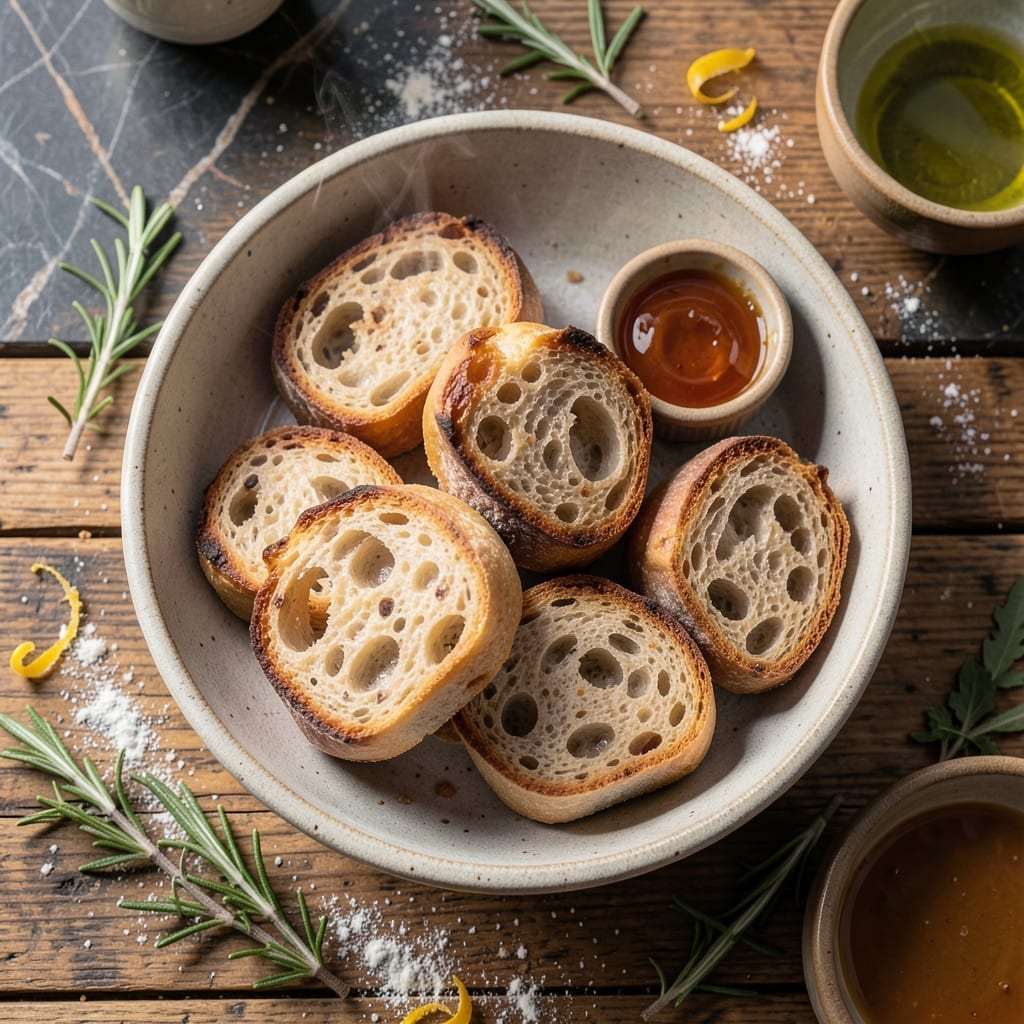
Achieving perfectly airy centers with crusty exteriors is the hallmark of authentic ciabatta. This recipe delivers professional results through precise hydration and proofing techniques.
With a wet dough and patient rising time, you’ll create rolls that are light and open inside with a crisp, golden crust. The process is straightforward but requires attention to detail.
Ingredients for Recipe for Ciabatta Bread Rolls
Professional results require precise ingredients and proper technique for authentic ciabatta rolls at home.
| Ingredient | Amount | Notes |
|---|---|---|
| Bread Flour 🌾 | 3 ½ cups | High-protein for structure |
| Active Dry Yeast 🍞 | 1 ¼ tsp | Or instant yeast same amount |
| Kosher Salt 🧂 | 2 tsp | Diamond Crystal preferred |
| Warm Water 💧 | 1 ¾ cups | 110-115°F for activation |
| Extra-Virgin Olive Oil 🫒 | 2 tbsp | Plus extra for greasing |
| Honey 🍯 | 1 tsp | Optional for yeast activation |
| Semolina Flour 🌾 | ¼ cup | For dusting work surface |
| All-Purpose Flour 🌾 | ½ cup | For initial mixing |
| Cornmeal 🌽 | 2 tbsp | For baking sheet dusting |
| Ice Cubes ❄️ | 4 pieces | For steam in oven |
[recipe_ingredient_scaler]
Bread flour is non-negotiable here. King Arthur or Bob’s Red Mill deliver the protein content needed for that open crumb structure. The yeast must be fresh—check the expiration date. Diamond Crystal kosher salt dissolves evenly, crucial for consistent flavor distribution. Warm water temperature is critical; too hot kills yeast, too cold slows activation. Invest in a thermometer if you’re serious about bread baking.
No bread flour? All-purpose with 1 tbsp vital wheat gluten per cup gets you close. Out of honey? Sugar or maple syrup works equally well for yeast activation. Semolina flour adds texture but fine cornmeal can substitute in a pinch. Olive oil quality matters—use something you’d dress a salad with. The ice cubes create essential steam; skip them and your crust won’t develop that signature crunch.
Store yeast in the freezer for maximum shelf life. Flour keeps 6-12 months in a cool, dark place. The dough requires a long, slow proof—don’t rush it. Baked rolls are best day-of but reheat beautifully wrapped in foil at 350°F for 10 minutes.
Why You’ll Love This Recipe
- No-Knead Magic: I mix the dough in one bowl, let it rise, and the yeast does all the work—no fancy techniques.
- Olive Oil Luxury: That drizzle of extra-virgin olive oil gives the rolls a rich, golden crust and a tender, open crumb.
- Sandwich Star: I use these rolls for everything from hearty meatball subs to simple tomato and mozzarella—so versatile.
- Budget Bake: Bread flour and yeast are cheap, and this makes a big batch that freezes beautifully for later.
Step-by-Step Instructions for Ciabatta Bread Rolls
Master the technique for achieving the signature open crumb and crisp crust of this Italian classic.
Step 1: Activate Yeast and Create Biga
In a large mixing bowl, whisk together the 1.75 cups warm water, 1.25 tsp active dry yeast, 1 tsp honey, and 0.5 cup all-purpose flour. The water should be between 110-115°F—hot enough to activate the yeast without killing it.
Cover with a damp towel and let stand for 15-20 minutes until the mixture becomes foamy and slightly bubbly. This biga (pre-ferment) develops deep flavor and improves the bread’s texture. The surface should look lively with visible fermentation activity.
Step 2: Develop the Dough with High-Hydration Technique
Add the 3.5 cups bread flour and 2 tsp kosher salt to the biga. Mix with a wooden spoon until a shaggy dough forms. Then incorporate the 2 tbsp extra-virgin olive oil. The dough will be very sticky—this high hydration is essential for ciabatta’s characteristic open crumb.
Transfer to a floured surface dusted with 0.25 cup semolina flour and perform a series of stretch-and-fold motions over 8-10 minutes. You’ll notice the dough becomes more cohesive and elastic with each fold. Resist the urge to add more flour; the stickiness is intentional.
Step 3: First Rise and Structure Building
Lightly oil a clean bowl, place the dough inside, and cover with a damp towel. Let rise at room temperature for 1.5-2 hours until nearly doubled in volume. The dough should look puffy with visible air bubbles beneath the surface.
Perform another series of stretch-and-folds after the first hour to strengthen the gluten network. This step ensures your rolls will have that desirable chewy texture and large, irregular holes characteristic of authentic ciabatta.
Step 4: Shape, Second Rise, and Oven Preparation
Turn the dough onto a surface dusted with 0.25 cup semolina flour and divide into 4 equal portions. Gently shape each into an oval roll, being careful not to deflate the air bubbles. Place on a baking sheet dusted with 2 tbsp cornmeal.
Cover and let rise for 45-60 minutes until puffy. Meanwhile, preheat your oven to 450°F with a baking stone or inverted baking sheet inside. Place a metal pan on the lower rack for steam generation.
Step 5: Bake with Steam for Professional Results
When ready to bake, toss the 4 pieces ice cubes into the preheated metal pan to create steam. Transfer the rolls to the preheated stone or baking sheet. The steam prevents a crust from forming too quickly, allowing maximum oven spring.
Bake for 20-25 minutes until the rolls are deep golden brown and sound hollow when tapped on the bottom. The crust should be crisp and the interior should have large, irregular holes. Cool on a wire rack for at least 30 minutes before serving to allow the structure to set properly.
Pro Tips For Making Recipe For Ciabatta Bread Rolls
- Proof Overnight: Let the dough rise in the fridge for 12-18 hours—this slow fermentation develops deeper flavor and a better crumb structure.
- Use High-Protein Flour: Bread flour (12-14% protein) is non-negotiable here; all-purpose just won’t give you that chewy, open texture ciabatta is known for.
- Skip Dry Yeast Shortcuts: I learned this the hard way—don’t rush the yeast by using water that’s too hot; 110°F is the sweet spot to activate it without killing it.
- Oil the Bowl Well: Coat your rising bowl with about 1 tablespoon of olive oil to prevent sticking—ciabatta dough is sticky, and this makes a real difference when shaping.
Best Sauces and Condiments for This Dish
Classic Olive Oil Dip
Mix ½ cup extra-virgin olive oil with 1 tsp balsamic vinegar, ½ tsp flaky sea salt, and ¼ tsp black pepper. This simple combination enhances the bread’s natural flavor without overpowering it. I use Colavita olive oil for its fruity notes. 🫒
Herb-Infused Options
Warm ½ cup olive oil with 3 smashed garlic cloves and 1 tbsp fresh rosemary for 5 minutes. Strain and serve warm. Alternatively, blend ¼ cup olive oil with 2 tbsp chopped basil and 1 minced garlic clove for a fresh herb dip.
Spicy Red Pepper
Combine ½ cup olive oil with 1 tbsp crushed red pepper flakes and 1 tsp smoked paprika. Heat gently for 2 minutes to infuse. The heat cuts through the bread’s richness beautifully. I love this with a sprinkle of Parmesan on top.
Balsamic Glaze
Simmer ½ cup balsamic vinegar until reduced by half—about 10-12 minutes. Drizzle over warm rolls for a sweet-tart contrast. Add 1 tsp honey during reduction for extra sweetness. This pairs especially well with the crusty exterior. ✨
Garlic Butter Spread
Mix ½ cup softened butter with 2 minced garlic cloves, 1 tbsp parsley, and ¼ tsp salt. Spread on warm rolls for a rich, savory treat. I use European-style butter for its higher fat content.
Pesto Variation
Blend 2 cups fresh basil, ¼ cup pine nuts, ½ cup Parmesan, and ½ cup olive oil for a classic pesto. The nutty, herby flavors complement the bread’s airy texture perfectly. Store-bought pesto works in a pinch.
Nutrition Facts
Frequently Asked Questions
Why is my dough so sticky?
High hydration is key for ciabatta’s open crumb. The dough should be very sticky—this is normal! Use wet hands and a dough scraper to handle it.
Can I use all-purpose flour instead?
Yes, but add 1 tbsp vital wheat gluten per cup to boost protein content. Bread flour gives the best structure, but this substitution works in a pinch.
How do I know when it’s fully baked?
Look for a deep golden brown crust and a hollow sound when tapped. Internal temperature should reach 205-210°F.
Why didn’t my rolls develop big holes?
Insufficient proofing or over-handling the dough can prevent large air pockets. Ensure a long, slow rise and handle gently during shaping.

Trained in classic French technique but raised on slow-cooked ribs and spicy rubs, she blends culinary skill with smoke and soul.
- Recipe for Boneless Pork Chops in Cast Iron Skillet: Sear and Baste to Juicy Perfection - October 3, 2026
- Recipe for Boneless Cross Rib Roast: Slow-Roasted Beef with Herb Crust - October 3, 2026
- Hamburgers in Sauce Recipe Crock Pot: Slow-Cooked Savory Delight - October 3, 2026