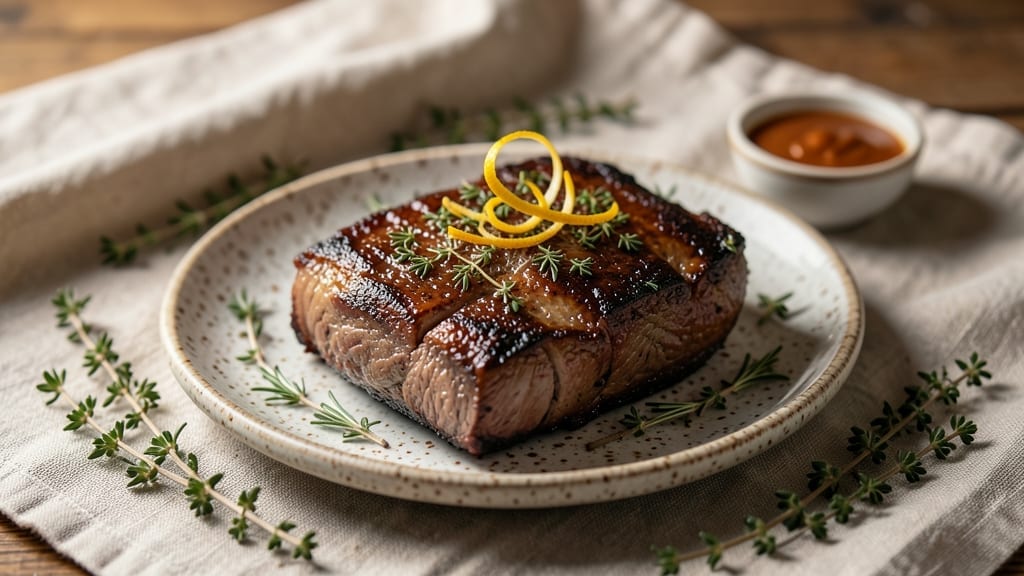
Mastering a recipe for cooking a brisket transforms tough, lean meat into melt-in-your-mouth perfection through precision and patience. The low-and-slow method—smoking at 225°F for 12+ hours—is the key to achieving that signature tenderness that makes brisket a centerpiece for gatherings.
I’ve perfected this technique over countless hours in the smokehouse, ensuring every bite delivers the right balance of smoky flavor and buttery texture.
The secret lies in the preparation: a well-trimmed brisket, a dry rub of salt, pepper, and spices, and the right wood for smoking—hickory or oak work best. This method isn’t just about time; it’s about control.
Monitoring the internal temperature and wrapping the brisket in foil at the right moment locks in moisture, preventing dryness while allowing the bark to form. The result? A brisket so tender it practically falls apart, with a crust that’s crisp enough to stand up to even the heartiest sides.
Once cooked, resting the brisket for at least an hour ensures the juices redistribute, making every slice juicy and flavorful. Slicing against the grain is non-negotiable—this step alone guarantees that each bite is as tender as the last.
Serve it with classic sides like baked beans, coleslaw, or cornbread to complete the meal, and you’ll have a dish that’s worth the wait. This isn’t just cooking; it’s an art form that rewards your effort with unforgettable results.
For those watching their fat intake, note that brisket is high in saturated fat, so portion control is key. But for everyone else, this is a recipe that delivers restaurant-quality tenderness at home—no shortcuts, just time-honored technique.
Let’s get started on creating a brisket that’ll have your guests asking for seconds.
Ingredients for recipe for cooking a brisket
Precision-cut brisket meets expertly balanced rub for restaurant-quality smokehouse tenderness at home.
| Ingredient | Amount | Notes |
|---|---|---|
| Beef Brisket 🥩 | 8 lb | Packer cut, well-trimmed of excess fat |
| Yellow Mustard 🍯 | ¼ cup | For bark development |
| Kosher Salt 🧂 | ½ cup | Diamond Crystal preferred |
| Coarse Ground Black Pepper 🌶️ | ¼ cup | Freshly cracked preferred |
| Smoked Paprika 🌶️ | 0.1 cup | For deep smoky flavor |
| Garlic Powder 🧄 | 2 tbsp | Freshly ground preferred |
| Onion Powder 🧅 | 2 tbsp | For balanced sweetness |
| Dried Thyme 🌿 | 1 tbsp | Fresh thyme works at double |
| Dried Oregano 🍃 | 1 tbsp | Mexican oregano preferred |
| Brown Sugar 🍚 | 2 tbsp | Light or dark preferred |
| Hickory Wood Chips 🌳 | 4 cups | Oak chips acceptable alternative |
| Apple Juice 🍎 | 1 cup | For spritzing during cook |
| Butter 🧈 | ½ cup | Cold, cubed for wrapping |
| Beef Broth 💧 | 1 cup | Low-sodium preferred |
[recipe_ingredient_scaler]
The brisket is the centerpiece, so source a full packer cut from a trusted butcher—look for thick fat cap and uniform grain. Costco or Whole Foods carry excellent pre-trimmed briskets, but if buying whole, trim excess fat to about 1/4-inch thickness for even cooking. The wood chips should be 100% natural, no additives—Traeger or Cookshack brands are reliable. For the rub, Diamond Crystal kosher salt dissolves better than table salt, creating a superior bark. Freshly ground black pepper adds complexity that pre-ground lacks, and Mexican oregano offers a distinct earthiness compared to Italian varieties.
No hickory wood chips? Oak or pecan work beautifully as alternatives, though flavor profiles differ slightly. Substituting apple juice for spritzing? White grape juice or even water will work, though apple adds subtle sweetness. The brown sugar in the rub can be omitted entirely if you prefer a less sweet bark, but it helps caramelize the surface. For those without a smoker, oven-braising at 275°F with indirect heat and a water pan mimics low-and-slow results, though bark formation will be less pronounced. Pre-ground spices are acceptable, but toasting whole spices (cumin, coriander) in a dry pan before grinding elevates flavor dramatically.
Store uncooked brisket vacuum-sealed in the fridge for up to 5 days or frozen for 6-12 months. Once cooked, wrap tightly in butcher paper or foil and refrigerate for 3-4 days or freeze for up to 3 months. The resting period is critical—plan for at least 1 hour before slicing to allow juices to redistribute. For large gatherings, pre-portion and reheat slices in a 350°F oven for 10-15 minutes to maintain moisture. Leftovers make excellent sandwiches or tacos, where the tender texture truly shines.
Why You’ll Love This Recipe
- I’ll be real: this recipe makes so much brisket, you’ll have leftovers for days. And guess what? They’re even better the next day. Slice it thick, pile it on sandwiches with pickles and coleslaw, or shred it into tacos. My kids don’t even notice it’s not fresh-off-the-smoker—just beef broth and a quick oven warm-up to bring it back to life. Budget-friendly? Absolutely. And way more satisfying than takeout.
- No-Fuss Masterpiece: Honestly, this recipe is the kind of unfussy magic that proves you don’t need a gourmet kitchen to impress. The dry rub—just kosher salt, smoked paprika, garlic powder, and onion powder—sticks to the brisket like glue thanks to the yellow mustard and apple juice base. No fancy prep, just mix, slather, and let it do its thing. And the best part? You’re only opening the smoker three times (plus the initial setup), so that dreaded temperature drop? Almost nonexistent.
- Crispy Outside, Creamy Inside: That smoked paprika and coarse black pepper combo gives you a bark so deep and flavorful it’ll make your taste buds do backflips. But here’s the real kicker: the butter-wrapped finish locks in moisture while keeping the outside perfectly crispy. It’s like a hug for your mouth—every bite is tender, juicy, and packed with that smoky, herby goodness. Trust me, your first bite will make you pause and say, “Chef’s kiss.”
- Leftovers That Outshine Takeout: I’ll be real: this recipe makes so much brisket, you’ll have leftovers for days. And guess what? They’re even better the next day. Slice it thick, pile it on sandwiches with pickles and coleslaw, or shred it into tacos. My kids don’t even notice it’s not fresh-off-the-smoker—just beef broth and a quick oven warm-up to bring it back to life. Budget-friendly? Absolutely. And way more satisfying than takeout.
Step-by-step instructions for cooking a brisket
This method delivers melt-in-your-mouth tenderness with a perfect bark every time.
Prepare the Brisket with Dry Rub and Mustard Base
Begin by trimming the 8 lb beef brisket to an even thickness, removing excess fat while preserving the fat cap. In a small bowl, combine ½ cup kosher salt, ¼ cup coarse ground black pepper, ¼ cup smoked paprika, 2 tbsp garlic powder, 2 tbsp onion powder, 1 tbsp dried thyme, 1 tbsp dried oregano, and 2 tbsp brown sugar. Mix thoroughly to create a balanced dry rub.
Apply the rub generously to all sides of the brisket, pressing firmly so it adheres. In a separate bowl, mix ¼ cup yellow mustard with 1 cup apple juice to create a sticky base. Brush this mixture evenly over the entire surface of the brisket—this helps the rub stick and promotes bark formation. Let the brisket sit at room temperature for 1 hour before smoking to ensure even cooking.
Set Up the Smoker and Begin Low-and-Slow Cook
Soak the 4 cups hickory wood chips in water for 30 minutes before use. Load them into your smoker and preheat to 225°F. Place a water pan inside to maintain moisture, which is crucial for keeping the brisket tender during the long cook.
Position the brisket fat-side up on the smoker grate. Close the lid and maintain a steady temperature—avoid opening it frequently, as each peek can drop internal temperatures by 10-15°F and extend cook time. Smoke the brisket undisturbed for 6 hours, or until the internal temperature reaches 165°F. Spritz the brisket every 90 minutes with ½ cup apple juice (reserved from the mustard mixture) to keep it moist and enhance bark development.
Wrap and Finish for Maximum Tenderness
When the brisket hits 165°F, it will enter “the stall”—a phase where internal temperature plateaus due to moisture evaporation. This is when you wrap the brisket. Place ½ cup cold cubed butter in the center of a large sheet of butcher paper. Fold the paper around the brisket, sealing it tightly to trap steam and accelerate cooking while preserving the bark.
Return the wrapped brisket to the smoker and continue cooking until the internal temperature reaches 203°F (about 4-5 additional hours). The brisket should now be fork-tender, with a deep mahogany bark. Remove it from the smoker and let it rest for 1 hour before slicing. During this time, preheat your oven to 300°F and pour 1 cup beef broth into a roasting pan to create a simple pan sauce.
Slice and Serve with Pan Sauce
Slice the brisket against the grain into ¼-inch thick pieces. Transfer the slices to the roasting pan with the beef broth, basting them with the juices. Cover and place in the preheated oven for 10 minutes to warm through and infuse with flavor. Serve immediately, ensuring each bite delivers tender, juicy meat with a perfectly balanced bark.
Pro Tips For Making Recipe For Cooking A Brisket
- Soak Wood Chips: I used to skip this step and ended up with a smoker that sputtered like a bad lawnmower. Soak those 4 cups of hickory wood chips for 30 minutes—they’ll burn slower and give you that steady, sweet smoke you’re after. Trust me, your brisket will thank you when it’s not fighting for flavor.
- Press That Rub Hard: The first time I rushed the dry rub, half of it fell off during the cook. Press that mix—especially the kosher salt and smoked paprika—into every crevice of the brisket. You want it to stick like glue, so the mustard base can lock it in. No shortcuts here.
- Stall? Wrap Fast: When the brisket hits 165°F and the temp flatlines, don’t panic—just wrap it. Place those cold butter cubes in the center of the butcher paper before sealing. The steam will break the stall faster than you can say “where’s my thermometer?” and keep the bark intact.
- Spritz Like a Pro: Skimping on the apple juice spritzes is how you end up with a dry, tough brisket. Every 90 minutes, hit it with that ½ cup—even if it feels like overkill. The sugar in the juice caramelizes into bark, and the moisture keeps the meat from drying out. (Yes, even if you’re impatient like me.)
Flavor customization for these flavors
Spicy Southwest Style
Transform your brisket into a fiesta with a Southwest kick—start by adding 2 tbsp Penzeys chili powder and 1 tsp cayenne pepper to your dry rub.
After wrapping, stuff the butcher paper with ½ cup shredded cheddar cheese and ¼ cup chopped cilantro alongside the butter for extra flavor infusion. Finish with a sprinkle of flaky sea salt and a drizzle of hot honey before serving.
This version pairs perfectly with cornbread and black beans for a full Texas-inspired meal. 🌶️
Sweet and Tangy BBQ Glaze
For a sticky, sweet finish, brush the unwrapped brisket with ½ cup BBQ sauce (I recommend Sweet Baby Ray’s Original) during the final 1 hour of cooking. Add 1 tbsp apple cider vinegar to the sauce to enhance tanginess.
This glaze caramelizes beautifully on the bark while keeping the meat tender. Serve with pickles and white bread to balance the sweetness. 🍯
Herb-Infused Mediterranean
Swap out the oregano for 1 tbsp dried rosemary and 1 tbsp dried marjoram in your rub, then add 2 minced garlic cloves and 1 tbsp lemon zest to the mustard mixture.
After wrapping, include ½ cup crumbled feta cheese with the butter for a bright, tangy twist. This Mediterranean style shines with tzatziki sauce and grilled pita on the side. 🌿
Smoky Maple and Bourbon
Boost the rub with 1 tbsp smoked sea salt and 1 tbsp brown sugar, then add 1 tbsp bourbon to the apple juice spritz mixture. For the final touch, drizzle 2 tbsp pure maple syrup over the unwrapped brisket during the last 30 minutes of cooking.
This deep, smoky-sweet profile pairs wonderfully with mashed potatoes and collard greens. 🍁
Classic Texas Style with Coffee Rub
Add 1 tbsp instant coffee granules to your dry rub for a rich, deep flavor—this is a Texas BBQ staple. The coffee enhances the smokiness while adding a subtle bitterness.
For extra depth, include 1 tbsp Worcestershire sauce in the mustard mixture. Serve with pickled jalapeños and cornbread for a true Texas feast. ☕
Nutrition facts
Frequently asked questions
Why does my brisket need to rest before slicing?
Resting is critical because it lets the juices redistribute evenly throughout the meat after cooking. Without resting, all the moisture would gather near the surface, making the first slices dry. For this recipe, plan 1 hour of rest—cover it loosely with foil to keep it warm while it relaxes. This step ensures every bite is juicy and flavorful!
What’s the best way to handle the “stall” when cooking brisket?
The stall occurs when the internal temperature hits 165°F and plateaus for hours. This is normal! To overcome it, wrap the brisket in butcher paper with ½ cup cold cubed butter inside, then return it to the smoker. The steam from the butter helps break the stall faster while preserving that perfect bark. Patience is key—this phase ensures tenderness!
Can I substitute oak wood chips for hickory in this recipe?
Oak chips are a fantastic alternative, though the flavor profile differs slightly. Oak offers a milder, slightly sweeter smoke compared to hickory’s bold intensity. If you prefer a more subtle wood flavor, oak works beautifully—just soak it for 30 minutes before smoking as directed. Your brisket will still turn out delicious!
What if my smoker temperature fluctuates during cooking?
Fluctuations are common, but aim to keep the temperature as close to 225°F as possible. If it drops by more than 10°F, add more wood chips or adjust airflow. For rises, open the vents slightly. Consistency is key—each 10°F deviation can add 30+ minutes to cook time, so stay vigilant!

Trained in classic French technique but raised on slow-cooked ribs and spicy rubs, she blends culinary skill with smoke and soul.
- Smoked Brisket Recipe: Low and Slow to Fall-Apart Tenderness - November 2, 2026
- Smoked Turkey Breast Recipe: Juicy Pink Center With Crispy Skin Every Time - November 2, 2026
- Leftover Smoked Pulled Pork Chili Recipe: Rustic Flavor Revival in One Pot - November 2, 2026