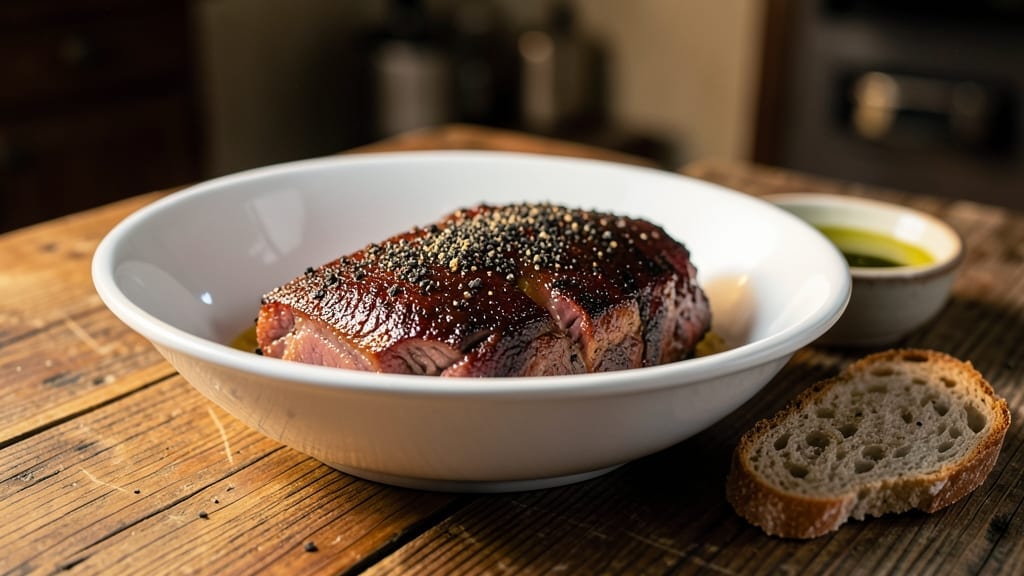
Slow-cooker brisket transforms tough cuts into melt-in-your-mouth perfection with just a few simple ingredients and hours of gentle cooking. 💫 I remember my first attempt—burnt edges and dry meat—until I learned the secrets of proper seasoning and slow heat. This method delivers restaurant-quality results without standing over the stove.
The key lies in selecting a well-marbled brisket and letting the slow cooker do the work. A simple blend of spices creates deep, smoky flavor, while the right amount of liquid keeps the meat moist.
Unlike traditional pit cooking, this approach requires minimal effort but delivers maximum tenderness—ideal for busy weeknights or meal prep.
By the end, you’ll have brisket that falls apart at the touch, with rich, flavorful juices ready to be used as a sauce. The texture is unmatched: tender yet firm, with layers of smoky depth from the spices.
Serve it sliced thin over buns, on a platter with pickles, or with roasted vegetables for a complete meal.
This recipe works equally well for sandwiches, tacos, or leftovers—making it incredibly versatile. The beauty of slow cooking is that it forgives minor mistakes, so even beginners can achieve professional results. Let’s get started on your perfectly tender brisket.
Ingredients for recipe for cooking brisket in a slow cooker
Just beef, spices, and time turn tough brisket into melt-in-your-mouth perfection.
| Ingredient | Amount | Notes |
|---|---|---|
| Beef Brisket 🥩 | 3 lb | Well-marbled, flat cut preferred |
| Yellow Onion 🧅 | 1 whole | Sliced into wedges |
| Garlic Cloves 🧄 | 6 cloves | Smashed with side of knife |
| Beef Broth 💧 | 2 cups | Low-sodium preferred |
| Apple Cider Vinegar 🍎 | ¼ cup | Or sub red wine vinegar |
| Brown Sugar 🍚 | ½ cup | Light or dark preferred |
| Smoked Paprika 🌶️ | 2 tbsp | For authentic smoky flavor |
| Ground Black Pepper 🌶️ | 1 tbsp | Freshly cracked preferred |
| Kosher Salt 🧂 | 1 ½ tbsp | Adjust to taste |
| Ground Cumin 🌿 | 1 tbsp | Toasted for depth |
| Mustard Powder 🍯 | 1 tsp | For subtle tang |
| Bay Leaves 🌿 | 2 whole | Remove before serving |
| Unsalted Butter 🧈 | 2 tbsp | For basting at end |
[recipe_ingredient_scaler]
The brisket is everything here. Look for a well-marbled flat cut—the fat keeps the meat moist during slow cooking. I always grab mine from Whole Foods or the butcher counter at Costco—they cut it specifically for slow cooking. If you’re buying a whole packer, ask for it to be trimmed of excess fat on the sides but leave the fat cap intact. That fat renders down and baste the meat as it cooks. Trust me, the extra 10 minutes at the butcher counter saves hours of dry meat later. And if you can’t find a flat cut, a point cut works too—just add an extra 30 minutes to cooking time.
No smoked paprika? Substitute regular paprika with a pinch of liquid smoke—just a teaspoon, or it’ll overpower. The apple cider vinegar adds brightness, but red wine vinegar works in a pinch. For the spices, I always toast the cumin seeds in a dry pan for 30 seconds first—that deepens the flavor. If you’re short on time, skip it, but don’t skip the mustard powder. It’s the secret to that perfect tang. And if you’re worried about the vinegar making it too acidic, just add a little more brown sugar to balance it out. The bay leaves? Only add them if you love that earthy aroma—some people find it too strong, so I usually use just one if I’m serving picky eaters.
This brisket gets better the next day—honestly, I make extra just to have leftovers. Store it in the fridge for up to 5 days, covered with its juices. For longer storage, slice it and freeze portions for up to 3 months. I like to portion it into individual containers so I can grab a meal whenever I need it. And if you’re making this for a crowd, double the recipe—it reheats beautifully. Just slice it thin and warm it gently in the juices. The best part? Those rich juices make an incredible sandwich spread or gravy—just strain them and reduce with a splash of broth.
Why You’ll Love This Recipe
- No-Fuss Feast: That smoky paprika and toasted cumin blend? It’s the secret sauce that makes this brisket taste like it’s been slow-cooked all day—even though I’m usually just tossing everything in the morning and forgetting about it until dinner. The fat-side-up trick means I don’t have to fuss with basting, and the apple cider vinegar keeps it from getting too heavy.
- Crowd-Pleasing Magic: Between us, this recipe is my go-to for game days or Thanksgiving leftovers. The brown sugar caramelizes into a sticky glaze that has my picky teen niece begging for seconds—yes, even on a Tuesday night. And the best part? It’s so forgiving that I can throw in extra bay leaves or a splash more vinegar without stressing.
- Leftovers That Last: Honestly, I never make this for just one meal. The slow cooker’s got me covered for lunches the next week, and the brisket freezes like a dream. Slice it up, pop it in the freezer, and boom—dinner’s sorted when I’m too tired to cook. The juices stay packed in, so it’s still tender and flavorful, no dry meat here.
- Budget Beef Win: A well-marbled brisket might seem pricey, but this recipe stretches it into something special with just a few pantry staples. The smoked paprika and cumin add depth without costing an arm and a leg, and the beef broth keeps it from drying out. For the effort, it’s one of my most satisfying budget wins—plus, it’s the kind of dish that makes people think I’m a culinary genius.
Step-by-step instructions for slow cooker brisket
Here’s the foolproof method for tender, flavorful brisket that falls apart with a fork.
👨🍳 Step 1: Prep and Season the Brisket
Pat the 3 lb beef brisket dry with paper towels—this helps the seasoning stick and creates a better crust later. Place it fat-side up in your slow cooker. The fat will render beautifully during cooking, adding moisture and flavor.
In a small bowl, mix together the 2 tbsp smoked paprika, 1 tbsp ground cumin, 1 tsp mustard powder, 1 tbsp ground black pepper, and 1½ tbsp kosher salt. Rub this mixture all over the brisket, pressing it into the meat so it doesn’t fall off during cooking. I like to focus extra attention on the edges and any exposed fat.
👨🍳 Step 2: Layer Aromatics and Liquid
Arrange the 1 yellow onion (sliced into wedges) and 6 garlic cloves (smashed with the side of a knife) directly on top of the brisket. This ensures the flavors infuse into the meat as it cooks. The onion will soften and caramelize slightly, adding sweet depth to the dish.
Pour the 2 cups beef broth and ¼ cup apple cider vinegar over the brisket, making sure the liquid reaches about halfway up the sides. Add the ½ cup brown sugar and 2 bay leaves to the slow cooker. The vinegar adds brightness, while the brown sugar helps balance the richness of the beef and creates a subtle caramelized crust.
🔥 Step 3: Cook on Low for Perfect Tenderness
Place the lid on the slow cooker and set it to low heat. Cook for 8-10 hours—this long, slow cook time is what transforms tough brisket into melt-in-your-mouth perfection. Don’t be tempted to rush it; patience is key here. The meat should become fork-tender and easily pull apart.
Here’s the thing—your slow cooker might run hot, so start checking the brisket at the 7-hour mark using an instant-read thermometer. It’s done when the internal temperature reaches 195-205°F and the meat falls apart easily. If it’s not quite there, keep cooking for another hour or so.
🍳 Step 4: Finish with Butter for Richness
Once the brisket is perfectly tender, remove it from the slow cooker and transfer it to a cutting board. Let it rest for 10-15 minutes before slicing. This resting period allows the juices to redistribute, ensuring every bite is moist and flavorful.
While the brisket rests, skim any excess fat from the slow cooker (if desired) and return the brisket to the pot. Add the 2 tbsp unsalted butter and let it melt over the brisket for 2-3 minutes on high heat. This basting step adds a luxurious finish and enhances the flavor of the meat. The butter will create a glossy sheen and deepen the richness of the dish.
🔪 Step 5: Slice and Serve
Slice the brisket against the grain into ¼-inch thick slices. The grain direction is easy to spot—it runs horizontally across the meat. Cutting against it ensures each bite is tender and easy to chew. Serve the brisket with the juices from the slow cooker spooned over the top for extra flavor.
This brisket pairs beautifully with classic sides like mashed potatoes, crusty bread, or a simple green salad. The slow cooker method delivers restaurant-quality results with minimal effort, making it perfect for busy weeknights or special gatherings. Enjoy your tender, smoky, and deeply flavorful brisket!
Pro Tips For Making Recipe For Cooking Brisket In A Slow Cooker
- Check Internal Temp Early: Your slow cooker’s low setting can be sneaky—start checking the brisket’s internal temp with an instant-read thermometer at the 7-hour mark. It’s done when it hits 195-205°F, not when it looks tender. I’ve burned through three briskets by guessing, and trust me, the meat’s texture changes drastically at those temps.
- Toast the Cumin First: Dry-toast the 1 tbsp ground cumin in a dry pan for 30 seconds until fragrant before mixing it into the rub. That extra depth of flavor is subtle but makes a real difference—my grandmother swore by it, and I finally believed her after tasting the difference.
- Don’t Skip the Butter Baste: Those 2 tbsp unsalted butter at the end aren’t just for flavor—they create a glossy crust that traps juices and adds richness. Skip it, and you’ll miss the restaurant-quality finish. High heat for 2-3 minutes is all it takes, but don’t rush it.
- Slice Against the Grain (Really): The grain runs horizontally across the brisket, so cutting perpendicular to it shortens the muscle fibers and makes each bite melt in your mouth. I used to slice with the grain out of laziness, and the result was chewy—don’t make that mistake.
Troubleshooting great recipe for cooking brisket in a slow cooker
Overcooked Meat
I’ve seen it happen—brisket that’s dry as a bone because someone checked the thermometer too early or cranked up the heat. The secret is patience and low heat for the full 8-10 hours.
If your brisket hits 195°F too soon, it’s likely because your slow cooker runs hotter than expected. I use a dual-probe thermometer to monitor both the meat and the cooker—this helps me adjust if needed. Always check at the 7-hour mark to avoid overcooking.
Uneven Seasoning
Seasoning falling off is a common frustration, but it’s easy to fix. Pat the brisket thoroughly dry before seasoning—this helps the spices stick. I rub the seasoning mixture into the meat, focusing on the edges and fat cap.
For extra grip, lightly brush the surface with olive oil before applying the spices. A little goes a long way—don’t overdo it, or the brisket will taste salty.
Fat Buildup
If your brisket develops a thick layer of fat on top, it’s usually because the fat cap wasn’t trimmed properly. Leave ¼-inch of fat intact—this renders down and bastes the meat. If you trimmed too much, the fat will pool at the bottom instead of staying on the meat.
Skim excess fat before basting with butter to keep the sauce clean. I use a spoon to gently push fat back onto the brisket if needed.
Underseasoned Flavor
The spices might seem weak if the brisket didn’t infuse long enough. I always toast the cumin seeds in a dry pan for 30 seconds before grinding them—this deepens the flavor.
If your brisket tastes bland, add a pinch of smoked paprika or a splash of apple cider vinegar to the juices before serving. Taste as you go—adjust seasoning gradually to avoid overpowering the meat.
Uneven Texture
If some parts are tough while others fall apart, the brisket likely wasn’t sliced against the grain. The flat cut has grain running horizontally, so slice perpendicular to that direction. For the point cut, rotate the board mid-slice to follow the grain.
Use a sharp knife—dull blades tear the meat instead of cutting cleanly. I always rest the brisket for 10-15 minutes before slicing to ensure even tenderness.
Nutrition facts
Frequently asked questions
Why does my slow cooker brisket turn out dry even when I follow the recipe?
Dry brisket often happens when the cooker runs hotter than expected or the meat is checked too early. Stick to low heat for the full 8-10 hours, checking at the 7-hour mark with an instant-read thermometer. Your brisket is done when it reaches 195-205°F and easily pulls apart. If your slow cooker runs hot, consider reducing time slightly or using the “low” setting if available.
Can I use a different cut of brisket if I can’t find a flat cut?
A point cut works too, but add an extra 30 minutes to cooking time. The point cut is slightly tougher, so the extra time ensures tenderness. If you use it, trim any excess fat to ¼-inch to prevent greasiness in the slow cooker.
What’s the best way to reheat leftovers without drying them out?
Slice the brisket thinly and reheat it gently in the juices from the slow cooker. Cover the pot and warm on low heat for 10-15 minutes, stirring occasionally. You can also reheat slices in a skillet over medium-low heat for 2-3 minutes per side to keep them moist and flavorful.
How do I know if my brisket is cooked enough without cutting into it?
Use an instant-read thermometer to check the thickest part of the brisket. It’s done when it reaches 195-205°F and the meat easily pulls apart with a fork. If it’s still firm, cook for another 1 hour and check again. The internal temperature is the most reliable indicator of doneness.
Can I skip the resting time before slicing?
Resting is crucial for juicy brisket! Skipping it causes the juices to run out when you slice, leaving you with dry meat. Let it rest for 10-15 minutes after cooking—this redistributes the juices and ensures every bite is tender and flavorful. Patience here makes all the difference!

Trained in classic French technique but raised on slow-cooked ribs and spicy rubs, she blends culinary skill with smoke and soul.
- Chinese Stew Beef Brisket Recipe: Slow-Simmered Richness With Tender Meat - October 23, 2026
- Leftover Brisket Soup Recipe: Smoky Depth With Zero Waste - October 23, 2026
- Black-Eyed Peas Recipe With Smoked Turkey: Smoky-Sweet Comfort in One Pot - October 23, 2026