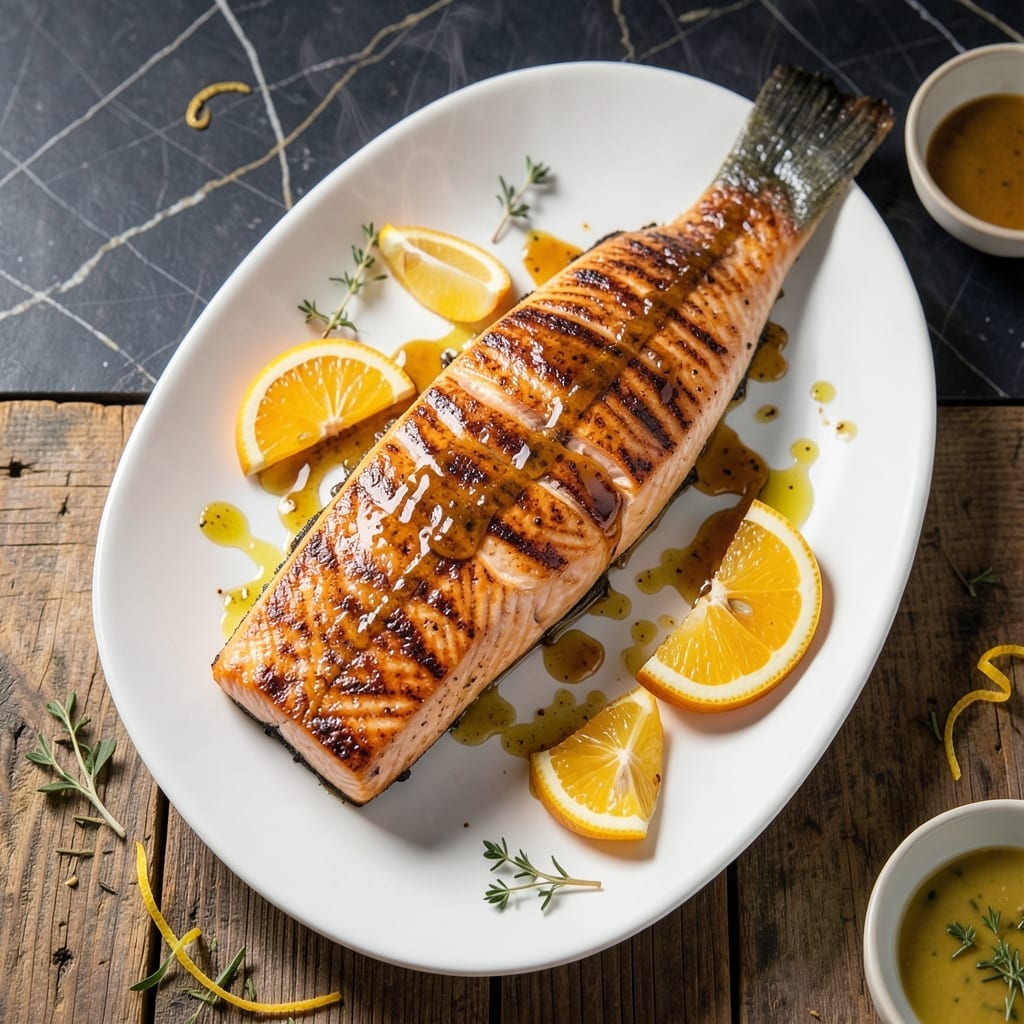
This method for oven-roasted whole salmon guarantees moist, flaky results every time. A simple citrus glaze enhances the natural richness without overpowering the fish.
The technique involves scoring the skin for even cooking and basting with the glaze during roasting. This ensures the salmon stays tender while developing a golden exterior.
At 375°F, a 3-4 pound salmon cooks in about 25 minutes, making it ideal for weeknight dinners or special occasions. The glaze caramelizes beautifully, adding depth to each bite.
Serve with roasted vegetables or a fresh herb salad for a complete meal. This approach delivers restaurant-quality salmon with minimal effort.
Ingredients for Recipe for Cooking Whole Salmon in the Oven
Fresh salmon plus a bright citrus glaze make this oven-baked dish unforgettable and effortless.
| Ingredient | Amount | Notes |
|---|---|---|
| Whole Salmon 🐟 | 3 ½ lb | Skin-on, scaled, gut removed |
| Extra-Virgin Olive Oil 🫒 | 2 tbsp | For brushing and glaze |
| Fresh Lemon Juice 🍋 | ¼ cup | About 2-3 lemons |
| Orange Juice 🍊 | ¼ cup | Freshly squeezed preferred |
| Honey 🍯 | 2 tbsp | Or maple syrup for vegan |
| Dijon Mustard 🟡 | 1 tbsp | Smooth variety |
| Garlic Cloves 🧄 | 3 cloves | Minced finely |
| Fresh Dill 🌿 | ¼ cup | Chopped, for garnish |
| Fresh Parsley 🌿 | ¼ cup | Chopped, for garnish |
| Kosher Salt 🧂 | 1 tsp | Diamond Crystal preferred |
| Black Pepper 🌶️ | ½ tsp | Freshly ground |
| Lemon Zest 🍋 | 1 tbsp | From 1-2 lemons |
| Orange Zest 🍊 | 1 tbsp | From 1 orange |
[recipe_ingredient_scaler]
The salmon quality is paramount. Wild-caught sockeye or king salmon offers the best flavor and texture for roasting. Source from reputable seafood counters at Whole Foods or Local Fish Markets—ask for the freshest catch of the day. Ensure the skin is intact and scales removed (most fishmongers will do this for you). For consistent cooking, select a fillet of even thickness, about 1-1.5 inches at the thickest part.
Citrus substitutions work beautifully here. Lime or grapefruit juice can replace lemon or orange at a 1:1 ratio. For a sugar-free glaze, swap honey for pure maple syrup—the caramelization will be just as impressive. If fresh herbs aren’t available, dried dill or parsley at one-third the amount works (rehydrate in a bit of warm water first). Dijon can be swapped for whole-grain mustard for added texture.
Store fresh salmon in the coldest part of your fridge and use within 1-2 days of purchase. The glaze keeps for 1 week refrigerated in an airtight container. Leftovers? Flake the cooked salmon into salads or pastas—it holds up beautifully for 3-4 days.
Why You’ll Love This Recipe
- One Pan Wonder: I just rub the salmon with olive oil, drizzle honey and citrus, then let the oven do the rest.
- Citrus Kiss: The lemon and orange juice with honey creates this bright, sweet-tangy glaze that’s honestly addictive.
- Feeds a Crowd: One whole salmon serves my entire family with leftovers for lunch the next day.
- Low-Effort Luxe: Between us, it tastes like a fancy restaurant dish but takes less effort than roasting chicken.
Step-by-Step Instructions for Cooking Whole Salmon in the Oven
This method ensures perfectly cooked fish with vibrant citrus notes and a glossy glaze.
Step 1: Prepare the Salmon and Preheat the Oven
Remove the 3.5 lb whole salmon from the refrigerator and let it sit at room temperature for 15-20 minutes. This ensures even cooking throughout the thickest parts. Meanwhile, preheat your oven to 375°F and position the rack in the center.
Pat the salmon dry with paper towels to remove excess moisture, which helps the skin crisp. Place it on a large sheet of parchment paper or foil for easy transfer to the baking sheet. Season the cavity and exterior with the 1 tsp kosher salt and 0.5 tsp black pepper.
Step 2: Create the Citrus-Honey Glaze
In a small bowl, whisk together the 0.25 cup fresh lemon juice, 0.25 cup orange juice, 2 tbsp honey, 1 tbsp Dijon mustard, 1 tbsp lemon zest, and 1 tbsp orange zest until smooth. Stir in the minced 3 cloves garlic cloves and set aside.
The glaze should be well combined but not overly thick. This balance ensures it adheres to the salmon while cooking and doesn’t slide off. The acidity from the citrus will brighten the rich salmon flavor beautifully.
Step 3: Glaze and Bake the Salmon
Brush the salmon generously with 2 tbsp extra-virgin olive oil, then pour half of the citrus glaze over the top, allowing it to pool in the cavity. Fold the parchment or foil edges up around the salmon to create a loose packet, which helps steam the fish gently.
Transfer the salmon (still on the parchment) to a baking sheet and bake for 20-25 minutes. The salmon is done when the thickest part reaches an internal temperature of 145°F and the flesh flakes easily with a fork. Avoid overbaking, as the fish will continue cooking slightly after removal from the oven.
Step 4: Garnish and Rest Before Serving
Carefully transfer the salmon to a serving platter, leaving the parchment behind. Drizzle the remaining glaze over the top, then sprinkle with the 0.25 cup fresh dill and 0.25 cup fresh parsley. The herbs add a fresh, vibrant finish to the dish.
Let the salmon rest for 5-10 minutes before serving. This allows the juices to redistribute, ensuring moist, tender flesh. Serve directly from the platter, accompanied by the pan juices for extra flavor.
Pro Tips For Making Recipe For Cooking Whole Salmon In The Oven
- Preheat the Pan: I learned this the hard way—start with a screaming hot oven (425°F) and a preheated baking sheet to guarantee crisp skin and even cooking.
- Score the Skin: Make shallow cuts along the salmon’s skin before adding the olive oil and citrus; this prevents curling and helps the glaze penetrate.
- Don’t Over-Sauce: Resist the urge to drown the salmon in honey and juice—just a light brush of each keeps the glaze from burning before the fish cooks through.
- Rest Before Serving: Give it a solid 5-10 minutes under foil after baking; the salmon reabsorbs its juices and stays moist, even if you’re impatient like me.
Troubleshooting This Recipe
Glaze Running Off
If your glaze pools at the bottom, thicken it with 1 tsp cornstarch mixed with 1 tbsp water before applying. Brush it on in thin layers during baking instead of pouring. I use a silicone pastry brush for even coverage every 5-7 minutes. 💡
Dry Salmon Issue
Overcooking is the main culprit. Pull it out at 140°F internal temp—it will rise to 145°F while resting. Also, ensure you’re not skipping the parchment packet, which traps moisture. A 3.5 lb salmon should never exceed 25 minutes at 375°F.
Uneven Cooking
Score the thickest part of the salmon with 2-3 shallow cuts to help heat penetrate evenly. If one end is thicker, fold it under slightly before baking. I always check both the thickest and thinnest parts with my instant-read thermometer.
Skin Sticking
Prevent this by ensuring your parchment or foil is well-oiled with 1 tbsp olive oil. If using a baking sheet, line it first. The skin should release easily when properly cooked—if it resists, it needs more time. 🔥
Bland Flavor
Boost the glaze with ½ tsp salt and ¼ tsp black pepper.
Nutrition Facts
Frequently Asked Questions
Should I leave the skin on when baking?
Yes, leave the skin on for baking. It protects the delicate flesh and helps hold the fish together. The skin crisps nicely at 375°F and adds texture. You can remove it after cooking if preferred.
How do I know when it’s done?
The salmon is ready when the thickest part reaches 145°F internally. The flesh should flake easily with a fork. For a 3.5 lb fish, this takes about 20-25 minutes.
Can I use frozen salmon?
Yes, but thaw it completely first. Place frozen salmon in the fridge overnight. Never bake from frozen—it cooks unevenly. Pat dry before seasoning to ensure crisp skin.
What if the glaze burns?
If the glaze darkens too quickly, tent the salmon with foil. Reduce oven temp by 25°F and baste less frequently. A thicker glaze (with 1 tsp cornstarch) resists burning better.

Trained in classic French technique but raised on slow-cooked ribs and spicy rubs, she blends culinary skill with smoke and soul.
- Recipe for Boneless Pork Chops in Cast Iron Skillet: Sear and Baste to Juicy Perfection - October 3, 2026
- Recipe for Boneless Cross Rib Roast: Slow-Roasted Beef with Herb Crust - October 3, 2026
- Hamburgers in Sauce Recipe Crock Pot: Slow-Cooked Savory Delight - October 3, 2026